Why Falmouth Homeowners Are Rushing to Upgrade Their Windows Right Now
If you live in Falmouth, you already know the Atlantic doesn’t hold back. The salt-laden westerly winds that roll in off the Carrick Roads and Falmouth Bay don’t just affect your mood on a rainy Tuesday, they actively eat through single-glazed window frames, corrode metal fittings, and drive cold, damp air into your home in ways that just don’t happen in inland towns.
With Falmouth’s average EPC sitting at Band D and gas bills still uncomfortably high, the town’s roughly 22,000 residents are increasingly asking a very practical question, how much of my heating bill is simply escaping through my windows? The honest answer, in many of Falmouth’s older terraced and semi-detached properties, is a significant amount.
There’s something else worth mentioning too. Cornwall Council has been actively pushing retrofit programmes across the peninsula, and Falmouth’s proximity to Truro (just 12km away) means local installers serving both towns are currently very active. Lead times are shorter than you might expect, and competition is keeping prices reasonably sharp. Right now is genuinely a good time to get quotes.
What Double Glazing Actually Involves for a Typical Falmouth Home
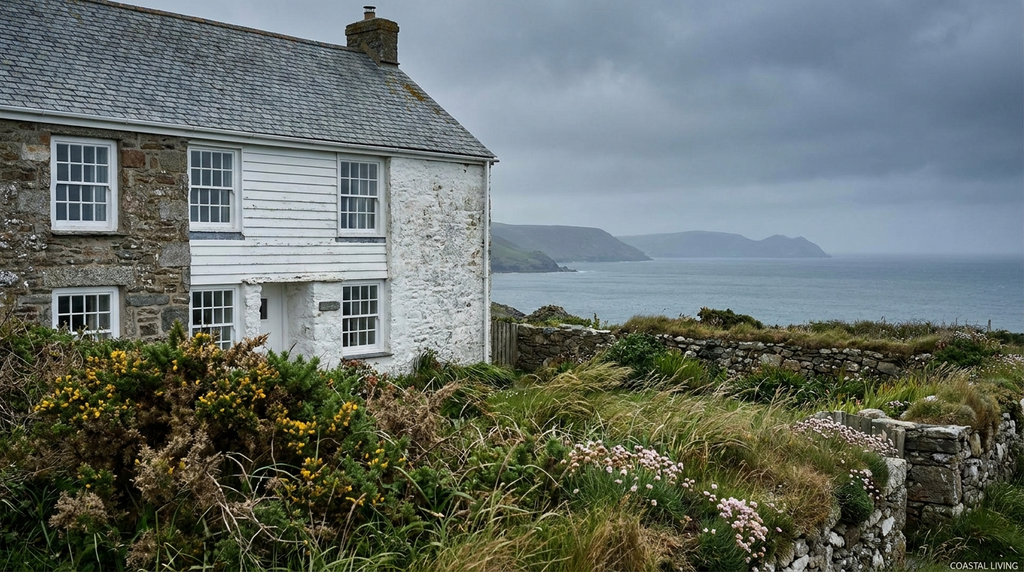
Falmouth’s housing stock is fascinatingly varied but skews heavily towards properties built between the mid-Victorian era and the 1970s, terraced fishermen’s cottages near the town centre, Edwardian semis around the Kimberley Park area, and post-war council-era homes spreading up towards Penwerris and Trescobeas. Each era brings its own challenges for window replacement.
The Victorian and Edwardian properties are the trickiest. Their window openings were designed around timber sliding sash frames, and swapping these out for modern casement double glazing changes the character of the property noticeably. Many Falmouth homeowners in these older streets opt for double-glazed sash units instead, they’re more expensive but preserve the aesthetic and avoid planning headaches.
For the post-war semis and terraces, standard casement double glazing fits far more straightforwardly. The main practical complication in Falmouth’s denser streets, think the roads climbing off Killigrew Street or the tighter terraces near the docks, is access. Some properties have no front garden, narrow pavements, and limited parking for installation vehicles. This can add a small but real cost to your quote compared with more accessible suburban homes.
- Granite and stone walls are common in older Falmouth homes, window reveals tend to be deeper than in brick-built properties, which affects how frames are fitted and sealed
- Timber lintels in pre-war homes occasionally need inspection or reinforcement before new frames go in
- Damp window reveals are surprisingly common in coastal properties, a good installer will flag this before fitting, not after
- Original timber frames in conservation-adjacent streets may require like-for-like replacement in terms of colour and profile
The good news is that most standard double glazing installations in a typical Falmouth semi-detached or terraced home take one to two days. It’s disruptive but manageable, and you’ll notice the difference in draught reduction almost immediately.
How Much Double Glazing Costs in Falmouth and the South West in 2026
Prices in Falmouth sit slightly above the national average for a few specific reasons, marine-grade materials cost more, some access situations require additional labour, and being at the end of the supply chain (most manufacturers are based further east) adds modest delivery costs. Even so, Falmouth benefits from healthy installer competition from companies serving the Truro-Falmouth-Penryn corridor, which keeps margins in check.
| Property Type | Number of Windows | Standard uPVC Double Glazing | Marine-Grade Aluminium | Timber-Look uPVC |
|---|---|---|---|---|
| Small terraced (2 bed) | 5–7 windows | £3,200–£4,500 | £5,800–£7,500 | £4,200–£5,800 |
| Mid terraced (3 bed) | 7–9 windows | £4,200–£5,800 | £7,200–£9,500 | £5,500–£7,200 |
| Semi-detached (3 bed) | 8–10 windows | £4,800–£6,500 | £8,000–£11,000 | £6,200–£8,500 |
| Semi-detached (4 bed) | 10–13 windows | £6,000–£8,200 | £10,000–£14,000 | £7,800–£10,500 |
| Add a front door | , | £900–£1,400 | £1,800–£2,800 | £1,200–£1,900 |
For context, the South West average for a standard 3-bed semi sits around £5,200 for uPVC, Falmouth prices are roughly 5–10% above this due to the coastal materials premium. Installers based in Truro or Penryn often charge similar rates for Falmouth jobs, while companies travelling from further afield (Newquay or St Austell, both about 29km away) sometimes add a call-out uplift.
Insider tip: Always get at least three quotes. The spread between the cheapest and most expensive quote for the same job in Falmouth can be as wide as £1,500, that’s not always a quality signal, sometimes it’s just margin.
How Falmouth’s Weather and Location Shape Your Window Choices
Falmouth sits in one of the most climatically distinct corners of England. The Gulf Stream influence means winters are mild by national standards, you’re looking at 1,200 to 1,500 heating degree days per year, which is notably lower than the Midlands or North. So double glazing in Falmouth isn’t primarily about surviving Arctic winters. It’s about something else entirely.
The real villains here are driving rain and salt air. Falmouth receives between 1,000 and 2,000mm of rainfall annually, most of it arriving horizontally on a south-westerly wind straight off the Atlantic. This is genuinely punishing for window seals, frame joints, and any metal hardware that isn’t properly specified for coastal conditions. A standard aluminium handle that might last 15 years in Wolverhampton could start corroding visibly in Falmouth within three or four years.
What this means practically is that your choice of frame material and hardware finish matters enormously here in a way it simply doesn’t in inland towns. Stainless steel or marine-grade powder-coated hardware should be non-negotiable. If a salesperson doesn’t mention this unprompted when they know you’re in Falmouth, that’s a red flag.
- uPVC frames are genuinely salt-resistant and low-maintenance, a good choice for coastal Falmouth, provided the reinforcing steel inside the profile is galvanised
- Aluminium frames need marine-grade anodising or high-quality powder coating, standard powder coat isn’t sufficient this close to the sea
- Timber frames can work beautifully in Falmouth’s character streets but require more maintenance, annual painting or staining in a coastal environment isn’t optional
- Sealed unit quality matters more here too, warm-edge spacer bars (rather than standard aluminium spacers) resist condensation better in Falmouth’s high-humidity winters
On the brighter side, literally, Falmouth enjoys some of the best solar irradiance in the UK at 1,100 to 1,200 kWh per square metre per year. This means south and west-facing windows contribute real passive solar gain in winter. Triple glazing, which reduces this solar gain slightly, is often oversold in Cornwall, high-performance double glazing with a good solar heat gain coefficient (SHGC) actually performs better for your annual energy balance in this mild, sunny climate.
The Products and Specifications That Actually Perform Well Here
Based on Falmouth’s specific combination of mild winters, high rainfall, salt exposure, and decent solar gain, here’s what genuinely works rather than what just sounds good in a brochure.
For most terraced and semi-detached homes in Falmouth, high-performance uPVC casement windows with A+ energy ratings, warm-edge spacer bars, and argon-filled units hit the sweet spot of performance, longevity, and cost. Look for a U-value of 1.2 W/m²K or better, anything above 1.4 W/m²K is genuinely underwhelming by current standards.
For Victorian and Edwardian properties in the older streets around the town centre and near the harbour, double-glazed timber or timber-effect uPVC sliding sash windows are worth the extra £300 to £500 per window. The difference in resale value and planning simplicity is worth the premium.
For exposed elevations facing south-west, which in Falmouth means facing directly into the prevailing weather, specify windows tested to at least Weather Class 3 or higher for wind and rain resistance. Ask your installer specifically about this rating.
- Argon-filled units over air-filled, better thermal performance for modest cost uplift
- Warm-edge spacer bars (Thermix, Swisspacer or equivalent), reduces cold-edge condensation in Falmouth’s damp winters
- Low-E coatings, retains heat in winter while allowing solar gain; specify the right type for south-west facing windows
- Marine-grade stainless steel or PVD-coated handles and hinges, non-negotiable within 5km of the coast
- Internally beaded frames, more secure and better for coastal environments than externally beaded units
How to Find a Trustworthy Double Glazing Installer Near Falmouth
Falmouth is a small town of 22,000 people, which means you won’t find the same density of specialist window installers you’d get in Plymouth or Exeter. Most reputable local fitters are based in Truro or Penryn and cover Falmouth as part of their regular patch. A handful of Falmouth-based sole traders and small companies also operate locally and are worth seeking out, smaller operators often give more personal service and are easier to hold accountable.
For double glazing specifically, the certification you absolutely must check is FENSA registration (or alternatively CERTASS). These schemes allow installers to self-certify that the work complies with Building Regulations, which saves you the cost of a separate building control inspection. Without this, you could face issues when you sell your property.
Beyond FENSA, look for TrustMark registration as a general quality mark, and check whether the company offers a deposit protection insurance scheme, some less scrupulous operators take large deposits and disappear. A reputable Falmouth-area installer should never ask for more than 25% upfront.
Questions worth asking any installer
- Are you FENSA registered and will you provide the certificate on completion
- What specific hardware do you use for coastal installations, is it marine-grade
- Do you carry deposit protection insurance
- What is your warranty on frames, sealed units, and installation workmanship separately
- Have you worked on properties similar to mine in Falmouth specifically
- What is your current lead time from order to installation
Current lead times in the Falmouth-Truro area in 2026 are running at four to eight weeks from order to installation, shorter for smaller jobs. If someone quotes you two weeks, that’s either exceptionally good or a warning sign that they’re not busy for a reason.
Grants and Funding Available to Falmouth Residents in 2026
Funding for double glazing specifically has narrowed in recent years, but there are still meaningful routes to reduce your costs if you know where to look.
ECO4 (Energy Company Obligation) remains the most significant national scheme for lower-income households. If you’re a Falmouth homeowner receiving qualifying benefits, including Universal Credit, Pension Credit, or certain disability benefits, you may be eligible for fully or heavily subsidised double glazing as part of a whole-house retrofit. Cornwall Council administers referrals locally, and you can apply directly through their website or via the national ECO4 eligibility checker.
The Great British Insulation Scheme closed on 31 March 2026. It funded insulation measures only and never covered windows or glazing. Double glazing sits within the eligible measures. Eligibility has both an income-based route and a general route for Band D properties, meaning many Falmouth homeowners who aren’t on benefits can still access support.
The Warm Homes Plan, the government’s broader retrofit programme rolling out through 2026, is beginning to channel funding through local authorities including Cornwall Council. Check the Cornwall Council retrofit hub for the latest Falmouth-specific availability, allocations can run out, so earlier enquiries get better results.
For properties in Conservation Areas, some grant routes are more restricted because the permitted measures must be in keeping with character, but this doesn’t disqualify you, it just means the eligible window specifications are more tightly defined.
If you don’t qualify for grants, some energy suppliers also offer interest-free or low-interest financing for window upgrades under their own obligations, worth asking about when you contact them about your account.
Planning Permission and Falmouth’s Conservation Rules, What You Need to Know
Here’s where Falmouth gets genuinely more complicated than many towns, and it’s something many homeowners don’t discover until they’re already committed to a purchase.
Falmouth has a significant Conservation Area covering much of the historic town centre and harbour areas, this includes streets around Church Street, Market Street, and the older residential areas stepping up from the waterfront. If your property sits within this zone, permitted development rights for window replacement are restricted. You cannot simply swap out original windows for standard uPVC without consent, and doing so without checking first could require expensive remediation.
Cornwall Council is the local planning authority, and their conservation team takes a reasonably pragmatic approach, double glazing within the Conservation Area is often approved, but only if the windows match the appearance of the originals in terms of profile, colour, and opening style. Slim-profile double-glazed sash windows built to mimic Victorian originals are the typical solution, and they do genuinely work well.
Outside the Conservation Area, the rules are much simpler. Standard permitted development rights apply for most terraced and semi-detached homes, meaning you don’t need planning permission for like-for-like window replacement regardless of material, provided you’re not in a listed building. Always check Cornwall Council’s planning portal or call their duty planning officer if you’re unsure, it’s a free five-minute call that could save you significant hassle.
Listed buildings require listed building consent for any window changes, even internal secondary