Why St Austell Homeowners Are Suddenly Taking Double Glazing Seriously
There’s something happening on the streets of St Austell right now. From the terraced rows of Poltair and Carclaze to the semis out towards Holmbush and Mount Charles, more homeowners than ever are getting quotes for double glazing, and it’s not hard to see why.
St Austell sits in one of the wettest, windiest corners of England. Those Atlantic fronts rolling in off the coast don’t just bring rain, they bring persistent, driving damp that finds every gap in an ageing window frame. When your home is already sitting at EPC Band D (the national average, as it happens), poorly performing windows are often the most visible and fixable weak point in your home’s thermal envelope.
Then there’s the salt air. Living this close to the coast, metal window fittings and degraded timber frames age faster than they would in, say, Birmingham or Leeds. Many St Austell homeowners find themselves replacing single-glazed or early double-glazed units that have simply corroded or blown well ahead of schedule. Getting it right this time, with marine-grade materials, matters more here than almost anywhere else in England.
Energy bills are another driver. St Austell’s gas usage sits around 11,200 kWh per year, broadly in line with the national median, but the town has a notably older housing stock and a higher-than-average proportion of retired residents for whom keeping bills manageable is a real priority, not just a nice-to-have. Double glazing won’t fix everything, but it makes a genuine, measurable difference.
What Double Glazing Actually Involves for a Typical St Austell Home
Most St Austell homes fall into two broad camps, Victorian and Edwardian terraces built between roughly 1880 and 1920 (you’ll find plenty of these in the town centre and around Truro Road), and post-war semis from the 1950s through to the 1970s in areas like Carclaze, Bugle Road, and the Holmbush estate. Each comes with its own quirks for glazing work.
Victorian and Edwardian Terraces
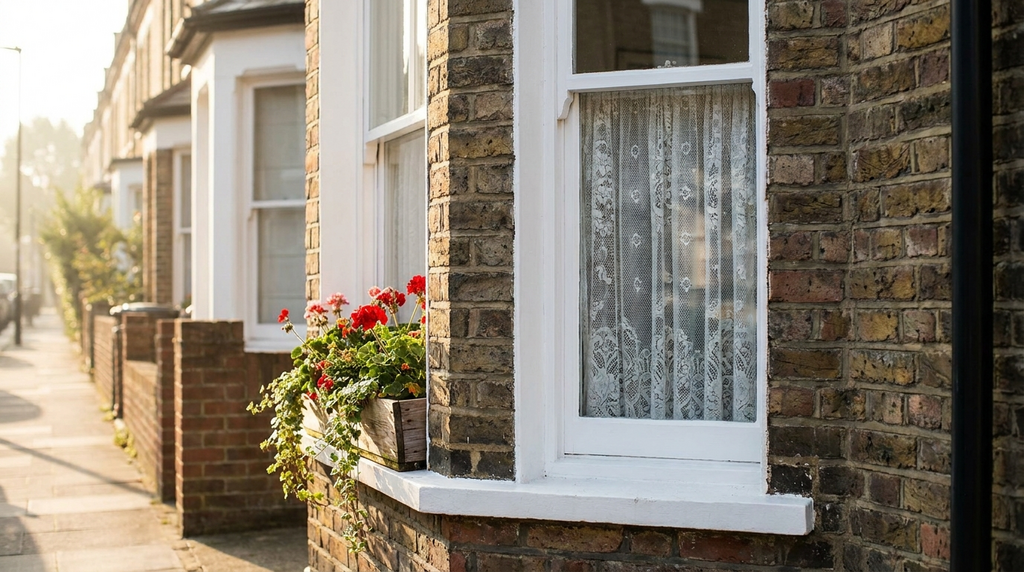
These homes typically have timber sash or early casement windows set into solid stone or rubble walls. The frames are often thicker than modern openings, which sounds like it should make replacement easier, but it doesn’t always. Original window reveals can be irregular, and matching the external appearance matters a lot if your neighbours are watching or if you’re anywhere near the town’s conservation areas (more on that below).
Slim-profile uPVC or timber-effect frames are the go-to here. Importantly, you’ll want to discuss the reveals carefully with your installer, a poor fit around the original stone surround will let cold air track straight in and completely undermine your investment.
Post-War Semis and Later Builds
These homes were often built with cavity walls and standardised window openings, which makes double glazing installation more straightforward. However, many still have their original steel-framed single-glazed windows, and those are genuinely dreadful thermal performers. Replacing them is one of the highest-impact upgrades you can make in a single afternoon’s work.
One practical note for St Austell specifically, access can be tight in older parts of town. Some terraced rows have limited street parking, and getting a van and equipment to a rear elevation isn’t always simple. Factor this into your quote conversations; a good installer will have priced for it already.
How Much Double Glazing Costs in St Austell and the South West in 2026
Let’s talk numbers. Below is a realistic pricing guide for double glazing in St Austell in 2026. These figures include supply and professional installation, they are not trade prices or DIY estimates.
| Property Type and Scope | St Austell Estimate | South West Average | UK National Average |
|---|---|---|---|
| 1–2 bedroom flat or terraced (4–6 windows) | £2,800 – £4,500 | £2,600 – £4,200 | £2,400 – £4,000 |
| 3 bedroom terraced house (6–8 windows + door) | £4,200 – £6,500 | £4,000 – £6,200 | £3,800 – £5,800 |
| 3 bedroom semi-detached (7–9 windows + door) | £5,000 – £7,500 | £4,800 – £7,200 | £4,500 – £6,800 |
| 4 bedroom detached (10–12 windows, 2 doors) | £7,500 – £11,000 | £7,200 – £10,500 | £6,800 – £10,000 |
| Upgrade to triple glazing (per window, premium) | +£150 – £300 per unit | +£130 – £280 per unit | +£120 – £250 per unit |
You’ll notice St Austell prices sit slightly above both the South West average and the national average. There are a few genuine reasons for this that aren’t just installers padding their margins.
- Supply chain distance, St Austell isn’t adjacent to any major glazing distribution hub. Installers typically travel from Truro (20km), Bodmin (16km), or even Falmouth (29km), and that transport cost feeds into the quote.
- Marine-grade specification, Homes within a few miles of the coast should be specified with stainless steel hardware and marine-grade sealants as standard. This adds cost but prevents the nightmare scenario of replacing your new windows again in five years because the ironmongery has corroded.
- Access challenges, Tight terraced streets, steep rear gardens common in St Austell’s hilly terrain, and older properties with non-standard reveals all add labour time.
Insider tip, always get three quotes from local installers who specifically mention visiting the property rather than quoting remotely. A glazing quote done without a site visit in St Austell is essentially a guess.
How St Austell’s Weather and Location Should Shape Your Window Choices
Cornwall gets more sun than almost anywhere in the UK, around 1,200 to 1,500 sunshine hours per year, with solar irradiance at the top end of the national range. That’s brilliant news if you’re thinking about solar panels too, but it also means south-facing windows can contribute meaningful passive solar gain in winter if specified correctly.
However, St Austell’s weather is not all gentle sunshine. The town receives between 1,000 and 2,000mm of rainfall annually, much of it arriving horizontally on prevailing westerly winds. This is driving rain, the kind that genuinely tests the weather seals on window frames. Any installer who shrugs at your questions about weather sealing performance is one to be cautious about.
Wind loads here are also higher than the UK average. Standard residential window specifications are typically fine, but if your home is elevated, and plenty of St Austell homes are, given the town’s hilly character, or particularly exposed on a western elevation, it’s worth asking your installer about enhanced fixing systems and frame reinforcement.
The salt air factor genuinely cannot be overstated for homes near the Pentewan Valley, Black Head, or anywhere within a few miles of the coastline. Salt crystallises inside frame joints and around hardware, accelerating degradation. Ask specifically for stainless steel hinges, handles, and locking mechanisms, not zinc or standard steel, even if they’re quoted as weather-resistant. In St Austell’s environment, marine-grade means marine-grade.
The Products and Specifications That Actually Perform Well Here
This isn’t a generic list of what double glazing products exist. It’s an honest opinion on what works in St Austell’s specific conditions.
Frame Material
White uPVC remains the most popular choice and is perfectly good for most St Austell homes, provided it’s specified with reinforced steel inserts (which virtually all modern uPVC profiles use) and marine-grade hardware. It’s low maintenance, doesn’t corrode, and holds its thermal performance well.
Composite frames (timber core with an aluminium or GRP outer) are worth the premium for coastal-facing elevations or for Victorian properties where the aesthetics of a wood-effect finish genuinely matter. They handle salt air better than most alternatives and look the part on period homes.
Avoid aluminium-only frames without a thermal break unless you’re very specifically going for a contemporary look, they conduct heat out of your home and will sit cold to the touch in winter.
Glazing Specification
- Low-E glass with argon fill, this is the minimum you should accept. A U-value of 1.2 W/m²K or better for the whole unit is the current Building Regulations standard, and you should be aiming for 1.0 or below if possible.
- Warm edge spacer bars, these replace the traditional aluminium spacer between the two panes with a low-conductivity alternative. They reduce cold bridging at the glass edge (often the source of those annoying bottom-of-window condensation patches).
- South-facing windows, consider a higher solar gain glazing (g-value of 0.5 or above) to capture passive winter warmth. Cornwall’s sun hours make this more worthwhile here than in northern England.
- North and west-facing windows, prioritise lower U-values and superior weather sealing over solar gain. The west elevation especially will take the brunt of Atlantic weather.
Triple Glazing, Worth It in St Austell
Triple glazing adds £150 to £300 per window but delivers U-values around 0.7 to 0.8 W/m²K versus a good double-glazed unit at around 1.0 to 1.2. Given St Austell’s milder winters (1,200 to 1,500 heating degree days per year), the purely thermal payback on triple glazing is longer here than it would be in Scotland. However, the acoustic and weather-resistance benefits are real, especially on westerly elevations exposed to driving rain and wind. It’s a genuine consideration, not just an upsell.
Finding a Trustworthy Double Glazing Installer Near St Austell
St Austell has a small cluster of local glazing companies, but realistically most homeowners will be drawing on installers covering the Truro–Bodmin–Newquay corridor. This isn’t a problem, many excellent firms serve this whole area, but it does mean you should ask specifically whether an installer knows the St Austell area, and how they handle access to older terraced properties.
Certifications to Look For
- FENSA registered, this is the most important one for replacement windows. FENSA registered installers self-certify compliance with Building Regulations, which means you don’t need to apply for a council building notice separately. You’ll also receive a FENSA certificate on completion, which is essential for future property sales.
- CERTASS, an alternative to FENSA, equally valid. Some excellent installers use this scheme instead.
- TrustMark, a government-endorsed quality scheme. Not all good installers have it, but it’s a useful positive signal.
- Which Trusted Trader or similar, read the reviews carefully and look specifically for reviews from Cornwall-based customers.
Questions Worth Asking Before You Commit
- Are you FENSA or CERTASS registered, and will I receive a certificate on completion?
- What hardware specification do you use for coastal or near-coastal properties, is it stainless steel as standard?
- Have you worked on Victorian terraced properties in St Austell town centre before?
- What is your warranty period on frames, glass units, and hardware separately?
- Can you provide references from customers in the St Austell or Truro area?
Red flags, pressure selling with same-day discounts that expire tonight, quotes given entirely over the phone without a site visit, warranty offered only on the glass unit with no frame guarantee, and any installer who doesn’t mention Building Regulations compliance unprompted.
Lead times in the South West currently run at around four to eight weeks from survey to installation for most residential jobs. Premium or bespoke products (heritage profiles, composite frames) can stretch to twelve weeks.
Grants and Funding That Could Cut Your Costs in 2026
The funding landscape for window upgrades has narrowed compared to a few years ago, but real money is still available for eligible St Austell homeowners.
ECO4 Scheme
The Energy Company Obligation scheme in its current iteration (ECO4) can cover or partially fund window upgrades where they form part of a wider fabric improvement package, typically alongside insulation or heating upgrades. To qualify you generally need to be on means-tested benefits (including Universal Credit, Pension Credit, or Child Tax Credit) and have a low EPC rating. Cornwall Council participates in the scheme and can signpost eligible residents. Contact them directly or use the government’s ECO4 referral route at gov.uk.
Great British Insulation Scheme (GBIS)
The Great British Insulation Scheme closed on 31 March 2026. It funded insulation measures only and never covered windows or glazing. The scheme focuses primarily on insulation measures, but in some cases glazing upgrades can be incorporated. It’s worth a direct conversation with an approved GBIS installer to understand what’s possible for your specific property.
Warm Homes Plan
The Government’s Warm Homes Plan, continuing through 2026, provides additional funding routed through local authorities and social housing providers. Cornwall Council has been active in piloting retrofit programmes in the South West, and St Austell has been included in area-based schemes targeting older housing stock. Contact Cornwall Council’s energy team directly, they have an Energy Advice Service that can assess your home and match you to available funding.
Local Authority Flex
Under ECO4 Flex, Cornwall Council can refer households that don’t meet the standard eligibility criteria but are identified as living in fuel poverty or cold homes. This is a less well-known route that catches homeowners who fall just outside the standard criteria. It’s worth asking specifically about ECO4 Flex when you contact the council.
Honest note, grants for glazing alone, without other improvements, are harder to access than they were in previous years. If you’re replacing windows primarily for comfort and energy savings without being on qualifying benefits, you’ll most likely be paying full cost. Even so, the savings and home value uplift are real and the maths still works for most St Austell homeowners.
Planning Permission and Local Rules in St Austell
For most St Austell homes, replacing like-