Why Newquay Homeowners Are Finally Taking Double Glazing Seriously
If you’ve lived in Newquay for any length of time, you already know what Atlantic winter feels like. The westerly winds that roll in off the sea don’t just rattle single-glazed sashes, they push cold, salt-laden air through every gap they can find. For the 22,000 people who call this town home, draughty windows aren’t just uncomfortable, they’re expensive.
But there’s something else driving the current wave of interest in double glazing here. Newquay’s housing stock, a mix of post-war semis, converted flats, and older Cornish terraces, is sitting at an average EPC rating of Band D. That’s right at the national average, which sounds fine until you realise what it means in a coastal environment where salt air corrodes window frames faster than inland towns and driving rain hammers your elevations for months at a stretch.
Energy bills have also pushed things along. With gas usage in the average Newquay home running at around 11,000 kWh per year, there’s real money to be saved, and double glazing is often the most visible, most impactful single upgrade you can make to a home. The good news is that 2026 has brought better funding options and a more competitive installer market to Cornwall than residents have seen before.
What Double Glazing Actually Involves for a Typical Newquay Home
Most homes in Newquay fall into one of two categories, semi-detached houses built roughly between the 1950s and 1980s, and flats, many of which are either purpose-built or converted from older Victorian and Edwardian properties closer to the town centre and seafront.
For a standard 1960s or 70s semi, the kind you’ll find across areas like Trenance, Tretherras, and Edgcumbe, double glazing installation is relatively straightforward. These homes tend to have standard casement or top-hung windows in timber or old aluminium frames, and most modern double glazing units drop in without structural alterations. A full house installation typically covers six to eight windows and a front or back door.
Flats are a slightly different story. If you own a leasehold flat, you’ll almost certainly need written permission from your freeholder or management company before any windows are replaced. This is particularly common in converted properties near the harbour or along Narrowcliff. It’s worth sorting this paperwork before you even get quotes, because installers won’t touch a leasehold property without it.
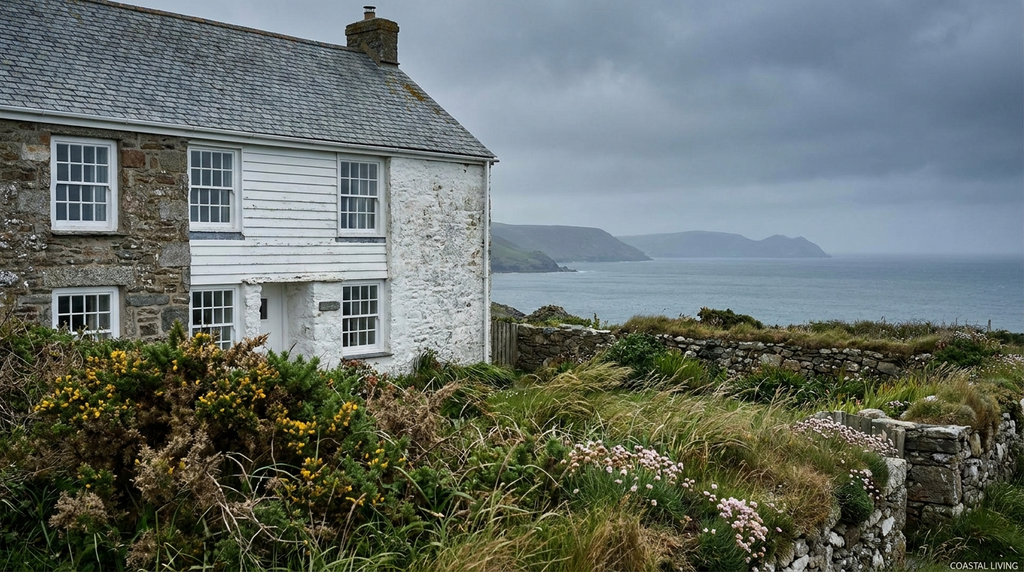
Older properties, and there are plenty of granite and stone-built cottages in and around Newquay, sometimes present frame depth issues. The reveals (the recesses around your windows) in older stone walls can be deeper or shallower than standard, which may require bespoke or slimline units. This adds cost, but it’s not unusual for Cornwall and specialist fabricators in Truro and Bodmin are well used to making non-standard sizes.
Key practical points for Newquay homes specifically
- Salt air means uPVC or marine-grade aluminium frames are strongly preferred over timber, more on this below
- Access can be an issue on narrow Cornish streets, check whether your installer’s van can get close enough to avoid manual carrying charges
- Some seafront and harbour properties sit within the Newquay Conservation Area, which adds a planning layer
- Flats in older conversions may have non-standard opening mechanisms, measure everything twice before ordering
- Cornish granite walls are very thick, which can be a bonus for insulation but requires careful measurement for frame depth
How Much Double Glazing Costs in Newquay and the South West in 2026
Let’s get to the numbers you actually need. Costs in Newquay sit slightly above the national average, not dramatically, but typically 5–10% higher due to the need to bring installers in from Truro, St Austell, or Bodmin, the coastal access challenges on some streets, and the additional cost of marine-grade or specialist frames.
| Property Type | Scope of Work | Estimated Cost (Newquay) | UK National Average |
|---|---|---|---|
| 1-bed flat | 3–4 windows, 1 door | £2,800 – £4,200 | £2,400 – £3,800 |
| 2-bed semi-detached | 6–7 windows, 1 door | £4,500 – £6,800 | £4,000 – £6,200 |
| 3-bed semi-detached | 8–10 windows, 1–2 doors | £5,800 – £9,000 | £5,200 – £8,200 |
| Larger detached / older Cornish cottage | Bespoke sizing, 10+ windows | £9,500 – £15,000+ | £8,500 – £13,500 |
| Triple glazing upgrade (per window premium) | Per unit vs standard double | +£150 – £250 per window | +£120 – £220 per window |
These figures are for supply and installation including frames, glass units, and basic finishing. They don’t include any scaffold hire (needed for some first-floor work), specialist conservation area glazing, or secondary glazing in listed buildings.
Compared to the South West broadly, Newquay’s costs are roughly in line with Falmouth and slightly above Truro or St Austell, simply because those towns have more local installer competition. Bodmin-based companies often quote competitively for Newquay jobs and are worth including in your quote comparison.
Tip, always get at least three quotes, and make sure each one specifies the exact glass specification (U-value, gas fill, frame material) so you’re comparing like for like.
How Newquay’s Weather and Location Change the Rules for Double Glazing
This is where living on the north Cornish coast genuinely makes a difference, and where a lot of generic double glazing advice falls flat.
Newquay faces the full force of the Atlantic. Annual rainfall regularly reaches 900–1,100mm, and driving rain on west-facing elevations is a serious concern. This matters for double glazing because the quality of your frame seals and drainage channels will determine how long your installation stays watertight. Cheap or poorly fitted units can allow water ingress within a few years in this environment.
The salt air issue is real, not a marketing scare. Metal hardware, hinges, locking mechanisms, handles, corrodes significantly faster in coastal locations than it does 20 miles inland. Any installer familiar with Newquay will tell you that standard chrome fittings on cheaper units start to pit and seize within three to five years. Stainless steel or marine-grade hardware is the sensible spec here.
On the flip side, Newquay’s winters are milder than much of the UK. With heating degree days in the 1,200–1,500 range, you’re not battling the extreme cold that drives energy bills sky-high in the north of England or Scotland. What you are battling is wind chill, draughts, and the psychological discomfort of a cold, rattling house, and that’s where good double glazing makes an immediate, noticeable difference even if the theoretical energy savings look modest on paper.
There’s also something worth knowing about solar gain. The South West gets the best solar irradiance in the UK, around 1,100–1,200 kWh/m2/year, and in Newquay that means south and south-west facing rooms can get genuinely warm on sunny winter days even in January. The right glass specification can help you harvest this free heat rather than block it out.
The Products and Options That Actually Perform Well Here
Given everything above, here’s what genuinely experienced advice looks like for Newquay conditions, not a generic spec sheet, but real recommendations based on the local environment.
Frame Material
uPVC remains the most popular choice, and for good reason, it doesn’t corrode, it requires virtually no maintenance, and it performs well thermally. For coastal Newquay, choose a mid-to-premium grade uPVC with reinforced steel or aluminium inserts and marine-grade hardware throughout. The cheap end of the uPVC market is false economy here.
Powder-coated aluminium is worth considering for contemporary properties or where a slim sight line matters. Specify marine-grade powder coat with a Qualicoat Class 2 or better certification, this is specifically tested for coastal environments and will outlast standard coatings significantly.
Timber frames can work beautifully in older Cornish properties but need serious commitment to maintenance in a high-rainfall, salt-air environment. If you love the look, use an engineered timber core with an aluminium cladding externally, the best of both worlds.
Glass Specification
- Warm edge spacer bars, always. Standard aluminium spacers create cold bridges at the edge of the glass. Warm edge (typically foam or hybrid) reduces condensation and improves overall U-value by around 0.1 W/m²K
- Argon gas fill, standard on quality units and worth insisting on. Krypton fill is available but rarely cost-effective in a mild climate like Newquay’s
- Low-E coating, aim for a whole-window U-value of 1.4 W/m²K or below. Better units hit 1.2 W/m²K. This is the minimum for a meaningful EPC improvement
- Solar control glass, for south or south-west facing elevations, consider a balanced solar control coating. It limits summer overheating while still allowing useful winter solar gain
- Triple glazing, genuinely worth considering for north-facing or exposed elevations. In a mild climate, the payback period is longer than in Scotland, but the comfort improvement on a stormy January night is significant
Hardware and Seals
As mentioned above, specify stainless steel or marine-grade hardware for everything that’s externally exposed. Check your installer’s warranty covers salt air environments, some standard warranties explicitly exclude coastal locations beyond a certain distance from the sea.
Finding a Trustworthy Double Glazing Installer Near Newquay
This is where being a small town of 22,000 people has both advantages and disadvantages. The advantage is that word gets around quickly, ask neighbours in Trenance or Penhallow what company they used and whether they’d recommend them. The disadvantage is that Newquay doesn’t have a large pool of dedicated local double glazing companies, and you’ll often be dealing with firms based in Truro, St Austell, Bodmin, or Falmouth who cover the area.
That’s not necessarily a problem, many of these companies are excellent and very familiar with Cornish conditions, but it does mean you should be more thorough in vetting them.
Certifications to look for
- FENSA registered, this is the key one for windows and doors. A FENSA-registered installer self-certifies that their work meets Building Regulations, which means you don’t need to pay for a separate council inspection. It also provides a guarantee and insurance-backed warranty
- CERTASS, an alternative to FENSA, equally valid. Either is acceptable
- TrustMark, the government-endorsed quality scheme. Useful as an additional layer of reassurance
- Which? Trusted Trader or Checkatrade, read the reviews carefully and look specifically for reviews from Cornish customers
Questions worth asking any installer
- Are you FENSA or CERTASS registered, and will you provide a certificate on completion
- What hardware spec do you use for coastal properties
- What is the centre-of-glass and whole-window U-value for the units you’re quoting
- What does your warranty cover, and is it insurance-backed
- Have you worked on properties in conservation areas in Cornwall before
- Can you provide references from jobs in the Newquay or Perranporth area specifically
Lead times from South West installers are currently running at four to ten weeks for standard orders. Bespoke or heritage-style units can take twelve to sixteen weeks, so if you’re planning around a tenancy change or renovation timeline, factor this in carefully.
Grants and Funding That Could Cut Your Costs in 2026
The funding landscape for double glazing in 2026 is more nuanced than it used to be, windows are rarely a standalone funded measure, but they can be included as part of broader schemes.
ECO4 (Energy Company Obligation 4)
ECO4 is the main government scheme requiring energy suppliers to fund efficiency improvements for lower-income households. Double glazing can be included under ECO4 as part of a whole-house package, but it’s typically approved alongside insulation or heating upgrades rather than on its own. If your home is on benefits or has a low EPC rating with poor insulation, it’s worth checking eligibility. Contact your energy supplier directly or use the government’s ECO4 checker online.
Great British Insulation Scheme (GBIS)
The Great British Insulation Scheme closed on 31 March 2026. It funded insulation measures only and never covered windows or glazing. Homes in EPC Band D, which describes the average Newquay property, may qualify for funded improvements under the lower-income group criteria. Again, windows are more likely to be included as part of a package assessment rather than standalone.
Cornwall Council Retrofit Support
Cornwall Council has been running its own retrofit and warm homes pilot programmes as part of the Devon and Cornwall regional energy strategy. These schemes have historically offered additional support for coastal and rural properties that are harder to treat. Check Cornwall Council’s housing and energy pages directly for current 2026 availability, these programmes change regularly and are often undersubscribed, meaning eligible residents have a genuine chance of accessing funding.
Local Authority Flexible Eligibility
Under ECO4’s Flexible Eligibility mechanism, Cornwall Council can refer households that don’t meet standard benefit criteria but are still in fuel poverty or have specific vulnerabilities. If you’re a pensioner on a fixed income in a Band D home, a profile that fits a significant slice of Newquay’s population, it’s worth contacting the council to ask about a referral.
If You’re Self-Funding
Most Newquay homeowners will be self-funding, and the honest truth is that grants for double glazing specifically remain limited. The most useful thing to know is that good double glazing will improve your EPC rating, which increases your property value and can unlock better mortgage rates under green mortgage products offered by several lenders in 2026.
Planning Permission and Regulations, What Newquay’s Rules Actually Mean for You
The planning picture for double glazing in Newquay is shaped by two things, permitted development rights for most homes, and the specific rules around the town’s conservation areas.