Why Shipston-on-Stour Homeowners Are Taking Double Glazing Seriously Right Now
Shipston-on-Stour sits quietly in the south Warwickshire countryside, tucked between the Cotswold Hills and the River Stour valley. It’s a town that looks timeless, and many of its homes genuinely are. That’s both the charm and the challenge. A significant portion of the housing stock here dates from before the double glazing era, which means a lot of households are still losing heat through thin, draughty single-glazed windows every single winter.
With the average Shipston home sitting at EPC Band D, there’s real headroom for improvement. Energy bills haven’t exactly shrunk lately, and with gas usage running at around 12,200 kWh per year, right at the national median, most households here are burning through a predictable amount of fuel that could be meaningfully reduced. Double glazing won’t transform your energy bills overnight, but it’s one of the most dependable steps you can take toward a warmer, quieter, more efficient home.
There’s also a very practical driver here. Shipston is a small town of just over 5,000 people, and word travels. When one household on a terraced street on New Street or along Martin’s Close gets their windows replaced and the results speak for themselves, neighbours take notice. The local retrofit conversation is very much alive.
What Double Glazing Actually Involves for a Typical Shipston-on-Stour Home
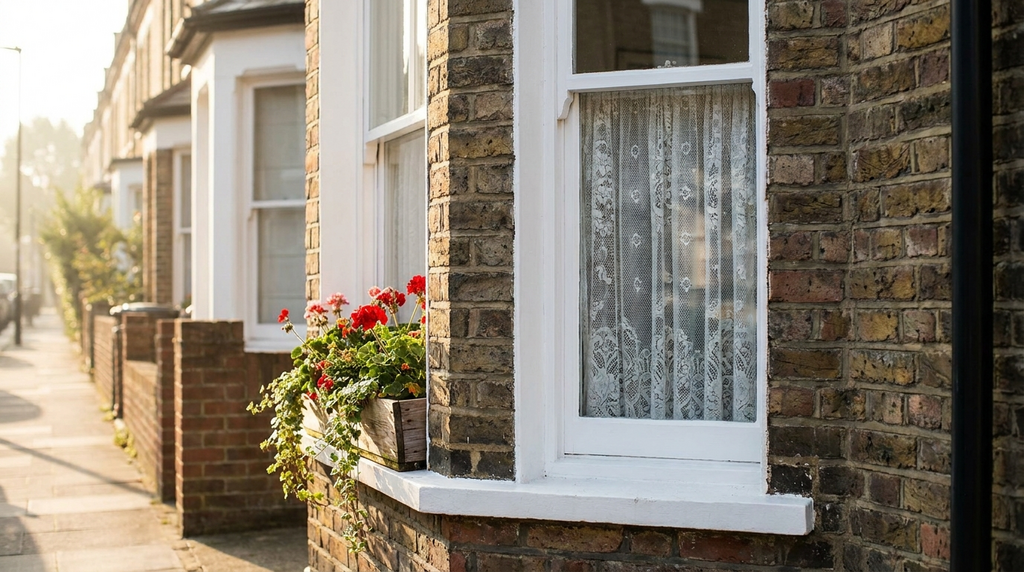
Shipston’s housing stock is a genuine mix. You’ll find Georgian and Victorian-era properties along the older town centre streets, think solid stone or brick construction with period sash windows. Then there are the mid-century semis and terraces built in the post-war decades, followed by more recent developments on the edges of town where modern construction standards already include double glazing as standard.
For homeowners in the older terraced properties near the town centre, the key consideration is window style. Many of these homes have original timber sash windows, and swapping them out for standard UPVC casements can look jarring and may trigger planning concerns (more on that shortly). Timber or aluminium alternatives that replicate the sash profile are often the smarter choice, even if they cost a bit more.
Detached homes on the newer residential roads, the kind built between the 1970s and 1990s, are generally more straightforward. Standard casement frames in UPVC are easy to source, the openings are regular sizes, and installation is typically a one-to-two day job for a full house.
A few practical realities specific to Shipston worth knowing:
- Access and parking, The town centre streets are narrow. If your home is on a tight terrace, getting a van and materials close enough can add a little time and cost to the job
- Installer distance, Shipston doesn’t have large glazing firms based locally. Most installers will travel in from Stratford-upon-Avon, Banbury, or Leamington Spa, which can affect scheduling and may add a small travel premium
- Stone and solid-wall homes, Some of the older properties have non-standard reveals and deep window embrasures that require custom-made frames or careful measurement
- Conservation zone sensitivities, Parts of the town centre fall under conservation area designation, which limits your frame material and colour choices
How Much Double Glazing Costs in Shipston-on-Stour and the Surrounding Area in 2026
Let’s get into the numbers. Prices below reflect what you’re realistically looking at when getting quotes from installers serving the south Warwickshire corridor, Stratford, Banbury, Evesham, and Leamington Spa firms all regularly work in Shipston.
| Property Type and Scope | UPVC Casement (Standard) | Timber or Aluminium | Heritage Sash Style |
|---|---|---|---|
| 2-bed terraced (6–8 windows) | £3,200 – £4,800 | £4,500 – £6,500 | £5,500 – £8,000 |
| 3-bed semi-detached (8–10 windows) | £4,200 – £6,000 | £5,800 – £8,500 | £7,000 – £10,500 |
| 3-bed detached (10–12 windows) | £5,000 – £7,500 | £7,000 – £10,000 | £8,500 – £13,000 |
| 4-bed detached (12–15 windows + doors) | £7,000 – £10,500 | £9,500 – £14,000 | £12,000 – £18,000 |
| Single window replacement (supply and fit) | £350 – £650 | £550 – £900 | £700 – £1,200 |
Shipston prices sit broadly in line with the West Midlands average, though you’ll typically pay £200–£500 more per project than someone in central Birmingham or Coventry, where installers have lower travel costs and more competitive local markets. Compared to Stratford-upon-Avon, where the tourist economy and higher property values push prices up, Shipston can actually be slightly cheaper to get work done.
Banbury-based installers (just 20km south) often quote competitively for Shipston jobs, so it’s worth getting quotes from both Warwickshire and Oxfordshire firms. Don’t assume your nearest option is your best value option.
Tip: Always get three quotes, and be specific about the glass specification you want. A U-value of 1.2 W/m²K or better should be your baseline ask, don’t accept vague descriptions like “energy efficient.”
How Shipston-on-Stour’s Weather and Location Affect Your Double Glazing Choices
Shipston sits in a genuinely favourable climatic pocket. Southern Warwickshire benefits from some of the best solar irradiance figures in the Midlands, around 1,100 to 1,200 kWh per square metre per year. Winters here are relatively mild compared to, say, the Pennines or even the Welsh borders, with heating degree days in the 1,200 to 1,500 range. That’s meaningfully lower than northern England.
What does that mean practically for your glazing choices? A few things:
- Solar gain is your friend, South and west-facing windows in Shipston can harvest meaningful passive solar heat in autumn and spring. Choosing glass with a slightly higher solar factor (g-value around 0.4–0.6) on these elevations can reduce your heating load without sacrificing light
- Overheating risk is real, That same irradiance means south-facing rooms in summer can get uncomfortably warm. If you have a south-facing extension or conservatory, consider solar control glass or external blinds as part of your glazing upgrade
- Wind exposure is moderate, Shipston is sheltered from coastal gales by its inland position. This means standard double glazing performs reliably without needing the extreme weather resistance ratings you’d specify for a coastal Cornish home
- Condensation management matters, The Stour valley can produce misty, damp mornings, particularly in autumn. Warm-edge spacer bars in your glazing units significantly reduce the chance of condensation forming at the edges of your windows
Rainfall sits around 700–800mm per year here, moderate and consistent through the seasons. Your frames need decent weathersealing but nothing extraordinary. UPVC performs perfectly well; so does powder-coated aluminium. Untreated timber needs more maintenance in Shipston’s damp autumns, so if you go the timber route, specify factory-painted or stained factory finish.
The Products and Options That Actually Work Best for Shipston Homes
Based on the local housing stock, climate, and the conservation sensitivities in play, here’s what genuinely performs well here rather than a generic product list:
For Victorian and Edwardian Terraces Near the Town Centre
Slim-profile aluminium double glazed sash windows are the standout recommendation. They replicate the look of original timber sashes closely enough to satisfy conservation officers, last decades without warping, and achieve U-values down to 1.0 W/m²K with the right glazing spec. Yes, they cost more than UPVC, but they’re appropriate for the building and unlikely to cause planning headaches.
For Post-War and 1970s–1990s Detached Homes
Standard UPVC A-rated casements remain excellent value and a proven performer. Look for frames carrying the BFRC Window Energy Rating of A or A+, with a central glass U-value of 1.0–1.2 W/m²K and warm-edge spacers (brands like Swisspacer are worth specifying by name). Argon-gas-filled units are now standard at this price point, krypton filling gives marginal gains at notably higher cost and isn’t worth it for most Shipston homes.
For South-Facing Extensions and Garden Rooms
Specify solar control glass (low-e coating with solar factor around 0.35–0.45). Saint-Gobain SGG Climatop or Pilkington Activ range are two products commonly available through Midlands glazing suppliers. This prevents the summer greenhouse effect while still letting winter sun through.
Glazing Unit Specification Worth Asking For
- Whole window U-value of 1.4 W/m²K or better (frame included)
- Centre-pane U-value of 1.0–1.2 W/m²K
- Argon gas fill as standard
- Warm-edge spacer bar (not standard aluminium spacers)
- Low-E glass coating (hard coat or soft coat, both work, soft coat is slightly better performing)
How to Find a Trustworthy Double Glazing Installer Near Shipston-on-Stour
This is honestly one of the trickier parts of the process when you live in a smaller town. Shipston doesn’t have a large local glazing industry of its own, so you’ll be drawing from a catchment that spans across to Stratford-upon-Avon, down to Banbury, across to Evesham, and north toward Leamington Spa. That’s not a problem, plenty of good firms work this corridor, but it means you need to vet carefully rather than just picking whoever has a van parked nearby.
Certifications that matter for double glazing:
- FENSA registration, This is non-negotiable. A FENSA-registered installer self-certifies that the installation complies with Building Regulations, saving you the cost of a building control inspection. Always check FENSA’s online register before committing
- TrustMark accreditation, Government-endorsed quality scheme. Particularly relevant if you’re applying for any grant funding
- GGF Membership, The Glass and Glazing Federation runs a deposit protection scheme and a conciliation service, useful backup if things go wrong
- Which? Trusted Trader or Checkatrade, Useful supplementary signals, but always read the actual reviews rather than just the star rating
Questions worth asking any installer before signing anything:
- Are you FENSA registered, and will you provide a FENSA certificate on completion
- What is the whole-window U-value of the units you’re proposing
- What spacer bar do you use, and is the gas fill argon as standard
- What guarantee do you offer on frames, glass units, and installation workmanship separately
- Do you have experience working in conservation areas in Warwickshire
Red flags to walk away from: pressure to sign on the day, vague quotes without specific U-value specifications, no evidence of insurance, and any suggestion that Building Regulations “don’t apply” to your job.
Lead times from Stratford and Banbury firms are typically four to eight weeks for a standard installation. During spring and summer this can stretch to ten or twelve weeks as demand peaks, so if you’re targeting an autumn installation, get quotes in June or July.
Grants and Funding That Could Reduce Your Costs in Shipston in 2026
The honest answer is that pure double glazing grants are narrower than many people expect, but there are still real routes to financial support worth exploring.
ECO4 (Energy Company Obligation)
ECO4 is the main government scheme channelled through energy suppliers, targeting lower-income households and those in fuel poverty. To qualify, you generally need to be receiving a qualifying benefit (such as Universal Credit, Pension Credit, or similar) and have a home rated EPC D or below. Since Shipston’s average EPC sits at Band D, a meaningful portion of the town’s residents could be eligible in principle. Double glazing is eligible under ECO4 as part of a package of measures. Contact your energy supplier directly or use the government’s ECO4 referral route at gov.uk.
Great British Insulation Scheme (GBIS)
The Great British Insulation Scheme closed on 31 March 2026. It funded insulation measures only and never covered windows or glazing. Shipston falls under Stratford-on-Avon District Council, and Band D properties on lower council tax bands may qualify. The Great British Insulation Scheme closed on 31 March 2026. It funded insulation measures only and never covered windows or glazing.
Warm Homes Local Grant
The government’s Warm Homes Local Grant scheme, running through local authorities, covers low-income owner-occupiers and private renters in EPC bands D to G. Stratford-on-Avon District Council manages this allocation for Shipston residents. It’s worth calling the council’s housing or environmental health team directly to ask what’s currently available, allocations vary and new tranches open periodically.
West Midlands Combined Authority Retrofit Programme
The WMCA has its own retrofit funding stream, though coverage and eligibility criteria vary by district. Warwickshire sits at the edge of this programme’s reach, so check with the council on whether Shipston postcodes qualify for any current WMCA-linked funding.
VAT on Energy-Saving Products
This is available to everyone and is worth remembering.Glazing is standard-rated for VAT at 20%. The zero rate for energy-saving materials covers insulation, heat pumps and solar panels; HMRC names secondary and double glazing as excluded (VAT Notice 708/6). On a £6,000 job, that’s a £1,200 saving already built into your quote, make sure any quote you receive reflects this and isn’t showing VAT on top.