Why Banbury Homeowners Are Turning to Double Glazing Right Now
There’s something quietly significant happening across Banbury’s residential streets. From the Victorian terraces near the town centre to the post-war semis spreading out towards Grimsbury and Easington, homeowners are finally tackling those rattling, draughty windows, and the timing makes a lot of sense.
Banbury sits in an interesting position. As an Oxfordshire market town with around 47,000 residents, it punches above its weight for property values, you’re in the South East, after all, where upgrading your home genuinely adds meaningful value. At the same time, a significant chunk of the housing stock is older, inefficient, and badly overdue for a glazing upgrade. The average EPC rating here is Band D, which tells you everything: there’s real energy to be saved, and real money to be made back over time.
Energy bills remain stubbornly high in 2026, and that’s the single biggest driver of enquiries. When you’re burning through around 10,800 kWh of gas a year, close to the national median, even modest improvements to your home’s thermal envelope start to feel urgent. Double glazing isn’t a silver bullet, but it’s one of the most visible, impactful upgrades you can make.
Add to that Cherwell District Council’s growing emphasis on retrofit and sustainability, and you’ve got a local policy environment that’s starting to actively support homeowners who want to improve their properties. Now genuinely is a good time to look into this.
What Double Glazing Actually Involves for a Typical Banbury Home
Most Banbury homes fall into two broad categories, and both come with their own quirks for double glazing installation.
The terraced and semi-detached properties that dominate areas like Grimsbury, Neithrop, and the streets around the Oxfordshire canal corridor were largely built between the 1880s and the 1970s. That means you’re typically dealing with either original timber sash or casement frames (in the older Victorian and Edwardian stock) or the increasingly tired aluminium and early uPVC frames fitted during the 1980s and 1990s.
Older Timber Frames, More Work, but Worth It
If your home is pre-1940s, the original frames may be single-skin brick reveals with relatively narrow openings. This occasionally means standard off-the-shelf double glazing units won’t sit flush without some remedial work to the surrounding masonry. It’s not a disaster, but it does mean your installer needs to measure carefully and order bespoke units rather than grabbing something from a van.
Timber frames also need to be assessed for rot before any new glazing goes in. A good installer will flag this; a bad one won’t mention it until you’ve already committed.
1980s and 1990s Homes, Often the Easiest Job
For the semis and terraces built in developments like Hardwick Hill or around the Southam Road corridor, installation is typically straightforward. Existing uPVC frames are usually in standard sizes, access is easy, and replacement is often a half-day job per room. These homes tend to benefit most quickly from an upgrade, too, early uPVC units with original glass have virtually no insulating value by modern standards.
Parking and Access on Banbury’s Tighter Streets
One practical consideration that often catches people off-guard: many of Banbury’s older terraced streets have limited parking and narrow access. Getting a delivery van close enough to the property, especially in areas like the town centre conservation streets, can add time and occasionally cost to a job. Mention this upfront when getting quotes.
How Much Double Glazing Costs in Banbury and the South East in 2026
Let’s talk real numbers. Double glazing costs in Banbury sit slightly above the national average. This reflects the South East premium on labour and materials, but they’re noticeably more competitive than central London or parts of Surrey. Here’s what you can realistically expect to pay in 2026.
| Property Type | Number of Windows | Standard uPVC (A-rated) | Premium uPVC or Aluminium (A+ rated) | Timber Double Glazed |
|---|---|---|---|---|
| Mid-terrace (2-bed) | 5–7 | £3,200 – £4,500 | £4,800 – £6,200 | £6,500 – £9,000 |
| Semi-detached (3-bed) | 8–10 | £4,500 – £6,200 | £6,500 – £8,500 | £9,000 – £13,000 |
| Semi-detached (4-bed) | 11–14 | £6,000 – £8,200 | £8,500 – £11,500 | £12,000 – £17,000 |
| Conservation area surcharge | , | +£500 – £1,200 | +£800 – £1,500 | Often required, no surcharge |
Why do prices vary here specifically? A few factors push Banbury costs above, say, Daventry or Southam prices. Labour rates in Oxfordshire reflect South East employment costs. Access issues on older town-centre streets can add time. And if you’re in or near one of Banbury’s conservation areas, you may need specific glazing profiles or secondary glazing instead, both of which carry a premium.
Even so, Banbury’s position within easy reach of installers serving Leamington Spa, Daventry, and Shipston-on-Stour means you have genuine competition in the market. Getting three quotes from local companies covering this cluster of towns is entirely realistic and will save you money.
Compared to the wider South East average of £5,000–£7,000 for a three-bedroom semi, Banbury sits at the lower end, which is good news for you.
How Banbury’s Weather and Location Shape Your Double Glazing Choices
Banbury’s climate is genuinely helpful context for making the right product choice. You’re in central-southern England, which means milder winters than the Midlands or North, moderate rainfall (typically 750–850mm a year), and importantly, excellent solar irradiance. At 1,100–1,200 kWh per square metre annually, you’re getting some of the best natural light in the UK.
Milder Winters Mean You Have More Flexibility
With 1,200–1,500 heating degree days per year, Banbury doesn’t face the brutal thermal demands of, say, northern Scotland. That means you don’t necessarily need to go straight for the most expensive triple glazing to achieve meaningful savings. A well-specified A+ rated double glazing unit will do an excellent job here without the premium cost of triple glazing.
Solar Gain, A Hidden Advantage Worth Protecting
Because Banbury gets good sunshine, your south-facing windows are actually an asset for passive solar heating in winter. The right glazing specification can let you keep that heat in. Look for units with a high g-value (solar heat transmittance) on south-facing elevations, around 0.5 or above, so you’re not inadvertently blocking free winter warmth while trying to insulate.
On east and west-facing windows, a slightly lower g-value helps prevent summer overheating, relevant if you’re in one of Banbury’s newer-build estates where large window openings are common.
Wind and Rain, Manageable, but Don’t Cut Corners
Banbury is reasonably sheltered from coastal weather systems, but you’ll still see driving rain from the south-west, particularly in winter. Make sure any quote includes quality weather seals and drainage channels within the frame. This is an area where cheaper installer quotes sometimes cut corners, don’t let them.
The Products and Options That Actually Perform Well in Banbury
Here’s what genuinely works for Banbury’s housing stock, based on the conditions and property types we’ve talked about.
uPVC Casement Windows, The Workhorse Choice
For the majority of Banbury semis and terraces, white uPVC casement windows with A+ energy ratings represent the best balance of cost, performance, and longevity. Look for units with a U-value of 1.2 W/m²K or better (the lower the better). Many installers in this area now offer 1.0 W/m²K as standard, that’s well worth the modest step-up in cost.
Argon-Filled Units with Low-E Glass, Non-Negotiable
Insist on argon gas-filled sealed units with low-emissivity (low-E) coated glass. In 2026, this is standard on any reputable installation, but it’s worth confirming. The low-E coating reflects heat back into the room during winter, particularly valuable in Banbury’s older draughty terraces where heat loss through windows has historically been significant.
Flush Casement Profiles for Conservation and Older Streets
If you’re in or near Banbury’s town centre conservation zone, or you simply want a period-appropriate look on a Victorian or Edwardian property, flush casement uPVC profiles are now excellent. They sit flat when closed, mimicking traditional timber windows convincingly. Several manufacturers supply these to installers across the Banbury–Leamington Spa corridor.
Aluminium, Worth Considering for Modern Extensions
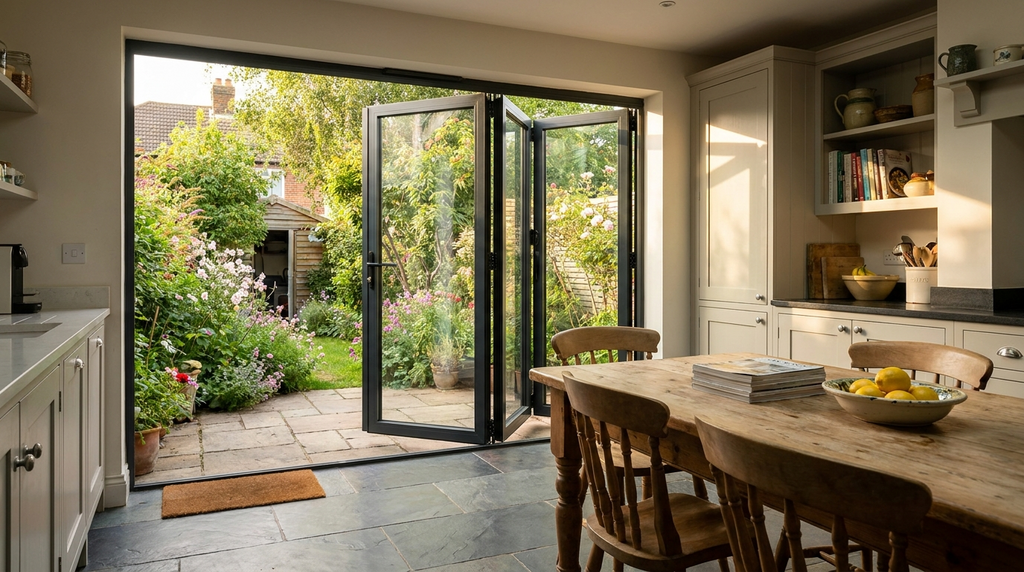
If you’ve got a kitchen extension or a more contemporary part of your home, slim-profile aluminium double glazing looks far better than uPVC and now achieves comparable U-values. It costs 20–30% more, but on a smaller number of large panes, that premium is often justified.
- Recommended U-value, 1.2 W/m²K or below for windows
- Recommended g-value, 0.5+ for south-facing, 0.35–0.45 for east/west
- Gas fill, Argon as minimum; krypton for maximum performance
- Frame colour, Anthracite grey is popular here but check conservation rules before ordering
- Guarantee minimum, 10 years on sealed units, 5 years on installation
How to Find a Trustworthy Double Glazing Installer Near Banbury
The Banbury area has a healthy installer market, but as with anywhere, quality varies enormously. Here’s how to separate the reliable tradespeople from the ones who’ll leave you with draughty frames and a missed deadline.
The Certifications That Actually Matter
FENSA registration is the most important thing to check. Any installer replacing windows in England must be FENSA-registered (or submit a building regulations application in your name). FENSA registration means the installer self-certifies compliance with building regs, if they’re not registered, walk away.
TrustMark accreditation is the government-endorsed quality scheme for home improvement trades. Not every good installer has it, but it’s a strong positive signal. Which? Trusted Traders is another useful benchmark for Banbury-area companies.
Questions Worth Asking Before You Sign Anything
- Are you FENSA-registered, and will you provide the certificate on completion
- Who manufactures your sealed units and what U-value do they achieve
- Is the quote fully inclusive of waste disposal and making good around frames
- Do you cover Banbury as a primary area or are you coming from further afield
- What’s your current lead time for installation
Lead Times and Coverage in 2026
Most established installers based in or around Banbury are booking 6–10 weeks out at present. Installers coming from Leamington Spa (28km) or Daventry (25km) may offer slightly shorter waits, the local market serves this cluster of towns as a shared region. Be wary of anyone who can start next week; that usually signals they’re not busy for a reason.
Red Flags to Watch For
- High-pressure same-day discounts, a genuine quote doesn’t expire overnight
- No physical business address (a mobile number and email only)
- Quotes that don’t specify the glass specification or frame brand
- No mention of building regulations compliance
Grants and Funding That Could Reduce Your Costs in Banbury in 2026
The funding landscape for double glazing has tightened compared to previous years, but there are still real routes to financial support, particularly if your home is energy-inefficient or your household income is lower.
ECO4, The Most Accessible Route for Many Banbury Households
The Energy Company Obligation (ECO4) scheme funds energy efficiency upgrades, including windows, for households on qualifying benefits or with a low EPC rating. Given that Banbury’s average EPC is Band D, a meaningful number of homes here could qualify on energy grounds alone.
To check eligibility, contact your energy supplier directly or use the government’s ECO4 eligibility checker. If you receive Universal Credit, Pension Credit, or certain other benefits, you may qualify for fully funded or heavily subsidised double glazing as part of a wider home upgrade.
Great British Insulation Scheme (GBIS)
The Great British Insulation Scheme closed on 31 March 2026. It funded insulation measures only and never covered windows or glazing. The scheme can contribute to glazing costs as part of a broader insulation package. It’s administered through energy suppliers and local council referral routes; Cherwell District Council can signpost you to local delivery partners.
Cherwell District Council Retrofit Support
Cherwell District Council participates in Oxfordshire-wide retrofit schemes, sometimes with additional local funding through the Oxfordshire Local Energy Strategy. It’s worth contacting the council directly to ask about any current pilot schemes or area-based grants, these often aren’t widely advertised but can be accessed by residents who ask the right questions.
Warm Homes Plan
The government’s Warm Homes Plan in 2026 continues to target lower-income households and Band D–G properties. Eligible homeowners can receive support through local authority delivery routes. Check gov.uk for the latest eligibility criteria, as the scheme evolved from earlier iterations and thresholds have been updated.
Insider tip, grants rarely cover glazing as a standalone measure. They typically require it to be part of a package that includes insulation or heating upgrades. If you’re already thinking about your loft or cavity walls, combining it all in one application significantly improves your chances of support.
Planning Permission and Regulations, What Banbury Homeowners Need to Know
For most Banbury residents, replacing windows doesn’t require planning permission. But there are important exceptions worth understanding before you order anything.