Why Shrewsbury Homeowners Are Looking at Double Glazing Right Now
If you live in Shrewsbury, you already know the town has a character unlike anywhere else in the Midlands. The loop of the Severn, the mix of Tudor timber frames and Victorian terraces, the way the town sits in a natural bowl, it all adds up to a housing stock that’s wonderfully varied but, in many cases, genuinely leaky for heat.
With the average Shrewsbury home sitting on EPC Band D and gas bills running close to the national median, a lot of residents are realising that their windows are one of the biggest sources of heat loss they can actually do something about quickly. Double glazing isn’t glamorous, but it’s one of the most impactful upgrades you can make to a typical semi-detached or terraced home in this town.
There’s also a growing awareness around Shrewsbury’s conservation areas, particularly in the town centre and parts of Belmont and Kingsland, where older single-glazed windows are still common. Shropshire Council has updated its guidance on sympathetic replacements, and more homeowners are discovering that well-chosen double glazing can actually be approved even in sensitive locations. More on that below.
Energy bills remain high compared to pre-2022 levels, and with a typical Shrewsbury household burning through 11,200 kWh of gas each year just to keep warm, reducing heat loss through windows is one of the most straightforward ways to chip away at those costs.
What Double Glazing Actually Involves for a Typical Shrewsbury Home
Most Shrewsbury homes fall into two camps, the interwar semis and terraces built in the 1930s and 1940s that spread out along roads like Copthorne Road, Sundorne Road, and Belle Vue, and the Victorian and Edwardian properties closer to the town centre and inner suburbs like Castlefields and Coleham. Each presents its own practical realities for double glazing.
The 1930s and Post-War Semis
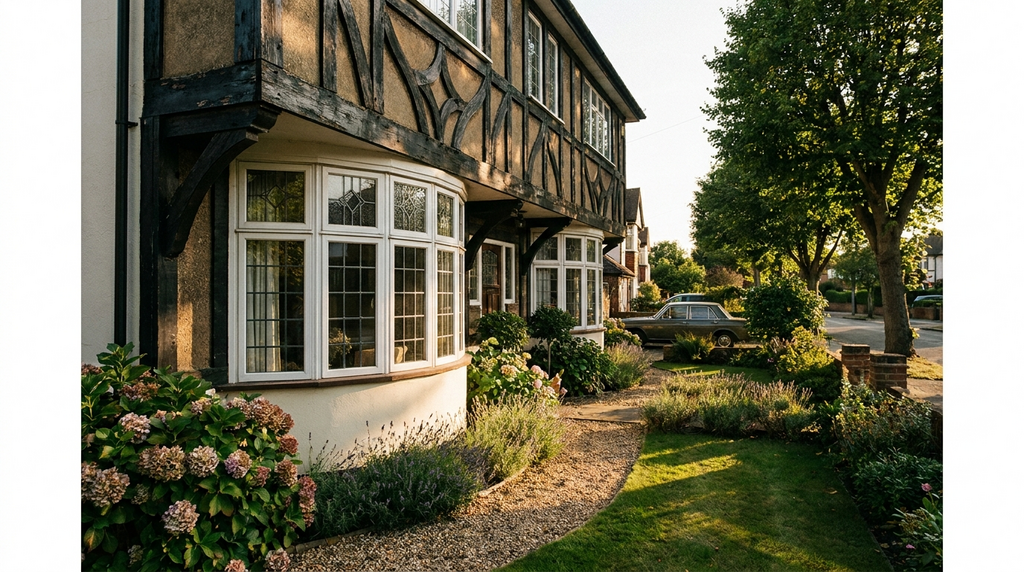
These homes typically have larger original bay windows at the front and straightforward casement or sash styles elsewhere. The good news is that most of these properties have standard-sized openings, which keeps costs down, fabricators can often use near-standard units without too much custom work. The bad news is that decades of settlement mean frames can be out of square, and you might need some remedial work to the reveals before installation.
If your home is one of the many 1950s or 1960s council-built semis that were later sold under Right to Buy, common in areas like Harlescott and Meole Brace, you may already have had one round of double glazing fitted in the 1990s or early 2000s. That first generation of sealed units is now well past its effective life, and you’ll likely see the telltale fogging between panes that signals the argon has escaped and the unit has failed. Replacing those older units with modern A-rated or A+-rated double glazing is well worth doing.
Victorian and Edwardian Terraces
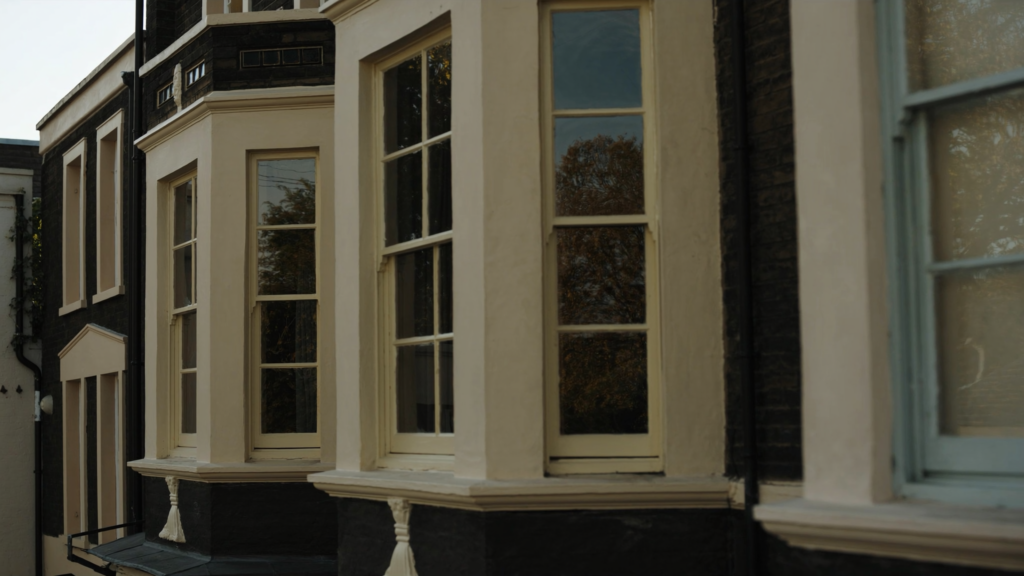
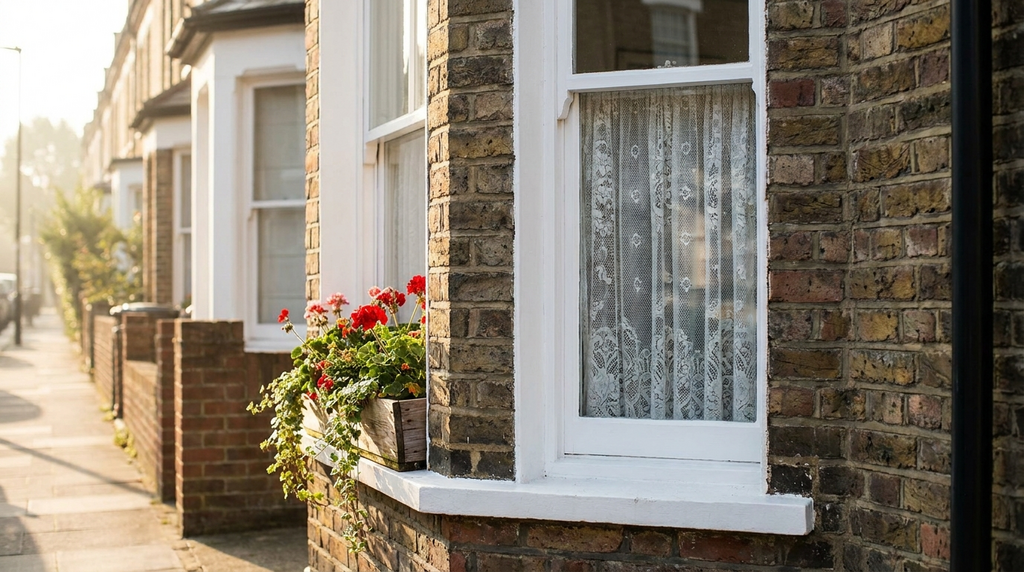
For terraced homes in Belmont, Belle Vue, or the streets around Kingsland Road, the situation is more nuanced. You’re looking at tall sash windows in many cases, often with original timber frames. Replacing these requires either full frame replacement or, where the frames are still structurally sound, a sash replacement system that drops new glazed panels into the existing frame. The latter can be a more sympathetic and cost-effective route, particularly in conservation-adjacent streets.
Access can be a genuine challenge in tightly packed terraces, fitters may need to work from inside for upper floors, adding time and therefore cost to the job. Always check this with your installer upfront.
How Much Double Glazing Costs in Shrewsbury and the West Midlands Area in 2026
Costs in Shrewsbury sit comfortably below London and the South East but are broadly in line with the wider West Midlands. Labour rates here are moderate, you’ll typically pay less than in Birmingham itself, but slightly more than in very rural areas of Shropshire where competition among installers thins out. Nearby towns like Telford (21km) and Oswestry (26km) tend to have similar pricing, though Telford’s larger installer base can sometimes drive slightly sharper quotes.
| Property Type | Number of Windows | Standard uPVC Double Glazing | Flush Casement or Timber-Look uPVC | Aluminium Double Glazing |
|---|---|---|---|---|
| Mid-terrace (2 bed) | 4–6 windows | £2,800 – £4,200 | £3,500 – £5,000 | £4,500 – £6,500 |
| Semi-detached (3 bed) | 6–9 windows | £4,200 – £6,500 | £5,200 – £7,800 | £6,500 – £9,500 |
| Semi-detached with bay (3 bed) | 7–10 windows | £5,000 – £7,500 | £6,000 – £9,000 | £7,500 – £11,000 |
| Detached (4 bed) | 10–14 windows | £6,500 – £10,000 | £8,000 – £12,500 | £10,000 – £16,000 |
| Single replacement (any type) | 1 window | £400 – £700 | £550 – £900 | £700 – £1,200 |
These figures include supply, fitting, and VAT. They assume standard access, if scaffolding is needed for upper floors (more common on Shrewsbury’s older three-storey terraces), expect to add £400–£800 depending on the scaffold hire period. Conservation area work with bespoke profiles adds roughly 15–25% to the base cost.
Compared to the West Midlands average, Shrewsbury sits broadly on par, perhaps 5% lower than Birmingham due to lower labour overheads, but within the same ballpark as Telford and Oswestry. Church Stretton and Welshpool installers occasionally quote higher for rural delivery costs, so it’s always worth getting quotes from Shrewsbury-based companies first even if you’re on the edge of town.
How Shrewsbury’s Weather and Location Affect Your Double Glazing Choices
Shrewsbury sits in a river valley, which shapes its microclimate in ways that matter for your windows. The Severn loop creates a degree of natural shelter from the stronger westerly winds that batter properties in higher-ground Shropshire towns. However, that valley position also means temperature inversions are common, cold air pools overnight, and frost settles more readily in low-lying parts of town like Coleham, Frankwell, and Castlefields than it does on the higher ground of Sundorne or Bayston Hill.
With 1,500–1,800 heating degree days per year, Shrewsbury has a genuine heating demand, not extreme, but consistent enough that good window insulation pays back steadily over time. The town receives around 1,000–1,200 sunshine hours annually, which means south-facing windows have reasonable solar gain potential in winter. This is worth factoring in, don’t over-specify solar control glass on south-facing elevations where you actually want that passive warmth in January.
Rainfall sits at 700–1,000mm per year, moderate for England, but enough that drainage details around window sills and cills matter. Make sure your installer uses proper flashing and sealant that accommodates thermal movement. Cheaper installations sometimes skimp on this, and Shrewsbury’s temperature swings between summer and winter are enough to cause seal failures within a few years if the work is done poorly.
The town isn’t coastal, so extreme wind-driven rain isn’t the primary concern, but east-facing windows can catch cold easterly winds in winter, particularly on higher streets above the river valley. Specifying windows with a good weather rating (Class 3 or above for air permeability, Class 5A for water tightness) is sensible for exposed elevations.
The Products and Options That Work Best Here
Given Shrewsbury’s mix of housing eras, climate profile, and the prevalence of conservation-sensitive streets, here’s what we’d genuinely recommend rather than a generic product list.
For 1930s–1960s Semis
- White or cream uPVC casement windows with sculptured profiles, These suit the era well and are the most cost-effective option. Look for a minimum U-value of 1.2 W/m²K, ideally 1.0 or below with warm-edge spacer bars.
- A-rated double glazing as a minimum, The standard 4-16-4mm argon-filled unit is fine here. Triple glazing is harder to justify economically in Shrewsbury’s moderate climate unless you’re doing a deep retrofit alongside wall insulation.
- Trickle vents, Mandatory under current Building Regulations for replacement windows, and genuinely useful in these homes which can suffer condensation issues in winter.
For Victorian and Edwardian Terraces
- Flush casement uPVC in a heritage finish (Chartwell Green, Anthracite Grey, or Cream), These sit much more sympathetically against period brickwork than standard chamfered profiles and are increasingly accepted by Shropshire Council’s planning officers even in conservation-adjacent streets.
- Slimline double glazing for sash replacements, A 28mm unit in a slim sash profile maintains the visual proportions of the original window far better than a chunky modern casement bolted into an old opening.
- Secondary glazing as a conservation area alternative, If you’re within one of Shrewsbury’s conservation areas and can’t get approval for full replacement, secondary glazing fitted internally to the existing single-glazed window can achieve a U-value of around 1.8–2.0 W/m²K and costs significantly less than full replacement.
Glazing Specifications Worth Knowing
- Warm-edge spacer bars reduce cold-edge condensation, ask for these specifically, they add minimal cost
- Low-E (low emissivity) glass coating is standard on most modern units, confirm it’s included
- Argon gas fill improves the U-value from around 2.8 (air-filled) to 1.2–1.4, always ask for argon
- Solar control glass is worth considering on west-facing windows that get strong afternoon sun in summer
How to Find a Trustworthy Double Glazing Installer Near Shrewsbury
Shrewsbury has a reasonable number of local installers, and the proximity to Telford (21km) means you can draw on a larger pool of West Midlands-based companies for competitive quotes. However, the double glazing trade has more than its share of high-pressure sales tactics, so here’s what to look for and what to avoid.
Certifications That Matter
- FENSA registration, This is the key one for windows and doors. FENSA-registered installers self-certify compliance with Building Regulations, saving you the cost of a building notice. Always check the FENSA register online before signing anything.
- TrustMark, A government-endorsed quality scheme. Not mandatory, but a good sign.
- CERTASS, An alternative to FENSA, equally valid but less well known. A registered CERTASS installer is just as trustworthy.
- Which? Trusted Trader or Checkatrade verification, Useful secondary checks, though they’re no substitute for the above.
Questions to Ask Before You Commit
- Are you FENSA or CERTASS registered and will you issue a certificate on completion
- What U-value will the finished installation achieve
- Do the frames include trickle vents to comply with current Building Regulations
- What is your process for surveying and handling out-of-square openings
- What is the warranty on frames, sealed units, and hardware separately
Red Flags to Walk Away From
- A quote that expires “tonight only” or same-day pressure to sign
- No mention of FENSA registration
- Unwillingness to provide a written, itemised quote
- Dramatically lower price than all other quotes, usually means inferior units, poor sealing, or a company that won’t be around for warranty claims
Lead times in the West Midlands currently run at around 4–8 weeks for standard installations, longer for bespoke conservation profiles. Companies covering both Shrewsbury and the Telford corridor tend to have more fabrication capacity and slightly shorter lead times than smaller local-only traders.
Grants and Funding That Could Reduce Your Costs in 2026
The honest picture in 2026 is that dedicated grants specifically for double glazing are limited, but there are routes to funding worth exploring, particularly if your home is poorly insulated overall or your household is on a lower income.
ECO4 (Energy Company Obligation)
ECO4 is the main government scheme for energy efficiency upgrades in lower-income households. It’s delivered by the major energy suppliers. Windows can be funded under ECO4, but typically only as part of a broader package of measures, not as a standalone installation. To qualify, your household generally needs to receive a means-tested benefit such as Universal Credit, Pension Credit, or similar, or your home needs to be in EPC Band D or below (which most Shrewsbury homes are). Contact your energy supplier or use the government’s Simple Energy Advice service to check eligibility.
Great British Insulation Scheme (GBIS)
GBIS focuses primarily on insulation measures, but in some cases glazing improvements can be included where they form part of an insulation-led retrofit. The Great British Insulation Scheme closed on 31 March 2026. It funded insulation measures only and never covered windows or glazing. Shropshire Council can sometimes help with referrals into this scheme.
Shropshire Council and the West Midlands Warm Homes Programme
Shropshire Council administers a Warm Homes programme that helps lower-income residents with energy efficiency measures. Eligibility criteria change, so contact the council’s housing team directly or visit the Shropshire Council website to check current availability. The West Midlands Combined Authority also operates its own retrofit funding stream, though coverage for Shropshire (which sits outside the WMCA boundary) can be limited, always worth checking whether any spillover funding applies to your area.
VAT
Double glazing installation is charged at the