Why Wakefield Homeowners Are Seriously Considering Double Glazing Right Now
There’s a particular kind of cold that settles into a Wakefield home in January, the kind that creeps through single-glazed windows on a Victorian terrace in Eastmoor or rattles through the frames of a 1960s semi in Sandal. Energy bills in this city have climbed enough that ignoring draughty windows is no longer an option for most families.
Wakefield sits right at the national average for energy consumption, with households burning through around 12,000 kWh of gas per year. That’s not surprising given the area’s building stock, a significant proportion of homes here were built before cavity wall insulation or double glazing were standard, and a Band D EPC rating across the city tells you there’s real room for improvement.
What’s also driving interest right now is the cluster effect. When your neighbours in Agbrigg or Lupset start replacing windows and you notice they’re not running their heating as hard, word travels fast. Wakefield Metropolitain District Council has also been active in promoting energy efficiency through local schemes, which means more homeowners are actively researching their options than ever before.
What Double Glazing Actually Involves for a Typical Wakefield Home
Most homes in Wakefield are either terraced or semi-detached, and many of them were built between the 1890s and the 1970s. That range matters enormously when you’re planning a double glazing installation, and it’s worth understanding before you get any quotes.
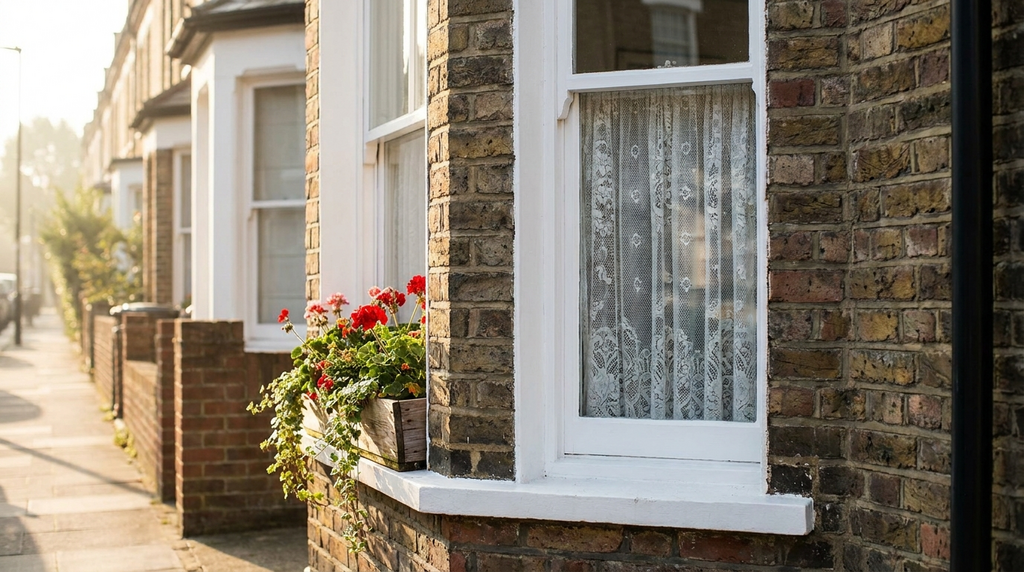
The Victorian and Edwardian terraces you’ll find throughout Alverthorpe, Portobello, and around the city centre typically have timber sash or casement windows in openings that weren’t designed with modern frames in mind. Replacing these requires careful measurement and sometimes bespoke sizing, which adds to your costs compared to a more straightforward job on a 1980s estate house.
Post-war semis, the bread and butter of areas like Kettlethorpe, Durkar, and Crigglestone, are generally more straightforward. Standard-sized openings, accessible from the ground on most elevations, and no heritage complications. If your home falls into this category, you’re in the easier and cheaper end of the Wakefield market.
A few practical things to expect regardless of property type:
- Most full-house installations take one to three days, depending on the number of windows
- Scaffold may be needed for upper-floor rear windows on some terraced properties where rear access is limited, a common issue on back-to-back streets near the city centre
- Older timber frames may reveal rot or structural surprises once removed, so budget a contingency of around 10–15%
- If you’re in a mid-terrace, installers need access along the side of the property or through the house, this adds a little time but rarely causes major problems
One insider tip, if your home was built before 1919, have a surveyor or an experienced installer assess the lintel condition above your window openings before committing to a quote. Wakefield has a lot of older housing stock where lintels have shifted over the decades, and catching this early saves a nasty surprise mid-installation.
How Much Double Glazing Costs in Wakefield and the Yorkshire and the Humber Area in 2026
Labour costs in Wakefield sit comfortably below London and the South East, but they’re broadly in line with the Yorkshire and the Humber regional average. You’re looking at slightly lower rates than Leeds (around 8–12% cheaper for comparable work) but very similar pricing to Dewsbury, Batley, and Pontefract installers operating in the same market.
Most reputable Wakefield-based window companies also cover the surrounding cluster of towns, expect the same price list if you’re in central Wakefield or out towards Normanton or Ossett.
| Property Type | Number of Windows | uPVC Double Glazing | Timber-Effect uPVC | Aluminium Double Glazing |
|---|---|---|---|---|
| Small terrace (2-bed) | 5–6 windows | £2,800–£3,800 | £3,400–£4,600 | £4,200–£5,500 |
| Mid terrace (3-bed) | 7–9 windows | £3,800–£5,200 | £4,600–£6,200 | £5,800–£7,800 |
| Semi-detached (3-bed) | 8–10 windows | £4,200–£5,800 | £5,000–£7,000 | £6,500–£9,000 |
| Semi-detached (4-bed) | 10–12 windows | £5,000–£7,200 | £6,200–£8,500 | £8,000–£11,500 |
| Detached (4-bed) | 12–15 windows | £6,500–£9,500 | £8,000–£11,500 | £10,500–£15,000 |
These prices include supply, fitting, removal of old frames, and disposal. They do not include any required scaffolding (budget £600–£1,200 if needed) or lintel repairs. The Yorkshire and the Humber regional average runs about 5–10% below the national average, so Wakefield homeowners are in a reasonable position compared to the UK as a whole.
How Wakefield’s Weather and Location Shape the Right Double Glazing Choice
Wakefield’s position in West Yorkshire gives it a climate that’s firmly in the “moderate but don’t underestimate it” category. Winters average around 1,600–1,700 heating degree days annually, which is close to the national median but meaningfully colder than cities further south. You’re not on the exposed Pennine flank the way Huddersfield is, but you’re not sheltered like parts of East Yorkshire either.
Rainfall sits between 700 and 900mm per year, and while you’re not dealing with the battering that coastal or upland areas face, persistent damp winters mean frame seals and drainage channels matter enormously. Cheap uPVC with poor-quality gaskets will start to fail within five to eight years in Wakefield’s conditions, worth bearing in mind when comparing quotes at either end of the price spectrum.
Wind exposure is moderate, but northerly and north-westerly winds in winter can be sharp, particularly on the higher ground towards Crigglestone and Sandal. Homes facing north or north-west benefit most from triple glazing or high-performance warm-edge spacer bars in their double-glazed units.
Sunshine hours of around 1,100–1,200 per year means there’s a genuine solar gain argument for south-facing rooms. Choosing glass with a higher solar gain coefficient (g-value) on your south-facing windows, while using low solar gain glass on west-facing windows to avoid summer overheating, is the kind of nuanced decision that pays back over the long term here.
The Products and Options That Actually Perform Well in Wakefield Homes
Based on what actually works in this area’s housing stock, here’s what’s worth prioritising when you’re specifying your windows.
Frame material
For the vast majority of Wakefield homes, particularly the terraces and semis that make up most of the city’s housing, white or woodgrain uPVC is the practical, cost-effective choice. It handles the local damp winters well, requires minimal maintenance, and delivers strong thermal performance. Aluminium is worth considering for contemporary extensions or where slim sightlines matter aesthetically.
Timber windows are period-appropriate for Victorian and Edwardian homes in places like Thornes or Agbrigg, but require ongoing maintenance that uPVC simply doesn’t. Timber-effect uPVC is a very reasonable middle ground.
Glazing specification
- U-value of 1.2 W/m²K or below, the Building Regulations minimum is 1.4, but push for better
- Warm-edge spacer bars, these reduce condensation on the inner pane and improve the edge-of-glass U-value significantly; well worth specifying in Wakefield’s damp winters
- Argon gas fill, standard in most decent units now, but always confirm it’s included
- Low-E coating (soft coat preferred), reduces heat loss through the glass itself
- A-rated or above BFRC energy rating, aim for A+ on south-facing windows if budget allows
Triple glazing is increasingly discussed but is really best suited to homes that are already well-insulated elsewhere. If you’ve still got uninsulated cavity walls or a draughty loft, triple glazing on the windows won’t move the needle much. Sort those first, then revisit if budget allows.
How to Find a Trustworthy Double Glazing Installer Near Wakefield
The good news is that installer coverage around Wakefield is strong. You’re within a sensible catchment area for companies based in Leeds, Dewsbury, Barnsley, and Pontefract, which means healthy competition and reasonable lead times, typically four to eight weeks for a full installation in 2026.
Here’s what to look for when vetting anyone who quotes for your work:
- FENSA registration, this is the most important one for window replacement. FENSA installers self-certify compliance with Building Regulations, saving you from needing a separate building control inspection
- TrustMark accreditation, government-endorsed quality scheme, increasingly worth having if you’re using any grant funding
- CERTASS membership, an alternative to FENSA for self-certification, equally valid
- Insurance-backed guarantees (IBGs), reputable companies offer 10-year guarantees backed by an independent insurer, not just themselves
Red flags to watch for in the Wakefield market, and they do exist here as everywhere:
- Pressure to sign on the day with a “today only” discount
- No physical address or only a mobile number
- Quotes with no detailed breakdown of what’s included
- No mention of FENSA or self-certification
- Very low quotes with vague specifications, often means cheap glass units that fail within a few years
Ask any potential installer whether they use subcontractors for fitting or employ their own teams directly. Companies that employ directly tend to have more consistent quality control, particularly important for older Wakefield properties where non-standard sizes are more common.
Grants and Funding That Could Reduce Your Costs in 2026
Double glazing sits in an interesting position with grants, it’s often funded as part of a broader energy efficiency package rather than as a standalone measure. Here’s the honest picture for Wakefield residents in 2026.
ECO4 (Energy Company Obligation)
If your household receives qualifying benefits, including Universal Credit, Pension Credit, or Child Tax Credit, and your home is EPC Band D or below (which covers most of Wakefield), you may qualify for fully or heavily subsidised window upgrades under ECO4. Contact Wakefield Council’s energy efficiency team or the government’s ECO4 referral route directly.
Great British Insulation Scheme (GBIS)
GBIS focuses primarily on insulation but can include windows as part of a whole-house improvement. Band D homes in lower council tax bands may qualify. Worth checking your eligibility as Wakefield has a significant proportion of Band A–D properties in areas like Eastmoor, Lupset, and Pinderfields that align with the scheme’s targeting criteria.
Wakefield Council Local Schemes
Wakefield Metropolitan District Council has historically operated Affordable Warmth and Healthy Homes programmes for residents in fuel poverty or with health vulnerabilities. Availability and funding change year on year, visit the council’s website or call their housing standards team directly to confirm what’s active in 2026. Private rented properties in the district may also trigger landlord obligations under Minimum Energy Efficiency Standards enforcement.
Glazing is standard-rated for VAT at 20%. The zero rate for energy-saving materials covers insulation, heat pumps and solar panels; HMRC names secondary and double glazing as excluded (VAT Notice 708/6).
Make sure any quote you receive reflects this correctly, as some smaller traders still quote incorrectly.
Planning Permission and Regulations for Wakefield Properties
For the majority of Wakefield homeowners, replacing windows with double glazing falls under permitted development rights, meaning you don’t need planning permission as long as the replacement windows are of a similar appearance to the originals.
However, there are important exceptions you need to know about before proceeding.
Conservation areas, Wakefield has several designated conservation areas, including parts of the city centre around the cathedral and Bull Ring, as well as some older residential areas. If your property sits within one of these, you’ll need to apply for planning permission before replacing windows, and the council will typically require materials and styles that preserve the character of the area. Standard white uPVC is usually not acceptable here, timber or timber-effect may be required.
Listed buildings, Wakefield has a notable number of listed properties, particularly around the historic core. If your home is listed at any grade, you’ll need Listed Building Consent as well as planning permission. Always check your property’s status on the Historic England register before assuming permitted development applies.
Building Regulations, regardless of planning requirements, all window replacements must comply with Building Regulations Part L (energy efficiency) and Part K (safety glazing where relevant). A FENSA or CERTASS registered installer handles this automatically through self-certification, which is one of the key reasons to use a registered firm.
If you’re unsure whether your home falls within a conservation area or is listed, Wakefield Council’s planning portal allows you to search by address, a five-minute check that could save you significant hassle later.
What You Will Actually Save, Honest Numbers for a Wakefield Home
Let’s be straightforward here, because too many window company websites promise savings that don’t materialise in real life. Here’s a realistic picture based on Wakefield’s actual energy data.
A typical Wakefield home burning 12,000 kWh of gas per year loses heat through multiple routes, the roof, walls, floor, and windows. Windows typically account for around 10–15% of total heat loss in a reasonably well-maintained property. That means upgrading from old single glazing to modern A-rated double glazing could reduce your heating demand by roughly 10–12%.
At current gas prices, that works out as follows:
- Conservative annual saving (terraced home, 5–6 windows, replacing single glazing), £120–£180 per year
- Moderate saving (semi-detached, 8–10 windows, replacing poor early double glazing), £90–£140