Carmarthen, Wales’s Oldest Town and What That Means for Your Home
Carmarthen holds a remarkable distinction, it’s often cited as the oldest town in Wales, with Roman roots stretching back nearly two thousand years. But while the town’s history is extraordinary, much of its housing stock tells a more recent story. The majority of homes here were built between the 1920s and 1980s, with solid concentrations of Victorian and Edwardian terraces running along streets like Priory Street and the areas around Lammas Street, and post-war semi-detached estates spreading out towards Johnstown, Pensarn, and Cwmffrwd.
That mix matters enormously when you’re thinking about eco improvements. Older terraces in the town centre tend to be solid-walled and draughty. The newer semis on the outskirts are often cavity-walled but frequently under-insulated. Both have real potential, and with energy bills still painfully high, getting your home working smarter is genuinely one of the best financial decisions you can make right now.
Carmarthen sits in the Tywi Valley, cradled by hills that rise steeply on three sides. It’s sheltered enough to avoid the worst Atlantic weather, but it still sits firmly in the wet and windy west of Wales, which shapes almost every choice you’ll make about insulation, ventilation, and even which renewable technology works best here. For the bigger county-wide picture, our Carmarthenshire eco homes guide is worth a read alongside this one.
How Energy-Efficient Are Carmarthen Homes, Honestly?
Most homes in Carmarthen sit at EPC Band D, which puts them right at the UK national average. In practical terms, Band D means your home is losing more heat than it should, your boiler is working harder than necessary, and you’re likely paying several hundred pounds a year more on energy than you need to.
For a typical Carmarthen semi-detached or terraced home using around 12,000 kWh of gas and 3,200 kWh of electricity annually, current bills are roughly £1,900 to £2,300 per year depending on your tariff. Getting from Band D to Band B through a package of sensible upgrades could realistically cut that by £600 to £900 a year.
Wales as a whole has a slightly higher proportion of older, harder-to-treat homes than England does, particularly in rural and semi-rural market towns like Carmarthen. The Welsh Government recognises this, which is partly why Wales has its own additional funding programmes on top of UK-wide schemes. You’re not just at the national average here; you’re in a county where upgrade support is genuinely more accessible than in many parts of England.
What Band D Looks Like Day to Day
- Bedrooms that feel noticeably colder than the living room
- Condensation appearing on windows during winter mornings
- A boiler that seems to run constantly on cold days
- Draughts around skirting boards, loft hatches, or older window frames
- Energy bills that spike sharply between October and March
If two or three of those sound familiar, you’re in very good company, and in a very improvable position.
Solar Panels in Carmarthen, Better Than You Might Think
Here’s something that surprises many Carmarthen homeowners. Despite Wales’s reputation for grey skies, southwest Wales receives some of the best solar irradiance in the UK, around 1,100 to 1,200 kWh per square metre per year. Carmarthen itself benefits from its valley position, which offers reasonable shelter from the worst weather while still catching good southerly light.
The town’s housing mix works well for solar too. The south-facing slopes above the Tywi, including parts of Llangunnor and the higher ground around Abergwili, can be particularly productive. Even terraced homes on flatter streets often have suitable roof pitches. One thing to factor in with Carmarthen’s higher rainfall is that panels will need cleaning more often, perhaps twice a year rather than once, to keep them performing well. Dust and grime build up faster when rain is frequent and heavy, paradoxically reducing output if left unattended.
Solar Panel Costs and Savings for Carmarthen Homes (2026)
| System Size | Typical Install Cost | Annual Generation | Annual Bill Saving | Payback Period |
|---|---|---|---|---|
| 3 kW | £5,500 – £6,500 | ~2,700 kWh | £500 – £650 | 9–12 years |
| 4 kW | £6,800 – £8,000 | ~3,600 kWh | £650 – £820 | 9–11 years |
| 6 kW | £9,500 – £11,500 | ~5,400 kWh | £950 – £1,150 | 9–11 years |
Adding a battery storage system (typically £3,000 – £5,000 extra) makes particular sense in Carmarthen because you can capture surplus summer generation and use it in the evenings, pushing your self-consumption rate from around 40% up to 70–80%.
If your home is in a conservation area, particularly around the historic town centre or near the old castle grounds, you may need to discuss panel placement with Carmarthenshire County Council’s planning department, which handles all planning applications for Carmarthen. Most solar installations are permitted development, but conservation area restrictions can apply to visible roof elevations.
Heating Choices That Actually Suit Carmarthen’s Climate
Carmarthen sits in a relatively mild corner of Wales. With around 1,200 to 1,500 heating degree days annually, your heating demand is genuinely lower than homes in, say, mid-Wales or the Scottish Borders. That’s good news, it means heat pumps can work very efficiently here, and your gas boiler isn’t under quite as much strain as it would be further north.
Gas Boiler
If your boiler is less than ten years old and your home isn’t well-insulated yet, replacing it like-for-like with a modern condensing gas boiler still makes short-term sense. Expect to pay £2,000 – £3,000 installed. Running costs for a typical Carmarthen home sit around £900 – £1,100 per year on current rates. But gas isn’t going away cheaply, this is a holding position, not a long-term answer.
Air Source Heat Pump
For most Carmarthen semi-detached and terraced homes, an air source heat pump (ASHP) is the most practical low-carbon heating upgrade. Carmarthen’s mild winters mean ASHPs operate at good efficiency for much of the year, they work best when outdoor temperatures stay above freezing, which is most of the time here in the Tywi Valley. Installed cost runs from £8,000 – £14,000, significantly reduced by the UK Boiler Upgrade Scheme grant. Well-insulated homes typically see running costs of £800 – £1,100 per year.
Ground Source Heat Pump
Ground source systems are harder to justify for most Carmarthen terraced homes, you need either a large garden for ground loops or the budget for a borehole (typically £18,000 – £28,000 installed). The outlying areas like Cwmffrwd or rural properties near Abergwili with more land could be good candidates. Running costs are slightly lower than air source at £700 – £950 per year, but the payback period is considerably longer.
The honest recommendation for most Carmarthen homeowners, insulate first, then consider a heat pump. A heat pump in a draughty, poorly-insulated terraced house will struggle. Get your loft and walls sorted first, and then the economics of a heat pump become much more compelling.
Where to Start With Insulation in Carmarthen
Given the combination of older housing stock, wet westerly weather, and average EPC ratings, insulation is where most Carmarthen homeowners will see the fastest return. Here’s where to prioritise.
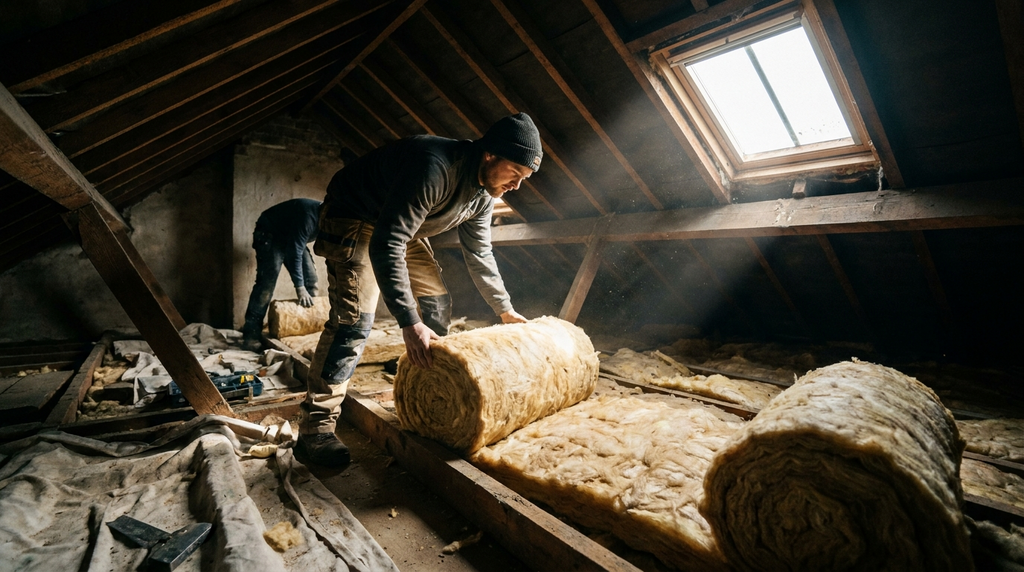
Loft Insulation, Start Here
If your loft has less than 270mm of mineral wool insulation, topping it up is the single cheapest and most effective upgrade available. Cost for a typical semi-detached in Pensarn or Johnstown is £300 – £600, with annual savings of £200 – £350. Payback in under two years. If your loft is already insulated to current standards, brilliant, move to the next priority.
Cavity Wall Insulation
Most homes built after the mid-1920s in Carmarthen have cavity walls. Getting them filled with mineral wool or EPS beads costs around £500 – £1,200 for a semi-detached and saves roughly £150 – £250 per year. One important note for Carmarthen, with high rainfall and driving westerly winds, make sure your installer assesses the exposure level of your walls properly. Homes in more exposed positions on higher ground above town may need a cavity closer or a specific fill material rated for exposed sites.
Solid Wall Insulation (Older Terraces)
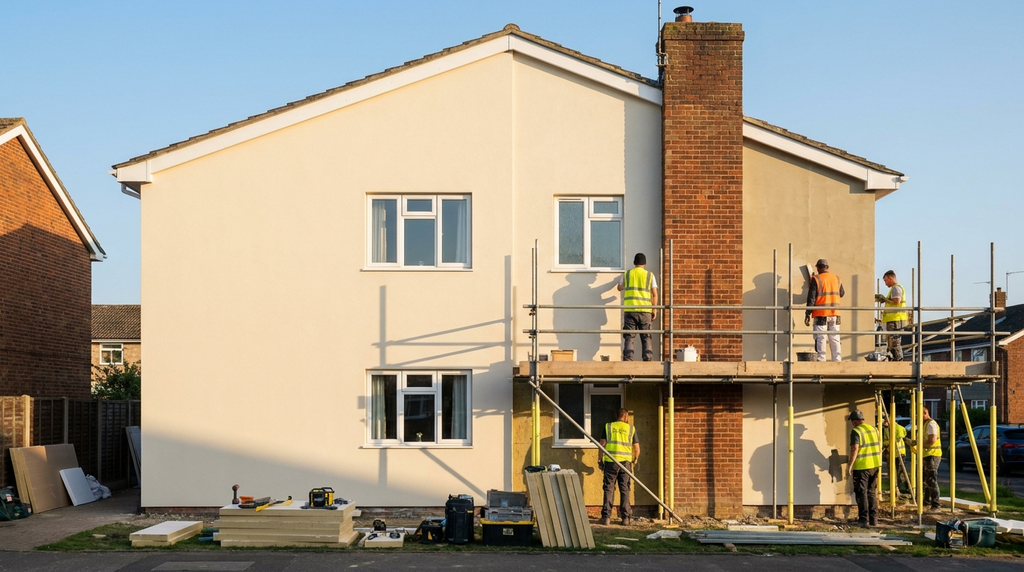
Victorian and Edwardian terraces around Priory Street and the town centre are solid-walled. External wall insulation (EWI) is the most effective solution but also the most expensive, typically £8,000 – £15,000 for a mid-terraced home. Annual savings can reach £300 – £500. If you’re in a conservation area or a listed property, EWI on the front elevation will face planning scrutiny, internal wall insulation is often the better route for these homes, at slightly lower cost.
Floor Insulation
Suspended timber floors, common in Carmarthen’s older terraced stock, can lose significant heat. Insulating beneath floorboards with mineral wool costs £1,000 – £2,000 and saves around £70 – £130 per year. Not the highest priority but worth doing when you’re already disrupting floors for other work.
Double and Triple Glazing
If your windows are single-glazed or have failed double-glazing units, upgrading to modern double or triple glazing costs £400 – £700 per window. Savings vary widely but improved comfort and draught reduction are significant. For listed buildings or conservation area properties near the town centre, sympathetic slim-profile secondary glazing is often the approved alternative.
Grants and Funding Carmarthen Residents Can Actually Access in 2026
The Warm Homes Nest Scheme, Wales-Specific and Worth Knowing
This is Wales’s flagship home energy improvement programme, and it’s more generous than equivalent English schemes for qualifying households. If you’re on a qualifying benefit (Universal Credit, Pension Credit, and several others) or have a household income below a certain threshold, you may receive free insulation, a free heat pump, or other improvements at no cost to you at all. Contact the Nest scheme directly on 0808 808 2244, it’s a freephone number and the advisors are genuinely helpful. Carmarthenshire County Council can also refer you in.
The UK Boiler Upgrade Scheme
If you’re replacing a gas boiler with an air source heat pump, you can claim £7,500 off the installed cost through this UK-wide scheme. Your installer claims it on your behalf, you simply pay the reduced price. This brings a mid-range ASHP installation into genuinely affordable territory for many Carmarthen homeowners.
ECO4 Scheme
Energy Company Obligation funding is available through your energy supplier for insulation and heating upgrades if you’re on a low income or certain benefits. Coverage in Wales tends to be good, energy companies are required to meet Wales-specific targets. Ask your supplier directly or check through Simple Energy Advice.
Welsh Government Optimised Retrofit Programme
This funds whole-house retrofits primarily for social housing in Wales. If you’re a Carmarthenshire Council tenant or live in a housing association property managed by Pobl Group or Tai Tywi, ask your landlord whether your home is in line for an Optimised Retrofit under this programme.
VAT on Energy Efficiency Improvements
In Wales (as across the UK), solar panels, heat pumps, insulation, and most associated energy efficiency products carry zero VAT. This isn’t a grant but it’s worth knowing, a 20% saving is built into every quote you receive for qualifying work.
Finding Good Installers Around Carmarthen
Carmarthen is a market town of around 15,000 people, which means the local installer pool is smaller than in Swansea or Llanelli. Most trades serving Carmarthen cover a cluster of towns including Llanelli (22km), Tenby (33km), and Cardigan (35km), so you’re not limited to businesses based in the town itself. Many of the best installers in the region are based in Swansea (37km) and regularly work across Carmarthenshire.
What Certifications to Look For
- MCS accreditation, mandatory for solar and heat pump installers if you want to claim the Boiler Upgrade Scheme grant or Smart Export Guarantee payments
- TrustMark registration, required for ECO4 and most government-backed grant work
- CIGA guarantee, for cavity wall insulation, insist on a CIGA-backed guarantee
- Gas Safe registration, non-negotiable for any gas boiler work
Practical Tips for Getting Good Quotes
- Get at least three quotes, installer pricing across rural west Wales varies more than in cities
- Ask specifically whether they’ve worked on similar-age properties in Carmarthen, experience with older Welsh terraces matters
- For wall insulation, ask how they assess exposure risk, any good installer will mention it unprompted for a Carmarthen property
- Waiting times for MCS-certified heat pump installers in this part of Wales can run to eight to sixteen weeks, plan ahead
- Be cautious of any installer who doesn’t visit the property before quoting, a proper survey is essential