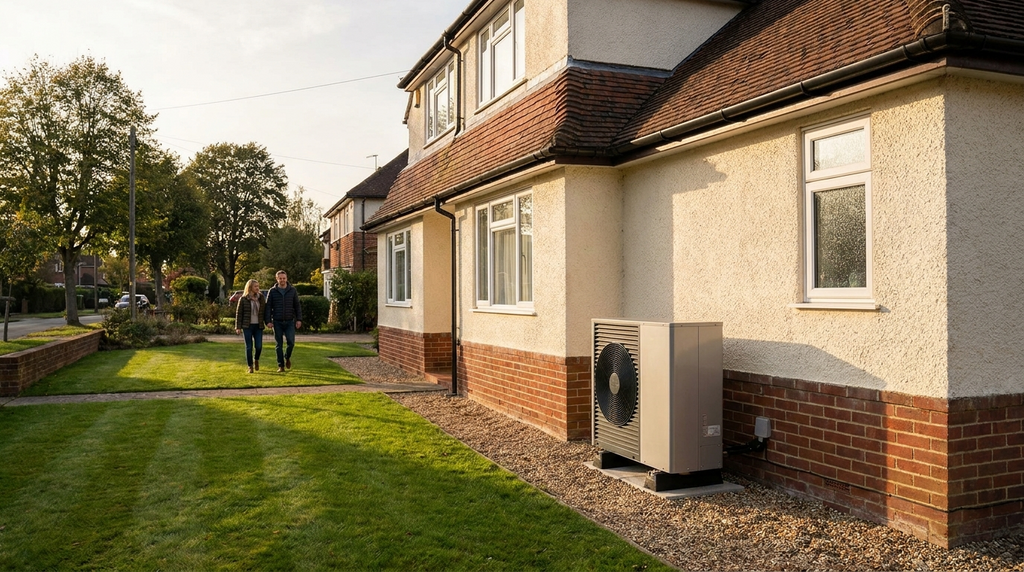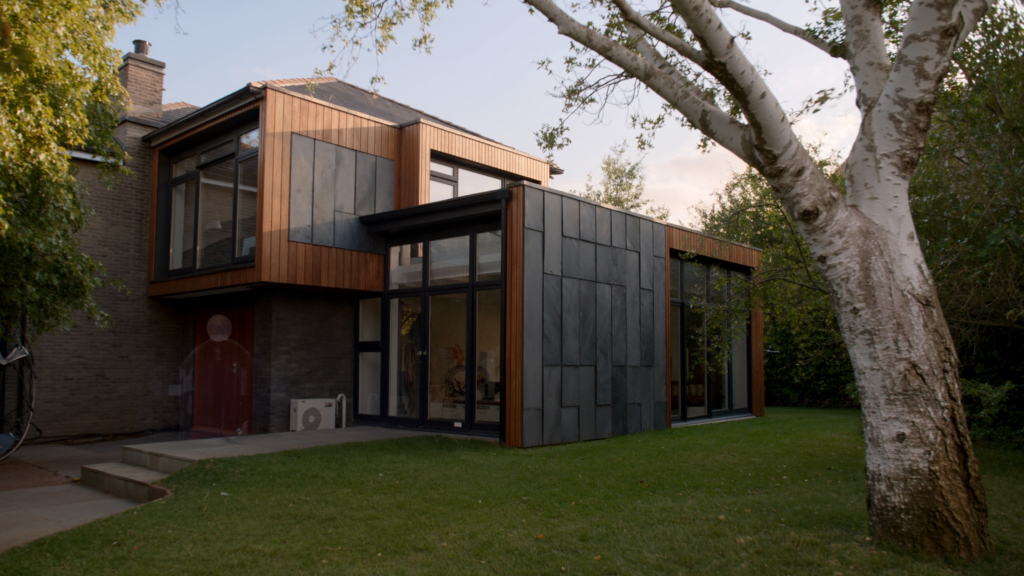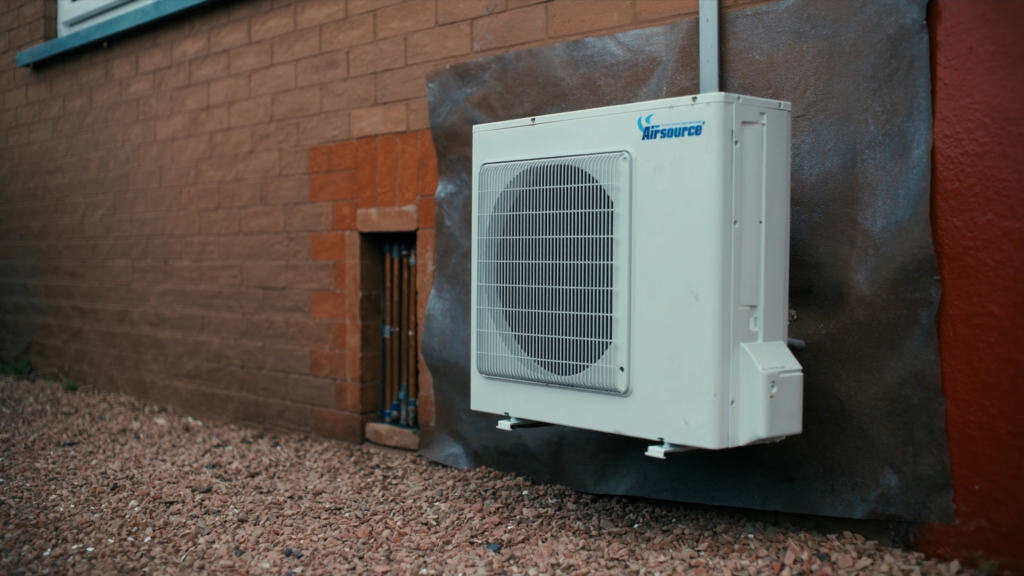
A cascade heat pump system typically costs 30–50% more than a single-unit system, but can cut heating bills by up to 40% in large properties.
If you own a large UK property like a country house, farmhouse, or multi-zoned home over 250 m², a standard single heat pump may struggle to keep the whole building warm efficiently. A cascade heat pump system links two or more heat pumps together to share the heating load, which can dramatically improve efficiency and cut running costs. According to the Energy Saving Trust, cascade systems cost 30–50% more to install than a single unit, but DESNZ monitored field trials show they can reduce heating bills by up to 40% in large homes (Energy Saving Trust, 2026; DESNZ, 2026).
What a cascade heat pump system is and how it differs from a single unit
A cascade heat pump system uses two or more heat pumps connected to a single hydraulic loop, so they work as one coordinated system. Unlike a single oversized heat pump that must cycle on and off to meet demand, a cascade system modulates its output by turning individual units on or off, or running them at partial load. This avoids the efficiency penalty of a single unit running at low load, which wastes energy.
Typical configurations include air-source-to-air-source (two air-source heat pumps), air-source-to-ground-source (one air and one ground source), or mixed-source cascades combining different technologies. Cascade systems are especially relevant for UK properties over 250 m², such as country houses, farmhouses, and homes with multiple heating zones, where heat demand exceeds 20 kW and single-unit efficiency drops sharply at partial load.
Quick numbers typical costs, running costs, and payback ranges
The table below compares installed costs and annual running costs for single-unit versus cascade heat pump systems at three common sizes. Costs are based on MCS Installation Database 2026 mean prices and Energy Saving Trust data (MCS, 2026; Energy Saving Trust, 2026). Running costs assume electricity at 24p/kWh (Ofgem Typical Domestic Consumption Values 2026) (Ofgem, 2026).
| System size (kW) | Single-unit cost (installed) | Cascade cost (installed) | Annual running cost (single) | Annual running cost (cascade) | Payback period (years) |
|---|---|---|---|---|---|
| 12 kW | £8,000–£10,000 | £11,000–£14,000 | £1,200–£1,500 | £900–£1,100 | 8–12 |
| 20 kW | £11,000–£14,000 | £15,000–£20,000 | £1,800–£2,200 | £1,200–£1,500 | 8–14 |
| 30 kW | £15,000–£19,000 | £20,000–£27,000 | £2,500–£3,000 | £1,600–£2,000 | 8–14 |
How much you can save on heating bills with a cascade system
In a 300 m² property, a cascade system can save £800–£1,400 per year compared to a single oversized heat pump. DESNZ field trials for large properties confirm these savings come from higher coefficient of performance (COP) during partial load operation (DESNZ, 2026). The COP measures how many units of heat a heat pump produces for each unit of electricity it uses. At 30% load, a single oversized unit might achieve a COP of 2.8, while a cascade system can deliver 3.5, because it runs one smaller unit at higher efficiency rather than one large unit at low load.
For example, a 20 kW cascade made of two 10 kW units versus a single 20 kW unit: at low heating demand, the cascade runs just one 10 kW unit at near full capacity, achieving a COP of 3.5. The single unit runs at 30% load, achieving a COP of 2.8. Over a year, this 0.7 COP difference translates directly into lower electricity consumption and lower bills.
Eligibility and certification requirements for cascade heat pump installations
To qualify for the Boiler Upgrade Scheme (BUS) grant of £7,500 for air-source heat pumps (2026), the installer must hold MCS certification for heat pumps (GOV.UK, 2026). The grant applies per property, not per unit, so a cascade system with two heat pumps is still eligible for a single £7,500 payment. Additional requirements include TrustMark registration for consumer protection, and Gas Safe Register certification only if the system integrates with a gas backup boiler.
The system itself must meet MCS 007, the heat pump installation standard, which the installer verifies. For large properties, building regulations Part L (conservation of fuel and power) also apply. Check with your local authority before installation, as a building notice or full plans application may be needed for systems over 45 kW output.
The real payback when a cascade system makes financial sense
Payback for a 20–30 kW cascade system ranges from 8 to 14 years, compared to 6 to 10 years for a single unit, according to Energy Saving Trust analysis based on typical UK gas and electric prices (Energy Saving Trust, 2026). However, cascade systems typically last 20 years or more with lower maintenance costs, because running two smaller compressors at lower stress extends their lifespan. This longer life can offset the longer payback period.
Cascade systems make most financial sense for properties with high heat demand (over 20 kW), multiple heating zones, or existing underfloor heating. The worst scenarios are small properties under 150 m² or single-zone systems, where the extra cost of a cascade adds no benefit. The BUS grant of £7,500 applies to cascade installations, reducing the upfront cost and shortening payback by 2–3 years.
compare cascade systems to single heat pump costs
How to verify an installer for a cascade heat pump system in the UK
Start by checking MCS certification on the MCS website (mcs.uk.com), searching by installer name or postcode (MCS, 2026). Next, verify TrustMark registration on trustmark.org.uk for consumer protection. Ask the installer for references from at least two previous cascade installations in large properties similar to yours. A competent installer should provide a detailed heat loss calculation following BS EN 12831, which determines the exact heating load for your property size. Without this calculation, any system sizing is guesswork, and a cascade system sized too large will waste money.
learn about heat pump sizing for large homes
Frequently Asked Questions
A cascade heat pump system links two or more heat pumps on a single hydraulic loop to share the heating load. According to the Energy Saving Trust, this avoids the efficiency loss of a single oversized unit running at partial load.
A cascade heat pump system costs 30–50% more than a single unit, with typical installed prices ranging from £15,000 to £30,000 for a large UK home. MCS 2026 data confirms these figures.
DESNZ field trials show cascade systems can reduce heating bills by up to 40% in large homes over 250 m². The Energy Saving Trust reports typical annual savings of £800–£1,500 for a country house.
Yes, if your home exceeds 250 m² or has multiple heating zones. The Energy Saving Trust states payback is usually 6–12 years, and efficiency gains are significant compared to a single oversized unit.
Homes over 250 m² often need a heating output above 20 kW. A cascade system matches demand by modulating multiple units, avoiding the inefficiency of a single large heat pump running at low load.