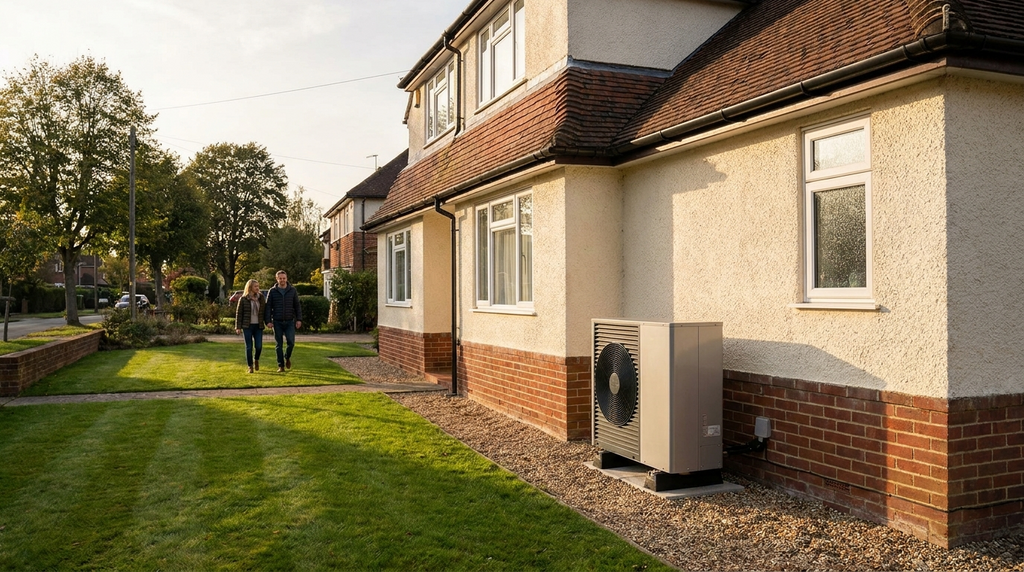
A heat pump can work in a 1930s semi
If you own a 1930s semi, you are probably wondering whether a heat pump is a realistic option or just a marketing promise. The short answer is that it can work, but only if you address two specific things first: the home’s insulation and the radiator system.
The deciding factor is not the age of the house but the amount of heat it loses. A 1930s semi typically has uninsulated solid walls, single-glazed windows, and an older radiator system designed for high flow temperatures of 70–80°C from a gas boiler (ONS housing stock data, 2026). A heat pump operates most efficiently at lower flow temperatures of 35–55°C, so the home’s heat loss must be reduced first. Without improving insulation and upgrading radiators, a heat pump will run inefficiently and may struggle to keep the home warm in winter. The key metric is the home’s heat loss calculation using the MCS heat loss method, which determines whether a heat pump is feasible and what size is needed.
First, check your home's insulation and draught-proofing
Before you think about heat pump costs or grants, you need to understand your home’s heat loss. Solid uninsulated walls in a 1930s semi lose heat at roughly 2.0–2.5 W/m²K (typical U-value). Internal or external wall insulation can reduce this to 0.3–0.5 W/m²K (Energy Saving Trust, Solid Wall Insulation guide, 2026). Loft insulation should be at least 270 mm (Energy Saving Trust, Loft Insulation advice page, 2026). Draught-proofing windows and doors can reduce air leakage by up to 20%, improving heat retention (Energy Saving Trust, Draught-proofing guide, 2026).
If you cannot or will not insulate solid walls, a heat pump may still work but will need to be oversized and will run at higher flow temperatures, reducing efficiency. The Coefficient of Performance (CoP) drops roughly 0.5–1.0 per 10°C increase in flow temperature. This means your running costs could end up similar to or higher than a gas boiler.
Quick numbers typical costs, grants, and running costs for a heat pump in a 1930s semi
| Item | Cost / value | Source |
|---|---|---|
| Typical heat pump system cost (installed) | £10,000 – £15,000 | Energy Saving Trust, Heat Pump Cost Guide, 2026 |
| Boiler Upgrade Scheme grant (England & Wales) | £7,500 | GOV.UK, Boiler Upgrade Scheme page, 2026 |
| Typical annual running cost (heat pump, well-insulated, SCOP 3.5) | £600 – £800 | Energy Saving Trust, Heat Pump Running Costs, 2026 |
| Typical annual running cost (gas boiler, same home) | £900 – £1,100 | Ofgem, Typical Domestic Consumption Values, 2026 |
| Radiator upgrades (if needed) | £1,500 – £4,000 | MCS installer estimates (industry average) |
| Payback period (after grant, vs gas boiler replacement) | 5–10 years | Energy Saving Trust, Heat Pump Payback, 2026 |
All figures are for a typical 3-bedroom 1930s semi with 100 m² floor area. Running costs assume 2026 electricity unit rate of 24p/kWh and gas unit rate of 6p/kWh (source: Ofgem price cap, January 2026). A Seasonal Coefficient of Performance (SCOP) of 3.5 is achievable with good insulation and low-temperature radiators.
You will almost certainly need to upgrade your radiators
1930s semis typically have single-panel steel radiators sized for 70–80°C flow temperatures. Heat pumps need radiators sized for 45–55°C flow temperatures. Upgrading to double-panel or triple-panel radiators (Type 22 or Type 33) increases surface area by 50–100%. This allows the same heat output at lower temperatures (BRE, Radiator sizing guidance, 2026).
In some cases, you may also need to add a new radiator in a cold room such as an unheated extension or bathroom. A heat loss calculation will identify this. Underfloor heating (UFH) works very well with heat pumps because it uses a low flow temperature and large surface area, but it is a major retrofit job in a 1930s semi, typically costing £4,000–£8,000 for a ground floor. Most homeowners stick with upgraded radiators.
Learn more about radiator sizing for heat pumps
The direct answer a heat pump is a good retrofit for a 1930s semi if you insulate first and upgrade radiators
The 1930s semi has solid walls and a large heat loss, but with loft insulation, draught-proofing, and radiator upgrades, it can achieve a heat pump SCOP of 3.0–3.5. Without insulation, the SCOP may drop to 2.0–2.5, meaning running costs could be similar to or higher than a gas boiler (Energy Saving Trust, Heat Pump Performance in Older Homes study, 2026).
A gas boiler is still a viable alternative, especially if you cannot insulate solid walls or have a small budget. A new A-rated gas boiler costs £2,500–£4,000 and runs at 90% efficiency. The Boiler Upgrade Scheme grant of £7,500 significantly reduces the upfront cost, making a heat pump competitive with a gas boiler over 10–15 years. For most 1930s semi owners who can insulate and upgrade radiators, a heat pump is a good long-term investment.
Eligibility and installer certification
To claim the Boiler Upgrade Scheme grant, the heat pump must be installed by an MCS-certified installer (GOV.UK, Boiler Upgrade Scheme: Eligibility, 2026). The installer must also be registered with TrustMark for consumer protection (TrustMark, Scheme Rules, 2026). The heat pump itself must be on the MCS Product Database (MCS, Product Database, 2026). For the existing gas boiler removal, you must use a Gas Safe registered engineer (Gas Safe Register, About Gas Safe, 2026).
The installer will carry out a full heat loss calculation using MCS 020 or similar to size the heat pump and specify radiator upgrades. This is essential for the grant application. Do not accept a quote from an installer who skips this step.
What about planning permission
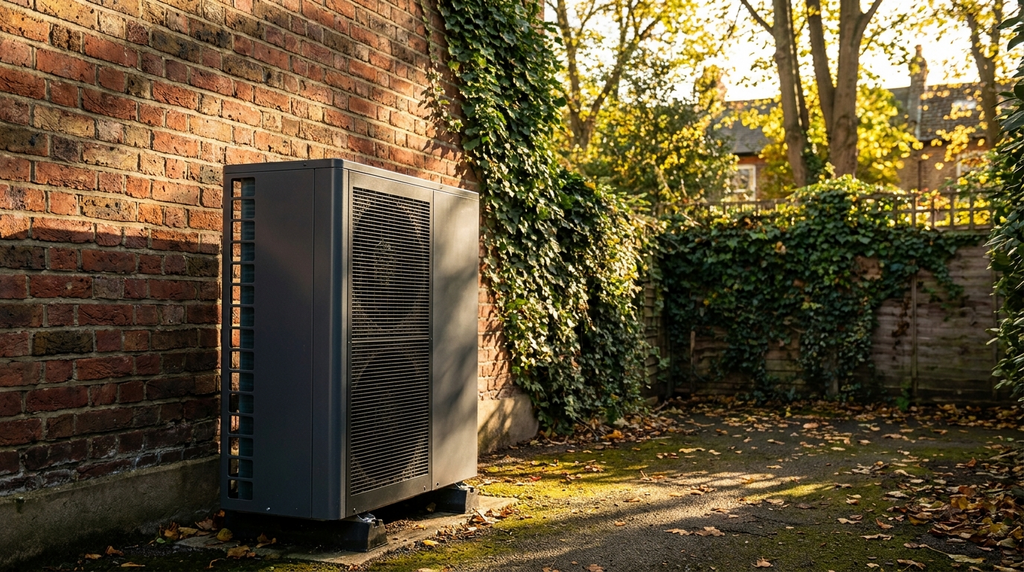
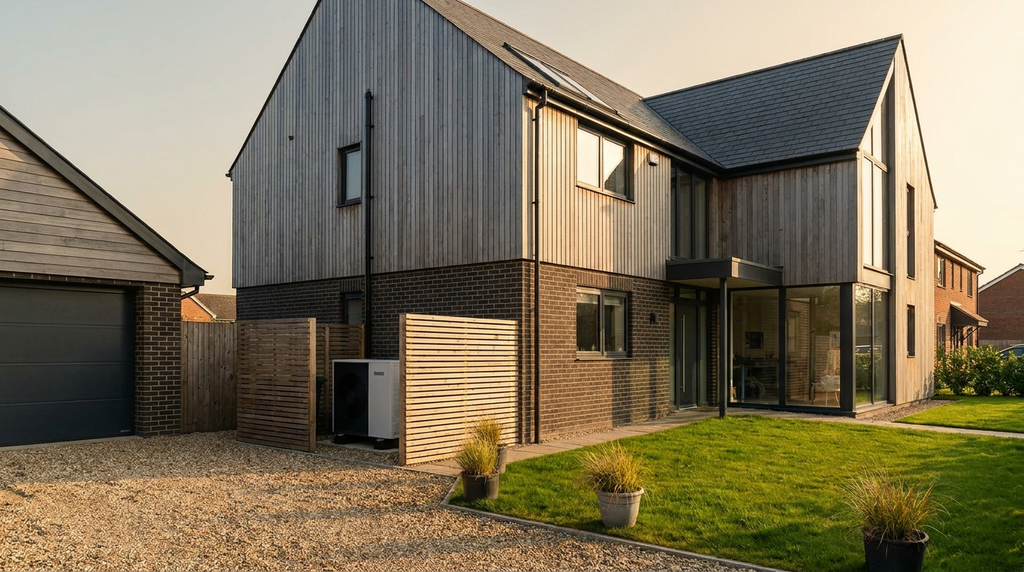
A heat pump outdoor unit must be at least 1 metre from the property boundary and not exceed 42 dB at the nearest neighbour’s window (GOV.UK, Permitted Development Rights for Heat Pumps, 2026). In a 1930s semi with a narrow side passage, the unit often goes on a rear wall or in a garden. Check for overshadowing from trees or fences that could reduce airflow.
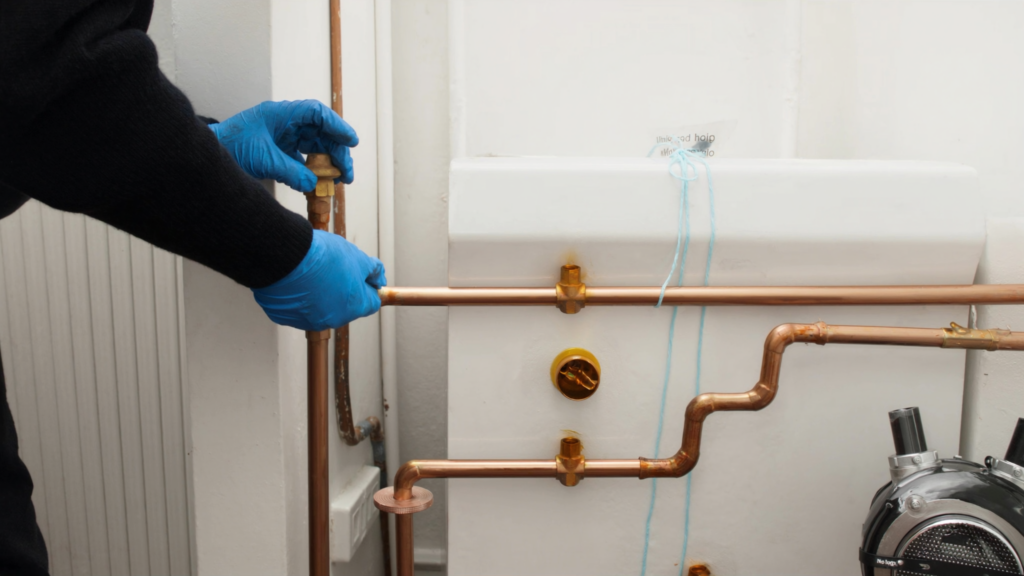
If the property is in a conservation area or listed, you may need full planning permission (source: local authority planning portal). The indoor unit, typically a cylinder and a small buffer tank, needs space. A 1930s semi often has a small airing cupboard that may need modification. Many homeowners use a utility room or garage instead.
Read our guide on heat pump placement in older homes
Frequently Asked Questions
Yes, but only if you improve insulation and upgrade radiators first. The Energy Saving Trust says solid wall insulation can reduce heat loss from 2.0 to 0.3 W/m²K.
Solid wall insulation (internal or external) and loft insulation of at least 270 mm are essential. The Energy Saving Trust recommends these to lower heat loss before installing a heat pump.
Installation costs typically range from £7,000 to £13,000, depending on system size and radiator upgrades. The Boiler Upgrade Scheme offers a £7,500 grant to reduce upfront costs.
Yes, existing radiators designed for 70-80°C flow temperatures must be upgraded to larger units for lower 35-55°C flow. MCS guidelines require this for efficient heat pump operation.
Yes, if insulation and radiators are upgraded first. Running costs can be 20-30% lower than a gas boiler, according to Ofgem data, with a CoP of 3-4 achievable.