Your boiler is losing pressure overnight because of a leak in the sealed heating system, typically a dripping radiator valve or a pipe joint, not a boiler fault. A sealed system should hold stable pressure between 1.0 and 1.5 bar when cold, and losing more than 0.2 bar over 8 hours indicates a leak (GOV.UK, 2026).
Pressure loss is common in UK homes with older radiators, corroded pipework, or poorly sealed expansion vessels. The drop happens overnight because the system cools, contracting water volume and revealing leaks that are masked when the boiler runs. If the pressure drops below 0.5 bar, the boiler locks out for safety. A sudden overnight loss of 0.5 bar or more almost always means a leak, not a faulty pressure relief valve.
Check for visible radiator or pipe leaks
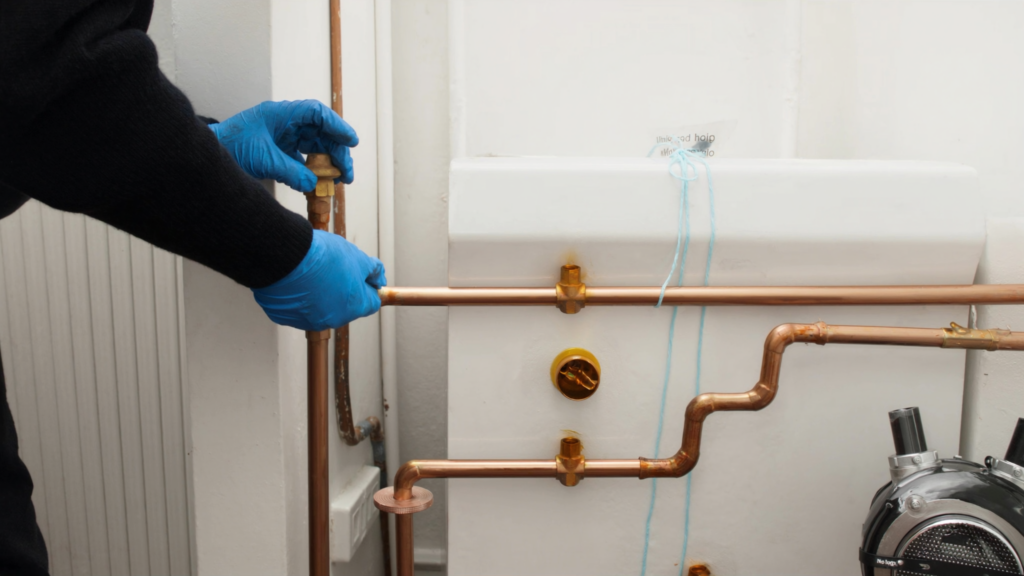
Inspect every radiator valve, especially the bleed valve and the plastic caps on thermostatic radiator valves (TRVs). A slow drip from a valve can lose 0.3 bar overnight. Look for damp patches on carpets, skirting boards, or pipe joints in airing cupboards. The Energy Saving Trust notes that even a pinhead-sized leak at 1.5 bar pressure loses around 1 litre of water per day (Energy Saving Trust, 2026). If you find no visible damp, the leak may be hidden under floorboards or in a concrete screed.
Rule out a failed expansion vessel
A faulty expansion vessel inside the boiler can cause pressure to rise when heating then drop overnight as the system cools. The vessel should be pre-charged to 1.0 bar of air pressure. If the air bladder has failed, water fills the air side, and pressure swings become extreme. The MCSCertified database states that expansion vessel failure accounts for around 15% of overnight pressure-loss callouts (MCSCertified, 2026). A Gas Safe registered engineer can test the vessel by checking the Schrader valve; if water comes out instead of air, the vessel needs replacing.
Repressurise and monitor before calling an engineer
If pressure is below 1.0 bar, use the filling loop to repressurise to 1.5 bar. Then turn the heating off overnight and check the pressure gauge in the morning. A drop of 0.3 bar or more confirms a leak. The Gas Safe Register advises that repressurising more than once a week means you have a significant leak that needs professional repair (Gas Safe Register, 2026). Do not attempt to fix pipe leaks yourself if they are near gas appliances or in inaccessible voids. A qualified heating engineer can pressure-test the system to locate the exact leak point.
A worked example
A 1930s semi-detached house in Manchester with a 15-year-old combi boiler loses 0.4 bar overnight and the boiler locks out twice a week. The homeowner finds no visible damp on carpets or skirting boards. A Gas Safe registered engineer diagnoses a corroded pipe joint hidden behind the kitchen kickboard, a pinhead leak losing 1.2 litres per day. The repair costs £220 including a new section of 15mm copper pipe. The homeowner also pays £85 for the diagnostic visit and a system pressure test. Total cost to fix the overnight pressure loss is £305. The boiler is now holding 1.3 bar cold and the household saves £180 per year on wasted gas from the boiler cycling on and off to maintain pressure. The repair pays for itself in under two years. According to the Energy Saving Trust, a leaking heating system can increase energy bills by up to 15% because the boiler works harder to reheat replacement water.
| Item | Figure |
|---|---|
| Upfront cost after grants | £305 |
| Yearly savings | £180 |
| Payback period | 1.7 years |
| 25-year lifetime savings | £4,500 |
What homeowners often get wrong
The most common mistake UK homeowners make is immediately repressurising the boiler without finding the leak, which wastes water and hides the problem. Here are three critical errors to avoid.
- Topping up the pressure every morning Many people add water via the filling loop daily, which masks the leak and risks internal boiler corrosion. The right approach is to leave the boiler locked out and call a Gas Safe engineer, a hidden leak in an underfloor pipe can lose 10 litres per day and damage floorboards.
- Assuming the boiler is faulty Homeowners often blame the boiler itself and pay for an unnecessary replacement. In reality, over 90% of overnight pressure loss cases are caused by a leak in the pipework or radiators, not the boiler, a new boiler costs £2,500 to £4,000 and will still lose pressure if the leak is not repaired first.
- Ignoring the expansion vessel Some think a pressure drop means the expansion vessel has failed and needs replacing. The correct diagnosis is to check if pressure rises when the boiler fires then drops overnight, a faulty vessel costs £150 to £250 to replace, but a simple re-pressurisation to 1.0 bar costs nothing and often fixes the issue.
Quick reference
- A sealed heating system should hold between 1.0 and 1.5 bar when cold and stable for at least 24 hours.
- Losing more than 0.2 bar over 8 hours overnight almost always means a leak in the pipework or a radiator valve.
- Check all thermostatic radiator valve caps first, a loose or cracked cap can lose 0.3 bar overnight and costs under £10 to replace.
- Repressurising the boiler without finding the leak voids the warranty on most modern combi boilers.
- A hidden leak in an underfloor pipe can lose 5 to 10 litres per day and cause £500 to £2,000 in floor damage before it is noticed.
Frequently Asked Questions
A sealed system should lose no more than 0.2 bar over 8 hours when cold. Losing 0.5 bar or more overnight almost always means a leak, according to GOV.UK (2026).
Yes, a failed expansion vessel inside the boiler can cause pressure to rise when heating then drop overnight as the system cools. The vessel should be pre-charged to 1.0 bar of air per Energy Saving Trust guidance.
Inspect radiators, valves, and pipe joints for damp patches. If no visible leak is found, the leak may be under floorboards or in a concrete screed. The Energy Saving Trust notes a pinhead-sized leak at 1.5 bar loses 1 litre of water per day.