Heat pump quotes in the UK in early 2026 sit in a wide range. The Which? heat pump survey for installs completed October to December 2025 put the average air-source heat pump at £13,431 before any grant. But for the same three-bedroom semi, one installer might quote £10,200 and another £15,500. The difference is not random. Here is what you are actually paying for, why quotes vary so widely, and what to push back on.
The headline UK figures
Real installer data for October to December 2025 from the Which? heat pump survey:
| System size | Property type | Average gross cost | After £7,500 BUS grant |
|---|---|---|---|
| 5 kW air-source | Two-bedroom flat or terrace | £8,500 | £1,000 |
| 7 kW air-source | Three-bedroom semi | £11,200 | £3,700 |
| 9 kW air-source | Three-bedroom detached | £13,000 | £5,500 |
| 11 kW air-source | Four-bedroom detached | £14,200 | £6,700 |
| 14 kW air-source | Five-bedroom or large period | £16,500 | £9,000 |
| Ground-source 8 kW | Three-bedroom rural | £24,000 | £16,500 |
These are averages. Within each row, real quotes vary by £2,000 to £4,000. The wider question is what causes that spread.
What you are actually buying
A heat pump installation is roughly six things stacked together:
- The heat pump unit itself. Around 30–40% of the total. A 7 kW air-source unit from a mainstream UK manufacturer typically wholesales at £3,500 to £4,500.
- The hot water cylinder. Almost every heat pump install needs a new cylinder sized for low-temperature output. Around £900 to £1,600 fitted.
- Radiators. Heat pumps run at lower flow temperatures than gas boilers, so radiators usually need to be larger. Typical retrofit replaces three to six radiators. £600 to £2,200.
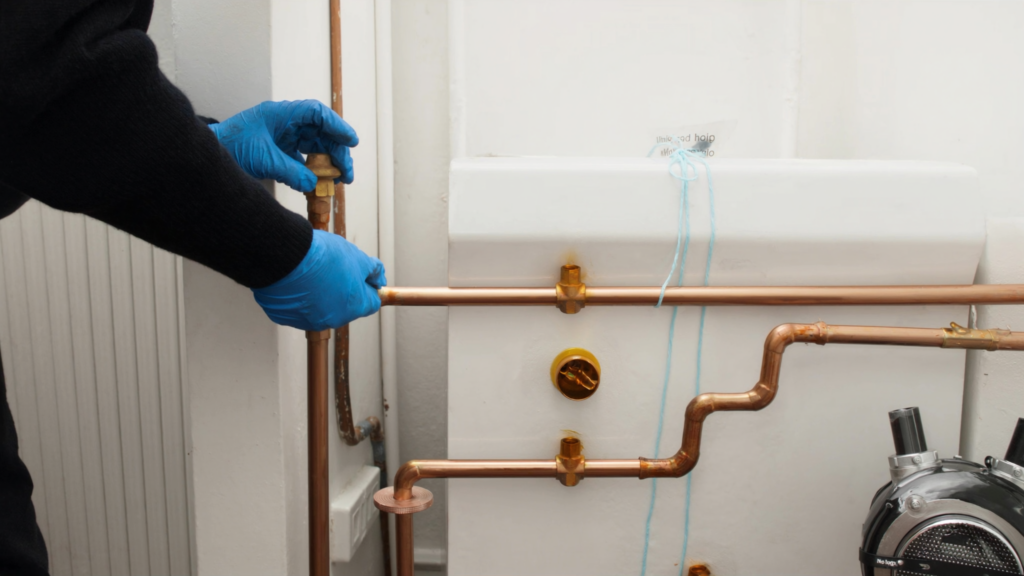
- Pipework and plumbing. New connections to the unit, sometimes upsized internal pipework. £500 to £1,500.
- Electrical work. A dedicated breaker, sometimes a consumer unit upgrade, sometimes a new outdoor isolator. £300 to £900.
- Labour. Three to six days on site for a full install, sometimes more. £2,000 to £5,000 in total labour.
Add VAT at 0% (until March 2027) and you arrive at the gross figure. Then the £7,500 BUS grant comes off, paid direct to the installer.
Why three quotes for the same house vary by £4,000
If you get quotes from three MCS-certified installers for the same three-bedroom semi, expect a spread of £10,000 to £14,000. The variation comes from genuine differences, not just different mark-ups:
System sizing. Heat pumps are sized on heat-loss calculations, not square metres. Two installers can run heat-loss calculations that differ by 1 to 2 kW, leading to a different unit and different radiator package. A 7 kW system is roughly £1,800 cheaper than a 9 kW.
Radiator scope. One installer might recommend changing three radiators; another might say six. Both can be technically defensible, the question is whether the heat pump can deliver design flow temperature at the lower number, and whether the homeowner will accept colder living rooms in February. Push for the radiator size calculation in writing.
Cylinder size and brand. A 200-litre Joule cylinder is around £1,000 fitted. A 300-litre Mixergy with smart controls is closer to £2,000. The difference is real comfort if you have a large family, irrelevant for a couple.
Buffer tank. Some installers insist on a buffer tank (an extra small water tank that absorbs short cycling). The unit costs around £300 to £600, the labour to fit it another £200 to £400. Newer heat pumps with built-in buffer functions do not need one, if the installer is quoting for one, ask why.
Survey depth. A thorough heat-loss survey with room-by-room calculations costs the installer more time. Some quote-only installers skip this and pad their figure as insurance. The good installer is sometimes the cheaper installer because they have surveyed properly.
Legitimate things that add cost
If a quote is high, these are usually genuine reasons:
- Larger radiator package, particularly if your existing radiators are single-panel and the room sizes are big.
- Cylinder relocation, if your existing hot water cylinder is in an awkward position (small airing cupboard, attic) and needs moving for the new spec.
- Underfloor heating compatibility, if you have a mix of radiators and UFH, the manifold may need new zone valves or a low-loss header.
- External wall pipework, solid walls often need core drilling and insulated lagged pipework outside, adding labour.
- Three-phase electrical supply, rare for domestic but increases unit choice and electrical work.
- Long pipe run to the outdoor unit, if the only place to site the unit is far from the cylinder, refrigerant or hydraulic pipework gets expensive.
Red flags, push back on these
Things that should not significantly inflate a quote:
- “Hydrogen-ready” anything. Hydrogen is not coming to UK domestic heating. Paying extra for hydrogen-ready cylinders or fittings is a scam.
- VAT charged at 5% or 20%. The current rate is 0% until March 2027. If a quote shows VAT, ask for it to be reissued.
- “Smart-ready” surcharges. Almost every heat pump made in the last three years has smart controls included. Paying extra for “smart compatibility” is double-counting.
- Buffer tank quoted without explanation. Ask whether your unit’s internal controls handle short-cycling. Many do.
- Wildly different system sizes between quotes. If one installer says 7 kW and another says 12 kW for the same house, one of them has done the heat-loss calculation badly. Ask both for the numbers.
- Quotes that do not list line items. A serious installer breaks down unit cost, cylinder, radiators, labour, electrical and ancillaries.
How to compare quotes properly
Three things to ask every installer:
- The MCS heat-loss calculation in writing. This is the document that proves the sizing logic. Without it, the quote is guesswork.
- Itemised line items. Insist on a breakdown, heat pump model and price, cylinder model and price, each radiator changed and its size, hours of labour. If they refuse, move on.
- Coefficient of Performance (COP) at your design flow temperature. A 4.0 COP at 35°C is excellent. A 3.0 at 50°C is mediocre. The lower your flow temperature, the cheaper the heat pump runs all winter. Better radiators today lower flow temperature later.
If you have three quotes with full line items, you can compare apples to apples. Without that breakdown, the cheapest quote may be the one cutting corners on radiator scope.
Sources
- Air source heat pump costs and savings, Which?
- Boiler Upgrade Scheme explained, Energy Saving Trust
- Microgeneration Certification Scheme, MCS
- Heat Pump Guide 2026, Heat Geek
Frequently Asked Questions
Usually because the installers have sized the system differently, are recommending different radiator scopes, or are quoting different cylinder specs. Compare line item by line item, not headline total.
Sometimes yes, sometimes no. Heat pumps run at lower flow temperatures than gas boilers. Existing radiators that are large enough for the room at the lower temperature can stay; smaller ones need upgrading.
Only if your installer can explain why. Modern heat pumps with weather compensation and built-in cycling protection do not usually need an external buffer tank.
If the cheapest quote is achieved by undersizing the system or skipping radiator upgrades, you save money up front but your heat pump struggles in cold weather. The running cost is higher and comfort is poorer.