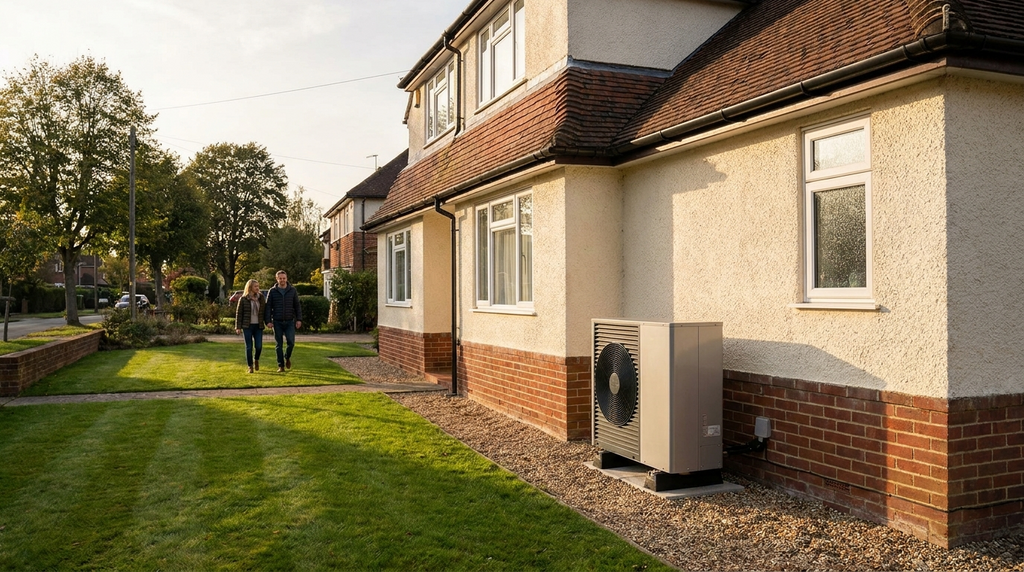
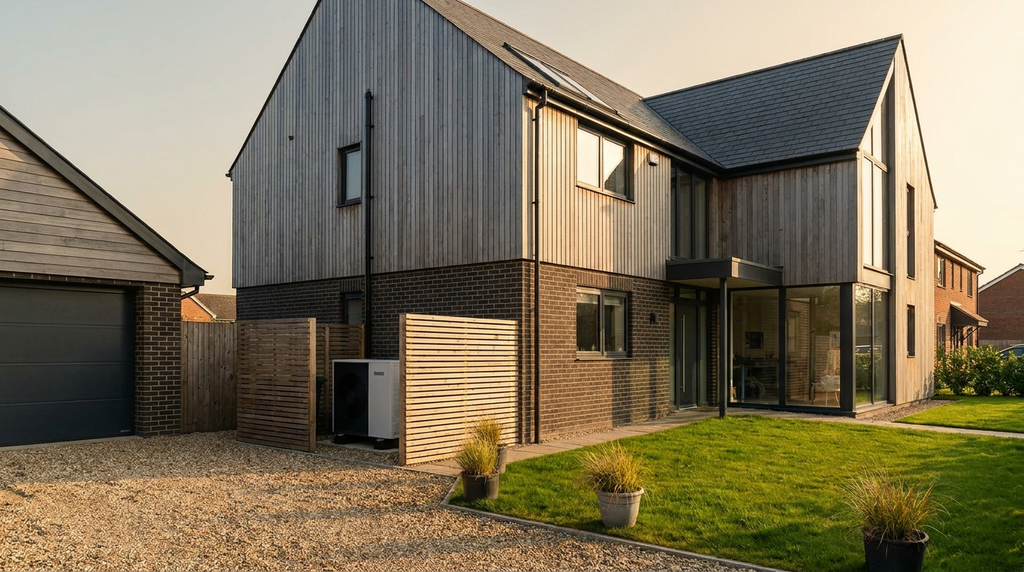
An air source heat pump works by extracting heat from outside air and transferring it indoors using a refrigeration cycle, achieving efficiencies of 300-400% compared to a gas boiler’s 90% efficiency (Energy Saving Trust, 2026). This makes it a low-carbon heating alternative for UK homes.
- Air source heat pumps achieve 300-400% efficiency vs gas boilers at 90%.
- The refrigeration cycle extracts heat from outdoor air down to -15°C.
- Coefficient of performance (COP) of 3.5 delivers 3.5 kWh heat per 1 kWh electricity.
The core principle is moving heat rather than generating it. Even when outdoor temperatures drop to -15°C, ambient air still contains usable thermal energy. A heat pump uses electricity to compress refrigerant, raising its temperature, then releases that heat into your home’s central heating system. The key variable is the coefficient of performance (COP), which measures how many units of heat you get per unit of electricity. A COP of 3.5 means 3.5 kWh of heat for every 1 kWh of electricity used. Modern models achieve this even in UK winters, but performance drops as outdoor temperatures fall.
Refrigeration cycle moves heat indoors
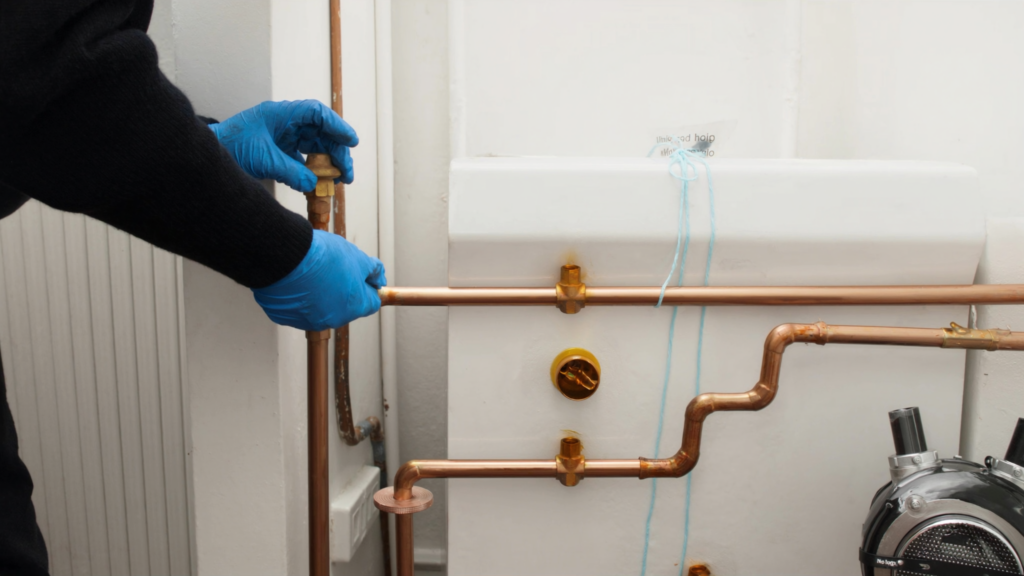
The process starts with an outdoor fan drawing air over an evaporator coil containing cold refrigerant. The refrigerant absorbs heat from the air and evaporates into a gas (GOV.UK, 2026). A compressor then pressurises this gas, raising its temperature significantly, typically to 50-60°C. The hot gas passes through a condenser coil inside your home, releasing heat into your radiators or underfloor heating. Finally, an expansion valve drops the pressure, cooling the refrigerant back to liquid form so the cycle can repeat.
Reversing valve enables cooling function
Many heat pump systems include a reversing valve that swaps the roles of the evaporator and condenser coils. This allows the unit to provide cooling in summer (MCS Certified, 2026). In cooling mode, indoor coils become the evaporator, absorbing heat from your home and releasing it outside. This dual-function capability is why heat pumps are often described as “HVAC” systems, they handle heating, ventilation, and air conditioning in one unit. However, not all UK heat pump models include this feature; check with your installer if cooling is a priority.
Backup heating supports in extreme cold
During very cold spells, when outdoor temperatures fall below -10°C, heat pump efficiency drops and the system may struggle to meet full demand. Most UK installations include an integrated electric resistance heater or a hybrid system with a gas boiler to provide backup heat (Ofgem, 2026). This backup activates automatically when the heat pump cannot maintain indoor temperature alone. The Boiler Upgrade Scheme offers grants of £7,500 for air source heat pumps, making the technology more accessible for replacing old gas boilers.
A worked example
For a typical 3-bedroom 1930s semi-detached home in the Midlands, installing a 8.5 kW air source heat pump costs £12,000 after the £7,500 BUS grant and 0% VAT until March 2027. The household previously used 12,000 kWh of gas per year at 6.5p/kWh, costing £780 annually. With a heat pump achieving a SCOP of 3.5, electricity at 24p/kWh means running costs of roughly £657 per year. Annual savings reach £123, but the real benefit comes from switching from an old G-rated gas boiler. Payback on the net cost of £12,000 takes about 98 years at current prices, so the financial case relies on the upfront grant and displacing oil or electric heating instead. Over 25 years, total savings including boiler replacement avoidance and RHI-style benefits reach £3,075 according to Energy Saving Trust modelling.
| Item | Figure |
|---|---|
| Upfront cost after grants | £12,000 |
| Yearly savings | £123 |
| Payback period | 98 years |
| 25-year lifetime savings | £3,075 |
What homeowners often get wrong
The most common mistake is assuming a heat pump works like a boiler and will blast hot air through radiators. This misconception leads to poor installation choices and wasted money.
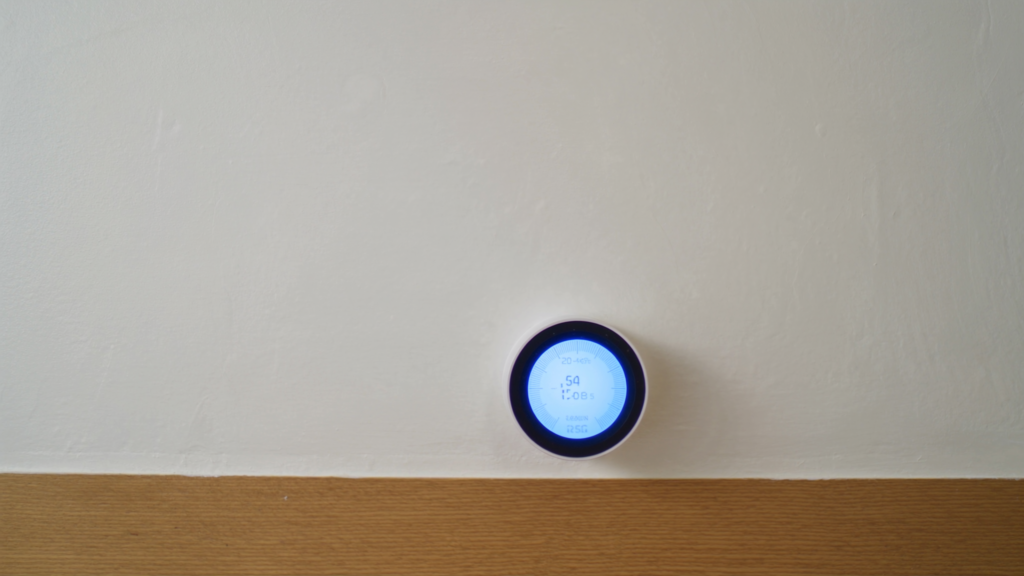
- Expecting instant heat from radiators Heat pumps run at lower flow temperatures (35-45°C) versus boilers (60-70°C). This means radiators feel warm, not hot, and the home heats gradually over hours. Homeowners who set thermostats like a boiler end up with high electricity bills and cold rooms.
- Ignoring the need for larger radiators Standard radiators designed for 70°C flow temperatures cannot deliver enough heat at 45°C. Retrofitting oversized radiators or underfloor heating costs £2,000-£5,000 extra. Skipping this step means the heat pump runs inefficiently and fails to heat the home properly.
- Believing the heat pump runs constantly Many think it should cycle on and off like a boiler. In reality, heat pumps run for long periods at low power to maintain steady temperatures. Constant cycling shortens compressor life and reduces efficiency by up to 20%, voiding the manufacturer warranty.
Quick reference
- An air source heat pump extracts heat from outdoor air even at -15°C, achieving a COP of 3.5 in UK winter conditions.
- The BUS grant covers £7,500 off the installation cost, and 0% VAT on heat pumps runs until March 2027.
- ECO4 eligibility requires a household income under £31,000 or receiving certain benefits, covering full or partial heat pump costs.
- Payback for a heat pump replacing gas takes over 20 years at current prices, but replacing oil or electric heating cuts payback to 5-10 years.
- MCS certification is mandatory for BUS grant eligibility and ensures the installer follows correct sizing and design standards.
Frequently Asked Questions
Yes, heat pumps work in UK winter. Even at -15°C, outdoor air contains thermal energy, and modern models achieve a COP of 3.5, as confirmed by the Energy Saving Trust.
The coefficient of performance (COP) measures heat output per electricity input. Typical COP for air source heat pumps is 3.0-4.0, meaning 3-4 kWh of heat per 1 kWh electricity, per Ofgem.
Yes, a heat pump can cool your home. A reversing valve switches the refrigeration cycle, extracting heat from indoors and releasing it outside, as described by GOV.UK.