Heat pump cover fencing costs £150–£700 installed in 2026
Homeowners considering a screen for their outdoor heat pump unit need to budget for both materials and professional installation. The total cost depends on the size, material and whether a base pad is required.
For a basic 1.8m x 1.8m slatted timber fence panel screen supplied and fitted by a local fencing contractor, the typical cost range in 2026 is £150–£700 (Checkatrade 2026 national fencing cost data). The lower end covers pressure-treated softwood panels, while the higher end includes larch, cedar or composite materials that offer longer life and a more finished appearance.
Labour for fitting a standard panel screen adds roughly £80–£200 to the total, depending on site access and ground conditions (Checkatrade 2026 fencing installation labour rates). If the unit sits on grass or soil, you may also need a concrete or gravel base pad to support the fence posts securely; expect an additional £80–£200 for this work. Decorative planters or bespoke joinery screens can push costs well above £1,200 and are not covered by these estimates.
Why homeowners in 2026 are adding a cover for their heat pump
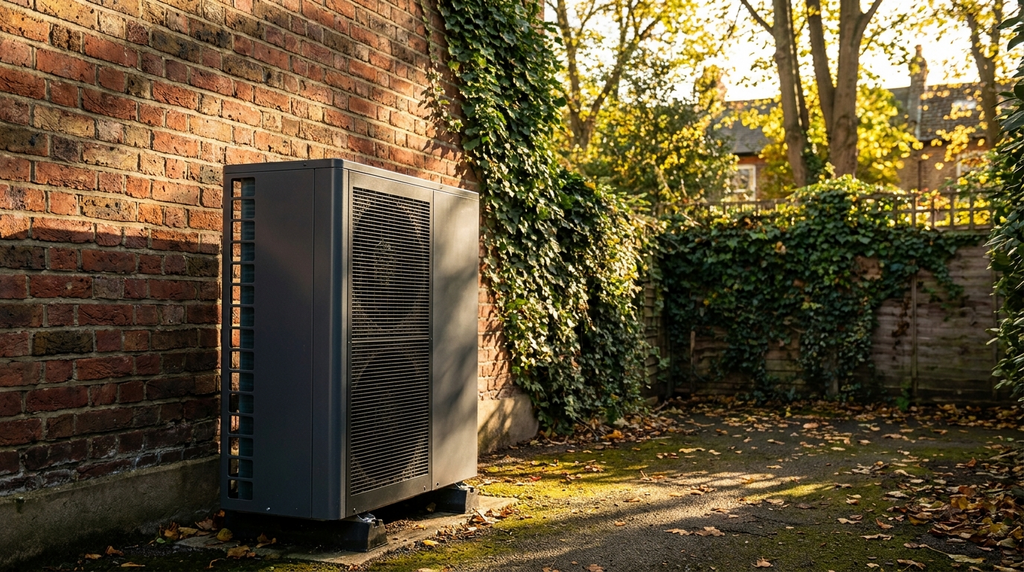
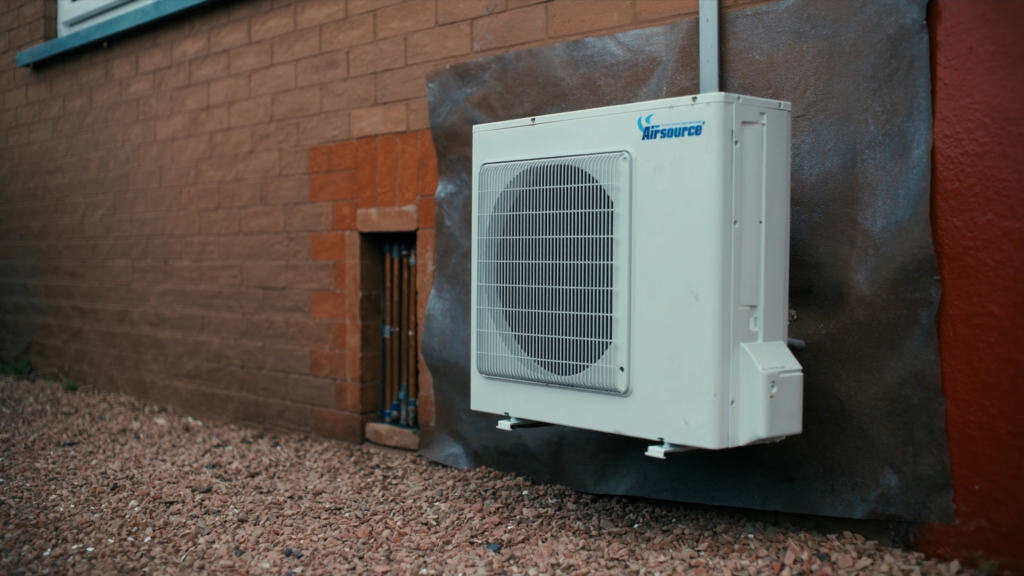
Heat pump outdoor units are typically 800–1,200 mm tall and visually prominent when sited near a patio, boundary or front elevation. As the UK installation base grows, the MCS register shows over 250,000 heat pumps installed by the end of 2026 (MCS register, 2026), more neighbours see these units, prompting homeowners to reduce their visual impact.
Some new-build developments and conservation-area homeowners report covenant or planning-condition concerns about the appearance of external plant equipment. A well-designed screen can address these issues while also providing acoustic benefits. Acoustic fence panels can reduce perceived noise break-out by 2–4 dB, according to BRE acoustic guidance for domestic heat pumps (2023 edition). Fencing also protects the unit from direct wind exposure, which reduces defrost-cycle frequency in exposed coastal or upland sites, a practical advantage that can improve seasonal efficiency.
The minimum clearance you must leave around the heat pump unit
Manufacturer clearance requirements are typically 300 mm at the rear, 600 mm on the air-intake side, and 1,500 mm in front of the fan (MCS 020 standard, section 5.3). Any fence or cover must not reduce these clearances, otherwise the unit’s coefficient of performance (COP) drops and the manufacturer warranty may be voided.
The minimum air gap between the unit and any solid fence panel is 150 mm (MCS 020, table 1). If you use a louvered or slatted design, the open area must be at least 70% of the panel face to allow free airflow. Never enclose the top of the unit, the fan exhausts upward and must have unobstructed vertical space. Failure to observe these clearances can reduce heating output and increase running costs.
Quick numbers, heat pump cover fencing at a glance
| Item | Typical cost (2026) | Source |
|---|---|---|
| Basic pressure-treated timber screen (1.8 x 1.8 m) | £150–£250 | Checkatrade 2026 |
| Cedar or composite screen | £350–£700 | Checkatrade 2026 |
| Concrete base pad (if needed) | £80–£200 | Checkatrade 2026 |
| Acoustic fence panel upgrade | +£50–£100 | BRE acoustic guidance |
| MCS-registered installer labour for siting adjustment | £100–£250 | MCS installer survey 2026 |
| Planning-permission application (if required) | £0–£250 | GOV.UK planning portal 2026 |
Does a heat pump cover fence need planning permission in 2026?
For most homes in England, a fence or screen up to 2 m high does not require planning permission under Permitted Development rights (Class A of Part 2 of Schedule 2 to the GPDO). However, there are important exceptions. If your property is in a Conservation Area, Area of Outstanding Natural Beauty, National Park, or World Heritage Site, a screen over 1 m high adjacent to a highway may need permission (GOV.UK “Permitted development rights for householders” (2026 edition)).
If the screen is attached directly to the heat pump itself, for example, a wrap-around cover, it counts as an alteration to the permitted development of the heat pump and may require prior approval from your local planning authority. Always check with your local planning authority before installing, especially if the unit is at the front of the property or near a boundary. The Planning Portal “Do I need permission?” tool can help clarify your specific situation.
How to find and verify a heat pump cover installer in 2026
For the fencing itself, look for TrustMark-registered fencing contractors (TrustMark website, 2026). For any work that involves moving or adjusting the heat pump position, use an MCS-certified installer (MCS register, 2026). If the cover includes electrical work, such as an integrated fan or light, use an NICEIC or NAPIT-registered electrician.
Get at least three quotes and ask each to confirm in writing that the cover will not void the heat pump warranty. Check the installer has public liability insurance (minimum £2 million) and ask for a written guarantee, typically 1–2 years for fencing, 5–10 years for composite materials. How to check a tradesperson’s credentials before hiring
How to measure your heat pump for a custom fence or screen
Start by measuring the unit’s width, depth and height, excluding pipework and the electrical isolator. Then add the minimum clearance distances, 300 mm rear, 600 mm intake side, 1,500 mm front, to calculate the minimum footprint for the fence. For a slatted or louvered screen, the slat gap should be at least 20 mm wide to maintain airflow (MCS 020, section 5.4).
Allow 150 mm gap between the back of the unit and the fence panel. Mark the ground with pegs and string before buying materials; a common mistake is ordering a screen that is too tall or too close to the unit. Heat pump siting and clearance distances explained Always verify final dimensions against the manufacturer’s installation manual before committing to any design.
Frequently Asked Questions
A standard 1.8m x 1.8m slatted timber fence panel screen supplied and fitted costs £150–£700 in 2026, according to Checkatrade national fencing cost data. Labour adds £80–£200, and a base pad costs £80–£200 extra.
Most domestic heat pump screens under 2m high do not need planning permission, but check with your local authority if you live in a conservation area or have specific covenants. The MCS register shows over 250,000 heat pumps installed by end of 2026, so many homeowners add screens without issues.
Pressure-treated softwood is cheapest at £150–£400, while larch, cedar or composite cost £400–£700 and last longer. Acoustic fence panels can reduce noise by 2–4 dB per BRE guidance.
Yes, acoustic fence panels can reduce perceived noise break-out by 2–4 dB, according to BRE acoustic guidance for domestic heat pumps (2023 edition). Standard timber panels offer minimal noise reduction.
Yes, leave at least 300–600 mm clearance on all sides for airflow and maintenance access. Blocking airflow reduces efficiency and may void your warranty.
A 1.8m high screen works for most 800–1,200 mm tall units, but keep it below 2m to avoid planning permission issues. Check local rules if in a conservation area.