Why Carmarthenshire Is a Fascinating Place to Go Green
Carmarthenshire is one of Wales’s most characterful counties, a place where market towns sit alongside rolling farmland, river valleys, and a surprisingly rugged coastline. It’s the largest county in Wales by area, yet with around 40,000 residents concentrated mainly in Carmarthen and Llanelli, it has a genuinely close-knit feel. People here tend to know their neighbours, and word travels fast about what works and what doesn’t.
That matters for eco home improvements. Unlike a city where you might feel like you’re navigating the process alone, Carmarthenshire homeowners often benefit from shared knowledge, a friend who’s already had solar panels fitted, a neighbour who’s switched to a heat pump. That community connection makes it easier to find trustworthy local installers and learn from real experiences.
What really sets Carmarthenshire apart from many Welsh counties is its geography and climate. The south-facing slopes along the Tywi Valley and the coastal areas around Llanelli get some of the best solar irradiance in Wales. Meanwhile, the county’s westerly exposure and higher-than-average rainfall mean that external insulation and weatherproofing choices genuinely matter here in ways they don’t further east. Getting the right upgrades for your specific location is good practice, and it is essential.
Wales also has its own policy landscape. The Welsh Government’s Net Zero Wales targets and dedicated grant schemes like the Warm Homes Nest programme mean Carmarthenshire homeowners have access to funding routes that English residents simply don’t. That’s a real advantage worth understanding and using.
What the Average EPC Band D Really Means for Carmarthenshire Homes
Most homes in Carmarthenshire sit at EPC Band D, the UK national average. That sounds reassuringly ordinary, but it actually is a significant opportunity. A Band D home is costing you more to run than it should, and the gap between where you are and where you could be is bridgeable with the right improvements.
At current energy prices, a typical Band D semi-detached home in Carmarthenshire is spending roughly £1,400 to £1,700 per year on gas heating and hot water, plus around £600 to £800 on electricity. That’s a combined annual energy bill somewhere between £2,000 and £2,500 for an average household.
The housing stock varies noticeably across the county. Llanelli, as the larger industrial town, has a high concentration of Victorian and Edwardian terraces, solid stone or brick construction that holds heat reasonably well structurally, but often has single-glazed windows, no cavity wall insulation, and outdated boilers. These homes typically sit at the lower end of Band D or even nudge into Band E.
Carmarthen itself has a more mixed picture. The town centre has older stone-built properties that can be trickier to insulate, while the surrounding residential areas developed from the 1960s onwards include semi-detached houses with cavity walls that are much more straightforward to upgrade. Many of these homes are already at mid-Band D and can realistically reach Band B or C with targeted improvements.
Rural properties on the outskirts of both towns, particularly older farmhouses and converted cottages, tend to perform worst of all. Solid stone walls, high ceilings, and lack of draught-proofing can push some of these homes into Band E or F territory, with annual bills exceeding £3,000. These properties need a more comprehensive retrofit approach, but the savings potential is also the greatest.
The Full Range of Eco Home Services Available Across Carmarthenshire
The good news is that Carmarthenshire’s compact size means most reputable installers cover the whole county from a single base. You’re not limited to hyperlocal contractors, and competition between installers is healthy enough to keep pricing reasonable. Here’s a plain-English summary of what’s available and what each service involves.
Solar Panel Installation
Given Carmarthenshire’s surprisingly strong solar resource, particularly along south-facing slopes and coastal areas, solar panels are one of the most popular and financially sensible upgrades available here. A typical 4kWp system costs between £5,000 and £7,000 installed, and can generate around 3,500 kWh per year in this part of Wales.
Pairing solar with a battery storage system (typically £2,000 to £4,000 extra) allows you to use more of what you generate rather than exporting it to the grid. For homes moving towards electric heating or EV charging, this combination is increasingly worth considering.
Heat Pumps
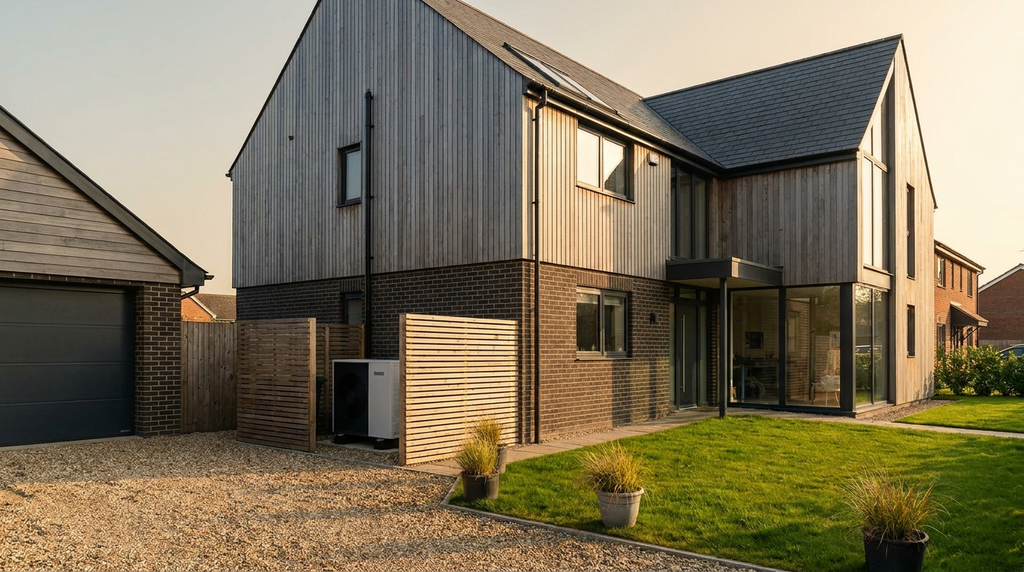
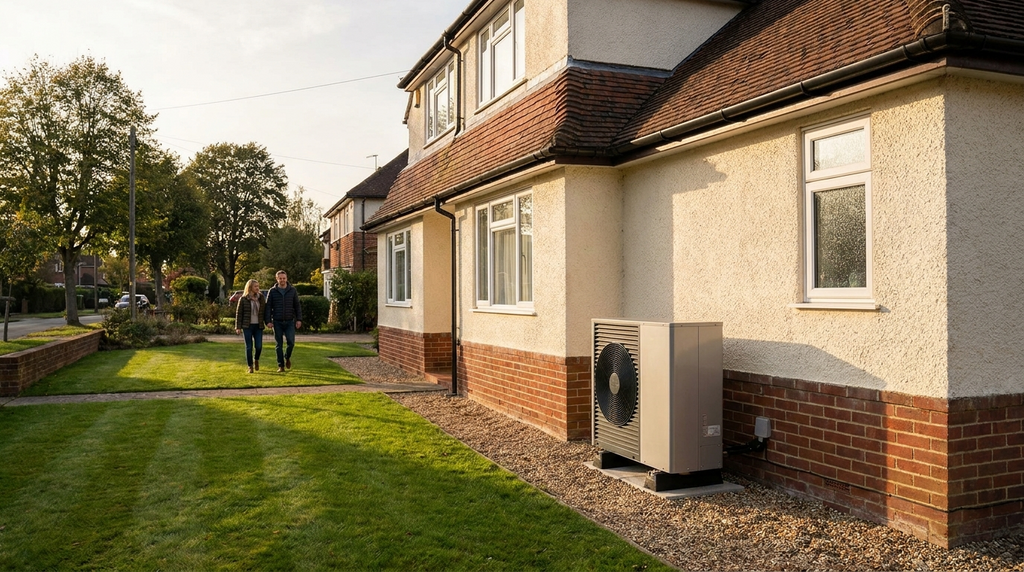
Air source heat pumps are increasingly common across Carmarthenshire, particularly in homes that are moving away from oil-fired central heating. A fully installed air source heat pump typically costs £8,000 to £14,000, though the Boiler Upgrade Scheme grant (covered below) significantly reduces this. They work best in well-insulated homes, so it’s usually worth tackling draught-proofing and insulation first.
Insulation
Cavity wall insulation, loft insulation, and solid wall insulation (internal or external) are available countywide. Loft insulation is typically £300 to £600 for a standard semi-detached home and offers some of the fastest payback of any home improvement. Cavity wall insulation runs from £400 to £800. Solid wall insulation is more involved, ranging from £6,000 to £20,000 depending on property size and method.
Double and Triple Glazing
Replacing single-glazed windows with A-rated double glazing typically costs £4,000 to £8,000 for a three-bedroom semi-detached home. It makes a noticeable difference to comfort as well as bills, and in Carmarthenshire’s wetter climate, quality window seals also help reduce condensation issues.
Draught-Proofing and Ventilation
Often overlooked but highly cost-effective, professional draught-proofing of doors, floors, and gaps can cost as little as £200 to £400 and save £100 to £200 per year. Mechanical ventilation with heat recovery (MVHR) is increasingly fitted in more airtight new builds and deep retrofits.
Smart Controls and Energy Monitoring
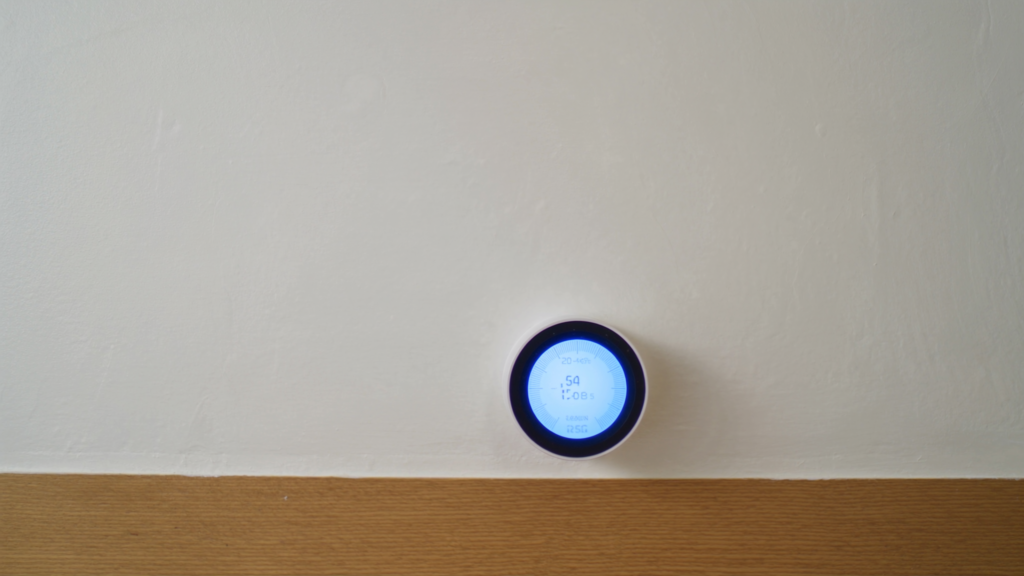
Smart thermostats, zoned heating controls, and home energy monitors are lower-cost additions (typically £150 to £400 installed) that help you get more from whatever heating system you have. They’re often a sensible first step before committing to larger upgrades.
Typical Costs and Savings for Carmarthenshire Homes
| Improvement | Typical Installed Cost | Annual Saving (Band D Semi) | Annual Saving (Band D Terrace) | Approximate Payback Period |
|---|---|---|---|---|
| Loft insulation (top-up to 270mm) | £300 – £600 | £150 – £250 | £120 – £200 | 2 – 4 years |
| Cavity wall insulation | £400 – £800 | £200 – £300 | £150 – £250 | 2 – 4 years |
| External solid wall insulation | £10,000 – £20,000 | £300 – £500 | £250 – £400 | 20 – 35 years |
| Double glazing replacement | £4,000 – £8,000 | £100 – £200 | £80 – £150 | 25 – 40 years |
| Air source heat pump (with grant) | £5,000 – £10,000 net | £200 – £600 | £150 – £500 | 10 – 20 years |
| Solar panels (4kWp) | £5,000 – £7,000 | £400 – £650 | £350 – £550 | 8 – 14 years |
| Solar panels with battery | £7,500 – £11,000 | £550 – £850 | £450 – £750 | 10 – 16 years |
| Smart thermostat | £150 – £400 | £80 – £150 | £60 – £120 | 2 – 4 years |
These figures are realistic estimates for Carmarthenshire homes in 2026 based on current energy prices and local installer rates. Your actual savings will depend on your current heating system, occupancy patterns, and how well the property is already insulated.
Grants and Funding Available to Carmarthenshire Residents in 2026
This is where Carmarthenshire homeowners have a genuine edge. Because you’re in Wales, you have access to Welsh Government schemes alongside the UK-wide programmes, and some of these are among the most generous residential energy grants available anywhere in Britain.
Warm Homes Nest (Wales-Specific)
The Warm Homes Nest scheme is the Welsh Government’s flagship free energy efficiency programme, and it’s significantly more accessible than its English equivalent. It covers free insulation, heating systems, and energy efficiency measures for households on low incomes or benefits, and also for homeowners whose properties have a poor EPC rating even if they’re not on benefits. If your home is EPC Band E, F, or G and your income is under £31,000, you could qualify for a fully funded package of improvements worth thousands of pounds.
Applications go through the Nest scheme directly, and Carmarthenshire County Council can provide referrals and support.
Optimised Retrofit Programme (Wales)
The Welsh Government’s Optimised Retrofit Programme funds research and demonstration projects around whole-home retrofits. While not universally available to all homeowners, it has supported community housing associations and social landlords across Carmarthenshire, and its findings help shape best practice for all retrofit projects in the county.
Boiler Upgrade Scheme (UK-Wide)
The Boiler Upgrade Scheme provides a £7,500 grant towards the cost of installing an air source heat pump. This is available to homeowners across Carmarthenshire regardless of income, as long as you have a valid EPC with no outstanding loft or cavity wall insulation recommendations. It’s one of the most straightforward grants to access and has made heat pumps genuinely affordable for many local households.
ECO4 (UK-Wide)
ECO4 is the Energy Company Obligation scheme, funded by energy suppliers. It targets households on qualifying benefits or with low EPC ratings. In Carmarthenshire, this has been used to fund cavity wall insulation, loft insulation, and first-time central heating in eligible homes. Your energy supplier is the first point of contact, though local advice services and Carmarthenshire County Council can help you navigate eligibility.
Great British Insulation Scheme (UK-Wide)
The Great British Insulation Scheme closed on 31 March 2026. It funded insulation measures only and never covered windows or glazing. If your home is EPC Band D or below and falls within a lower council tax band, you may qualify for heavily subsidised or free loft and cavity wall insulation. Given that the county average is Band D, a significant proportion of Carmarthenshire homes are potentially eligible.
Carmarthenshire County Council Support
Carmarthenshire County Council runs a housing support service that can signpost residents to appropriate funding streams, carry out home energy assessments, and in some cases provide additional local top-up funding for vulnerable households. Contacting the council’s housing team directly is worth doing before committing to any major upgrade.
Planning Permission and Local Authority Considerations Across Carmarthenshire
Most standard eco home improvements fall under permitted development rights in Wales, meaning you can go ahead without a formal planning application. This includes typical solar panel installations, loft conversions for insulation purposes, and most heat pump installations, provided they meet certain size and siting criteria set under Welsh building regulations.
However, Carmarthenshire has some important exceptions you need to be aware of.
Brecon Beacons National Park Overlap
Parts of northern Carmarthenshire fall within or adjoin the Brecon Beacons National Park (now formally known as Bannau Brycheiniog). If your property sits within the national park boundary, permitted development rights are more restricted, and you’ll need to check with the national park authority rather than Carmarthenshire County Council before installing solar panels or external cladding.
Conservation Areas
Both Carmarthen and Llanelli have conservation areas covering their historic town centres. Properties within these areas face tighter restrictions on changes to external appearance, which can affect external wall insulation, replacement windows, and even some solar installations. Always check with Carmarthenshire County Council’s planning department before starting work if you’re in or near a conservation area.
Listed Buildings
Carmarthenshire has a significant number of listed buildings, particularly in Carmarthen and the surrounding rural areas. Listed building consent is required for most structural or external changes, and standard insulation products or installation methods may not be appropriate. A heritage-aware contractor and early dialogue with the planning team will save you time and money.
Building Regulations in Wales
Wales sets its own building regulations, which in some areas are stricter than those in England. Heat pump installations, new glazing, and significant insulation works all need to comply with Welsh Technical Standards. Your installer should handle this, but it’s worth confirming they’re familiar with Welsh rather than English regulations.
How Carmarthenshire’s Climate Shapes the Best Eco Home Choices
Carmarthenshire sits in a genuinely interesting climatic sweet spot. Compared to most of Wales, the southern parts of the county, particularly around Llanelli and the Gower fringe, benefit from milder winters and a reasonable amount of sunshine. The county sees roughly 1,200 to 1,500 sunshine hours per year and heating degree days in the range of 1,200 to 1,500, lower heating demand than, say, the Scottish Borders or even mid-Wales.
That makes