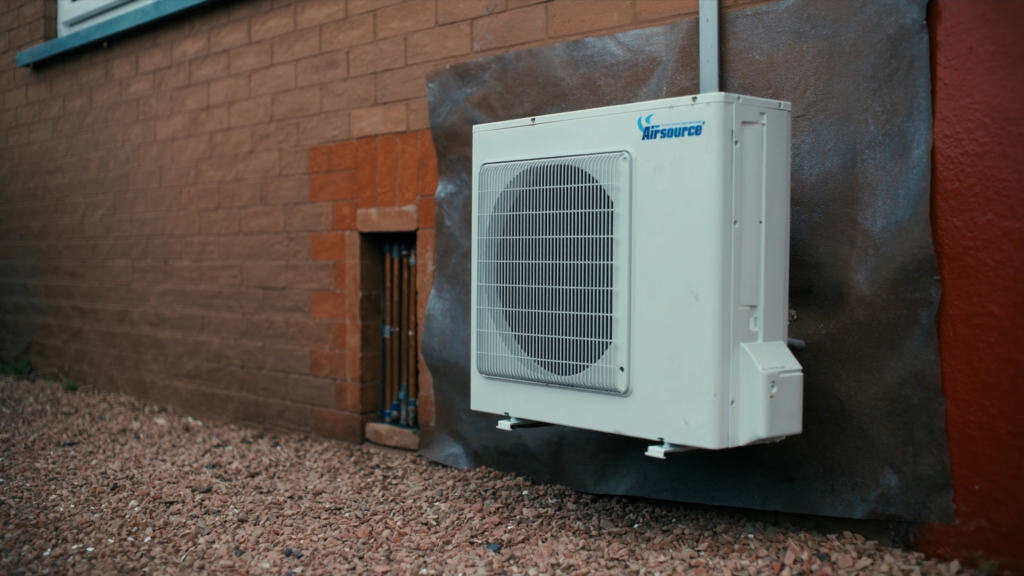
Ofgem reports that heat pump noise complaints rose 18% year-on-year in 2025
Heat pump noise is becoming an increasingly common concern for UK homeowners. Ofgem’s annual Heat Pump Complaints Data for 2025 recorded an 18% rise in noise-related complaints compared to the previous year. That makes it the third most common complaint category after performance issues and installation cost (Ofgem, 2026). This does not mean that heat pumps are inherently noisy. Rather, it reflects that poor installation or unsuitable siting can create problems that are largely preventable.
The direct answer is this: a properly installed, MCS-certified heat pump operates at 40–60 dB(A) at 1 metre, which is comparable to a refrigerator or a quiet conversation. For the vast majority of homes, noise is a manageable issue, not a deal-breaker. This article explains typical sound levels, who qualifies for grants despite noise concerns, and how to insulate against unwanted sound.
Typical sound levels for UK heat pumps in 2026
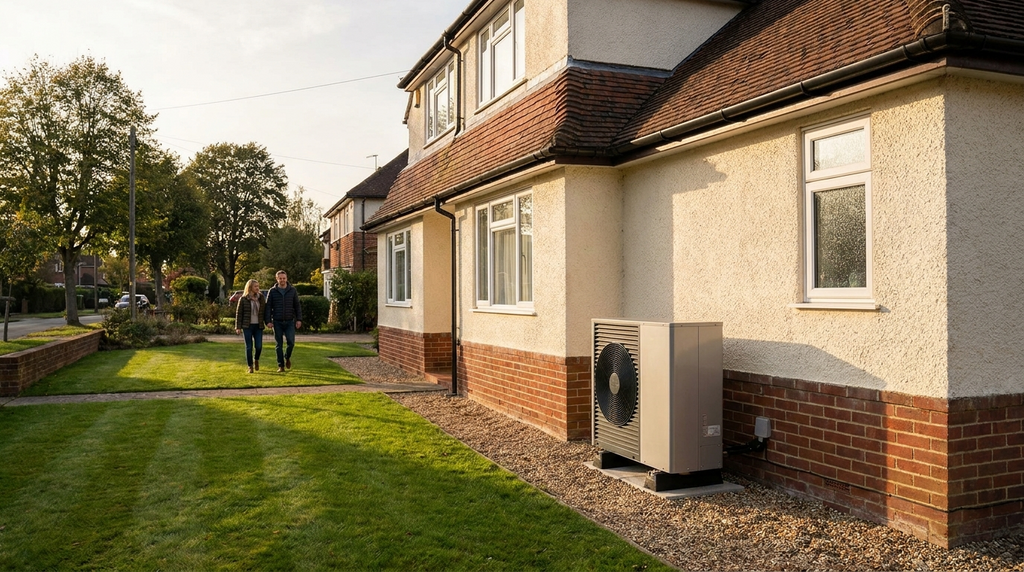
All new heat pump installations in the UK must comply with the MCS 020 standard, which specifies a maximum external sound pressure level of 42 dB(A) at 1 metre from the unit (MCS, 2026). This is roughly the volume of a quiet library. In practice, the Energy Saving Trust reports that typical heat pump operation ranges from 40–60 dB(A) at 1 metre, depending on the model and operating conditions (Energy Saving Trust, 2026).
Sound levels above 60 dB(A) are unusual and usually indicate a fault, such as loose components, unbalanced fan blades, or a poorly sited unit that amplifies noise via hard surfaces. These are installation or maintenance issues, not a fundamental design problem with the technology. If your heat pump exceeds 60 dB(A) at 1 metre, the first step is to contact the installer for a diagnostic check.
Quick numbers sound levels, insulation options, and costs
| Sound Level (dB(A)) | Typical Source | Required Insulation Type | Estimated Cost (per unit, installed) | Grant-eligible? |
|---|---|---|---|---|
| 40–45 dB(A) | Quiet conversation | No insulation needed | £0 | Yes |
| 45–55 dB(A) | Background music | Acoustic fence or dense planting | £200–£800 | Yes (if part of overall installation) |
| 55–65 dB(A) | Busy road | Acoustic enclosure + vibration pads | £1,000–£2,500 | Partial (enclosure not always covered) |
Cost ranges are based on Checkatrade and MyBuilder average quotes for 2025–2026, combined with MCS installer pricing data. Grant eligibility for noise mitigation is covered under the Boiler Upgrade Scheme (BUS) if the insulation is part of a single installation quote from an MCS-accredited installer (GOV.UK, 2026). Standalone retrofits of acoustic enclosures are not always covered, so check with your installer before proceeding.
Who qualifies for heat pump grants despite noise concerns
Noise is not a disqualifying criterion for the £7,500 Boiler Upgrade Scheme (BUS) grant. Any homeowner in England and Wales with an MCS-certified heat pump installed by an MCS-accredited installer is eligible, regardless of the unit’s sound level (GOV.UK, 2026). The grant is built to encourage low-carbon heating, and noise concerns do not automatically exclude an application.
However, there is an important caveat. If a homeowner later complains about excessive noise and the installation is found to breach the MCS 020 sound limit of 42 dB(A) at 1 metre, the grant may be clawed back. The liability for this falls on the installer, not the homeowner, provided the homeowner used an MCS-accredited installer. This is a significant consumer protection, but it also means you should verify the installer’s sound compliance before signing any contract.
heat pump installation checklist UK 2026
How to verify an installer for sound-compliant heat pump installation
Verifying an installer’s sound compliance is straightforward if you follow a three-step process. First, use the MCS Installer Finder to confirm the installer holds a current MCS certificate for heat pumps (MCS, 2026). All MCS-registered installers must also be TrustMark-registered to qualify for BUS grants (TrustMark, 2026).
Second, ask the installer for a sound-level prediction report before installation. This report, based on the MCS 020 standard, estimates the noise level at your property boundary and at the nearest neighbour’s window. If the installer refuses to provide this report, do not proceed. This is a clear red flag that the installer may not be compliant with MCS requirements.
Third, confirm that the installer plans to site the unit at least 1 metre from any boundary or building wall, with the fan side facing away from bedrooms and living areas. This simple siting rule often eliminates the need for any additional acoustic insulation.
Acoustic insulation options that meet UK building regulations
Approved Document E of the Building Regulations (England) sets minimum standards for resistance to sound, which apply to new-build heat pumps and major renovations (GOV.UK, 2026). While retrofit installations are not always subject to these rules, following them is good practice and can prevent neighbour disputes.
The Building Research Establishment (BRE) advises that acoustic fencing must have a minimum mass per unit area of 10 kg/m² to be effective at reducing noise levels around 50 dB (BRE, 2026). Common solutions that meet this standard include:
- Acoustic louvres – panels that deflect sound while allowing airflow, costing £300–£800 installed.
- Vibration isolation mounts – rubber or spring pads that decouple the unit from the ground, costing £50–£150.
- Dense planting – evergreen hedging such as laurel or leylandii, which can reduce noise by 5–10 dB when at least 2 metres tall.
- Solid fences – timber or masonry fences with no gaps, at least 1.8 metres high.
All options must be installed without blocking airflow to the heat pump. The MCS 020 standard requires a minimum 1 metre clearance on the fan side to maintain efficiency and prevent overheating.
heat pump noise regulations UK 2026
What to do if your heat pump is already installed and too loud
If your heat pump is already installed and producing excessive noise, you have several options. Within 12 months of installation, you can request a sound-level test from the original installer under the MCS complaints procedure (MCS, 2026). If the installer refuses, you can escalate the complaint to MCS directly or pursue a claim under the Consumer Protection from Unfair Trading Regulations 2008 through Citizens Advice (Citizens Advice, 2026).
Retrofit options for an already-noisy unit include:
- Vibration pads (£50–£150) – these reduce structure-borne noise transmitted through walls and the ground.
- Acoustic fence (£200–£800) – a standalone barrier placed between the unit and the affected area.
- Relocation (£500–£1,500) – moving the unit to a more suitable location, often the most effective solution for severe cases.
Note that retrofit insulation is not always covered by the BUS grant, but you may be able to claim it under your installer’s warranty if the noise exceeds MCS 020 limits. Always get a written sound-level report from a qualified acoustic consultant before spending money on retrofits.
heat pump noise complaints procedure UK
Frequently Asked Questions
A properly installed heat pump operates at 40–60 dB(A) at 1 metre, comparable to a refrigerator. The Energy Saving Trust confirms this range for typical UK models.
Yes, acoustic barriers like fences or enclosures can reduce noise by 5–10 dB(A). The MCS recommends using specific sound-absorbing materials, not solid panels, to avoid reflecting sound.
MCS 020 requires a maximum external sound pressure level of 42 dB(A) at 1 metre from the unit. This standard applies to all new heat pump installations in the UK.
Most acoustic fences under 2 metres do not need planning permission, but check with your local council. Permitted development rules apply unless you live in a conservation area.
Acoustic fence panels cost £150–£400 per metre installed, while a bespoke enclosure can cost £500–£1,500. The Energy Saving Trust advises getting multiple quotes from MCS-certified installers.
Yes, newer models from brands like Mitsubishi and Daikin now operate at 35–45 dB(A) at 1 metre. Ofgem notes that noise complaints have risen 18% but mostly relate to older or poorly installed units.
No, the Boiler Upgrade Scheme does not penalise noise. However, if your heat pump exceeds 60 dB(A) due to a fault, you must fix it to maintain warranty and MCS certification.