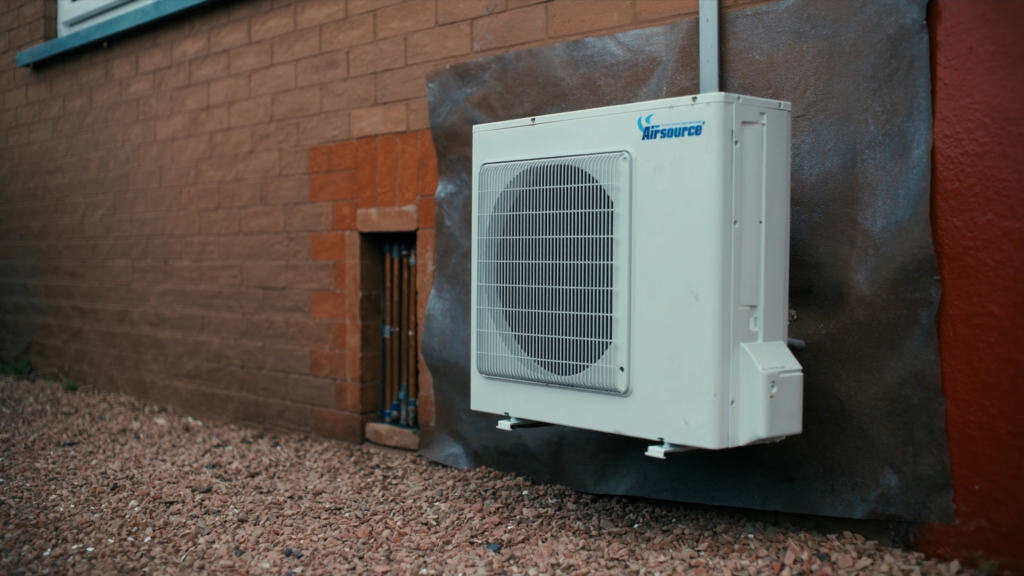
Heat pump pipe insulation is essential for efficiency and system longevity
Uninsulated pipes on an air-source heat pump lose heat to the surrounding air, forcing the system to run longer and use more electricity. Pipe insulation prevents condensation on cold pipes in summer, reducing the risk of corrosion, mould, and water damage inside the property. In winter, insulation protects outdoor pipes from freezing, which can cause blockages or burst pipes and costly repairs.
The Energy Saving Trust states that insulating exposed pipes can improve overall heating system efficiency by 5–10%, depending on the pipe length and location (Energy Saving Trust, 2026). This means for every 10 metres of uninsulated pipe, your heat pump could be wasting roughly £15–£30 per year in extra electricity costs. Insulation is a low-cost measure that directly reduces your running costs and protects the system from weather-related damage.
The minimum insulation thickness for heat pump pipes in 2026
UK building regulations require a minimum of 32mm thickness for pipe insulation on heat pump flow and return pipes in unheated spaces. This thickness applies to pipes with a diameter up to 28mm; larger pipes may require thicker insulation proportional to the pipe size (Approved Document L, Building Regulations 2021 including 2023 amendments). The requirement comes from Approved Document L, which mandates insulation to reduce heat loss and avoid condensation on pipework in lofts, garages, outside walls, and any other unheated area.
Homeowners should check that installers use pre-formed pipe insulation with a closed-cell structure to meet the required thermal performance. Open-cell or fibrous insulation (such as standard loft roll insulation) does not meet the regulation and will not prevent condensation or moisture ingress. The 32mm thickness is a minimum, using thicker insulation (e.g., 50mm) can further reduce heat loss but is not mandatory for domestic systems.
How to choose the right insulation material for heat pump pipes
Closed-cell polyethylene (PEX) foam is the most common material for heat pump pipe insulation due to its moisture resistance and flexibility. Elastomeric rubber (e.g., Nitrile rubber) offers higher temperature tolerance (up to 120°C) and is suitable for pipes near the heat pump unit or in boiler rooms. Fibreglass or mineral wool insulation is less common for domestic heat pump pipes because it absorbs moisture and requires a vapour barrier to remain effective.
The insulation material must have a thermal conductivity (k-value) of 0.035–0.040 W/mK at 40°C to be effective; check the product datasheet for this specification. For outdoor pipes, choose UV-resistant insulation or cover it with a protective weatherproof jacket. For pipes running through lofts or garages, standard closed-cell foam with a foil facing is adequate. Always match the insulation internal diameter to the pipe size (typically 22mm or 28mm for heat pump flow and return pipes).
Quick numbers, cost, thickness, and savings for heat pump pipe insulation in 2026
| Item | Value |
|---|---|
| Typical cost per metre of insulation (32mm thickness) | £2–£5 per metre (source: comparison of UK DIY retailers, 2026) |
| Recommended minimum thickness for unheated spaces | 32mm (source: Approved Document L, Building Regulations) |
| Estimated annual energy savings from insulating 10 metres of exposed pipe | £15–£30 per year (based on EST efficiency improvement of 5–10%) |
| Typical installation cost for a standard 3-bed home (professional fitting) | £150–£300 (source: EST guide to heat pump installation costs, 2026) |
| U-value of 32mm closed-cell foam insulation | 0.034 W/m²K (typical product spec) |
What you need to know
You must insulate all heat pump flow and return pipes that run through unheated spaces (lofts, garages, outside walls) to at least 32mm thickness using closed-cell foam. This insulation reduces heat loss by up to 90% on exposed pipework, according to the Energy Saving Trust (Energy Saving Trust, 2026). Failure to insulate can void your heat pump warranty or invalidate your MCS certificate, as the Microgeneration Certification Scheme (MCS) standard requires proper pipe insulation (MCS 007 standard, 2026).
The cost is low (typically £2–£5 per metre) and the payback period is under 2 years from energy savings. That makes it one of the most cost-effective heat pump upgrades. If you are installing a new system, ensure the contract specifies 32mm closed-cell insulation on all exposed pipework, this is a simple check that can save you hundreds of pounds over the system’s lifetime.
Eligibility and how to verify your heat pump installer for pipe insulation
Your heat pump installer must be MCS-certified to install the system under the Boiler Upgrade Scheme (BUS) grant; the MCS standard (MCS 007) requires all exposed pipework to be insulated to Building Regulations standards (MCS website, 2026). Check your installer’s MCS registration on the MCS website (mcscertified.com) before work begins. For the BUS grant (2026), the installer must also be registered with TrustMark for consumer protection (TrustMark, 2026).
After installation, request a certificate confirming pipe insulation thickness and material used; this may be needed for warranty claims or when selling the property. If your installer uses insulation thinner than 32mm or leaves gaps, you have grounds to request a correction before signing off the work. How to check your heat pump installer is MCS certified
Common installation mistakes that reduce the effectiveness of heat pump pipe insulation
Leaving gaps or compression points at joints, bends, or valves creates thermal bridges that leak heat and allow condensation. Using insulation that is too thin (e.g., 19mm) for outdoor or unheated spaces fails to meet Building Regulations and reduces efficiency. Failing to seal the insulation seams with tape or adhesive allows moisture ingress, which degrades the material over time (EST technical guidance on heat pump installation, 2026).
Not insulating the condensate drain pipe from the heat pump can cause freezing in winter, leading to system shutdown. The EST notes these as the top three installation defects found in audits. To avoid these issues, visually inspect all pipe runs after installation, look for gaps at joints, crushed insulation at bends, and exposed metal at valves. If you spot any of these, request the installer to rectify them before the system is commissioned. Heat pump winter maintenance checklist
Frequently Asked Questions
UK building regulations require a minimum of 32mm thickness for heat pump flow and return pipes in unheated spaces. The Energy Saving Trust confirms this applies to pipes up to 28mm diameter, with larger pipes needing thicker insulation proportional to size.
Yes, the Energy Saving Trust states insulating exposed pipes can improve system efficiency by 5-10%, saving roughly £15-£30 per year for every 10 metres of uninsulated pipe. It is a low-cost measure that directly reduces running costs.
No, open-cell or fibrous insulation like standard loft roll does not meet regulations. The Building Regulations Approved Document L requires closed-cell pre-formed pipe insulation to prevent condensation and moisture ingress.
Outdoor pipe insulation prevents freezing in winter, which can cause blockages or burst pipes, and stops condensation in summer that leads to corrosion and mould. The Energy Saving Trust recommends it for system longevity.
Uninsulated pipes lose heat to surrounding air, forcing the system to run longer and use more electricity. In summer, condensation can cause corrosion and mould; in winter, pipes may freeze and burst, leading to costly repairs.