Chippenham’s Housing Story, and Why Eco Upgrades Make Real Sense Here
Chippenham sits in the Avon valley, straddling the River Avon as it winds through the Wiltshire lowlands, a position that’s shaped both the town’s character and the way its homes were built. It’s an ancient market town that grew dramatically in the Victorian era when the Great Western Railway arrived, and you can still see that history written into the streetscape today. The terraced rows around Foghamshire and Lowden, the semis spreading out towards Pewsham and Cepen Park, the older stone cottages in Hardenhuish, each era of building brings its own energy efficiency quirks.
With around 35,000 residents and steady growth pushing new development towards Chippenham’s eastern and northern edges, the town is a real mix of old and new. If you live in one of the 1930s or post-war semis that dominate areas like Westmead or Rowden, you’re in the sweet spot where targeted improvements deliver the biggest bang for your buck.
The Avon valley setting also means Chippenham sits lower and more sheltered than, say, the high chalk downs around Devizes to the south-east. That moderate, sheltered climate, plus the South West’s excellent solar irradiance, makes this one of the better places in England to invest in renewables. The numbers genuinely stack up here, and this guide is going to show you exactly why.
How Energy Efficient Are Chippenham Homes Really
Here’s some good news worth taking a moment to appreciate, Chippenham homes average EPC Band C, which puts the town comfortably above the national average of Band D. That means most households here have already had some energy improvements done, whether that’s cavity wall insulation, a decent boiler, or double glazing that isn’t rattling in its frames.
But Band C covers a wide range. A home sitting at the bottom of Band C (scoring around 55) behaves very differently from one near the top (scoring around 68). The difference on your annual energy bill can easily be £400 to £600 per year, even for similar-sized properties on the same street.
For a typical Chippenham semi-detached home running on mains gas, you’re probably spending somewhere around £1,400 to £1,700 per year on combined energy bills in 2026, based on average gas usage of 10,800 kWh and electricity of 3,000 kWh. That’s actually slightly below the national typical spend, a reflection of both the relatively mild Wiltshire winters and the town’s better-than-average efficiency baseline.
The homes with the most to gain are the pre-1940s terraces around the town centre and older stone properties in areas like Hardenhuish Lane and Stanley, where solid walls, older heating systems, and minimal loft insulation mean energy is still quietly leaking away. Even a Band C home can climb to B or A with the right combination of upgrades, cutting bills by 30 to 50 percent.
Solar Panels in Chippenham, The Numbers That Might Surprise You
The South West is the UK’s solar goldmine, and Chippenham benefits from that fully. With solar irradiance of around 1,100 to 1,200 kWh per square metre per year, you’re getting meaningfully more usable sunshine than homeowners in the Midlands or the North. That translates directly into more units of electricity generated and shorter payback periods.
Chippenham’s valley position means most residential streets run in orientations that give a decent proportion of homes a south or south-west facing roof slope, ideal for panels. The newer estates around Pewsham and Cepen Park, built in the 1990s and 2000s, often have particularly good roof pitches for solar. Older terraced streets near the town centre tend to have smaller roof sections, which can limit system size but doesn’t rule solar out.
Here’s how the numbers look for a typical Chippenham home in 2026:
| System Size | Approx Install Cost | Annual Generation | Estimated Annual Saving | Payback Period |
|---|---|---|---|---|
| 3 kW (6 panels) | £5,500 to £6,500 | 2,700 kWh | £480 to £580 | 10 to 12 years |
| 4 kW (8 panels) | £6,500 to £8,000 | 3,600 kWh | £620 to £760 | 9 to 11 years |
| 6 kW (12 panels) | £8,500 to £10,500 | 5,400 kWh | £880 to £1,050 | 9 to 11 years |
Savings assume a mix of self-consumption and Smart Export Guarantee (SEG) export payments. Adding a battery storage unit (typically £2,500 to £4,000 extra for a 10 kWh battery) lifts self-consumption significantly and improves the overall return, particularly useful if you’re out during the day.
One local planning note worth knowing, Chippenham falls under Wiltshire Council for planning purposes. Most solar installs on standard homes qualify as permitted development and don’t need planning permission. However, if your home is in one of Chippenham’s conservation areas, the town centre area around the Borough Parade and the older streets off New Road have conservation designations, you’ll want to check with Wiltshire Council’s planning team before proceeding. Listed buildings require full listed building consent.
Heating Choices That Actually Work for Chippenham Homes
Chippenham’s climate sits in the milder southern band of England, the Avon valley gives some shelter, winters are rarely severe, and heating degree days of around 1,200 to 1,500 per year are at the lower end of the UK range. That matters when you’re comparing heating systems, because the economics shift depending on how hard your heating has to work.
Here’s an honest comparison for a typical Chippenham semi or terrace:
- Modern condensing gas boiler, Still the most straightforward option if you’re already on mains gas. A quality A-rated replacement costs £2,000 to £3,500 installed and will cut gas consumption by 15 to 20 percent compared to an older boiler. Annual running cost for a typical Chippenham semi runs around £800 to £1,000 for heating and hot water.
- Air source heat pump (ASHP), Increasingly practical for Chippenham homes, particularly those with good insulation. An ASHP works efficiently even in mild winters like Wiltshire’s, achieving a coefficient of performance (CoP) of around 3.0 to 3.5 in typical conditions. Installed cost runs £8,000 to £14,000, often reduced by the Boiler Upgrade Scheme grant (see below). Annual running cost for the same semi is typically £700 to £950 on current electricity tariffs, roughly comparable to gas, and falling as electricity costs ease.
- Ground source heat pump (GSHP), More powerful and more efficient, but requires garden space for ground loops. Chippenham’s newer estates at Pewsham sometimes have larger plot sizes that could accommodate this. Installed cost is £18,000 to £28,000, which is hard to justify for a terrace or standard semi without significant grant support.
For most Chippenham homeowners in a standard semi or terrace, the honest advice is this, if your boiler is failing and your insulation is already good, an ASHP with the Boiler Upgrade Scheme grant is worth serious consideration. If your insulation needs work first, do that before upgrading the heat source.
Where to Start with Insulation in Chippenham
Given that most Chippenham homes are already at Band C, you might assume insulation is already sorted. Often it is, partially. The most common gap is incomplete or degraded loft insulation, particularly in 1970s and 1980s properties around Lowden and Westmead where original mineral wool has compressed over time and lost much of its effectiveness.
Here’s a sensible priority order with honest cost and savings figures:
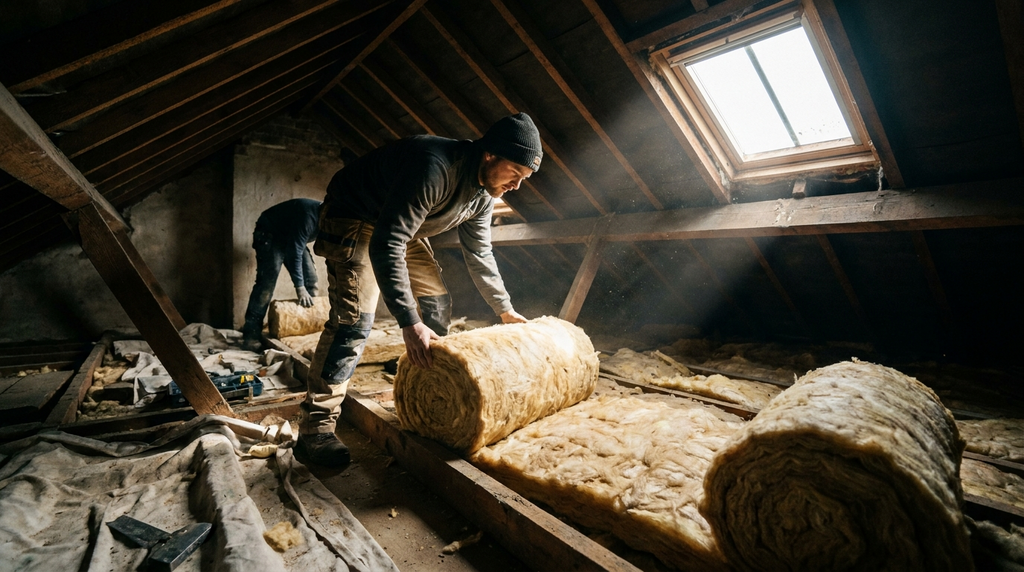
- Loft insulation top-up, If you have less than 270mm of insulation (pop your head up and check), topping up to the recommended level costs £300 to £600 for a typical semi and saves around £150 to £250 per year. Best value upgrade available, full stop.
- Cavity wall insulation, Most post-1930 semis and terraces in Chippenham have cavity walls. If it hasn’t been done, it costs £500 to £900 and saves £200 to £300 per year. If it was done more than 15 years ago, it’s worth having it checked, degraded or failed cavity fill is more common than people realise.
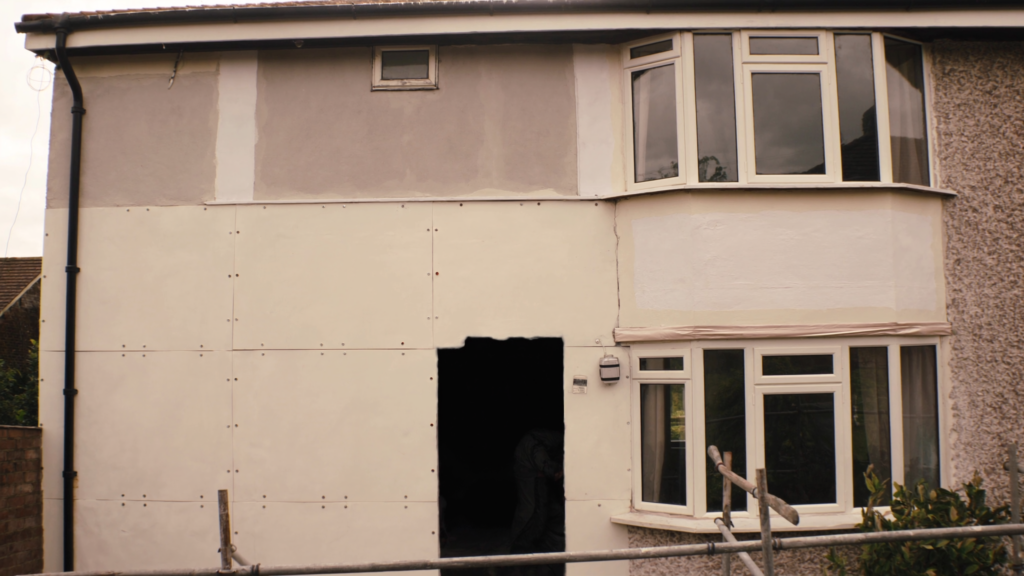
- Solid wall insulation, The older stone and brick properties in Hardenhuish and around the historic town centre have solid walls, which lose heat roughly twice as fast as cavity walls. External wall insulation costs £8,000 to £18,000 for a whole house but saves £300 to £500 per year. Internal wall insulation is cheaper at £4,000 to £9,000 but reduces room size slightly. Both qualify for grant funding if you meet income criteria.
- Floor insulation, Suspended timber floors over unheated crawl spaces, common in Victorian terraces near the town centre, lose a surprising amount of heat. Insulating underneath costs £1,000 to £2,500 and saves around £70 to £150 per year.
- Draught proofing, Unglamorous but effective, especially for older sash windows and around letterboxes and loft hatches. A professional draught proofing job costs £200 to £400 and can save £80 to £150 per year.
Grants and Funding Chippenham Residents Can Actually Get in 2026
This is where it gets genuinely interesting, because there’s more money on the table than most people realise, you just have to know where to look.
The Warm Homes Plan
The government’s Warm Homes Plan replaced the older ECO4 scheme and provides fully funded or heavily subsidised insulation and heating upgrades for households on qualifying benefits or with low incomes. If your household income is below around £31,000 per year or you receive benefits including Universal Credit, Pension Credit, or Housing Benefit, you could get insulation, a heat pump, or heating controls installed at no cost to you. Apply through Wiltshire Council’s housing team or directly via the government’s scheme portal.
The Boiler Upgrade Scheme
If you’re switching from a gas or oil boiler to a heat pump, you can claim £7,500 off the installed cost of an air source heat pump or £7,500 for a ground source heat pump. Your installer applies for this on your behalf, so you simply pay the reduced amount upfront. This scheme has no income limit, it’s open to all homeowners. For a Chippenham semi, this grant makes an ASHP genuinely competitive with a replacement gas boiler on whole-life costs.
The Great British Insulation Scheme
Separate from the Warm Homes Plan, this scheme offers subsidised insulation for homes rated EPC Band D or below, so if you have a Band D, E, F, or G property in Chippenham, this is worth exploring. It covers loft and cavity wall insulation primarily. Eligibility is broader than some other schemes, covering anyone on a low income or living in a lower council tax band property.
VAT on Energy Saving Improvements
All qualifying energy-saving products, solar panels, heat pumps, insulation, draught proofing, carry zero percent VAT rather than the standard 20 percent. This applies automatically and saves you a meaningful amount on any installation. A £10,000 heat pump installation saves you £2,000 in VAT alone compared to a standard-rated purchase.
Wiltshire Council’s Local Support
Wiltshire Council runs its own Home Energy Advice service and periodically offers area-based insulation schemes targeting specific streets or estates. It’s worth contacting Wiltshire Council’s housing team directly to ask what’s currently running in Chippenham specifically, these schemes often aren’t widely advertised but can deliver free surveys and subsidised work.
Finding Good Installers Around Chippenham
Chippenham is well-served by installers because of its position between Bath (19km), Trowbridge (17km), and the wider Wiltshire market. Most established renewable energy and insulation firms operating out of those centres will cover Chippenham as standard, and there are local tradespeople based in the town itself and in nearby Corsham (just 5km away).
Here’s what to look for and what to avoid:
- Solar installers should be MCS (Microgeneration Certification Scheme) certified, this is non-negotiable if you want to access SEG export payments or any grant funding. Check the MCS register at mcscertified.com before committing.
- Heat pump installers must hold MCS certification and ideally be members of the Heat Pump Association. Ask specifically how many ASHPs they’ve installed in the last 12 months, experience matters enormously with these systems.
- Insulation installers should be registered with the Cavity Insulation Guarantee Agency (CIGA) for cavity work, which provides a 25-year guarantee on the installation. For solid wall insulation, look for TrustMark registration.
- Get at least three quotes for any job over £2,000. Prices vary more than you’d expect, and a quote that’s significantly cheaper than the others deserves scrutiny rather than celebration.
- Be cautious of door-to-door salespeople offering “free government insulation”, legitimate scheme work is usually arranged through the council or through an energy supplier, not through cold callers at your door.
- Waiting times in this part of Wiltshire run to around four to eight weeks for solar installations and slightly longer (eight to twelve weeks) for heat pumps in 2026, plan ahead if you want work done before winter.
Your Step-by-Step Upgrade Plan for a Typical Chippenham Home
If you’re sitting in a Band C semi in Pewsham, Westmead, or Lowden and wondering where to start, here’s the sequence that makes the most financial sense:
- Get a free or low-cost energy