Warminster, A Town of Garrison History, Stone Streets, and Real Eco Home Potential
Warminster sits in the Wylye Valley at the edge of Salisbury Plain, hemmed in by the rolling chalk downland of the Wiltshire countryside. It’s a town shaped by its military connections, Battlesbury and Scratchbury hill forts overlook it from the east, and the Army’s presence at Warminster Garrison has long defined the town’s character. That history matters for homeowners, because it means a significant chunk of the housing stock includes older terraced streets and semi-detached estates built to house workers and service families from the Victorian era right through to the 1970s and 80s.
Neighbourhoods like Boreham Road, the Queensway estate, and the streets fanning out around the town centre along East Street and Weymouth Street are full of solid but draughty homes sitting on EPC Band D ratings. They’re crying out for upgrades, and the good news is that Warminster’s sunny, relatively sheltered position makes it one of the better spots in the South West for eco improvements to pay off quickly.
For a broader look at eco homes across the county, head over to our eco homes in Wiltshire guide.
How Energy Efficient Are Warminster Homes Really?
The average home in Warminster sits at EPC Band D, right in the middle of the national pack. That might sound fine, but in practical terms it means your home is losing more heat than it should, costing you significantly more to run than it needs to.
A Band D home in Warminster typically spends around £1,650 to £2,100 per year on energy, depending on the size of the property and how it’s heated. With an average gas usage of 10,800 kWh per year and electricity consumption of around 3,100 kWh, that lines up almost exactly with the national median, but it’s worth remembering that the South West tends to have milder winters than many parts of the UK, so heating demand here is actually slightly lower than average. That means if your bills are still high, insulation is almost certainly the culprit rather than the weather.
Homes in nearby Trowbridge and Frome share a similar housing age profile, but Warminster’s mix of stone-built Victorian terraces and post-war brick semis means there’s real variation. Move your home from Band D to Band B, which is very achievable with the right upgrades, and you could cut your energy bills by £600 to £900 a year.
- Band D to C, achievable with loft insulation, cavity wall fill, and a smart thermostat. Typical saving of £300 to £450 per year
- Band C to B, usually requires a heat pump or solar panels plus better controls. Adds another £250 to £400 per year in savings
- Band B to A, the final push, often involving battery storage and full airtightness work
Solar Panels Are a Particularly Good Bet in Warminster
Warminster benefits from the South West’s excellent solar irradiance, around 1,100 to 1,200 kWh per square metre per year. That’s the best in mainland Britain, and it makes solar panels one of the most reliable investments you can make here. The town sits in a valley, but most of the residential areas on the slopes facing south and southwest, particularly around Deverill Road and the newer estates off Boreham Field, have roof orientations that solar installers will be genuinely pleased to work with.
One thing to be aware of is that the town centre conservation area and some of the older stone-fronted streets off Church Street and Market Place fall under Wiltshire Council planning guidance, which may restrict panel placement on street-facing elevations. Check with Wiltshire Council’s planning department before ordering, most installers from the Frome and Trowbridge area will know the local rules and can advise you.
| System Size | Installed Cost (2026) | Annual Generation | Annual Bill Saving | Payback Period |
|---|---|---|---|---|
| 3 kW (6 panels) | £5,500 – £6,500 | ~2,700 kWh | £480 – £580 | 10 – 12 years |
| 4 kW (8 panels) | £7,000 – £8,000 | ~3,600 kWh | £620 – £750 | 9 – 11 years |
| 6 kW (12 panels) | £9,500 – £11,000 | ~5,400 kWh | £900 – £1,050 | 9 – 11 years |
Adding a battery storage system (typically £3,000 to £5,000 for a 5–10 kWh unit) makes a real difference if you’re out during the day. It lets you use the solar power you generate in the evening rather than exporting it cheaply to the grid. For a semi-detached in Warminster running mostly on electricity, the combination of 4 kW solar plus battery is often the single best investment you can make.
Getting Your Heating Right for a Warminster Home
Most Warminster homes are on mains gas, which makes the heating decision a little more straightforward than for rural properties out on the Plain. But with gas prices unlikely to fall significantly and heat pump technology improving every year, it’s worth thinking carefully about your next heating system rather than just replacing like-for-like.
Warminster’s valley position means winters are noticeably milder than upland Wiltshire towns like Devizes or the villages above the Plain. You’re typically looking at 1,200 to 1,500 heating degree days per year, that’s the lower end of the UK range, which is good news for heat pump performance.
Comparing Your Main Heating Options
- Modern condensing gas boiler, Running cost roughly £850 to £1,050 per year for a typical semi-detached. Familiar technology, lower upfront cost (£2,000 to £3,500 installed), but you’re still dependent on gas prices and it won’t help your EPC rating as much as a heat pump
- Air source heat pump (ASHP), Running cost roughly £700 to £950 per year with Warminster’s mild winters and current electricity tariffs, assuming good insulation. Upfront cost £8,000 to £14,000 before any grant, but the £7,500 Boiler Upgrade Scheme grant (see below) changes the maths considerably. Works well in the terraced homes off the Portway and the semi-detached estates around the Boreham Road area
- Ground source heat pump (GSHP), More efficient but requires garden space for ground loops or a borehole. Running cost roughly £550 to £800 per year, upfront cost £18,000 to £28,000 before grants. Better suited to the larger detached properties on the town’s outskirts than to the town centre terraces
Practical tip, if your home still has a standard radiator system, ask any heat pump installer about low-temperature radiator compatibility before committing. Many semi-detached homes in Warminster can run an ASHP on existing radiators if insulation is good, but you may need a few larger radiators in key rooms.
Where to Start with Insulation in Warminster
For the typical Band D semi or terrace in Warminster, think the streets around Weymouth Street, Boreham Road, or the Imber Road estate area, insulation is where the biggest and quickest wins are. Here’s how to prioritise.
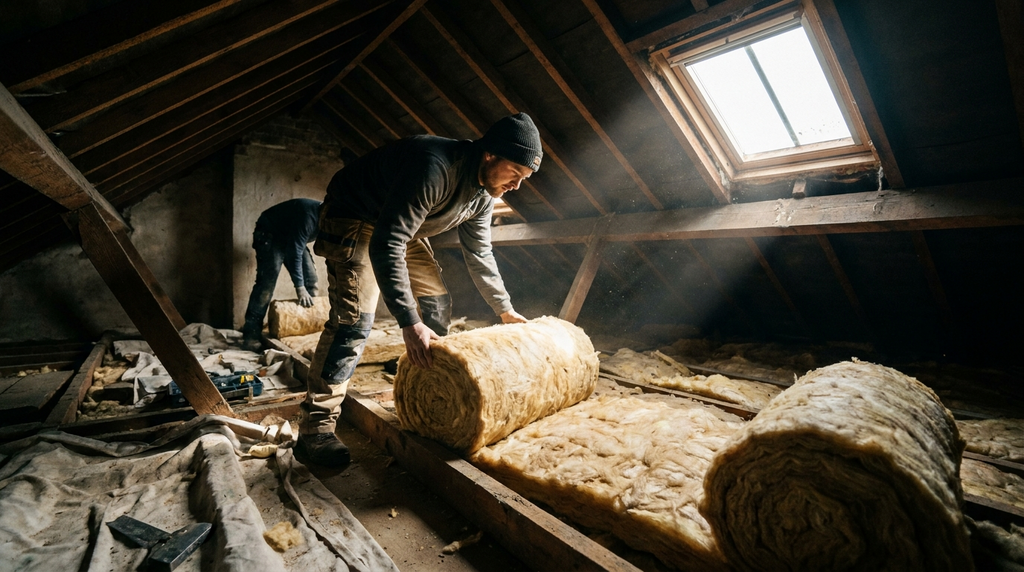
- Loft insulation, If your loft is uninsulated or has less than 270mm, this is your first job. Cost around £300 to £500 for a standard semi-detached. Annual saving of £180 to £250. Payback in under two years. This is genuinely the easiest, cheapest energy improvement you can make.
- Cavity wall insulation, Most post-war brick semis and terraces in Warminster have unfilled cavity walls. Getting them filled costs £600 to £900 and saves around £200 to £280 per year. Worth checking with a surveyor first, some older properties on the edges of town have wall types that need specialist assessment.
- Solid wall insulation, The Victorian stone terraces closer to the town centre are a different matter. Solid stone walls can’t have cavity fill, so you’re looking at internal or external insulation. Internal wall insulation costs £5,000 to £9,000 for a typical terrace and saves £300 to £450 per year. External insulation is more effective but may face planning restrictions in the conservation area around Church Street and the High Street.
- Floor insulation, Suspended timber floors (common in older Warminster terraces) can be insulated from below with rigid foam or mineral wool. Cost around £800 to £1,500, saving roughly £70 to £120 per year.
- Double or triple glazing, If you still have single-glazed windows, replacing them saves around £120 to £180 per year. Full double-glazing replacement typically costs £4,000 to £7,000 for a semi-detached. Not the fastest payback, but it makes a huge difference to comfort.
Grants and Funding Warminster Residents Can Actually Get in 2026
This is where it gets genuinely exciting. There’s more money available for home upgrades right now than at almost any point in the last decade, and Warminster homeowners are well-placed to access it.
The Boiler Upgrade Scheme
A flat £7,500 grant toward the cost of an air source or ground source heat pump. Applied for by your MCS-certified installer, not you directly, so make sure any heat pump quotes you get show the grant already deducted. No income test, available to most owner-occupiers. This single grant can bring the cost of a quality ASHP installation down to genuinely competitive territory with a new gas boiler.
The Great British Insulation Scheme
Free or heavily subsidised insulation for homes rated Band D or below, which covers most of Warminster. You can apply directly through the government’s website or through your energy supplier. Loft and cavity wall insulation are most commonly covered. Worth doing before any other upgrade as it costs you nothing and reduces your heating bills immediately.
The Warm Homes Plan (ECO4 successor)
For households on qualifying benefits or with lower incomes, the Warm Homes Plan can fund comprehensive upgrades including insulation, heating systems, and solar panels, sometimes fully funded. Contact Wiltshire Council’s energy team or Citizens Advice Wiltshire in Trowbridge to check eligibility and get help with the application.
Wiltshire Council Support
Wiltshire Council handles planning and is also a gateway to some county-level energy support programmes. Their website lists referral routes to retrofit assessors and links to the South West Net Zero Hub, which coordinates regional funding. It’s worth ringing their housing team directly to ask what’s currently available, funding pots open and close throughout the year.
Smart Export Guarantee
If you install solar panels, you’ll earn money for any electricity you export to the grid. Rates vary by supplier but typically run between 4p and 15p per kWh. Shop around, some suppliers offer notably better SEG rates than others.
Finding Good Installers Around Warminster
Warminster is a town of 18,000 people, big enough to have some local tradespeople, but most specialist eco installers will be based in nearby Frome, Trowbridge, or Bath, and will serve Warminster as part of their regular area. This is actually fine, those towns are all within 25 kilometres, and the installers who cover this cluster regularly are usually very familiar with local housing types.
What to look for
- MCS certification for solar panels and heat pumps, non-negotiable if you want grant funding
- TrustMark registration for insulation and retrofit work
- A PAS 2035 retrofit assessor for any whole-house works, this is the gold standard and increasingly required for grant-funded projects
- References from similar properties in Warminster, Frome, or Trowbridge, ask for them and actually follow up
Red flags to watch for
- Any installer who quotes without visiting the property
- Pressure to sign quickly or claims that “this grant won’t last”
- No mention of the Boiler Upgrade Scheme when quoting heat pumps
- Very low quotes that don’t include scaffolding, commissioning, or building regulation notifications
Waiting times in this part of Wiltshire currently run at four to twelve weeks for most installations. Solar installers tend to be busier in spring; heat pump installers are in higher demand in autumn. Get quotes in winter for the best choice of installation slots.
Your Practical Step-by-Step Plan for a Warminster Band D Home
If you’re sitting in a typical semi-detached or terrace in Warminster with a Band D EPC and wondering where to begin, here’s the order that makes the most financial sense.
- Get a free EPC and retrofit assessment, Know your starting point. Contact Wiltshire Council’s energy team or use the government’s Find an Assessor tool. Some assessments are free through grant schemes.
- The Great British Insulation Scheme closed on 31 March 2026. It funded insulation measures only and never covered windows or glazing. Do this first, before spending your own money on anything else.
- Top up loft insulation if not covered by the scheme, Cheapest job, fastest payback. Do it this year.
- Install solar panels, Warminster’s solar irradiance makes this one of the best returns you’ll find. A 4 kW system is the sweet spot for most semis and terraces here. Get three quotes from MCS-certified installers based in Frome, Trowbridge, or Bath.
- Add battery storage, Can be installed at the same time as solar or added later. Particularly worthwhile if you’re considering an EV or heat pump in future.
- Replace your heating system when the boiler is due