Trowbridge, Wiltshire’s County Town and Its Surprisingly Good Green Potential
Trowbridge has a quietly fascinating housing story. As Wiltshire’s county town, it grew rapidly during the wool and cloth-weaving industry of the 18th and 19th centuries, which is why you’ll still find a surprisingly dense mix of Victorian and Edwardian terraces, particularly around the Studley Green, Longfield, and Hilperton Road areas. Then came the post-war council estates and 1960s–80s semis that fill out neighbourhoods like Drynham and Paxcroft Mead. That layering of eras matters enormously when you’re thinking about eco upgrades, because a 1930s semi in Adcroft and a 1970s end-terrace near County Hall need very different approaches.
The town sits in the gentle valley of the River Biss, which keeps it sheltered and relatively mild compared to the higher chalk downland around Warminster to the south-east or the Cotswold edges near Bath. That sheltered position is actually a bonus for solar panels and heat pumps alike, you’re not fighting coastal gales or hard frost for months on end.
What makes Trowbridge particularly interesting for eco improvements right now is a combination of factors, strong solar irradiance thanks to the South West’s climate, a housing stock that’s overwhelmingly Band D and genuinely improvable, and a location that gives you good access to installers serving Bath, Frome, Corsham, and Warminster. If you’ve been putting off doing something about your energy bills, this is a decent moment to take stock.
What EPC Band D Actually Means for Your Bills in Trowbridge
Most homes in Trowbridge sit at EPC Band D, which sounds middling, and honestly, it is. It means your home is broadly average for England and Wales, neither a draughty nightmare nor a well-insulated modern build. In practical terms, Band D typically means some loft insulation but possibly thin or degraded, cavity walls that may or may not have been filled, single or older double glazing in places, and a gas boiler doing most of the heavy lifting.
With Trowbridge’s average gas usage of 10,800 kWh per year and electricity at 3,100 kWh per year, a typical household here is spending roughly £1,350–£1,500 on gas and around £900–£1,050 on electricity annually at 2026 tariff rates. That’s £2,300–£2,550 total for most households, not catastrophic, but there’s real money to be recovered with the right improvements.
Compared to the South West as a whole, Trowbridge homes actually use slightly less heating energy than average. The region’s milder winters help, Trowbridge sits in a relatively low-altitude valley, so the 1,200–1,500 heating degree days here are genuinely lower than you’d experience on the Wiltshire downs or the higher ground near Warminster. Even so, the older Victorian terraces clustered around the town centre, parts of Yerbury Street and the conservation area around St James’s Church, can be genuinely cold properties if their solid walls haven’t been treated.
The good news is that moving from Band D to Band B is very achievable for the typical Trowbridge semi or terrace, and it could cut those energy bills by £600–£900 per year once you stack up insulation, heating upgrades, and solar together.
Solar Panels in Trowbridge, the South West Advantage Is Real
Here’s something worth knowing. Trowbridge sits in one of the best solar regions in the entire UK. The South West gets 1,100–1,200 kWh of solar irradiance per square metre per year, and Wiltshire benefits from that fully. Compare that to Manchester at around 950 kWh/m² and you’ll understand why a system here genuinely outperforms the same panels installed further north.
Most semi-detached and terraced roofs in Trowbridge face a range of orientations, but a south or south-west facing pitch, which a good number of the Victorian terraces around Wingfield Road and the newer estates at Paxcroft Mead have, will give you near-optimal performance. Flat-roofed extensions can also be fitted with angled frames.
Typical Solar Costs and Savings for a Trowbridge Home in 2026
| System Size | Typical Installed Cost | Annual Generation (South West) | Estimated Annual Saving | Payback Period |
|---|---|---|---|---|
| 3 kW | £5,500–£6,500 | ~2,900 kWh | £450–£550 | 10–13 years |
| 4 kW | £6,800–£8,000 | ~3,900 kWh | £600–£720 | 10–12 years |
| 6 kW | £9,000–£11,000 | ~5,800 kWh | £850–£1,050 | 9–11 years |
Savings are calculated assuming you self-consume around 50% of generation and export the rest under the Smart Export Guarantee. Adding a 5–10 kWh battery (typically £3,000–£5,000 installed) pushes self-consumption to 70–80% and meaningfully improves those figures.
One local planning point, if your property is in or near Trowbridge’s town centre conservation area (which covers parts of the historic core including Church Street and the areas around the historic cloth mills), you’ll need to check with Wiltshire Council before installing panels on a front roof slope. Wiltshire Council handles all planning applications for Trowbridge, and permitted development rights can be restricted in conservation zones. Rear roof installations are usually fine without permission. If you’re in a listed building, and there are several in the older parts of town, you’ll need listed building consent regardless of which slope you use.
Heating Choices That Suit Trowbridge’s Homes and Climate
Trowbridge’s relatively mild winters mean your heating system isn’t under the same pressure as homes in colder parts of the UK, but that doesn’t mean any system will do. The housing mix matters a lot here.
Gas Boilers
Most Trowbridge homes are on the mains gas grid, which makes a modern condensing combi boiler the simplest like-for-like upgrade. A new A-rated boiler costs £1,800–£2,800 installed and can cut gas consumption by 15–20% compared to an older unit. If your boiler is over 12 years old, replacing it before layering on other improvements is usually the right first move.
Air Source Heat Pumps
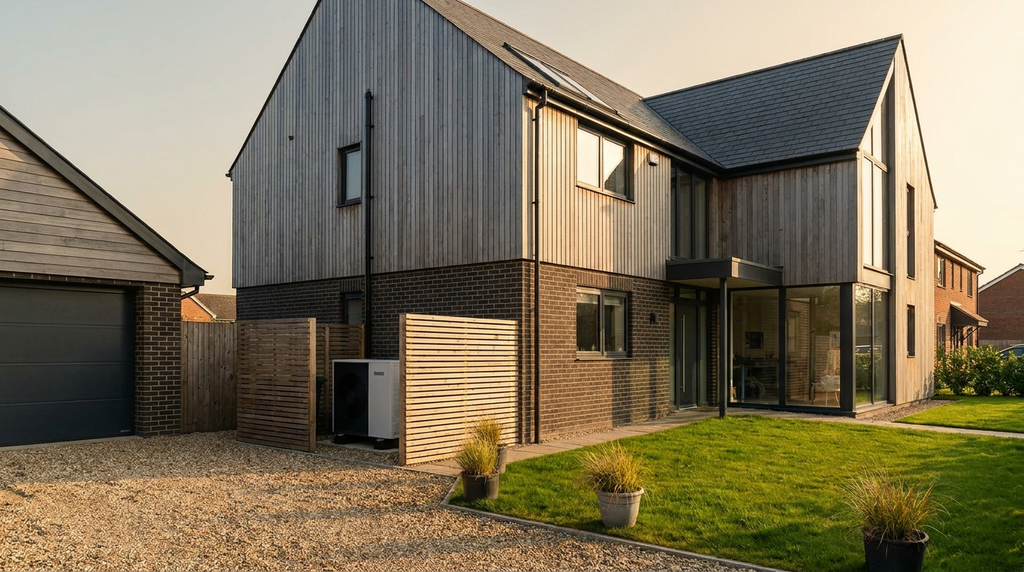
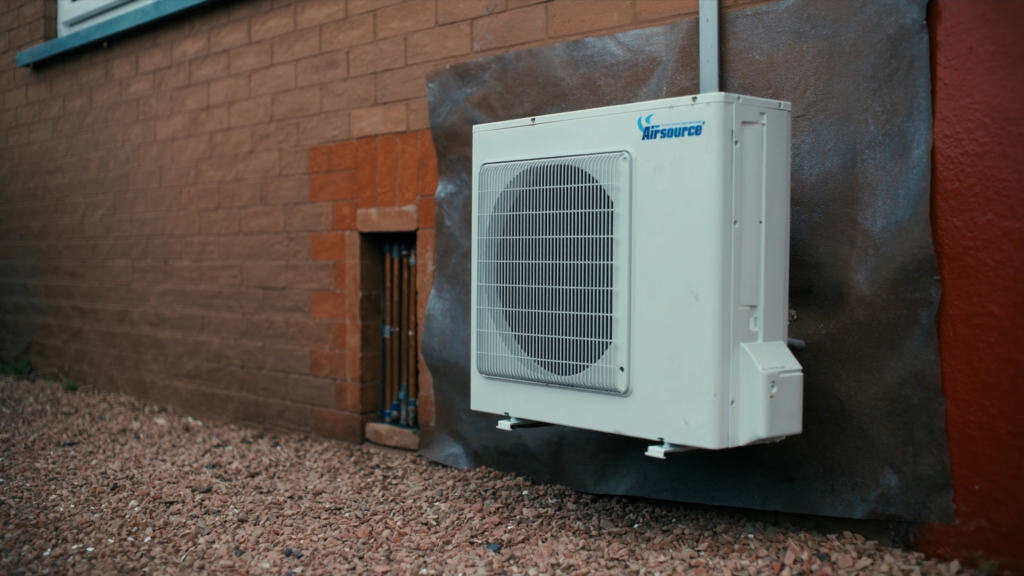
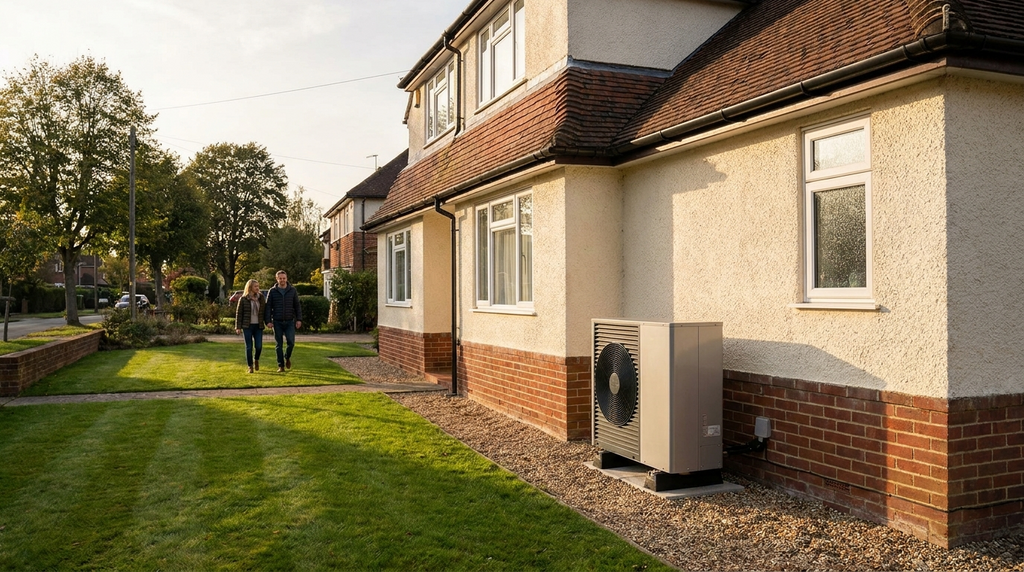
For Trowbridge’s climate, mild winters, moderate shoulder seasons, an air source heat pump (ASHP) is genuinely worth considering, especially if you’re pairing it with solar panels. The town’s sheltered valley position means the extreme cold snaps that reduce ASHP efficiency are rare here. Running costs depend heavily on insulation levels, but a well-installed 8–10 kW system in an insulated semi-detached home typically costs £1,100–£1,500 per year to run on electricity, comparable to a gas boiler once the £7,500 Boiler Upgrade Scheme grant is factored into the capital cost.
Ground Source Heat Pumps
Ground source heat pumps are more efficient but need either a borehole or horizontal ground loop. In Trowbridge’s tightly packed terraces, garden space is often limited, but for the larger semis on estates like Hilperton or properties with decent rear gardens, it’s worth getting a survey. Installed costs run £18,000–£28,000, partially offset by the £7,500 BUS grant, and running costs are typically 10–15% lower than an ASHP.
Heating Running Cost Comparison for a Typical Trowbridge Semi
| Heating System | Estimated Annual Running Cost | Typical Install Cost (After Grants) |
|---|---|---|
| Gas condensing boiler | £900–£1,150 | £1,800–£2,800 |
| Air source heat pump | £1,100–£1,500 | £6,000–£10,000 (post-grant) |
| Ground source heat pump | £900–£1,200 | £11,000–£21,000 (post-grant) |
Practical tip, heat pumps work best with underfloor heating or larger radiators running at lower flow temperatures. If you’re in an older Trowbridge terrace with standard rads, budget for some radiator upgrades (£150–£300 each) as part of the heat pump project.
Where to Start With Insulation, a Trowbridge Priority List
For most Band D homes in Trowbridge, the semis around Drynham Lane, the terraces near the station, the 1970s estates at Paxcroft, insulation is where you’ll find the fastest payback. Here’s a sensible order of priority.
Loft Insulation
If your loft has less than 270mm of mineral wool, topping it up is the single cheapest improvement with the fastest return. Cost for a typical semi is £300–£600, and you can save £200–£350 per year on heating. Payback in under two years in most cases.
Cavity Wall Insulation
Most post-1930 homes in Trowbridge have cavity walls. If yours hasn’t been filled, or the fill has degraded, this is your second priority. Typical cost is £700–£1,400 for a semi, with annual savings of £150–£280. A quick check with a thermal imaging survey (often free through energy assessors) will tell you if your existing fill has gaps.
Solid Wall Insulation
The Victorian terraces around the town centre often have solid brick walls, which are harder and more expensive to treat. External wall insulation costs £8,000–£15,000 for a terrace; internal wall insulation runs £4,000–£8,000 but reduces room size slightly. Annual savings are typically £300–£500. This is a bigger project, best planned alongside other renovation work and funded through grants where possible.
Floor Insulation
Often overlooked, but suspended timber ground floors in older Trowbridge terraces can account for 10–15% of heat loss. Insulating beneath the floorboards costs £1,000–£2,500 and saves around £70–£120 per year.
Double and Triple Glazing
If you still have single glazing or early double glazing from the 1990s, upgrading saves £100–£200 per year. Full replacement for a three-bed semi typically runs £4,000–£7,000. Worth doing, but it’s rarely the highest-return first step.
Grants and Funding Trowbridge Residents Can Actually Access in 2026
The Warm Homes Plan, Great British Insulation Scheme
The Great British Insulation Scheme closed on 31 March 2026. It funded insulation measures only and never covered windows or glazing. Given Trowbridge’s average Band D rating, a significant number of residents will qualify. Eligibility is income-based for the means-tested strand, but the general strand also covers homes in Council Tax bands A–D regardless of income. Apply through the government’s official scheme portal or ask your energy supplier directly, they administer the scheme.
Boiler Upgrade Scheme
The £7,500 grant is available toward an air source or ground source heat pump installation. Your installer applies on your behalf after you’ve agreed the work. You don’t need to be on benefits, this is available to all homeowners replacing a fossil fuel heating system. The key condition is that your home must have reasonable insulation in place first.
ECO4 Scheme
ECO4 funds whole-house retrofit packages for households on qualifying benefits (including Universal Credit, Pension Credit, and Child Tax Credit). If you qualify, you could receive free insulation, heating upgrades, and even solar panels, the total value can reach £10,000–£25,000 depending on your property. Contact Wiltshire Council’s energy advice team or a registered ECO4 installer to check eligibility.
Wiltshire Council Support
Wiltshire Council has committed to carbon reduction targets under its own climate strategy. The council runs referral pathways to national schemes and occasionally funds local energy advice surgeries. It’s worth calling their housing team directly to ask what’s currently running, these programmes change and aren’t always well publicised.
VAT
All energy-saving materials, insulation, heat pumps, solar panels, are currently zero-rated for VAT when installed by a registered contractor. That’s effectively a 20% saving on the labour and materials cost, built into every quote you receive from a compliant installer.
Finding Good Installers Around Trowbridge
Trowbridge sits at a useful intersection for the installer market, Bath, Frome, Corsham, and Warminster are all within 13km, which means you have genuine competition between companies serving this cluster of towns. That’s good for you as a customer, because you can realistically get three quotes without anyone travelling huge distances.
- For solar, look for MCS (Microgeneration Certification Scheme) accreditation. Without it, you can’t register for the Smart Export Guarantee and your installation may not meet building regulations. Check the MCS installer database at mcscertified.com.
- For heat pumps, MCS certification is also required for Boiler Upgrade Scheme grants. Ask specifically about their experience with the property type you have, a Victorian terrace needs different expertise than a 1980s semi.
- For insulation, look for CIGA (Cavity Insulation Guarantee Agency) membership for cavity wall work, and TrustMark registration for any installer receiving grant funding.
- Red flags, unsolicited cold calls offering free insulation, requests for large upfront payments, and installers who won’t provide a written survey before quoting.
- Waiting times, in this part of Wiltshire, good installers are typically booked 6–14 weeks ahead for solar and heat