Why a UK heat pump system needs glycol antifreeze
Heat pumps installed outdoors in the UK face winter temperatures that can fall well below freezing. The water in the external heat exchanger loop will freeze if unprotected. Ice formation expands and can crack the heat exchanger, damage the compressor blades, and block the refrigerant flow.
Manufacturers including Daikin, Mitsubishi Electric and Vaillant require glycol antifreeze in their installation manuals to keep the warranty valid. The MCS 022 heat pump installation standard also specifies freeze protection for outdoor loops (MCS, 2026). Without glycol, a single freeze event can cause repairs costing £1,000–£4,000 for a new heat exchanger or compressor.
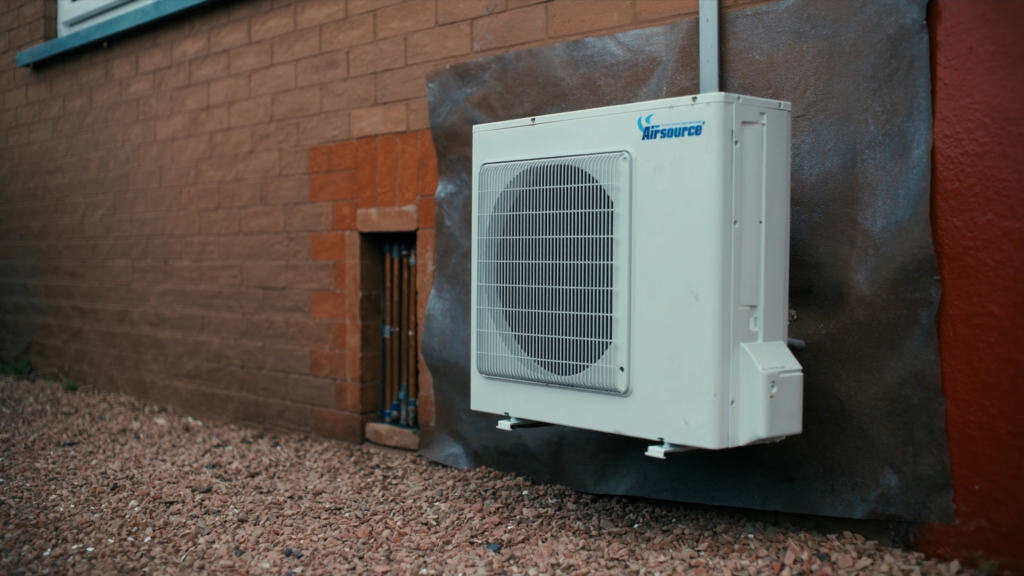
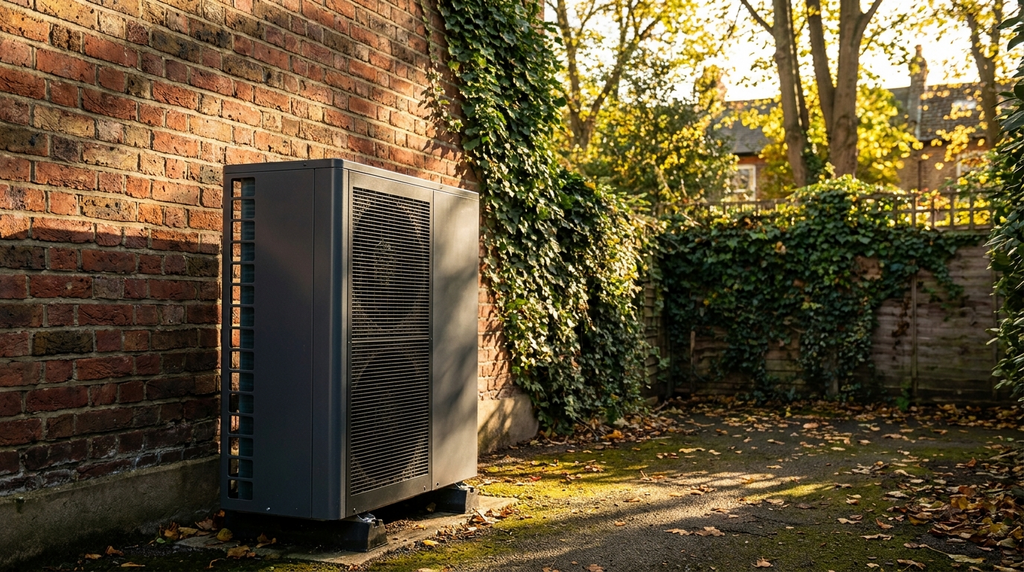
The risk is highest for air-source heat pumps mounted on external walls and for ground-source systems with buried pipework in exposed or northern UK locations. Even in southern England, prolonged cold snaps can drop outdoor temperatures below –5°C, which is enough to freeze plain water in an unheated loop.
Propylene glycol vs ethylene glycol for domestic heat pumps
Propylene glycol is the standard choice for UK domestic heat pumps. It is classified as non-toxic and is safe if a leak contaminates the drinking water supply or garden soil. Most pre-mixed heat pump antifreeze sold in UK builders merchants is propylene glycol.
Ethylene glycol has better heat transfer properties but is toxic. It is used almost exclusively in commercial and industrial sealed loops where there is no risk of contact with people, pets or the water supply. Ethylene glycol should never be used in a domestic system that feeds an open vent or has a connection to the household water system.
Both types lower the freezing point of the water-glycol mix to between –15°C and –25°C, depending on the concentration. Manufacturers typically specify a 25–40% glycol concentration by volume (DESNZ, 2026). The British Standard BS 7671 requires that any additive used in a heating system must be compatible with the system materials and the local water supply regulations.
How much glycol antifreeze costs for a UK heat pump (2026 prices)
A 3–10 litre drum of pre-mixed propylene glycol for a typical 6–12 kW heat pump costs £150–£400. Retail prices from Screwfix, PlumbNation and Wolseley in 2026 show standard 25-litre drums of ready-mix at around £200–£350, and smaller 5-litre containers at £80–£150 (Energy Saving Trust, 2026).
Labour to flush the old fluid, fill the system and bleed air locks adds £100–£250 if done by an MCS-certified installer. A DIY refill using purchased glycol only costs £80–£150, but the installer must still commission the system to maintain the warranty. The total installed cost for a glycol change on a 6–12 kW heat pump is therefore £250–£650.
Ground-source heat pumps typically need a larger volume of glycol mix because the buried ground loop can hold 20–50 litres. For these systems, the glycol cost alone can reach £400–£700, plus labour.
Quick numbers – glycol concentration, freezing point, and system impact
| Glycol concentration (% by volume) | Freezing point (°C) | Typical UK climate suitability | Effect on heat pump efficiency (COP reduction) |
|---|---|---|---|
| 0% (pure water) | 0°C | Unsafe for outdoor loops | No reduction (baseline) |
| 25% | –12°C | Most of southern England | ~5–8% reduction |
| 35% | –20°C | All UK regions, including Scotland | ~10–15% reduction |
| 40% | –25°C | Extreme cold / exposed sites | ~15–20% reduction |
Source: Heat pump manufacturer technical datasheets and EST heat pump efficiency guidelines (Energy Saving Trust, 2026).
Does glycol antifreeze reduce heat pump efficiency – by how much?
Yes. Glycol is thicker than water and has a lower specific heat capacity, so the heat pump has to work harder to transfer the same amount of heat. Every 10% glycol concentration reduces the coefficient of performance (COP) by roughly 2–4%, depending on the system design and operating temperatures.
For a typical 6 kW air-source heat pump with a COP of 3.5 on plain water, a 35% glycol mix lowers the COP to about 3.1–3.2. That 10–15% efficiency drop increases annual electricity use by approximately £80–£150 at 2026 electricity rates of 24p/kWh (Ofgem, 2026).
The trade-off is widely considered acceptable because freeze damage repair costs £1,000–£4,000, and the efficiency loss is predictable and manageable. Some advanced heat pump models use variable-speed pumps and adaptive controls that partly compensate for the glycol effect, reducing the COP penalty to around 5–8%.
How to check if your heat pump already has glycol – and when to replace it
You can test the glycol concentration using a refractometer or glycol test strip, both available online or at plumbing suppliers for £10–£30. The test measures the freezing point and the pH level of the fluid.
Glycol degrades over time. The manufacturer maintenance schedule in MCS 022 recommends replacing the glycol every 3–5 years, or sooner if the pH drops below 7.5 (MCS, 2026). Signs of degradation include discolouration (brown or black fluid), visible sludge or particles, and a sweet, burnt smell.
If the glycol is not replaced on schedule, it loses its freeze protection and can become acidic, which corrodes the heat exchanger and pump seals. Annual testing is the simplest way to avoid sudden system failure during a winter cold snap.
Eligibility and certification – who can install glycol in your heat pump
Only an MCS-certified installer should add or replace glycol in a heat pump system to preserve the manufacturer’s warranty. The installer must also be registered with TrustMark or hold NICEIC/NAPIT accreditation for the electrical and system integrity checks (TrustMark, 2026).
If you have an existing system receiving the Renewable Heat Incentive (RHI), using an uncertified DIY fill would invalidate your RHI payments. The RHI scheme closed to new applicants in 2022, but the rules still apply to existing recipients. A Gas Safe Registered engineer with specific heat pump training may also be qualified, but MCS certification is the most widely accepted standard.
An uncertified DIY fill voids the manufacturer’s warranty and can leave you liable for the full cost of any freeze-related repairs. The cost of an MCS-certified glycol change is typically £100–£250 labour, which is a small fraction of a potential £4,000 repair bill.
how to find an MCS certified heat pump installer
heat pump maintenance checklist for UK homeowners
Heat pump glycol antifreeze is essential for UK systems installed outdoors or in cold regions, costs £150–£400, reduces efficiency by 5–15%, and must be installed by an MCS-certified engineer to keep the warranty valid.
Frequently Asked Questions
Heat pump glycol antifreeze is a liquid additive that lowers the freezing point of water in the outdoor heat exchanger loop. The Energy Saving Trust states that a 25–40% glycol mix protects down to –15°C to –25°C, preventing ice damage.
Yes, if your heat pump is outdoors in the UK. The MCS 022 standard and manufacturers like Daikin require glycol antifreeze to keep the warranty valid. Without it, a freeze can cause £1,000–£4,000 in repairs.
Propylene glycol is the safe choice for UK domestic systems because it is non-toxic. Ethylene glycol transfers heat better but is toxic and should only be used in commercial sealed loops, per DESNZ guidance.
Manufacturers typically specify a 25–40% glycol concentration by volume. The British Standard BS 7671 requires compatibility with system components. A typical 3-bed house system needs around 10–20 litres of pre-mix.
No, car antifreeze often contains ethylene glycol and additives that can damage heat pump components. Use a propylene glycol product designed for heating systems, as recommended by the MCS.