Why Devon Is One of the Most Interesting Counties in England for Eco Home Improvements
Devon is a county of real contrasts. You’ve got the rugged moorland of Dartmoor and Exmoor sitting alongside busy coastal towns, traditional farming villages, and thriving urban centres like Exeter and Plymouth. That variety makes Devon genuinely fascinating from an eco homes perspective, because no two properties here face quite the same challenges or opportunities.
With 642,265 residents spread across a large rural county, a significant proportion of Devon homes sit off the gas grid entirely. That’s actually a brilliant starting point for heat pumps and renewable energy, and it’s one reason why Devon and Cornwall have become something of a testing ground for the UK’s rural retrofit ambitions.
Devon also enjoys the best solar irradiance in the entire UK. If you’re sitting on a south-facing roof in Exeter, Torquay, or anywhere along the South Devon coast, you’re in prime position to generate meaningful amounts of your own electricity. Combine that with the county’s older housing stock (much of it stone-built and draughty), and there’s a compelling case for making eco improvements sooner rather than later.
Devon stands apart from neighbouring Somerset or Dorset because of the scenery, the sheer variety of housing types, the proportion of off-gas rural homes, and the real potential to cut energy costs dramatically with the right upgrades. Let’s walk through what that looks like in practice.
Understanding Energy Performance Across Devon’s Diverse Housing Stock
The county average EPC rating for Devon is Band D, which puts it right in line with the national UK average. That might sound unremarkable, but it actually masks a wide range of performance across different parts of the county.
Exeter and Plymouth, as the county’s two main cities, have a higher proportion of newer builds and recently upgraded properties. You’ll find more Band C and B-rated homes here. But head out towards the North Devon coast, Ilfracombe, Bideford, Barnstaple, or into the rural South Hams around Dartmouth and Totnes, and older stone cottages rated E, F, or even G become much more common.
Stone-built properties are particularly prevalent across Devon, and they present a unique challenge. Traditional solid stone walls have poor thermal performance compared to modern cavity walls, but they also need careful treatment, breathable insulation systems rather than the standard approaches used on newer homes. Get this wrong and you risk moisture problems.
In terms of energy bills, a Band D-rated Devon home currently pays roughly £1,600 to £2,200 per year on energy, depending on size and fuel type. Homes relying on oil or LPG heating, common in rural Devon, often pay significantly more, sometimes £2,800 to £3,500 per year. Those are the households where the case for switching to a heat pump is most financially compelling.
The average Devon home uses 11,407 kWh of gas per year and 3,107 kWh of electricity. Improving insulation, upgrading glazing, and switching heating systems can cut those figures substantially, and in many cases, the savings pay for the work within a decade or less.
The Range of Eco Home Services Available to Devon Homeowners
If you’re in a terraced house in Plymouth, a detached farmhouse near Crediton, or a seafront flat in Sidmouth, there’s a range of eco home improvements worth considering. Here’s a plain-English overview of what’s available and roughly what each involves.
Solar Panels
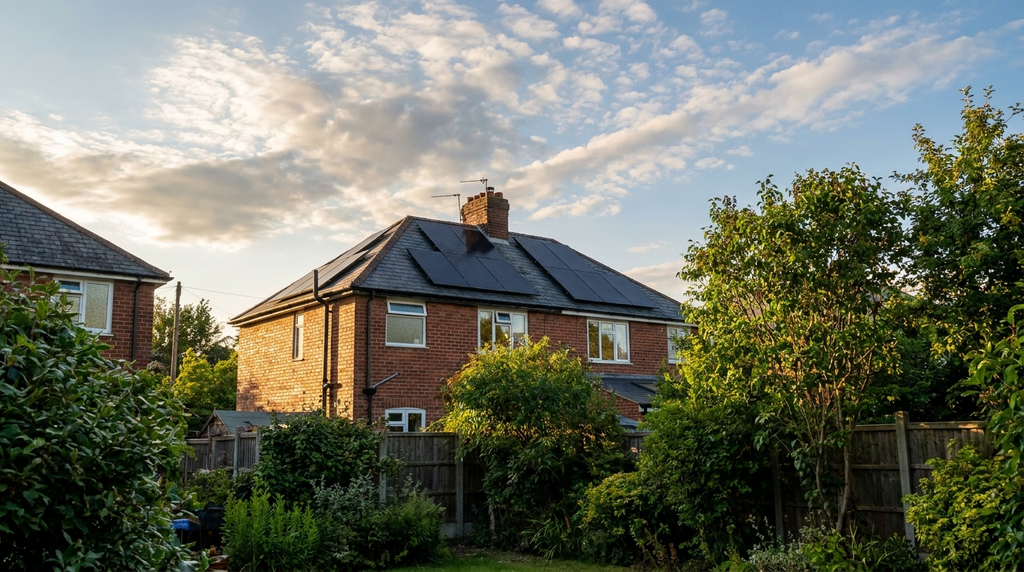
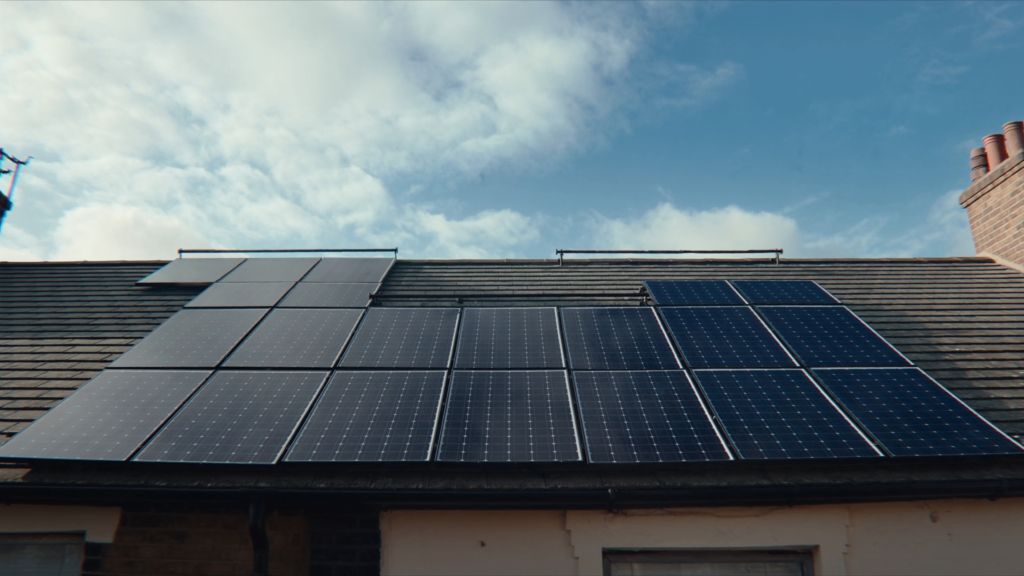
Devon’s exceptional sunshine levels make solar panels one of the most reliable investments you can make. A typical 4kWp system costs £6,000 to £9,000 installed, and in Devon’s climate you can realistically expect to generate around 3,500 to 4,200 kWh per year, more than enough to cover the average household’s electricity use. Adding battery storage (typically £3,000 to £5,000 extra) means you can use that energy in the evenings too.
Heat Pumps
Air source heat pumps are transforming home heating across rural Devon, where oil boilers have been the norm for decades. A typical installation costs £8,000 to £14,000 before grants, though the Boiler Upgrade Scheme significantly reduces that (more on grants below). Ground source heat pumps are also viable on larger rural plots and offer even greater efficiency, though costs start around £15,000 to £25,000.
Insulation
Cavity wall insulation, loft insulation, solid wall insulation, and underfloor insulation are all available across Devon. Loft insulation is the quickest win, often costing as little as £300 to £600 for a standard semi-detached home if you’re not eligible for a grant. Solid wall insulation (internal or external) is more expensive at £8,000 to £22,000 for a whole house, but the savings are considerable in older stone properties.
Double and Triple Glazing
Replacing single-glazed windows with A-rated double glazing typically costs £4,500 to £9,000 for a whole house, depending on the number of windows and property size. In conservation areas or listed buildings (and Devon has plenty of both), you may need to consider secondary glazing instead, which is less intrusive and can still reduce heat loss significantly.
Energy Efficiency Improvements
Smart thermostats, hot water cylinder upgrades, EV charger installation, LED lighting overhauls, and demand-controlled ventilation all contribute to a more energy-efficient home. Many of these are relatively low-cost and can be tackled without major disruption.
Typical Costs and Savings for Devon Homes, A Property-by-Property Comparison
| Property Type | Most Impactful Upgrade | Typical Install Cost | Estimated Annual Saving | Approximate Payback Period |
|---|---|---|---|---|
| Semi-detached | Solar panels + loft insulation | £7,000 – £10,000 | £650 – £950 | 9 – 13 years |
| Terraced | Internal wall insulation + new glazing | £9,000 – £16,000 | £550 – £800 | 12 – 18 years |
| Detached | Air source heat pump + solar panels | £14,000 – £22,000 | £1,100 – £1,800 | 10 – 15 years |
| Flat | Smart heating controls + glazing upgrade | £3,500 – £7,500 | £250 – £450 | 10 – 15 years |
| Bungalow | Loft insulation + air source heat pump | £9,000 – £15,000 | £800 – £1,300 | 9 – 14 years |
A quick note on these figures, payback periods look much shorter once grants are applied. If you qualify for the Boiler Upgrade Scheme, for example, a heat pump installation could pay back in under seven years in some cases.
Grants and Funding Available to Devon Homeowners in 2026
The good news is that there’s real money available to help cover the cost of eco improvements, both nationally and through schemes specifically targeting the South West.
The Boiler Upgrade Scheme
This national scheme offers £7,500 off the cost of an air source heat pump and £7,500 off a ground source heat pump. It’s available to most homeowners in England, and in rural Devon, where oil boilers are so common, it’s one of the most valuable grants going. Your installer applies on your behalf, and the discount comes off your bill directly.
ECO4
The Energy Company Obligation scheme (ECO4) targets lower-income households and those with poorly insulated homes. If you’re on certain benefits or have a low household income, you could receive fully funded insulation, heating upgrades, or solar panels at no cost to you. Devon has a significant number of rural communities that qualify, so it’s worth checking eligibility even if you’re not sure.
The Great British Insulation Scheme
The Great British Insulation Scheme (GBIS) supports households with EPC ratings of D or below, which describes most Devon homes. Eligible households can receive subsidised or free insulation measures including loft, cavity wall, and solid wall insulation. Both lower-income and middle-income households can qualify depending on circumstances.
Devon and Cornwall Retrofit Pilot Programmes
Devon and Cornwall have been running coordinated pilot retrofit programmes, working with local authorities and Homes England to deliver whole-house retrofit projects in targeted communities. These programmes often prioritise rural and coastal communities with older housing stock, exactly the kind of areas that dominate much of Devon. Exeter City Council, Plymouth City Council, and North Devon Council have all been involved in locally administered energy efficiency initiatives, so it’s worth contacting your local council directly to ask what’s currently running in your area.
Warm Homes Devon
Devon County Council has historically supported the Warm Homes Devon programme, which provides advice and grant signposting for eligible households across the county. Check with Devon County Council or your district council for the most current version of this scheme and whether it applies to your postcode.
Planning Permission and Local Authority Considerations Across Devon
Most standard eco home improvements, solar panels on a rear-facing roof, a heat pump unit in the garden, loft insulation, fall under permitted development rights and don’t require planning permission. But Devon has more than its fair share of protected areas and historic buildings, so it’s worth knowing the landscape before you start.
National Parks and Protected Landscapes
Dartmoor National Park and Exmoor National Park both have their own planning authorities and stricter rules about what’s permitted. If your home sits within either park boundary, you’ll likely need to apply for planning permission for external changes like solar panels or external wall insulation, even where other homeowners wouldn’t. Dartmoor National Park Authority and Exmoor National Park Authority handle these applications separately from the district councils.
Conservation Areas
Devon has a large number of designated conservation areas, particularly in historic towns like Totnes, Dartmouth, Crediton, and parts of Exeter. Homes in conservation areas often can’t have solar panels on front-facing or street-visible roofs. Secondary glazing is often preferred over replacement windows to preserve the character of original frames.
Listed Buildings
If your property is listed, and many of Devon’s older stone farmhouses and coastal cottages are, you’ll need listed building consent for most structural or external changes. That doesn’t mean eco improvements are off the table, but they need to be approached carefully with specialist advice and appropriate materials.
The Councils Covering Devon
Planning applications across Devon are handled by a range of local authorities. These include
- Exeter City Council
- Plymouth City Council
- Torbay Council
- Devon County Council (strategic planning)
- North Devon Council (covering Barnstaple, Bideford, Ilfracombe)
- Mid Devon District Council (covering Tiverton, Crediton)
- East Devon District Council (covering Honiton, Sidmouth, Exmouth)
- South Hams District Council (covering Dartmouth, Totnes, Kingsbridge)
- West Devon Borough Council (covering Tavistock)
Always check with your specific local authority before starting work, particularly if you’re in a conservation area, near a national park boundary, or in an older stone property.
How Devon’s Climate and Geography Shape the Best Eco Home Choices
Devon’s climate is genuinely one of the most favourable in the UK for renewable energy, and that’s not just marketing speak. Here’s what that means in practical terms for your home.
Solar Panels Perform Exceptionally Well Here
With 1,200 to 1,500 sunshine hours per year and the best average solar irradiance in the UK, Devon homeowners consistently get more from solar panels than counterparts further north. A system that might generate 3,200 kWh in the Midlands will typically generate 3,500 to 4,200 kWh in Devon. That gap is meaningful over a 25-year panel lifespan.
Milder Winters Reduce Heating Demand
Devon’s milder winters, with 1,200 to 1,500 heating degree days compared to 2,000-plus in northern England, mean your heating system simply doesn’t have to work as hard. This makes heat pumps particularly effective here, since they operate at higher efficiency in milder temperatures. An air source heat pump in Devon will typically achieve a higher seasonal coefficient of performance than the same unit installed in Yorkshire or Scotland.
Rainfall and Wind Affect Some Choices
The western parts of Devon, North Devon coast, Dartmoor fringes, receive 1,500 to 2,000mm of rainfall per year. That’s something to factor in when choosing external wall insulation systems. You need products with good weather resistance and appropriate breathability, especially on traditional stone and cob buildings. Always use an installer experienced with Devon’s building stock, not someone who’s only worked on modern brick homes further east.
Off-Gas Grid Properties Are Common and Well-Suited to Heat Pumps
A large proportion of Devon’s rural homes heat with oil, LPG, or even solid fuel. These households are ideal candidates for heat pump installation, both because the economics are compelling (oil prices are volatile and often expensive) and because they’re already set up without the gas network dependency that complicates urban retrofit projects.
Where You Can Access Eco Home Services Across Devon
We cover eco home services across 14 towns throughout Devon, from the urban centres of Exeter and Plymouth to smaller coastal and market towns. Here’s where you can find qualified local installers and advisors.
| Town | Part of Devon | Typical Housing Stock | Key Services Available |
|---|---|---|---|
| Exeter | Central / East Devon | Terraced, semi-detached,
Towns in Devon
Barnstaple
Bideford
Crediton
Dartmouth
Exeter
Exmouth
Honiton
Ilfracombe
Plymouth
Sidmouth
Tavistock
Tiverton
Torquay
Totnes
Services in DevonWindows & Glazing Solar Panels Boilers & Heating Home Insulation Energy Saving Government Grants Nearby Counties
Vale of Glamorgan
81.5 km away
Somerset
81.6 km away
Bridgend
86.7 km away
Cornwall
90.8 km away
Cardiff
93 km away
Dorset
97.9 km away Frequently Asked Questions About Eco Home Services in Devon – Energy Saving SolutionsFor a typical Band D Devon home, solid wall insulation tends to run between u00a38,000 and u00a315,000 depending on property size and wall type, while cavity wall insulation is much more affordable at around u00a31,500 to u00a33,000. Loft insulation is often the most cost-effective starting point, averaging u00a3400 to u00a3700 for a standard semi-detached. Many Devon homeowners find that combining two or three measures together unlocks better grant support and faster payback times. The Great British Insulation Scheme closed on 31 March 2026. It funded insulation measures only and never covered windows or glazing. Eligibility is often linked to your EPC rating, so a Band D property like many across Devon qualifies well for support. Your local council, including Devon County Council and district councils like Teignbridge or Exeter City, may also offer top-up funding worth checking before you commit to any work. Look for installers who are MCS certified for heat pumps and solar, and TrustMark registered for insulation work, as these schemes offer you consumer protection specific to green home improvements. The South West has a strong network of independent eco installers, and asking for references from local Devon homeowners is one of the best ways to shortlist reputable firms. Avoid any installer who pressures you to sign on the same day or asks for a large upfront cash deposit before work begins. It genuinely can be, but older Devon stone and cob cottages do need some preparation first, usually improved insulation and possibly radiator upgrades, to get the most from a heat pump system. The Boiler Upgrade Scheme in 2026 still offers a u00a37,500 grant toward an air source heat pump, which makes the numbers far more attractive for Devon rural properties off the gas grid. A good local installer will carry out a full heat loss survey before recommending anything, and that survey should always be your first step. Most Devon homeowners can move from Band D to Band C within a few months once funding is confirmed and an installer is booked, with the physical work itself often completed in just a few days depending on the measures chosen. A combination of loft insulation, cavity or external wall insulation, and LED lighting upgrades is usually enough to bridge that one-band gap for a typical Devon semi or terrace. Getting a proper whole-house assessment done first means you spend money in the right order and avoid doing work twice. Devon actually receives some of the highest solar irradiance levels in England, making it one of the better locations in the UK for solar panel performance throughout the year. A typical 4kW system on a south-facing Devon roof can generate around 3,800 to 4,200 kWh annually, cutting a significant portion of an average household electricity bill. Pairing panels with a home battery storage unit has become increasingly popular across the South West in 2026, allowing you to store daytime generation and use it through the evening. Featured eco home guides.
Boilers & Heating
Underfloor Heating with Heat Pumps, The Complete GuideYes, underfloor heating with a heat pump cuts electricity use by 20–30% and boosts efficiency to 360–420% (SCOP 3.6–4.2). This pairing works because both systems operate efficiently at low flow…
Solar Panels
Solar carports for UK homes (cost and rules)A 4 kW solar carport costs £8,000–£12,000 installed in 2026, which is 15–25% more per kW than roof-mounted panels. The premium comes from structural steelwork and foundations, not the panels…
Solar Panels
Hybrid solar inverters explained UK 2026A hybrid solar inverter costs £1,200 to £2,500 installed in the UK, plus £1,500 to £4,000 for a battery. It saves £200 to £400 yearly by storing solar power for…
Solar Panels
Solar Panel Removal and Reinstallation, A UK GuideThe average solar panel removal and reinstallation cost in the UK is £1,200–£2,500 for a standard 10–16 panel system. This includes scaffolding and labour but excludes electrical work.
Solar Panels
Do solar panels work in UK winter weather?Yes, solar panels work in UK winter, generating 15-20% of annual output. A 4 kWp system produces 4-6 kWh daily in December, enough for half a home's daytime needs. Diffuse…
Solar Panels
Best solar panel angle and tilt for UK homesThe best solar panel angle for UK homes is 35°, within a 30° to 40° range. Most UK roofs already fall within this pitch, so no adjustment is needed. A… Get Eco Home Quotes in DevonCompare quotes from trusted local eco home installers. No obligation. Get a Free Quote |