Why Lincolnshire Is a County Worth Talking About When It Comes to Eco Homes
Lincolnshire is one of England’s largest counties by area, yet with a population of just 455,090 it feels genuinely spacious, and that shapes everything about how people live and heat their homes here. Stretching from the Humber estuary in the north down to the Wash in the south, the county takes in fenland flatness, the rolling Lincolnshire Wolds, market towns steeped in history, and a long North Sea coastline. It’s a county of real variety, and that variety shows up directly in the housing stock.
What makes Lincolnshire different from its East Midlands neighbours is the combination of rural spread, older housing, and genuinely cold east-facing winters. Those bitter easterly winds that roll in off the North Sea in January don’t care how charming your Georgian townhouse is, they find every gap in your insulation and push your heating bills higher than you’d like. That’s precisely why eco home improvements matter so much here.
There’s also a strong community-minded spirit across the county. From the Lincolnshire Wolds Area of Outstanding Natural Beauty to the tight-knit communities of the Fens, people here tend to think long-term. Investing in your home’s energy performance is good for your wallet, and it fits the practical, no-nonsense approach that Lincolnshire homeowners are known for.
Understanding What Band D Actually Means for Your Energy Bills
The average EPC rating across Lincolnshire sits at Band D, which puts the county right at the national average. That might sound reassuring, but Band D still means there’s a lot of room for improvement, and plenty of money leaving through walls, roofs, and draughty windows every single year.
With average gas usage of 11,820 kWh per year and electricity usage of 3,210 kWh per year, a typical Lincolnshire household is spending somewhere around £1,650 to £2,100 annually on energy, depending on their tariff and property type. That’s a significant chunk of the household budget, and much of it is heat that simply escapes through poorly insulated walls and lofts.
Different parts of the county tell quite different stories. The older terraced streets of Grimsby and Scunthorpe in the north include a high proportion of pre-war housing with solid brick walls, some of the trickiest properties to insulate efficiently. Lincoln city centre has Georgian and Victorian stock, including listed buildings, where energy upgrades require careful planning. Meanwhile, the coastal towns like Skegness and Mablethorpe have large numbers of bungalows, many of which are poorly insulated, bungalows lose a disproportionate amount of heat through their roofs because there’s no upstairs floor to slow things down.
The market towns of Stamford, Louth, and Grantham feature a mix of older stone and brick properties alongside postwar semis and modern estates. Post-war semis from the 1950s to 1980s very often have cavity walls, which is actually good news, because cavity wall insulation is one of the most cost-effective upgrades available. Sleaford and Spalding, with their significant fenland surroundings, have many detached and semi-detached properties on the newer side, where solar panels and heat pumps can deliver strong returns.
The Full Range of Eco Home Services Available Across the County
If you’re in a Victorian terrace in Grimsby or a modern detached in Grantham, there’s a range of eco home improvements that can make a real difference to your comfort and your bills. Here’s a straightforward overview of what’s available across Lincolnshire.
Solar Panels
Lincolnshire enjoys more sunshine than most of England, sitting on the eastern side of the country with lower rainfall (500 to 700mm per year) and good solar irradiance. A typical 4kW solar panel system for a semi-detached home costs around £6,000 to £8,500 fully installed and can generate meaningful savings from day one. Adding a battery storage system (typically £2,500 to £4,500 extra) means you can store daytime generation for evening use, something that makes particular sense given that many Lincolnshire households are out during the day.
Heat Pumps
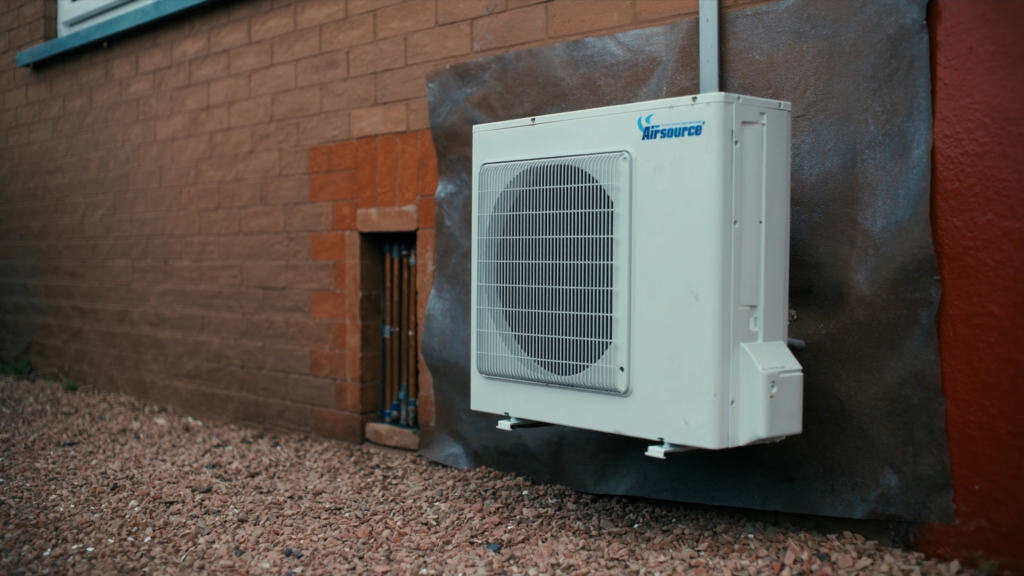
Air source heat pumps are increasingly common across Lincolnshire, particularly in rural areas where mains gas isn’t available. They work by extracting heat from outdoor air, even on cold days, and are remarkably efficient. Typical installed costs run from £8,000 to £14,000 depending on property size, though the Boiler Upgrade Scheme grant can significantly reduce this (more on that below). Ground source heat pumps are also viable across Lincolnshire’s generous rural plots, though costs are higher at £18,000 to £30,000.
Insulation
This is often the most cost-effective starting point. Loft insulation for a typical semi-detached costs just £400 to £700 and can cut heat loss dramatically. Cavity wall insulation runs from £700 to £1,800 depending on property size. For solid-walled properties, common in older parts of Lincoln, Louth, and Stamford, external wall insulation typically costs £8,000 to £20,000 but delivers transformational results in both comfort and energy use.
Double and Triple Glazing
Replacing old single-glazed or poorly sealed windows makes a genuine difference, especially against those cold easterlies. Expect to pay £300 to £600 per window for quality double glazing, with triple glazing at a premium. Composite or well-insulated doors add to this, a draught-free front door alone can save you a surprising amount.
Energy Efficiency Improvements
Smart heating controls, hot water cylinder insulation, underfloor heating, and LED lighting upgrades all contribute to a more efficient home. These smaller measures are often overlooked but can collectively save £150 to £400 per year with relatively modest investment.
How Costs and Savings Stack Up Across Different Property Types
Here’s a practical comparison to help you see what eco improvements might cost, and save, across the most common property types in Lincolnshire.
| Improvement | Terraced House | Semi-Detached | Bungalow | Detached House |
|---|---|---|---|---|
| Loft Insulation | £400 / saves £180/yr | £500 / saves £220/yr | £600 / saves £290/yr | £700 / saves £310/yr |
| Cavity Wall Insulation | £750 / saves £200/yr | £900 / saves £260/yr | £800 / saves £230/yr | £1,600 / saves £380/yr |
| External Wall Insulation | £9,000 / saves £450/yr | £12,000 / saves £520/yr | £10,000 / saves £480/yr | £18,000 / saves £700/yr |
| Solar Panels (4kW) | £6,500 / saves £650/yr | £7,000 / saves £680/yr | £6,500 / saves £660/yr | £8,500 / saves £780/yr |
| Air Source Heat Pump | £9,000 / saves £550/yr | £10,500 / saves £620/yr | £9,500 / saves £580/yr | £13,500 / saves £800/yr |
| Double Glazing (full house) | £3,500 / saves £180/yr | £4,500 / saves £220/yr | £4,000 / saves £200/yr | £6,500 / saves £290/yr |
These figures are estimates based on typical Lincolnshire properties in 2026. Your actual savings will depend on your current EPC rating, how you use energy, and whether you combine multiple measures together, which usually improves the overall payback significantly.
Grants and Funding That Lincolnshire Homeowners Can Access in 2026
The funding landscape in 2026 is more varied than many people realise, and Lincolnshire residents can access a range of national, regional, and council-level support.
The Boiler Upgrade Scheme
The Boiler Upgrade Scheme (BUS) provides a £7,500 grant towards an air source heat pump and £7,500 towards a ground source heat pump. This is available to homeowners across all of Lincolnshire, regardless of income. The grant is paid directly to your MCS-certified installer, so you simply pay the reduced amount. Given the county’s significant number of rural off-gas properties, particularly around the Fens, the Wolds, and coastal areas, this scheme is especially relevant here.
ECO4
The Energy Company Obligation (ECO4) scheme funds insulation, heating upgrades, and other improvements for lower-income households or those living in the least energy-efficient homes. Eligibility is based on receiving certain means-tested benefits, or having a very low EPC rating. Several areas of Lincolnshire, including parts of Grimsby, Scunthorpe, Boston, and Skegness, have higher concentrations of fuel-poor households and see strong ECO4 activity. If your home is EPC Band E, F, or G and you receive benefits, you may qualify for a fully funded upgrade.
The Great British Insulation Scheme
The Great British Insulation Scheme closed on 31 March 2026. It funded insulation measures only and never covered windows or glazing. It focuses specifically on insulation measures and can fund loft insulation, cavity wall insulation, and in some cases solid wall insulation. You don’t need to be on benefits to qualify for this one. That makes it widely accessible across the county.
Local Authority Funding Across Lincolnshire
Lincolnshire’s district and borough councils have been active in fuel poverty reduction. North East Lincolnshire Council (covering Grimsby) and North Lincolnshire Council (covering Scunthorpe) have run dedicated programmes targeting hard-to-heat homes. South Kesteven District Council (Grantham and Stamford) and East Lindsey District Council (Skegness and Louth) have both participated in energy-efficiency grant schemes with additional local top-up funding in recent years. It’s always worth contacting your local council directly to ask what’s currently available, these programmes come and go, and local advisors can often signpost funding you wouldn’t find online.
Warmer Homes Fund and Local Referral Routes
Lincolnshire homeowners can also access support through referral via their energy supplier, GP surgery, or local housing team. If you’re struggling with energy costs, Citizens Advice Lincolnshire can help identify which schemes you’re eligible for, and the referral process is often simpler than people expect.
Planning Permission and Local Authority Rules Across Lincolnshire
Most eco home improvements in Lincolnshire fall under permitted development rights, meaning you don’t need to apply for planning permission. Solar panels on your main roof, loft insulation, cavity wall insulation, and most heat pump installations can generally go ahead without a formal application, as long as your property isn’t listed or in a designated area.
However, Lincolnshire does have some areas where extra care is needed.
- The Lincolnshire Wolds AONB covers a significant stretch of the county and includes settlements around Louth and parts of East Lindsey. Some external changes, including visible solar panels and external wall insulation, may require permission or need to meet specific design guidelines.
- Conservation areas exist across Lincoln city centre, Stamford (one of England’s best-preserved Georgian towns), Grantham, and many of Lincolnshire’s market towns. In these areas, external wall insulation and visible roof-mounted equipment will need permitted development rights checked carefully, and sometimes a full planning application.
- Listed buildings are common throughout Lincolnshire given its rich history. If your home is listed, you’ll need listed building consent for most external and many internal changes. This doesn’t mean eco improvements are impossible, but it does mean working with your local authority from the start.
Planning applications in Lincolnshire are handled by the relevant district or borough council. City of Lincoln Council, South Kesteven, East Lindsey, South Holland, Boston Borough, West Lindsey, North Kesteven, North East Lincolnshire, and North Lincolnshire councils each handle applications for their areas. Your installer should be familiar with local requirements, but it’s always worth a quick call to your council’s planning department before committing to any external improvement.
How Lincolnshire’s Climate and Geography Shape the Best Eco Choices
Lincolnshire’s location on England’s east coast gives it a distinctive climate that genuinely influences which eco improvements deliver the best return.
The easterly winds that sweep across the county in winter, particularly along the coast and across the open fenland, make draught-proofing and insulation more impactful here than in more sheltered counties. A well-insulated and draught-sealed home in Skegness or Spalding will feel dramatically more comfortable than one that’s been left untreated, and the energy savings reflect this.
On the solar side, Lincolnshire is genuinely well-placed. The county benefits from 1,000 to 1,200 sunshine hours per year, lower cloud cover than the west of England, and relatively low rainfall. For solar PV panels, this translates to strong annual generation, typically around 850 to 950 kWh per kWp installed, which is comfortably above the UK average. If you’re hesitating over solar because you think England isn’t sunny enough, Lincolnshire is one of the counties that should reassure you otherwise.
For heat pumps, Lincolnshire’s moderate winters, sitting at around 1,500 to 1,800 heating degree days per year, mean air source heat pumps perform reliably and efficiently. They’re not being pushed to their limits in the way they might be in a much colder northern climate, which is good for both efficiency and longevity.
The county’s geology also matters for ground source heat pumps. The Lincolnshire Limestone and chalk formations across parts of the county, combined with the wide open plots common in rural Lincolnshire, make ground source viable