Why Staffordshire Is a County Worth Talking About When It Comes to Eco Homes
Staffordshire is one of those counties that often gets overlooked in conversations about green energy and home improvement, and that’s a shame, because it has a genuinely interesting story to tell. Sitting at the heart of England, it bridges the post-industrial legacy of the Potteries around Stoke-on-Trent with the market town charm of Lichfield and Stafford, the commuter belts around Tamworth and Cannock, and the quieter residential streets of Burton upon Trent.
That variety matters more than you might think. It means Staffordshire has an enormous range of housing types, ages, and energy profiles, from solid Victorian terraces that haven’t seen an upgrade in decades to 1960s semis with cavity walls just waiting to be insulated. With 572,000 residents spread across six main towns and plenty of surrounding communities, there’s no single “Staffordshire home.” But almost all of them share one thing: real room to improve.
What also makes this county distinctive is its geography. Staffordshire sits in central England, shielded from the worst coastal weather but still subject to the cool, damp winters that make heating bills a genuine concern for most households. It borders Birmingham and the wider West Midlands to the south, which means it benefits from some regional retrofit funding programmes that don’t reach more rural English counties. That’s a genuine advantage worth knowing about.
The honest picture is this, if you own a home in Staffordshire and you haven’t made any eco improvements yet, you’re almost certainly spending more on energy than you need to. This guide is here to help you change that.
The Energy Performance Picture Across Staffordshire’s Towns and Neighbourhoods
The county’s average EPC rating is Band D, which puts it squarely at the UK national average. That might sound reassuring, but Band D is actually a fair way from where most energy experts think homes should be, Band C or above is considered a meaningful baseline for energy efficiency.
What Band D really means in practice is that your home is losing heat faster than it should, and you’re paying for it every month. Based on current energy prices, a typical Staffordshire household on Band D is spending somewhere in the region of £1,600 to £2,200 per year on heating and electricity combined. Push that home up to Band B and you could realistically be looking at bills closer to £900 to £1,300, a saving of several hundred pounds every year.
Across the county, there are some clear patterns in housing age and efficiency. Here’s a rough guide to how different areas tend to compare:
- Stoke-on-Trent has a high concentration of older terraced housing, much of it built before 1919. These properties often have solid walls rather than cavity walls, which makes insulation more complex and more expensive. Fuel poverty is a genuine issue in some parts of the city.
- Burton upon Trent has a mix of Victorian and interwar housing, with a good proportion of 1930s to 1960s semis, exactly the type of home that benefits most quickly from cavity wall insulation and loft upgrades.
- Cannock and Tamworth have large areas of post-war suburban development, including many 1950s to 1980s properties that are solid candidates for a full range of eco improvements.
- Lichfield and Stafford tend to have a broader mix, including more detached homes and some higher-value properties, but also conservation areas and older housing stock that requires more careful planning.
The county’s average gas usage is 11,267 kWh per year, close to the national median. That figure tells you that Staffordshire homes are heating themselves in fairly typical ways, which means the standard suite of improvements (insulation, heating upgrades, solar) delivers broadly predictable results. You’re not in a wildly unusual situation, you just need the right plan.
The Full Range of Eco Home Services Available to Staffordshire Homeowners
If you’re looking to make one targeted improvement or transform your home from the ground up, there’s a wide range of services available across the county. Here’s a practical overview of the main options.
Solar Panels
Solar photovoltaic (PV) panels generate electricity from daylight, you don’t need blazing sunshine, just reasonable light levels. Staffordshire gets around 1,000 to 1,200 sunshine hours per year, which is close to the UK average and perfectly workable for solar. A typical 4kWp system on a south-facing roof can generate around 3,400 kWh of electricity annually, covering a significant chunk of an average household’s usage.
Heat Pumps
Air source heat pumps are increasingly popular across Staffordshire, particularly in homes that are moving away from gas boilers. They work by extracting heat from outside air and using it to warm your home, even when it’s cold outside. They work best in well-insulated properties, so they’re often installed alongside insulation upgrades. Ground source heat pumps are also an option for larger plots, though they involve more significant groundwork.
Insulation
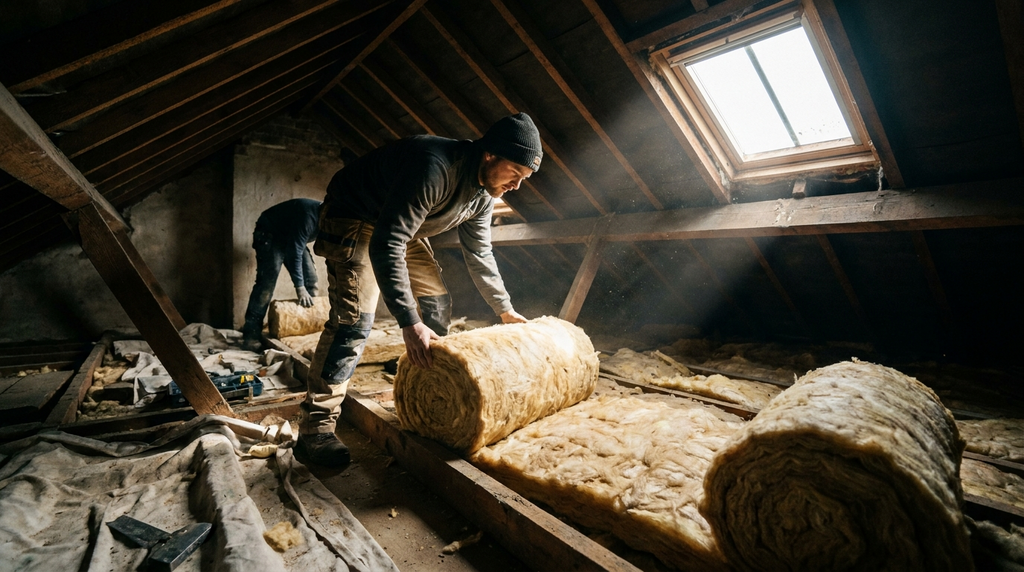
This is often the single most cost-effective improvement you can make. Cavity wall insulation, loft insulation, and underfloor insulation all reduce the amount of heat escaping from your home. Given that a large proportion of Staffordshire’s housing stock is from the 1930s to 1980s, cavity wall insulation is particularly relevant here, and in many cases it’s partially or fully funded through grant schemes.
Double and Triple Glazing
Upgrading old single-glazed or poor-quality double-glazed windows makes a real difference to comfort and heat retention. Modern A-rated or A+-rated double glazing is the standard recommendation for most homes, with triple glazing worth considering in larger detached properties where the investment is easier to recoup.
Battery Storage
If you have or are planning solar panels, a home battery stores surplus electricity generated during the day so you can use it in the evening. This significantly improves the return on your solar investment and reduces your reliance on the grid.
EV Charging
Home electric vehicle chargers are now a standard part of the eco home package for many families. A dedicated 7kW home charger is faster, safer, and cheaper per mile than using public charging networks.
Smart Heating Controls
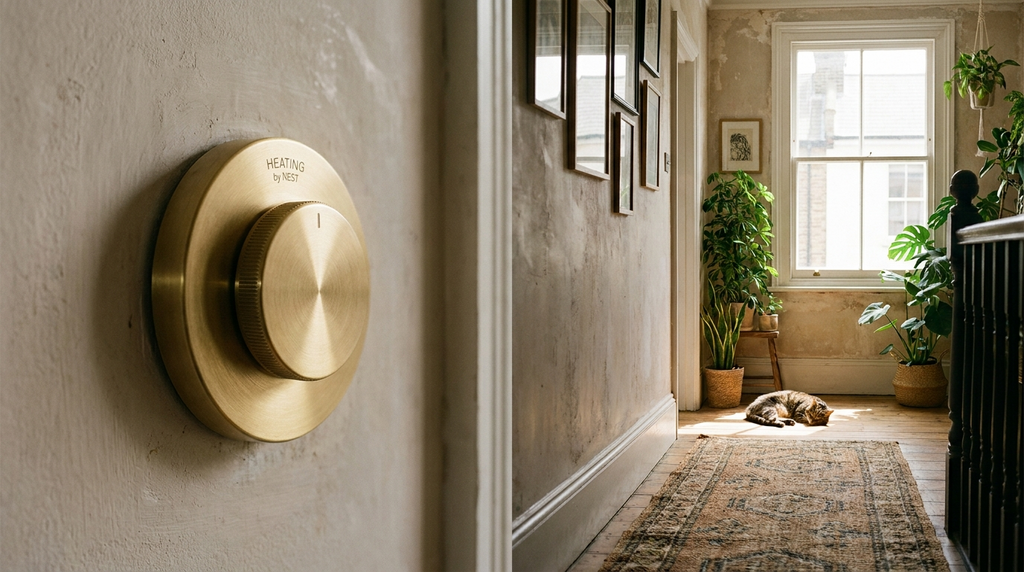
Sometimes the simplest improvements make a surprising difference. Smart thermostats and heating controls can reduce gas consumption by 10 to 15% without any major works.
Typical Costs and Savings for Eco Improvements Across Different Staffordshire Property Types
Here’s a straightforward comparison of what the main improvements tend to cost, and what you might reasonably expect to save. These are realistic 2026 figures, not best-case scenarios.
| Improvement | Terraced Home | Semi-Detached | Detached Home | Typical Annual Saving | Approximate Payback Period |
|---|---|---|---|---|---|
| Loft Insulation (top-up) | £300 – £500 | £400 – £600 | £500 – £800 | £150 – £300 | 2 – 4 years |
| Cavity Wall Insulation | £500 – £800 | £700 – £1,000 | £900 – £1,400 | £200 – £400 | 3 – 5 years |
| Solar Panels (4kWp) | £5,500 – £7,000 | £6,000 – £7,500 | £7,000 – £9,000 | £600 – £950 | 8 – 12 years |
| Air Source Heat Pump | £8,000 – £11,000 | £9,000 – £12,000 | £11,000 – £15,000 | £400 – £900 | 10 – 15 years |
| Double Glazing (whole house) | £3,500 – £6,000 | £4,500 – £7,500 | £6,000 – £12,000 | £120 – £250 | 15 – 25 years |
| Home Battery Storage | £3,500 – £5,000 | £3,500 – £5,000 | £4,000 – £6,000 | £300 – £600 | 7 – 12 years |
A practical note on payback periods, these figures assume no grant funding. With ECO4, GBIS, or the Boiler Upgrade Scheme reducing your upfront costs, payback times can shorten considerably. More on that below.
Grants and Funding Available to Staffordshire Homeowners in 2026
This is where things get genuinely exciting for Staffordshire residents, because you have access to both national funding schemes and some regional programmes that aren’t available everywhere in England.
The Boiler Upgrade Scheme
The Boiler Upgrade Scheme (BUS) provides a £7,500 grant towards the cost of an air source heat pump and a £7,500 grant for a ground source heat pump. This is available to homeowners across Staffordshire regardless of income. Your installer applies on your behalf, so you simply pay the reduced amount upfront. Given that a heat pump can cost £10,000 to £15,000 installed, this grant makes a very real difference.
ECO4
The Energy Company Obligation (ECO4) scheme targets households in fuel poverty or on certain qualifying benefits. If you receive Universal Credit, Pension Credit, Housing Benefit, or a range of other means-tested benefits, you could qualify for free or heavily subsidised insulation, glazing, or heating upgrades. In some parts of Stoke-on-Trent and other lower-income areas of Staffordshire, this scheme is particularly relevant. Check your eligibility, you may be surprised.
The Great British Insulation Scheme
The Great British Insulation Scheme closed on 31 March 2026. It funded insulation measures only and never covered windows or glazing. It’s focused specifically on insulation, loft, cavity wall, and solid wall. Eligibility is based partly on income and partly on your current EPC rating. If your home is currently Band D or below (which, as we’ve established, covers the Staffordshire average), you’re more likely to qualify.
West Midlands Combined Authority Retrofit Programme
This is the regional funding opportunity that sets Staffordshire apart from many other English counties. The West Midlands Combined Authority (WMCA) has been running its own retrofit programme targeting homes across the region, with a focus on reducing fuel poverty and improving housing stock at scale. While eligibility criteria vary and the programme has specific focus areas, homes in the southern parts of Staffordshire, particularly around Tamworth and Cannock, which border the WMCA area, may be able to access additional support. It’s always worth asking your installer or local council whether WMCA-linked funding applies to your property.
Local Authority Flexible Eligibility
Councils within Staffordshire can use something called Local Authority Flexible Eligibility (LAFE) to extend ECO4 funding to households that don’t meet the standard benefit-based criteria but are still in genuine need. Stafford Borough Council, Cannock Chase District Council, Lichfield District Council, and others have used this mechanism to help more residents access funding. Contact your local council directly to ask whether this applies to you.
Planning Permission Across Staffordshire, What You Need to Know Before You Start
Most standard eco home improvements fall under permitted development rights, which means you don’t need to apply for planning permission before going ahead. But there are important exceptions you need to be aware of, and Staffordshire has some specific considerations.
When You Generally Don’t Need Permission
- Solar panels on a pitched roof that don’t protrude more than 200mm beyond the roof surface
- Air source heat pumps meeting the standard permitted development criteria (one unit per property, away from the highway)
- Loft and cavity wall insulation
- Internal improvements including smart controls and underfloor heating
When You Might Need Permission
- If your home is a listed building, any external changes including solar panels and heat pumps require listed building consent. Lichfield, Stafford, and parts of Burton upon Trent have a significant number of listed properties given their historical heritage.
- If you’re in a conservation area, solar panels on a roof facing a public highway may require permission. Lichfield city centre, Stafford old town, and several village conservation areas across the county fall into this category.
- Ground source heat pump installations typically require planning permission due to the groundworks involved.
Which Councils Handle Applications
Planning applications across Staffordshire are handled at the district and borough level. The relevant authorities include Stafford Borough Council, Cannock Chase District Council, Lichfield District Council, Tamworth Borough Council, East Staffordshire Borough Council (covering Burton upon Trent), and Stoke-on-Trent City Council. Each has its own conservation area maps and listed building registers available on their websites.
Practical tip, before committing to any external works, take five minutes to check whether your postcode falls within a conservation area using your local council’s planning portal. A good installer will do this check for you, but it’s always worth knowing yourself.
How Staffordshire’s Climate Shapes the Best Eco Home Choices
Central England has a climate that sits comfortably in the middle of the UK range, not as mild as the south-west, not as cold as northern Scotland, not as wet as Wales. For Staffordshire, that translates into moderate but genuine heating demand throughout winter, and enough sunshine to make solar a worthwhile investment year-round.
The county sees around 1,000 to 1,200 sunshine hours per year, which is enough to make solar panels a sound financial decision. Don’t be put off by overcast autumn days; modern panels generate meaningful electricity even in diffuse light conditions.
Winters bring around 1,500 to 1,800 heating degree days annually, which is close to the UK average. This means your home needs consistent, reliable heat from around October through to April, and that’s exactly the kind of steady demand