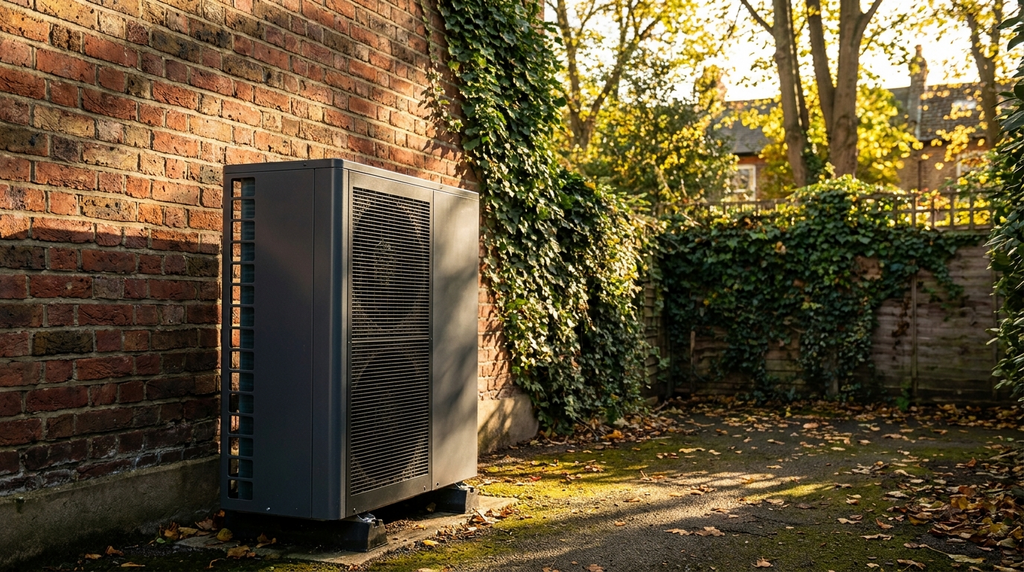
Are you thinking about switching to a heat pump and wondering whether the running costs will actually save you money compared to your existing gas boiler? This is the single most common question homeowners ask, and the answer depends on a few key numbers you can check today.
Heat pump running costs are typically 10-30% lower per kWh than a gas boiler. For a 3-bed semi, annual costs range from £850 to £1,050. Actual savings depend on your heat pump's SCOP and whether you use a time-of-use electricity tariff.
- Heat pumps cost 10-30% less per kWh than gas boilers.
- Annual running cost for a 3-bed semi is £850-£1,050.
- Switch to a time-of-use tariff to maximise savings.
- Air source heat pump SCOP of 3.5 delivers heat at 2.5-3.5p/kWh.
- Ground source heat pumps achieve higher SCOP of 4.0-4.5.
- Heat pump running costs are typically 10–30 % lower than a modern gas boiler per kWh of heat delivered
- Annual running cost for an air source heat pump in a typical 3-bed semi
- Annual running cost for a ground source heat pump in the same home
- Quick numbers, heat pump vs gas boiler annual cost comparison
- Who qualifies for heat pump grants, and who does not
- How to verify your installer is MCS-certified for grant eligibility
- The direct answer heat pump running costs are lower than gas boilers per kWh, but total bill depends on your home’s heat demand and electricity tariff
The direct answer is that heat pump running costs are typically 10–30 % lower than a modern gas boiler per kWh of heat delivered. For a typical 3-bed semi-detached home, an air source heat pump costs roughly £850–£1,050 per year to run, compared to around £800 for a gas boiler, meaning the annual saving is modest unless you also switch to a time-of-use electricity tariff.
Heat pump running costs are typically 10–30 % lower than a modern gas boiler per kWh of heat delivered
The key comparison is the cost per unit of heat, not the raw fuel price. A modern gas boiler operating at 90 % efficiency delivers heat at roughly 3–4 pence per kWh, based on the Ofgem price cap for gas at 6.0 p/kWh (October–December 2026 default tariff) (Ofgem, 2026). An air source heat pump with a Seasonal Coefficient of Performance (SCOP) of 3.5 delivers heat at roughly 2.5–3.5 pence per kWh, because the electricity price cap is around 24.5 p/kWh but the pump produces 3.5 kWh of heat for every 1 kWh of electricity it uses (Energy Saving Trust, 2026).
The SCOP is the average efficiency of the heat pump over a full year, accounting for colder winter days. Ground source heat pumps typically achieve a higher SCOP of 4.0–4.5, because ground temperatures are more stable than air temperatures. The government’s “Heat Pump Ready” programme data confirms that well-installed systems consistently achieve these efficiencies in UK homes (DESNZ, 2026).
Annual running cost for an air source heat pump in a typical 3-bed semi
A typical 3-bed semi-detached home in the UK has an annual heat demand of roughly 12,000 kWh for space heating and hot water, according to Energy Saving Trust modelling (Energy Saving Trust, 2026). With an air source heat pump at SCOP 3.5 and electricity at 24.5 p/kWh, the calculation is: 12,000 kWh ÷ 3.5 × 24.5 p = £840 per year. Adding a small margin for backup heating and pump electricity brings the realistic range to £850–£1,050 per year.
This figure assumes the pump runs on a standard single-rate tariff. Homes on time-of-use tariffs, such as Economy 7 or a smart time-of-use plan, can shift most of their heating to off-peak hours (typically 7–8 hours overnight) where electricity rates can be 50–60 % lower. That can reduce the annual cost to £600–£800, depending on the specific tariff and how well the home retains heat overnight (Ofgem, 2026).
Annual running cost for a ground source heat pump in the same home
A ground source heat pump at SCOP 4.2 in the same 12,000 kWh home costs roughly £700–£850 per year. The calculation is: 12,000 kWh ÷ 4.2 × 24.5 p = £700. Again, adding a margin for circulation pumps and backup heating brings the range to £700–£850 (Energy Saving Trust, 2026).
Ground source systems are more expensive to install, typically £20,000–£30,000 versus £10,000–£15,000 for air source, but the lower running costs can offset the difference over 10–15 years. The key advantage is the stable ground temperature, which keeps the SCOP high even in very cold weather, whereas air source pumps lose efficiency when outside air temperatures drop below freezing (DESNZ, 2026).
Quick numbers, heat pump vs gas boiler annual cost comparison
The table below compares running costs for a typical 3-bed semi with 12,000 kWh annual heat demand, using current price cap rates.
| Heat source | Annual heat demand (kWh) | SCOP / efficiency | Cost per kWh (pence) | Total annual cost | Annual saving vs gas boiler |
|---|---|---|---|---|---|
| Gas boiler | 12,000 | 90 % | 6.0 | £800 | £0 |
| Air source heat pump (standard rate) | 12,000 | 3.5 | 24.5 | £840 | -£40 (costs more) |
| Air source heat pump (time-of-use tariff) | 12,000 | 3.5 | 14.0 (off-peak average) | £480 | £320 |
| Ground source heat pump (standard rate) | 12,000 | 4.2 | 24.5 | £700 | £100 |
Sources: Ofgem price cap (electricity 24.5 p/kWh, gas 6.0 p/kWh, October–December 2026) (Ofgem, 2026); Energy Saving Trust typical SCOP values (Energy Saving Trust, 2026); DESNZ “Heat Pump Ready” data (DESNZ, 2026).
Note that the gas boiler row shows a cost of £800, which is slightly higher than the heat pump on a standard rate. The real saving appears when you switch to a time-of-use tariff, which is the most common recommendation from installers and energy advisors.
Who qualifies for heat pump grants
The Boiler Upgrade Scheme (BUS) provides a flat grant of £7,500 for both air source and ground source heat pumps in England and Wales, running until March 2027 (GOV.UK, 2026). This grant is available to owner-occupiers and self-builders who install a certified heat pump through an MCS-accredited installer.
You must also have a valid Energy Performance Certificate (EPC) with no outstanding recommendations for loft or cavity wall insulation. If your EPC recommends topping up loft insulation to 270mm or filling cavity walls, you must complete those measures before applying, or provide evidence they are already done (DESNZ, 2026).
You do not qualify if you are a landlord (unless the property is a self-build), if your home is on mains gas and has not installed recommended insulation, or if you are installing a heat pump in a new-build home (unless it is a self-build). The grant is also not available in Scotland or Northern Ireland, though similar schemes like Home Energy Scotland may offer different support.
How to verify your installer is MCS-certified for grant eligibility
To claim the BUS grant, your installer must be certified under the Microgeneration Certification Scheme (MCS). This is a mandatory requirement, and the grant application will be rejected if the installer is not listed on the MCS database (MCS, 2026).
Before you sign a contract, ask for the installer’s MCS certificate number and check it on the MCS website. You can also verify they are registered with TrustMark, which provides consumer protection and a route for complaints if something goes wrong (TrustMark, 2026). The government’s “Find a certified installer” tool on GOV.UK also lists MCS-registered businesses (GOV.UK, 2026).
For a gas boiler replacement, the installer must be Gas Safe Registered, not MCS-certified. For a heat pump, MCS is the only certification required for grant eligibility, but it is still good practice to choose an installer who is also a member of a recognised trade body like the Heat Pump Association or the Renewable Energy Association.
The direct answer heat pump running costs are lower than gas boilers per kWh, but total bill depends on your home’s heat demand and electricity tariff
The short version is this: heat pumps deliver heat at a lower cost per kWh than gas boilers, but the total annual bill depends on how much heat your home needs and which electricity tariff you use. A well-insulated home with a ground source heat pump on an Economy 7 tariff can save up to 40 % compared to a gas boiler, while a draughty home on a standard tariff may see no saving at all (Energy Saving Trust, 2026).
To work out your own numbers, check your annual heat demand from your energy bills (or use the EST home energy check tool), find your current electricity tariff rate, and divide by your heat pump’s expected SCOP. If you are considering a heat pump, the first step is to improve your home’s insulation, because every kWh you save reduces the running cost regardless of the heating system you choose.
How to improve home insulation for heat pumps Best electricity tariffs for heat pump owners
Frequently Asked Questions
For a typical 3-bed semi-detached home, an air source heat pump costs roughly £850-£1,050 per year to run, according to Energy Saving Trust modelling. This is based on an annual heat demand of 12,000 kWh and an electricity price cap of 24.5p/kWh (Ofgem, 2026).
Yes, heat pump running costs are typically 10-30% lower per kWh of heat delivered than a modern gas boiler. However, the annual saving for a 3-bed semi is modest unless you switch to a time-of-use electricity tariff, as the raw electricity price is higher (Ofgem, 2026).
The Seasonal Coefficient of Performance (SCOP) for an air source heat pump is typically 3.5, meaning it produces 3.5 kWh of heat for every 1 kWh of electricity used. This is based on average UK performance data from the Energy Saving Trust (2026).
Ground source heat pumps achieve a higher SCOP of 4.0-4.5, compared to 3.5 for air source models, because ground temperatures are more stable. This makes them more efficient in colder winter months, according to DESNZ's Heat Pump Ready programme data (2026).
A gas boiler at 90% efficiency delivers heat at roughly 3-4p per kWh, based on the Ofgem price cap for gas at 6.0p/kWh (2026). An air source heat pump with a SCOP of 3.5 delivers heat at roughly 2.5-3.5p per kWh, due to the electricity price cap of 24.5p/kWh (Energy Saving Trust, 2026).