Why Stirling Is One of Scotland’s Most Interesting Counties for Eco Home Improvements
Stirling is a county that genuinely surprises people. It stretches from the flat agricultural carse lands around the River Forth all the way up into the dramatic Highland landscapes of the Trossachs. That dramatic range of geography, and the equally dramatic range of housing stock that comes with it, makes Stirling a fascinating place for eco home improvements.
The county sits right at the boundary between Highland and Lowland Scotland, which means the climate here is serious. Long, cold winters, high rainfall, and persistent westerly winds are the norm rather than the exception. Your heating system doesn’t get a gentle workout here, it earns its keep. That’s exactly why upgrading your home’s energy performance matters so much in this part of Scotland.
With an average EPC rating of Band E across the county, Stirling homes are measurably less energy efficient than the national average. That sounds like bad news, but it’s actually an opportunity. Lower-rated homes tend to qualify for more grant funding, and the savings from improvements are proportionally larger. If your home is currently haemorrhaging heat through poorly insulated walls and an ageing boiler, the returns on investment here can be genuinely impressive.
What also sets Stirling apart is its mix of communities. You’ve got the historic city of Stirling itself, full of stone tenements, Victorian villas, and 1960s council estates, alongside the charming market town of Callander, which is the eastern gateway to the Trossachs National Park. Each area comes with its own housing character, its own planning sensitivities, and its own practical challenges for eco retrofitting.
What the Average EPC Band E Really Means for Stirling Homeowners
An EPC Band E might just look like a letter on a certificate, but it translates directly into money leaving your bank account every month. At current energy prices, a typical Band E home in Stirling is likely spending somewhere between £2,200 and £2,800 per year on energy, significantly more than a well-insulated Band C home, which might cost closer to £1,200 to £1,500 annually.
That gap of £800 to £1,300 per year is real money. Over a decade, it adds up to £8,000 to £13,000 in avoidable bills.
The county’s average gas usage of 13,750 kWh per year is close to the national median, but that figure is a little misleading in Stirling’s case. The county has around 20 to 30 percent higher heating demand than the UK average due to its cold climate, meaning homes here are working harder to stay warm, often with inefficient heating systems or poor insulation that forces the boiler to run longer and harder.
Different parts of the county tell different stories for energy performance. The older stone-built properties in Stirling city centre, particularly around the historic core near the castle and along King’s Park, tend to perform worst on EPC assessments. Solid stone walls are notoriously hard and expensive to insulate. Callander’s older housing stock, much of it Victorian-era stone construction, faces similar challenges.
Newer housing estates on the edges of Stirling city, built from the 1990s onwards, tend to be better insulated but often still benefit from upgrades like solar panels or heat pump installations. The worst-performing homes are typically pre-1919 solid-wall properties and 1950s to 1970s cavity-wall homes where the original cavity fill has degraded or was never done.
The Full Range of Eco Home Services Available Across Stirling
The good news for Stirling homeowners is that the full suite of eco home improvements is available across the county. Here’s a practical rundown of what’s on offer and what each service typically involves.
Solar Panels
Solar PV works in Stirling, even though the sunshine hours (700 to 900 per year) are lower than southern England. The long summer days in Scotland mean panels still generate well in warmer months. A typical 4kWp system costs between £6,000 and £8,500 installed, and can generate around 2,800 to 3,200 kWh per year in this area. Pair it with a battery storage system and you’ll be capturing that summer generation for evenings and cloudy days.
Heat Pumps
Air source heat pumps are increasingly popular across Stirling, particularly for homes moving away from oil or LPG heating. They work efficiently even in cold Scottish winters. A typical installation costs £8,000 to £14,000 before grants. Ground source heat pumps suit rural properties with enough land, but the higher install cost (£18,000 to £30,000) makes them less common in urban areas.
Insulation
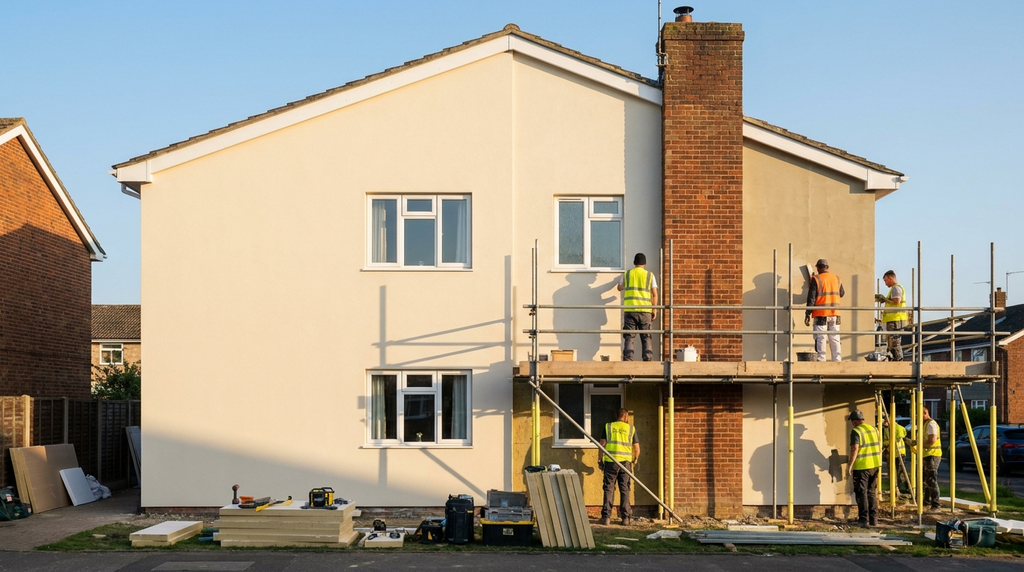
This is where Stirling homes have the most to gain. Cavity wall insulation for a semi-detached home typically costs £600 to £1,200. Loft insulation is even more affordable at £300 to £600 for most properties. External wall insulation for solid stone properties is more expensive, typically £8,000 to £18,000 for a full house, but the savings are substantial and it can often be grant-funded.
Double and Triple Glazing
Upgrading from single-glazed windows (still common in older Stirling properties) to double or triple glazing makes an enormous difference to comfort and heat retention. Expect to pay £4,000 to £9,000 for a full house re-glaze depending on property size and window count.
Energy Efficiency Improvements
Smaller but impactful measures include smart thermostats (£150 to £300 fitted), hot water cylinder insulation (£100 to £200), draught proofing (£200 to £500), and LED lighting upgrades. These are often the quickest wins with fastest payback periods.
Eco Improvement Costs, Savings and Payback Periods Across Stirling Property Types
| Improvement | Terraced Home | Semi-Detached | Detached | Typical Annual Saving | Payback Period |
|---|---|---|---|---|---|
| Loft Insulation (top-up) | £300 – £450 | £400 – £550 | £500 – £700 | £150 – £300 | 2 – 4 years |
| Cavity Wall Insulation | £600 – £900 | £800 – £1,200 | £1,000 – £1,600 | £200 – £450 | 3 – 5 years |
| External Wall Insulation | £8,000 – £12,000 | £10,000 – £15,000 | £14,000 – £20,000 | £400 – £800 | 15 – 25 years |
| Solar PV (4kWp) | £6,000 – £7,500 | £6,500 – £8,000 | £7,000 – £9,000 | £450 – £700 | 10 – 15 years |
| Air Source Heat Pump | £9,000 – £12,000 | £10,000 – £13,000 | £12,000 – £16,000 | £300 – £900 | 10 – 18 years |
| Double Glazing (full house) | £4,000 – £6,000 | £5,000 – £7,500 | £6,500 – £9,500 | £100 – £250 | 20 – 35 years |
Tip, always get the insulation done before the heat pump. A well-insulated home needs a smaller, cheaper heat pump and the running costs will be noticeably lower. Doing things in the right order genuinely matters.
Grants and Funding Available to Stirling Residents in 2026
Stirling homeowners are in a genuinely strong position for grant funding. Scotland has its own funding programmes on top of UK-wide schemes, which means there are more routes to financial support here than in many parts of England.
Home Energy Scotland
This is Scotland’s flagship advice and funding programme, run by Energy Saving Trust on behalf of the Scottish Government. It offers free, impartial advice from qualified assessors and access to interest-free loans of up to £15,000 for energy efficiency and renewables. There’s also a cashback element, up to £7,500 in grants for measures like heat pumps, solar panels, and insulation. Almost any homeowner in Stirling can access this, regardless of income.
Warmer Homes Scotland
This programme is aimed at households on low incomes or qualifying benefits. If you’re eligible, you could receive a comprehensive package of improvements, insulation, heating systems, glazing, entirely free of charge. The work is coordinated by a single installer rather than you having to manage multiple contractors. Eligibility is based on income, age, and existing benefit claims.
ECO4
The UK-wide Energy Company Obligation scheme (ECO4) remains available in Stirling. Energy suppliers fund improvements for households in lower EPC bands (typically D, E, F, or G) and on qualifying benefits or low incomes. Given that Stirling’s county average is already Band E, a significant proportion of homes here will be eligible.
Great British Insulation Scheme (GBIS)
The Great British Insulation Scheme closed on 31 March 2026. It funded insulation measures only and never covered windows or glazing. Homes rated Band D to G can access funded insulation measures even if they’re not on benefits, provided household income falls below certain thresholds. For Stirling homes in Band E, this is worth exploring before paying full price for insulation.
Boiler Upgrade Scheme (BUS)
The BUS grant provides £7,500 towards an air source heat pump and £7,500 towards a ground source heat pump for homeowners in England and Wales, but this scheme does not apply in Scotland. Scottish homeowners should use the Home Energy Scotland loan and cashback scheme instead, which covers similar ground.
Stirling Council Support
Stirling Council administers area-based schemes from time to time, targeting specific streets or neighbourhoods with the worst-performing housing stock. These can provide additional top-up funding or facilitated access to installers. It’s worth contacting Stirling Council’s housing team directly or checking their website to see what’s currently active in your area.
Planning Permission and Local Authority Considerations Across Stirling
Most standard eco home improvements in Scotland fall under permitted development rights, meaning you don’t need to apply for planning permission. This includes most solar panel installations, heat pump systems, and internal insulation work. However, Stirling has some significant planning sensitivities that you need to be aware of.
The Loch Lomond and The Trossachs National Park
Parts of the Stirling county area fall within or border the Loch Lomond and The Trossachs National Park. If your property sits within the National Park boundary, planning rules are stricter. External changes, including solar panels visible from the street, external wall insulation, or heat pump installations, may require full planning consent. The National Park Authority handles these applications rather than Stirling Council. Always check your property’s position relative to the National Park boundary before starting any external work.
Stirling City Conservation Areas
Stirling city has several designated conservation areas, particularly around the historic castle area, the medieval old town, and parts of the King’s Park and Viewfield areas. In conservation areas, permitted development rights are more restricted. External wall insulation and visible solar installations may need prior approval or full planning permission. Stirling Council’s planning department can confirm your status quickly.
Listed Buildings
Stirling has a notably high density of listed buildings relative to its size, not surprising given the city’s medieval heritage. If your home is listed (Category A, B, or C in Scotland), you’ll need listed building consent for most external changes and some internal ones. This doesn’t make eco improvements impossible, but it does require a more careful, often more expensive approach, especially for insulation and glazing.
Who to Contact
Planning applications for most of the county go to Stirling Council. Properties within the National Park boundary should contact the Loch Lomond and The Trossachs National Park Authority. For listed building queries, Historic Environment Scotland can also provide guidance.
How Stirling’s Climate and Geography Shape Your Eco Home Choices
Stirling’s climate is one of the most important factors in deciding which eco improvements are worth prioritising. With more than 2,200 heating degree days per year and rainfall between 1,000 and 2,000mm annually (more in the western Highland areas), this is genuinely challenging weather for homes and their occupants.
Insulation is the single most impactful improvement you can make in Stirling. With heating demand running 20 to 30 percent above the national average, every kilowatt-hour of heat you retain rather than lose through walls, roof, or windows directly reduces your bills. The return on insulation investment here is better than in milder parts of the UK.
External wall insulation needs to be specified carefully in Stirling’s high-rainfall environment. Systems must use breathable, weatherproof renders and be installed with proper detailing around windows, sills, and roof lines to prevent water ingress. A poorly specified system in this climate can cause more problems than it solves. Always use an installer familiar with Scotland’s weather conditions.
Heat pumps perform well in Stirling’s climate, but they need to be sized correctly for the colder winters. Modern cold-climate heat pumps operate efficiently down to minus 20°C, so the Scottish winters are no barrier, but the system needs proper design. Underfloor heating or oversized radiators work better with heat pumps than standard radiators, so factor in potential heating system upgrades when budgeting.
Solar panels generate less than in southern Britain, but the economics still work, particularly with battery storage to shift generation into evening use. The strong prevailing westerly winds across Stirling also make small-scale wind generation viable for rural properties, though planning and noise considerations apply.
Towns Across Stirling Where Eco Home Services Are Available
Axiom Eco Homes covers eco home installations and improvements across the full county of Stirling, serving homeowners in both of the county’s main towns as well as the surrounding rural areas.
Stirling
Scotland’s smallest city and the county’s main urban centre, Stirling has a hugely varied housing stock
Local Specialists in Your Area
Installers serving Stirling. All enquiries go through our secure quote system.