Why Falkirk Is One of Scotland’s Most Interesting Places to Go Eco
Falkirk sits at the heart of Scotland’s Central Belt, wedged between Edinburgh and Glasgow, and it has a character all of its own. This is a county shaped by industrial heritage, think the Falkirk Wheel, the Kelpies, and centuries of ironworks and coal mining that left behind rows of solid, traditional housing that’s now crying out for an energy efficiency overhaul.
The geography here is fascinating too. You’ve got the River Forth to the south, the Campsie Fells visible on the horizon, and a landscape that shifts between former industrial towns and surprisingly green rural stretches. It’s compact, just 36,000 residents across a relatively tight area, which means local installers know the patch well and can cover the whole county efficiently.
Here’s why eco improvements matter so much in Falkirk specifically. The winters are long and genuinely cold, heating demand runs 20 to 30% above the UK national average, and the housing stock is dominated by semi-detached and terraced properties that were built before modern insulation standards existed. That’s a recipe for high energy bills, but it’s also a tremendous opportunity to make real savings with the right upgrades.
Falkirk also sits in Scotland, which means homeowners here have access to some of the best eco home funding in the UK. Scotland runs its own grant schemes on top of UK-wide programmes, and that combination can make improvements genuinely affordable even for households on modest incomes.
What the Average EPC Band D Really Means for Falkirk Homes
The county average EPC rating across Falkirk is Band D, which puts the area roughly in line with the UK national average. But averages can be deceiving, and it’s worth understanding what that Band D actually means in practice for your heating bills.
A Band D home in Falkirk, with the county’s colder climate and higher heating demand, is likely costing you somewhere between £1,800 and £2,400 a year in gas alone, based on average usage of 13,000 kWh per year and current tariff rates. Add electricity at around 3,200 kWh per year and you’re looking at total annual energy costs in the region of £2,200 to £2,900 for a typical household.
Different parts of Falkirk tend to reflect different housing eras, which affects energy performance significantly.
- Older terraced streets in central Falkirk town, many date from the late Victorian and Edwardian periods, with solid stone or brick walls, minimal loft insulation, and single or aged double glazing. These tend to sit at the lower end of Band D or even into Band E.
- Post-war council housing estates, built in the 1950s through to the 1970s, these cavity wall properties are often more improvable but frequently have poor or absent cavity fill and outdated heating systems.
- Newer developments on the edges of town, properties built in the 1990s onwards can be Band C or higher if they’ve had upgrades, but older double glazing and gas boilers that are approaching end of life still drag many down to Band D.
The good news is that Band D is squarely in the sweet spot for improvement. You’re not starting from scratch, but there are clear, cost-effective upgrades that can push most Falkirk homes into Band C or even Band B, and that shift translates directly into lower bills and a warmer home every winter.
The Full Range of Eco Home Services Available to Falkirk Residents
If you’re looking to tackle draughty walls, slash your heating bills, or generate your own electricity, there’s a full menu of eco home services available across Falkirk. Here’s a practical rundown of what’s on offer and what each one involves.
Solar Panels
Solar photovoltaic (PV) panels generate electricity from daylight, and while Falkirk only gets around 700 to 900 sunshine hours per year, the long summer days in Scotland mean panels still perform well over the warmer months. A typical 4kWp system costs around £5,000 to £7,000 installed and can generate 2,500 to 3,200 kWh per year. Pair them with a battery storage system and you’ll capture energy for use in evenings.
Heat Pumps
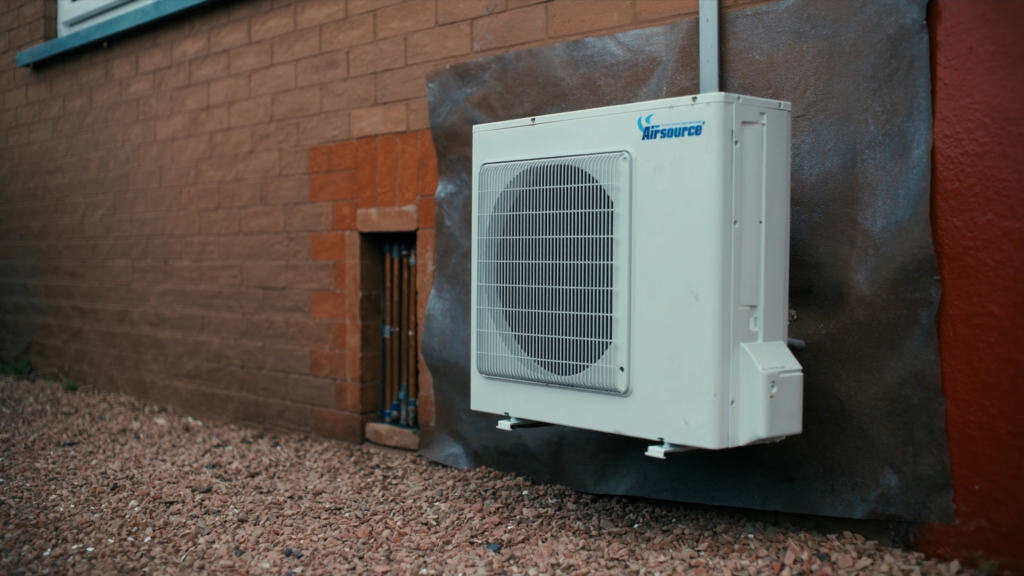
Air source heat pumps are increasingly popular in Falkirk, and they work particularly well in well-insulated homes. They extract heat from outside air even in cold temperatures and can replace a gas boiler entirely. Costs typically run from £8,000 to £14,000 for supply and installation, though the Boiler Upgrade Scheme can take £7,500 off that. Ground source heat pumps are also an option for properties with sufficient garden space.
Insulation
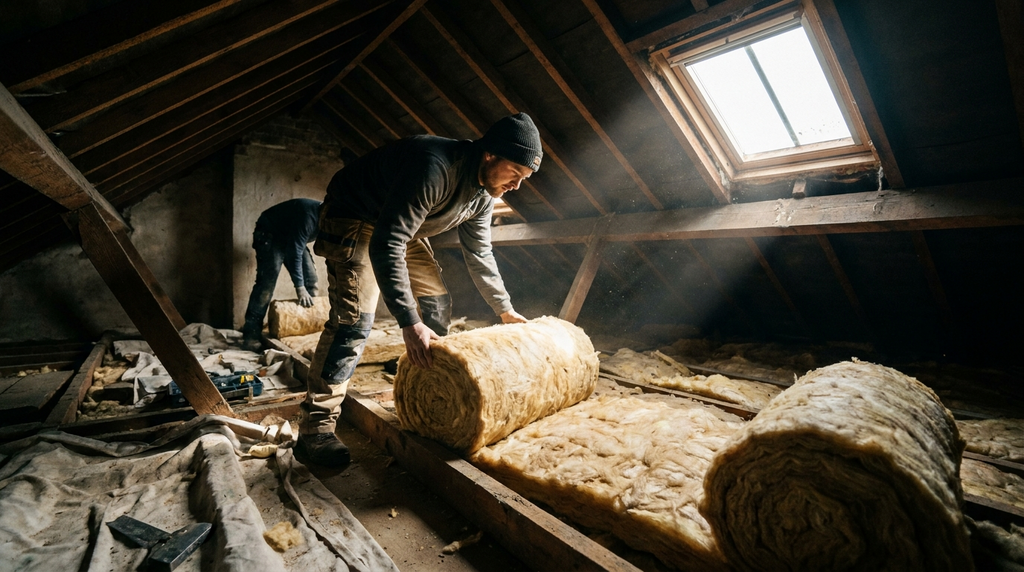
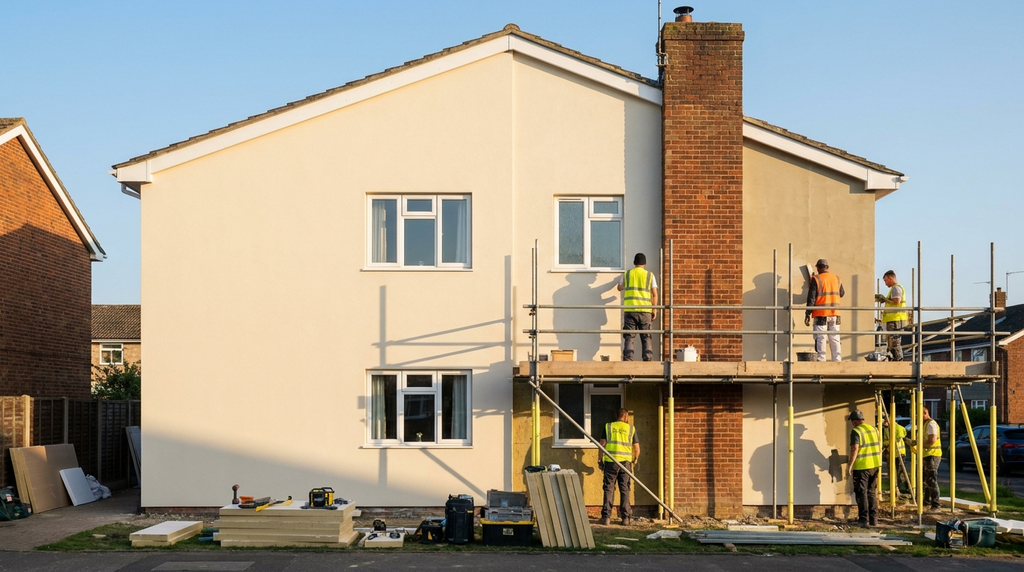
This is often the single best first investment for a Falkirk home. Loft insulation, cavity wall fill, and solid wall insulation (internal or external) all reduce heat loss dramatically. Given the colder winters here, good insulation pays back faster than in milder parts of the UK. Costs range from £300 for loft top-up insulation right up to £10,000 to £20,000 for external solid wall insulation on a terraced property.
Double and Triple Glazing
Replacing aged or single glazing with modern A-rated double or triple glazing makes a noticeable difference to both warmth and noise levels. A full house replacement typically costs £4,000 to £8,000 depending on the number of windows and frames required.
Energy Efficiency Improvements
Smart thermostats, hot water cylinder insulation, draught proofing, LED lighting upgrades, and underfloor heating all sit under this banner. These smaller measures can collectively save £150 to £400 per year and are often the most cost-effective starting point before committing to larger installations.
Typical Costs and Savings for Common Eco Improvements in Falkirk
One of the questions we hear most often is “what will it actually cost me, and how long before I see the money back?” Here’s a practical breakdown based on the most common property types in Falkirk, semi-detached and terraced homes.
| Improvement | Semi-Detached Cost | Terraced Cost | Estimated Annual Saving | Typical Payback Period |
|---|---|---|---|---|
| Loft Insulation (top-up) | £300 – £500 | £250 – £400 | £150 – £250 | 2 – 3 years |
| Cavity Wall Insulation | £800 – £1,200 | £600 – £900 | £200 – £350 | 3 – 5 years |
| External Solid Wall Insulation | £10,000 – £18,000 | £8,000 – £14,000 | £350 – £600 | 20 – 30 years (grant-funded reduces this significantly) |
| Solar PV (4kWp) | £5,500 – £7,000 | £5,000 – £6,500 | £400 – £600 | 9 – 14 years |
| Air Source Heat Pump | £9,000 – £14,000 | £8,000 – £13,000 | £300 – £700 (replacing gas) | 10 – 20 years (BUS grant reduces this) |
| Double Glazing (full house) | £5,000 – £8,000 | £4,000 – £6,500 | £100 – £200 | 25 – 40 years |
| Smart Thermostat and Controls | £200 – £400 | £200 – £400 | £100 – £180 | 2 – 3 years |
A practical note on payback periods, these figures assume no grant funding. With the Scottish and UK-wide schemes available in 2026, payback periods for insulation and heat pumps can be dramatically shorter. More on that below.
Grants and Funding Available to Falkirk Homeowners in 2026
This is where living in Scotland genuinely pays off. Falkirk residents have access to a layered set of funding options that, in the right circumstances, can make major eco improvements close to free. Here’s what’s available.
Home Energy Scotland
Run by the Scottish Government through Energy Saving Trust, this is a brilliant starting point. It offers free, impartial advice from energy experts who understand the Scottish housing stock and climate. On top of advice, qualifying homeowners can access interest-free loans of up to £15,000 for insulation, heat pumps, solar panels, and other improvements. There are also cashback incentives available for certain measures. This is genuinely one of the best schemes in the UK and it’s worth calling them before you do anything else.
Warmer Homes Scotland
If your household is on a lower income or you receive certain benefits, Warmer Homes Scotland can fund free energy efficiency improvements including insulation, heating system upgrades, and in some cases heat pumps. Eligibility is based on income and current EPC rating, and the scheme is delivered through Falkirk Council in coordination with the Scottish Government. It’s worth checking even if you’re not sure you qualify, the eligibility criteria are broader than many people expect.
ECO4 (Energy Company Obligation)
This UK-wide scheme obligates larger energy suppliers to fund energy efficiency improvements in lower-income and fuel-poor households. In Falkirk, ECO4 can cover insulation, boiler replacements, and first-time central heating in properties rated Band D or below. Eligibility is income-based and your energy supplier or a registered ECO4 installer can assess your property.
Great British Insulation Scheme (GBIS)
Also running UK-wide, GBIS focuses specifically on insulation for homes in EPC Bands D to G. Given that Band D is the Falkirk average, a large proportion of homes in the county could be eligible. The scheme covers loft and cavity wall insulation primarily, and eligibility is a mix of EPC rating and council tax band, Band A to D properties in lower council tax bands are prioritised.
Boiler Upgrade Scheme (BUS)
For homeowners ready to make the switch from gas to a heat pump, the BUS provides a £7,500 grant towards an air source heat pump or £7,500 towards a ground source or water source heat pump. This is applied directly by your MCS-certified installer, so you never see the full cost. Falkirk’s housing stock of semi-detached and terraced properties often suits air source heat pumps well, particularly once insulation is in place.
Falkirk Council Local Support
Falkirk Council administers several of the Scottish Government schemes locally and also has its own housing improvement programmes for council tenants and eligible private homeowners. It’s worth contacting the council’s housing or sustainability team directly to ask what’s currently available, as programmes can be updated throughout the year.
Planning Permission and Local Authority Considerations in Falkirk
Most standard eco home improvements in Falkirk fall under Permitted Development rights, which means you can go ahead without a formal planning application. But there are important exceptions and it’s always worth checking before you start work.
Planning in Falkirk is handled by Falkirk Council’s Planning and Environment team. Scotland operates under its own planning framework, so the rules differ slightly from England and Wales, your installer should know this, but it’s worth double-checking.
What Usually Doesn’t Need Planning Permission
- Solar panels on a pitched roof, as long as they don’t protrude more than 200mm above the roof surface
- Air source heat pumps on most properties (subject to size and noise conditions)
- Cavity wall and loft insulation
- Internal wall insulation
- Double glazing replacements (like-for-like)
When You Do Need to Check First
- Listed buildings, Falkirk has a number of listed properties, particularly in the town centre and in villages with historic character. Any external work on a listed building requires Listed Building Consent from Falkirk Council.
- Conservation areas, There are designated conservation areas within Falkirk’s boundary. In these zones, external changes including solar panels and external wall insulation may require prior approval.
- External solid wall insulation, This changes the external appearance of a property and may need planning permission depending on location and property type.
- Flats and communal buildings, Permitted Development rules are more restricted, and you’ll also need agreement from factoring companies or co-owners in tenements.
Our practical tip, always ask your installer to confirm the planning position in writing before work begins, and if in any doubt, submit a Pre-Application Enquiry to Falkirk Council. It’s free, and it saves potential headaches later.
How Falkirk’s Climate Shapes the Best Eco Home Choices
The climate in Falkirk isn’t something you can ignore when planning eco improvements, it should actively shape your decisions. Here’s what the local weather means in practice.
Cold Winters Mean Insulation Always Comes First
With over 2,200 heating degree days per year and temperatures that can stay stubbornly low from November through to March, insulation delivers bigger, faster savings in Falkirk than it does further south. If you’re working through a list of improvements, insulation should be at the top, it reduces demand on any heating system, which means heat pumps and solar panels all perform better in a well-insulated home.
Wind and Rain Affect External Work
Falkirk gets 1,000 to 2,000mm of rainfall annually with prevailing westerly winds off the Atlantic. This matters when choosing external wall insulation systems, the render and weatherproofing finish needs to be rated for high exposure conditions, which good installers will specify automatically. It also affects which face of your roof is best for solar panels; a south-facing pitch that’s sheltered from prevailing winds will give you