Why Tyrone Is Quietly Leading the Way on Eco Home Improvements
Tyrone is a county that doesn’t make a lot of noise about itself, but there’s a quiet determination here that you notice the moment you start talking to homeowners. Stretching from the Sperrin Mountains in the north to the drumlin country around Dungannon in the south, Tyrone has a geography that makes energy efficiency more than just an environmental choice, it’s a genuinely practical one.
Winters here are proper winters. The Sperrins catch the worst of the Atlantic weather rolling in from the west, and if you live in Strabane or the rural stretches between Omagh and Cookstown, you’ll know all about cold, damp mornings that seem to last well into April. That combination of altitude, westerly winds, and high rainfall means heating bills in Tyrone can be noticeably higher than in counties further east or south.
There’s another factor that makes Tyrone distinctive, a large proportion of homes here run on oil rather than mains gas. Northern Ireland as a whole has one of the highest rates of oil heating in the UK, and Tyrone reflects that pattern strongly. When oil prices climb, Tyrone households feel it sharply. That’s exactly why eco home improvements, from insulation to heat pumps, can make such a meaningful difference to your annual bills and your comfort.
The four main towns of Cookstown, Dungannon, Omagh, and Strabane serve as the practical hubs for eco home services across the county, with installers typically covering the whole area from these bases. If you’re in a rural townland between these centres, you’re still well within reach of qualified, experienced tradespeople.
Understanding Energy Performance Across the County, What Band D Actually Means for Your Bills
The average EPC rating across Tyrone sits at Band D, which puts the county right in line with the Northern Ireland average. Band D might sound like a pass mark, but in practice it means most homes here are losing heat through roofs, walls, and windows at a rate that costs real money every single year.
A typical Tyrone home currently uses around 14,000 kWh of energy per year for heating, which is close to the national median. Add in an average electricity consumption of 3,400 kWh per year, and you’re looking at total energy costs that can easily reach £2,200 to £2,800 annually depending on your tariff, your heating fuel, and how well insulated your home is.
Different parts of the county tell slightly different stories. Around Dungannon and the southern lowlands, you’ll find more post-war semi-detached and terraced housing, these properties often have cavity walls and loft spaces that are straightforward to insulate. Moving north and west towards the Sperrins, Gortin, and the areas surrounding Strabane, the housing tends to be older, with solid stone walls and single-glazed windows that present a bigger insulation challenge but also a bigger opportunity for improvement.
Omagh, as the county town, has a fairly mixed housing stock, everything from Victorian terraces in the town centre to 1980s detached bungalows on the outskirts. Each property type has its own upgrade path, and a good eco homes installer will assess yours individually rather than offering a one-size approach.
The honest truth is that a Band D home moving to Band B or C through targeted improvements could cut annual energy costs by £600 to £1,200 per year. That’s money that stays in your pocket, year after year.
The Full Range of Eco Home Services Available to Tyrone Homeowners
If you’re starting small with draught-proofing or going all-in with a full retrofit, there are services available across Tyrone to suit every home and budget. Here’s what’s on offer.
Solar Panels
Tyrone receives around 850 to 1,000 sunshine hours per year, that’s towards the lower end of the UK range, but still enough to make solar panels worthwhile, especially as electricity prices remain elevated. A standard 4kWp system generates roughly 2,800 to 3,200 kWh annually in this part of Northern Ireland. Combine that with a battery storage unit and you can use a much larger proportion of what you generate, reducing your reliance on grid electricity significantly.
Air Source Heat Pumps
For the many Tyrone homes currently running on oil boilers, an air source heat pump is worth serious consideration. Modern units work efficiently even in temperatures well below freezing, and they’re a natural fit for properties with underfloor heating or upgraded radiator systems. Oil boiler replacements with heat pumps are particularly popular in rural areas where mains gas has never been available.
Insulation
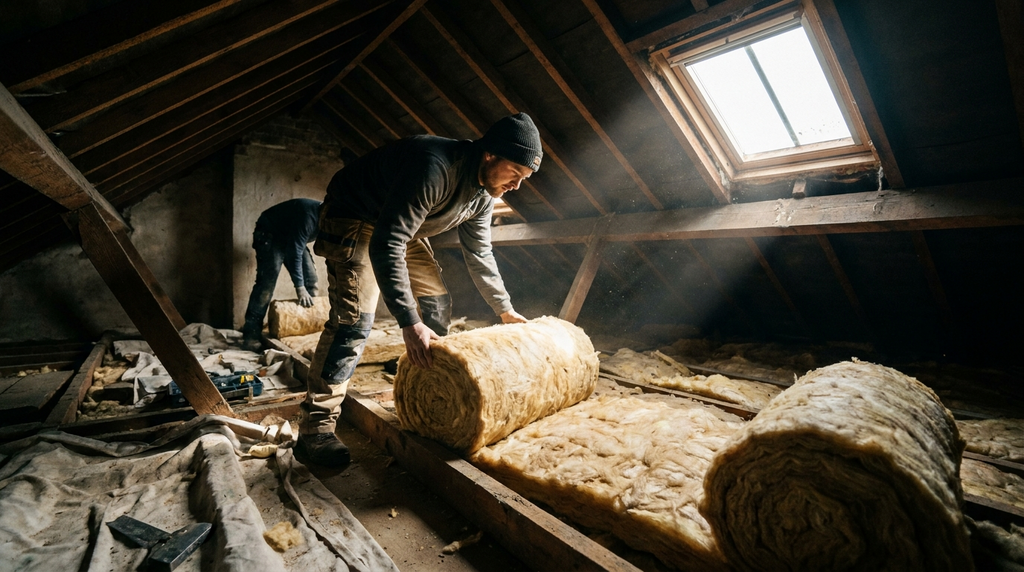
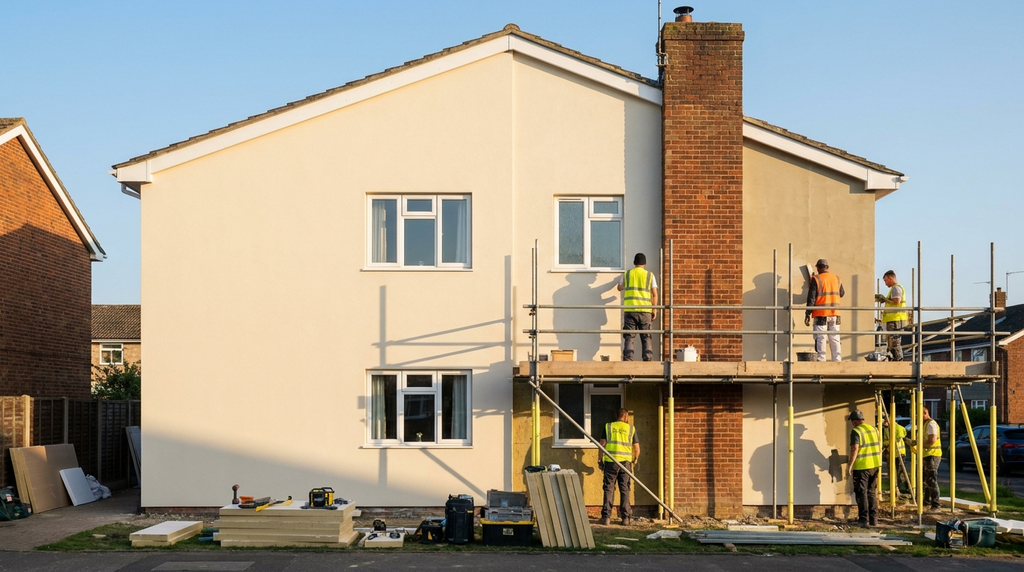
This is where the biggest gains are for most Tyrone homes. Loft insulation, cavity wall insulation, external wall insulation, and floor insulation each address a different heat-loss point. Given the wet westerly climate here, external wall insulation needs to be specified carefully, the render system and installation quality matter enormously in a county that sees 1,000 to 2,000mm of rainfall per year.
Double and Triple Glazing
Replacing single-glazed windows with modern double or triple glazing makes an immediate, noticeable difference to comfort, less draughts, less condensation, and quieter rooms. In older stone cottages around the Sperrins, secondary glazing is sometimes a more sympathetic option that still delivers good thermal performance.
Mechanical Ventilation with Heat Recovery
As homes become better sealed through insulation and glazing upgrades, good ventilation becomes more important. MVHR systems recover warmth from outgoing air and use it to heat fresh incoming air, particularly useful in well-insulated homes where natural draughts are no longer doing the work.
EV Charging Points
Home EV charger installation is growing steadily across Tyrone as more households make the switch to electric vehicles. A dedicated home charger typically costs £800 to £1,200 installed and charges a car overnight at a fraction of the cost of public rapid chargers.
Costs, Savings, and Payback Periods Across Common Tyrone Property Types
These figures give you a realistic starting point for budgeting. Every home is different, and a survey will give you a more precise figure, but these numbers reflect typical installations across Tyrone in 2026.
| Improvement | Semi-Detached | Detached | Terraced | Typical Annual Saving | Approx Payback Period |
|---|---|---|---|---|---|
| Loft Insulation (top-up) | £300 – £500 | £400 – £700 | £250 – £450 | £150 – £250 | 2 – 4 years |
| Cavity Wall Insulation | £600 – £900 | £800 – £1,200 | £500 – £800 | £200 – £350 | 3 – 5 years |
| External Wall Insulation | £8,000 – £13,000 | £12,000 – £20,000 | £7,000 – £11,000 | £400 – £700 | 15 – 25 years |
| Air Source Heat Pump | £8,000 – £12,000 | £10,000 – £15,000 | £7,500 – £11,000 | £500 – £900 | 10 – 18 years |
| Solar PV (4kWp) | £6,000 – £8,500 | £6,500 – £9,500 | £5,500 – £7,500 | £400 – £650 | 10 – 16 years |
| Double Glazing (whole house) | £4,500 – £7,000 | £6,000 – £10,000 | £3,500 – £5,500 | £100 – £200 | 20 – 35 years |
A practical tip worth remembering, combining measures in a single project often reduces the total cost compared to tackling them separately. An installer fitting both insulation and a heat pump at the same time has fewer mobilisation costs, and those savings can be passed on to you.
Grants and Funding Available to Tyrone Homeowners in 2026
Living in Northern Ireland means accessing a slightly different set of schemes compared to homeowners in England or Scotland. Here’s what’s available to you in 2026.
The Boiler Upgrade Scheme
The Boiler Upgrade Scheme (BUS) offers a grant of £7,500 toward the cost of an air source heat pump and £7,500 for a ground source heat pump. This is available across Northern Ireland and makes a significant dent in the upfront cost. Your installer applies on your behalf, so the grant is deducted from your invoice, you don’t need to claim it back yourself.
ECO4
The Energy Company Obligation scheme in its fourth phase targets households on qualifying benefits or low incomes. It can fund insulation, heating upgrades, and other measures at little or no cost to you. Eligibility depends on your household income, benefit status, and your current EPC rating. If you’re receiving Universal Credit, Pension Credit, or certain other benefits, it’s worth checking your eligibility, you may qualify for a fully funded package.
Great British Insulation Scheme
The Great British Insulation Scheme closed on 31 March 2026. It funded insulation measures only and never covered windows or glazing. Properties in the lower EPC bands, which describes a good number of Tyrone homes, are more likely to qualify. Cavity wall and loft insulation are the most commonly funded measures under this scheme.
NISEP, The Northern Ireland Sustainable Energy Programme
NISEP is Northern Ireland’s equivalent of the GB energy obligation schemes. It’s funded through a levy on electricity bills and delivered through energy suppliers. NISEP regularly funds insulation and heating measures for eligible households, with priority given to those in or at risk of fuel poverty. Given the high proportion of oil-heated homes in Tyrone, this scheme is particularly relevant here.
The Affordable Warmth Scheme
This Northern Ireland Executive scheme specifically targets households in fuel poverty. If your household income is below the threshold and your home has an inefficient heating system, you may qualify for a full heating upgrade and insulation at no cost. The scheme is administered through the Northern Ireland Housing Executive (NIHE), and applications are made directly through NIHE or through a referral from your local council.
Warm Homes Scheme
Also delivered by NIHE, the Warm Homes Scheme provides free energy efficiency improvements to owner-occupiers and private tenants in Northern Ireland who meet the eligibility criteria. Measures can include insulation, heating controls, and draught-proofing.
A genuinely useful step, contact your local Mid Ulster District Council or Derry City and Strabane District Council office and ask specifically about energy efficiency referral schemes. Local councils sometimes have additional funding or can fast-track NIHE referrals for residents in their area.
Planning Permission and Local Authority Considerations Across Tyrone
Most eco home improvements don’t require planning permission, but there are important exceptions you need to be aware of before work starts.
Tyrone’s local planning authority responsibilities fall across two councils. Mid Ulster District Council covers Cookstown and Dungannon, while Derry City and Strabane District Council covers Omagh and Strabane. Both councils process planning applications through the NI Planning Portal, and the rules largely align with Northern Ireland’s general permitted development rights.
What Usually Doesn’t Need Planning Permission
- Solar panels on a roof that don’t protrude significantly beyond the roof plane
- Air source heat pumps in most locations, subject to certain noise and siting conditions
- Loft and cavity wall insulation
- Internal wall insulation
- Double glazing replacements that match the style and material of originals
When You Will Need to Check First
- External wall insulation, this changes the external appearance of your home and may require approval
- Solar panels on listed buildings or in conservation areas, permitted development rights are restricted
- Any work on a listed building, which requires Listed Building Consent regardless of scale
- Homes within Areas of Outstanding Natural Beauty, of which parts of the Sperrins qualify
The Sperrin Area of Outstanding Natural Beauty covers a significant stretch of northern Tyrone. If you live in or near this designation, it’s worth a quick call to Mid Ulster District Council’s planning team before commissioning any exterior work. They’re generally helpful and can give you a clear steer without you needing to submit a formal application.
A practical tip, your eco homes installer should check planning requirements as part of their survey process. If they’re not raising this question, ask them directly before signing a contract.
How Tyrone’s Climate and Geography Shape the Best Eco Home Choices
The weather in Tyrone is a key factor that affects which improvements will perform best on your home and which ones need to be specified carefully.
High Rainfall and External Wall Insulation
With annual rainfall of 1,000 to 2,000mm per year, higher in the upland areas around the Sperrins, external wall insulation systems need to be specified for driving rain exposure. Look for systems with a high Wind-Driven Rain classification and make sure your installer is using a render finish and primer appropriate for western Ireland conditions. A poorly specified system in a high-rainfall area can lead to damp penetration rather than preventing it.
Wind and Solar Considerations
The prevailing westerly winds that bring all that rain also mean Tyrone has reasonable wind energy potential. While large wind turbines are beyond most domestic settings, smaller domestic turbines can work well in exposed rural locations, though they do require planning permission and a structural assessment of your site.
For solar panels, the 850 to 1,000 sunshine hours per year means south or south-west facing roof planes will perform best. Don’t be put off by overcast skies, modern panels generate electricity from diffuse daylight, not just direct sunshine. Battery storage makes