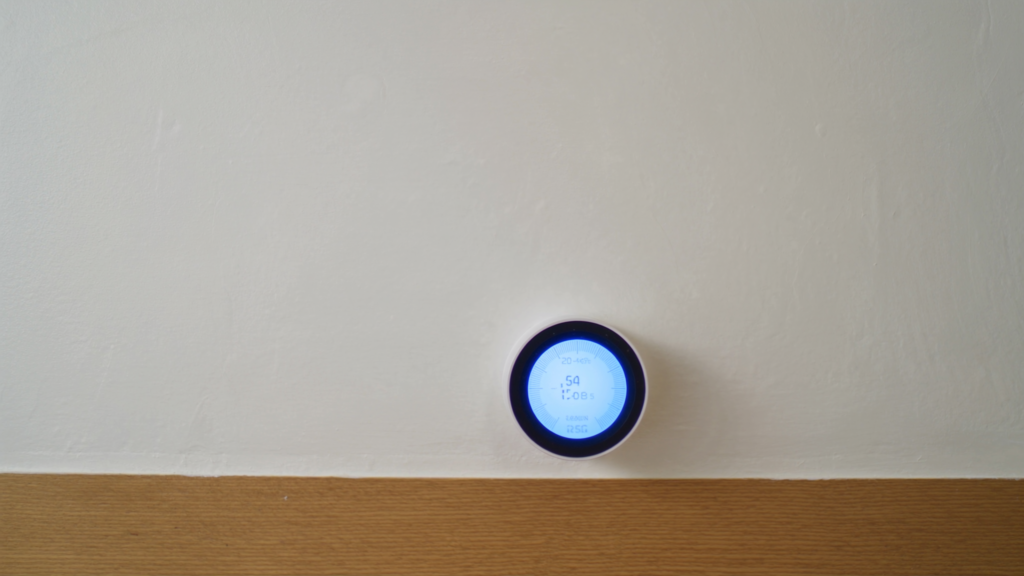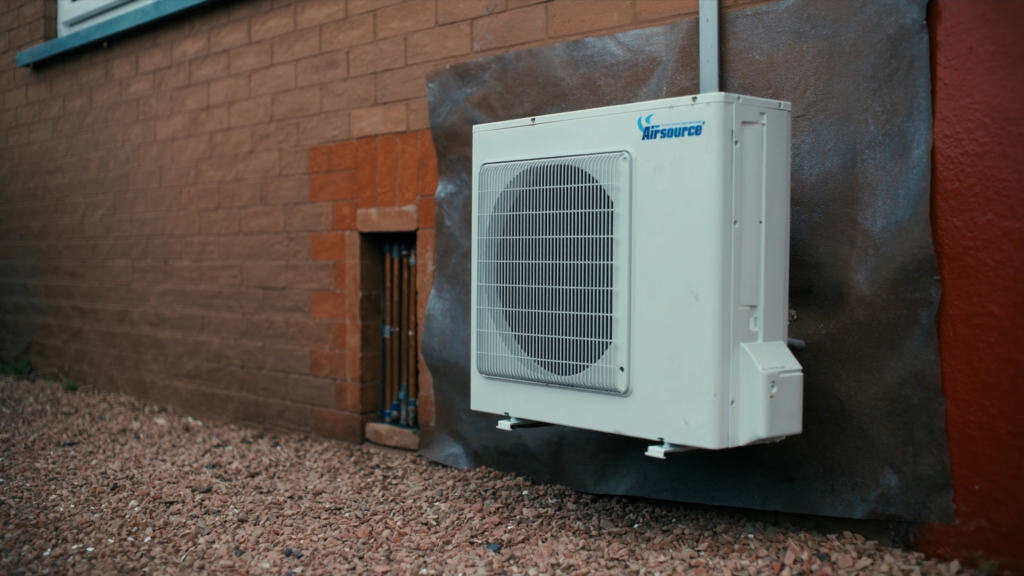
A heat pump’s COP and SCOP tell you how efficiently it turns electricity into heat, a typical modern air-source unit has a COP around 3.0 and a SCOP around 2.8, meaning it delivers roughly three units of heat for every one unit of electricity.
When you are considering replacing a gas boiler with a heat pump, two efficiency ratings dominate the specification sheet: COP and SCOP. These numbers directly determine your future heating bills and whether you qualify for government grant support. A typical modern air-source heat pump installed in 2026 has a COP of roughly 3.0 at 7°C outdoor temperature and a SCOP of about 2.8 across a full UK heating season, according to the Energy Saving Trust (Energy Saving Trust, 2026) and the MCS Heat Pump Installer Database.
COP measures performance at one moment; SCOP averages across a whole heating season
COP stands for Coefficient of Performance. It is a snapshot measurement: the heat output in kilowatts divided by the electrical input in kilowatts, taken at a specific outdoor temperature, typically 7°C for standard tests. A COP of 3.0 means the heat pump delivers 3 kW of heat for every 1 kW of electricity it consumes at that moment. The figure tells you how the unit performs under one set of conditions, but outdoor temperatures in the UK vary from below freezing in winter to mild in autumn and spring.
SCOP stands for Seasonal Coefficient of Performance. It averages the heat pump’s efficiency across the entire heating season, accounting for all the different outdoor temperatures, defrost cycles, and part-load operation that occur in practice. The UK’s building regulations, specifically Approved Document L (2026 edition), now require SCOP to be reported for all new heat pump installations (GOV.UK, 2026). COP alone is no longer sufficient for compliance under Part L or for the MCS 020 standard.
Quick numbers typical COP and SCOP ranges for UK heat pumps
| Heat pump type | COP range (at 7°C outdoor) | SCOP range (UK average climate) |
|---|---|---|
| Air-source heat pump (ASHP) | 2.5–4.0 | 2.5–3.5 |
| Ground-source heat pump (GSHP) | 3.0–5.0 | 3.0–4.5 |
| High-temperature heat pump | 2.0–3.0 | 2.0–2.8 |
| Older electric boiler (for comparison) | 1.0 | 1.0 |
The figures above are based on the Energy Saving Trust’s 2026 performance database and the MCS register of installed systems (Energy Saving Trust, 2026; MCS, 2026). Ground-source heat pumps consistently achieve higher SCOPs because the ground temperature remains more stable than outdoor air, but installation costs are significantly higher.
Higher COP and SCOP mean lower running costs, here is the direct comparison
The difference between a SCOP of 2.0 and 2.8 is substantial in annual running costs. For a typical UK home with an annual heat demand of 10,000 kWh, a heat pump with SCOP 2.8 uses about 36% less electricity than one with SCOP 2.0 to deliver the same amount of heat. At the Ofgem price cap level for Q1 2026 of 24.5p per kWh (Ofgem, 2026), a SCOP 2.8 unit costs approximately £875 per year to run, while a SCOP 2.0 unit costs about £1,225 per year, a saving of £350 annually.
Ground-source heat pumps with a SCOP of 3.5 or higher can reduce running costs by a further 20–25% compared to a typical air-source SCOP of 2.8. However, the higher installation cost means the payback period is longer. The Energy Saving Trust’s running cost calculator provides a more personalised estimate based on your home’s specific heat demand and local electricity tariff (Energy Saving Trust, 2026).
How much does a heat pump cost to run UK
What SCOP does a heat pump need to qualify for the Boiler Upgrade Scheme
The Boiler Upgrade Scheme (BUS) in England and Wales sets minimum SCOP thresholds for grant eligibility. For air-source heat pumps, the minimum SCOP is 2.8. For ground-source heat pumps, the minimum is 3.0 (GOV.UK, 2026). If your installer quotes a SCOP below these figures, the system will not qualify for the £7,500 grant available in 2026.
The MCS certificate for your installation must list the SCOP value. This document is required when applying for the BUS grant through Ofgem. The installer is responsible for ensuring the system achieves the required SCOP, and you should confirm the expected figure in writing before work begins. Ofgem’s BUS installer requirements state that the SCOP must be calculated using the standard UK climate conditions defined in the MCS 020 standard (Ofgem, 2026).
How to verify your installer’s SCOP claims, MCS certification and the register
Only MCS-certified installers can issue the SCOP certificate needed for BUS applications and for compliance with Part L of the building regulations. You can check the MCS register at mcscertified.com to confirm that both the installer and the specific heat pump model are listed. The MCS database shows the SCOP for each model under three UK climate zones, average, cold, and warm. For most homes in central and southern England, the average zone figure is the appropriate one to use (MCS, 2026).
TrustMark registration provides additional consumer protection for heat pump installations, covering workmanship and customer service standards. However, TrustMark does not replace MCS for SCOP certification. You should ask your installer for the MCS product certificate that states the SCOP value before installation begins. If the installer cannot provide this, the system is unlikely to meet BUS requirements or Part L compliance.
MCS certified heat pump installers UK
The direct answer a good UK heat pump should have a SCOP of at least 2.8, with many achieving 3.0–3.5
For a typical UK home, a SCOP of 2.8 or higher ensures efficient operation and eligibility for the £7,500 Boiler Upgrade Scheme grant. Air-source models from major brands such as Daikin, Mitsubishi, and Vaillant commonly achieve SCOP values between 2.8 and 3.2 in UK climate conditions, according to the MCS register (MCS, 2026). Ground-source systems regularly reach SCOP 3.0 to 4.5, but installation costs are typically higher, £15,000 to £25,000 for ground-source compared with £7,000 to £13,000 for air-source (Energy Saving Trust, 2026).
The SCOP figure you should target depends on your budget, available outdoor space, and whether you can accommodate ground loops or boreholes. For most homeowners, an air-source heat pump with a SCOP of 2.8 or 3.0 represents the best balance of efficiency and upfront cost. Always insist on seeing the MCS-certified SCOP value for the specific model before signing a contract.
Frequently Asked Questions
A good COP for a modern air-source heat pump in the UK is 3.0 or higher at 7°C outdoor temperature, according to the Energy Saving Trust.
A good SCOP for a UK heat pump installation is 2.8 or above, as reported by the MCS Heat Pump Installer Database. This figure accounts for the full heating season.
COP is a snapshot efficiency at one outdoor temperature, while SCOP averages performance across a whole UK heating season including defrost cycles, as defined by the Energy Saving Trust.
Yes, Approved Document L (2026 edition) requires SCOP to be reported for all new heat pump installations in the UK, as stated by GOV.UK.
A higher SCOP directly lowers your electricity bills because the heat pump delivers more heat per unit of electricity consumed over the season. For example, a SCOP of 2.8 means 2.8 kWh of heat per 1 kWh of electricity.