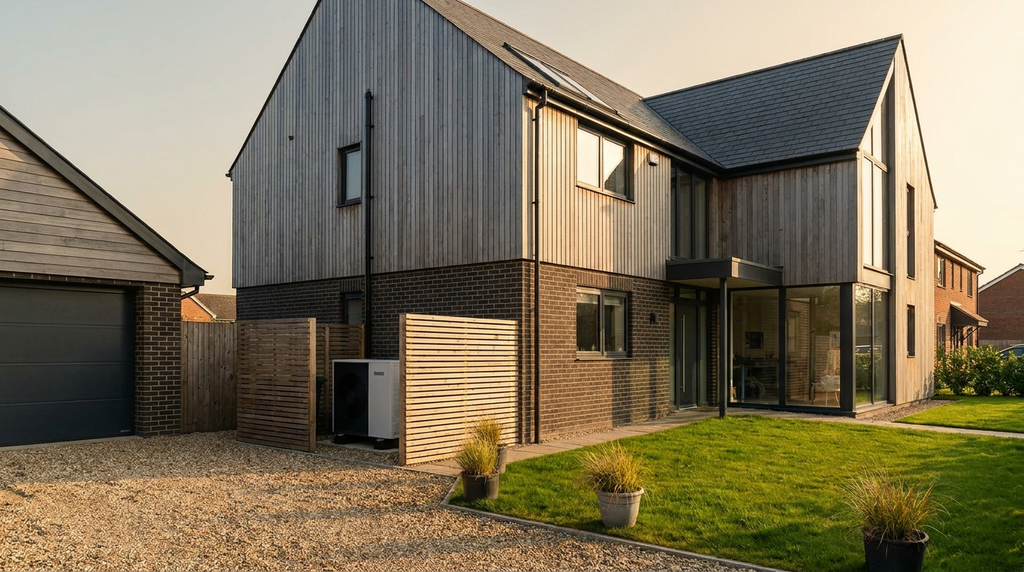
Heat pump installations in UK conservation areas can cost £7,000–£14,000 after the £7,500 Boiler Upgrade Scheme grant, but permission is not guaranteed
If you live in a conservation area and want to replace your gas boiler with a heat pump, the central question is whether the extra planning hurdles make the project unworkable. The short answer is that a heat pump is possible, but you face higher costs, longer timelines, and a real risk of refusal.
The Boiler Upgrade Scheme (BUS) offers a flat £7,500 grant for air-source heat pumps, reducing the typical outlay to £7,000–£14,000 for a standard installation (DESNZ, Boiler Upgrade Scheme statistics, January 2026; Energy Saving Trust, heat pump cost survey, 2026). In a conservation area, total costs can rise by 20–50% due to listed-building-consent (LBC) fees, specialist surveyors, and bespoke external-unit screening. The grant is available for detached houses, bungalows, and flats up to four units, but only if the property has a valid Energy Performance Certificate (EPC) with no outstanding recommendations for loft or cavity-wall insulation (GOV.UK, Boiler Upgrade Scheme eligibility, updated January 2026; Ofgem, BUS guidance, 2026).
Conservation-area status triggers extra planning rules that block most standard heat pump installations
Conservation areas are designated by local planning authorities (LPAs) under the Planning (Listed Buildings and Conservation Areas) Act 1990; any external alteration may require planning permission. Most air-source heat pumps are permitted development under the Town and Country Planning (General Permitted Development) Order 2015, but this right is removed in conservation areas (Ministry of Housing, Communities and Local Government, Permitted Development Rights for Heat Pumps, 2026; Historic England, Conservation Area Designation, 2026).
The LPA will assess visual impact, noise (typically limited to 42 dB(A) at the boundary), and whether the unit can be sited away from the street frontage. You must submit a full planning application (cost £462–£1,200 depending on the LPA) before any installation work begins (Planning Portal, 2026).
The exact eligibility criteria for a heat pump in a conservation area
Properties that are listed buildings (Grade I, II*, or II) are automatically excluded from permitted development and require listed-building consent, which is harder to obtain than standard planning permission. Flats in conservation areas with shared external walls or communal gardens often cannot meet the noise or siting requirements (Historic England, Listed Building Consent for Heat Pumps, 2026; GOV.UK, Planning Permission for Heat Pumps in Conservation Areas, updated January 2026).
Exceptions exist for ground-source heat pumps (buried pipework) and air-source units placed on a rear elevation or inside a garden structure, provided the LPA agrees. You are eligible for the BUS grant only if you own the property and have an EPC that shows no outstanding insulation recommendations, this applies regardless of conservation status (Ofgem, BUS guidance, 2026).
Quick numbers, costs, grants, and approval timelines for conservation-area heat pump projects
| Item | Typical figure | Source |
|---|---|---|
| Boiler Upgrade Scheme grant | £7,500 | GOV.UK, BUS, 2026 |
| Average total installation cost (non-conservation) | £10,000–£15,000 | Energy Saving Trust, 2026 |
| Average total installation cost (conservation area) | £12,000–£21,000 | EST survey, 2026 |
| Planning application fee (conservation area) | £462 (online) to £1,200 (full) | Planning Portal, 2026 |
| Average approval timeline (conservation area) | 8–16 weeks | Historic England, 2026 |
| Maximum noise limit at boundary | 42 dB(A) | MCS 020 standard, 2026 |
| EPC insulation requirement | no outstanding loft/cavity-wall recommendations | Ofgem, BUS guidance, 2026 |
The direct answer to “Can I install a heat pump in a conservation area?”, yes, but only after planning permission and with specific siting rules
You can install a heat pump in a conservation area, but you must first obtain planning permission from your LPA, permitted development rights do not apply. The LPA will require the unit to be sited away from the street frontage, screened by existing walls or planting, and to meet noise limits of 42 dB(A) at the nearest neighbouring property (Historic England, Heat Pumps in Conservation Areas: Planning Guidance, 2026; GOV.UK, Planning Permission for Heat Pumps, 2026).
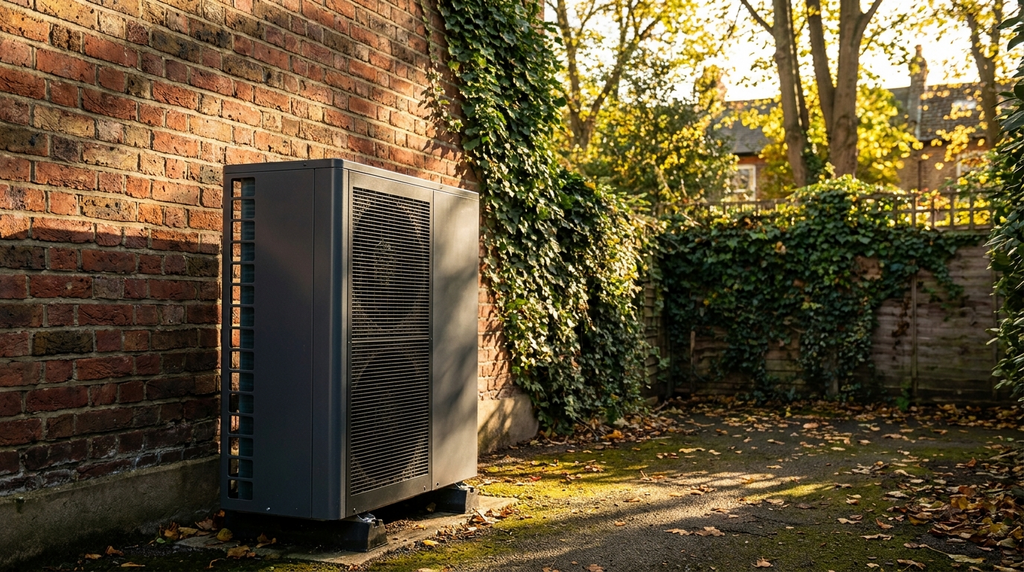
Ground-source heat pumps (buried pipework) face fewer visual objections and are more likely to be approved, but require sufficient garden space. Air-source units on a rear elevation or inside a purpose-built enclosure (e.g., a brick housing) are the most common approved solution.
How to verify an installer for a conservation-area heat pump project
All heat pump installations must be carried out by an MCS-certified installer to qualify for the BUS grant and to meet building regulations (MCS, Installer Certification, 2026; Ofgem, BUS installer requirements, 2026). For conservation areas, the installer must also be able to submit a planning application to the LPA, confirm they have experience with conservation-area applications.
Check the installer is registered with TrustMark (government-endorsed quality scheme) and, if the property is listed, has experience with listed-building consent. Use the MCS Installer Finder (mcscertified.com) to find certified contractors in your area; ask for at least three quotes and request a written planning-application scope (TrustMark, Heat Pump Installer Standards, 2026; Historic England, Finding a Specialist Contractor, 2026).
How to compare heat pump quotes for your home
The three documents you must obtain before starting a heat pump installation in a conservation area
Planning permission from the LPA (or listed-building consent if the property is listed), this is a legal requirement and cannot be bypassed. An EPC with no outstanding insulation recommendations, required to claim the BUS grant and to avoid enforcement action from the LPA (GOV.UK, Planning Permission for Heat Pumps in Conservation Areas, 2026; Ofgem, BUS eligibility, 2026).
A noise assessment report (typically included in the installer’s quote) showing the unit will not exceed 42 dB(A) at the nearest boundary. A siting and screening plan showing the unit’s location relative to the street frontage and neighbouring properties, submit this with your planning application.
Heat pump noise limits and what they mean for your garden
Frequently Asked Questions
Yes, but planning permission is required. Permitted development rights are removed in conservation areas under the Town and Country Planning (General Permitted Development) Order 2015 (GOV.UK, 2026).
£7,000–£14,000 after the £7,500 Boiler Upgrade Scheme grant, but costs can rise 20–50% due to LBC fees and specialist screening (Energy Saving Trust, 2026).
Yes. Conservation areas remove permitted development rights for air-source heat pumps under the Planning (Listed Buildings and Conservation Areas) Act 1990 (Historic England, 2026).
Local planning authorities typically limit noise to 42 dB(A) at the property boundary (Ofgem, BUS guidance, 2026).
Yes, the £7,500 BUS grant is available if your property has a valid EPC with no outstanding insulation recommendations (GOV.UK, updated January 2026).