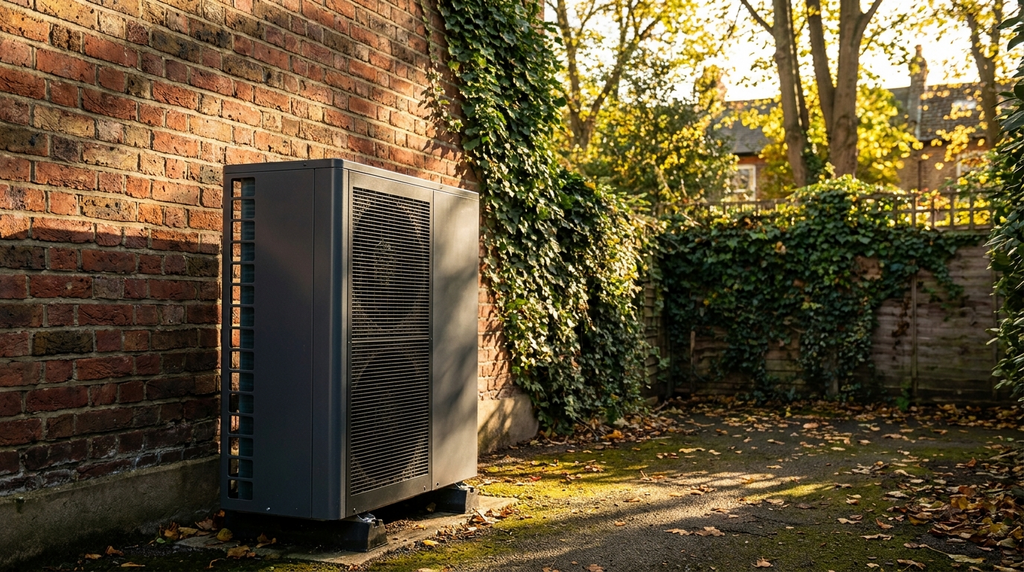
More UK households than ever stand to benefit from government energy grants in 2026, yet a significant number of eligible homeowners never claim them, simply because they do not know where to look or assume they will not qualify. The UK’s main energy efficiency programmes have distributed billions of pounds worth of support, and yet awareness remains surprisingly patchy, particularly among households who are not on means-tested benefits but would still qualify under property-based criteria.
The Great British Insulation Scheme closed on 31 March 2026. It funded insulation measures only and never covered windows or glazing. The Great British Insulation Scheme closed on 31 March 2026. It funded insulation measures only and never covered windows or glazing. Start your check using the official eligibility tool at gov.uk and only proceed with MCS-certified installers to ensure the work counts towards your grant claim.
- Assess three factors before applying — your household income and benefit status, your property's EPC rating, and your current heating system type
- The Boiler Upgrade Scheme offers grants of up to £7,500 towards an air source heat pump and does not require you to be on benefits or have a low EPC rating
- ECO4 targets homes with an EPC rating of D or below and prioritises households receiving means-tested benefits such as Universal Credit or Pension Credit
- The Great British Insulation Scheme closed on 31 March 2026. It funded insulation measures only and never covered windows or glazing. That makes it accessible to many mid-income homeowners
- Never sign a finance agreement or repayment plan in connection with a grant application — legitimate grants require no repayment
- Use the government's official eligibility checker at gov.uk and always verify any installer against the MCS certification register before agreeing to any work
- Understanding Energy Efficiency Grants in the UK
- Whether You Are Likely to Qualify, A Quick Overview
- The Main UK Energy Grants Available in 2026
- How to Check Your Energy Grant Eligibility Step by Step
- Online Tools and Resources That Make Checking Easier
- Comparing the Main Grants at a Glance
- What to Look For When Choosing an Installer to Help You Apply
- Understanding Your EPC and Why It Matters for Grant Eligibility
- Avoiding Common Mistakes When Applying for Energy Grants
Checking your energy grant eligibility in the UK involves assessing three key factors, your household income and benefit status, your property’s current Energy Performance Certificate (EPC) rating, and the type of heating system you currently use. The Great British Insulation Scheme closed on 31 March 2026. It funded insulation measures only and never covered windows or glazing. Each has different eligibility rules, but many homeowners qualify for at least one of them, and some qualify for more than one simultaneously.
Understanding Energy Efficiency Grants in the UK
An energy efficiency grant is a form of financial support, funded either by the government directly or by energy suppliers under a regulatory obligation, that helps homeowners reduce or eliminate the upfront cost of installing energy-saving improvements such as insulation, heat pumps, or solar panels. Importantly, a grant is money you do not repay. This distinguishes it from schemes like the now-defunct Green Deal, which was structured as a loan repaid through your energy bill.
Understanding this distinction matters because some energy companies and third-party brokers use language that blurs the line between a grant and a subsidised product offer. If you are ever asked to sign a finance agreement or repayment plan, what you are being offered is not a grant.
The three main active schemes in 2026 that most homeowners will encounter are as follows. ECO4 (Energy Company Obligation 4) is the government’s flagship fuel poverty programme, delivered through energy suppliers, targeting low-income and vulnerable households. The Great British Insulation Scheme (GBIS) focuses specifically on insulation improvements and has a broader reach than ECO4, including households who are not on benefits. The Boiler Upgrade Scheme (BUS) offers a direct grant voucher toward the cost of replacing a fossil fuel boiler with a low-carbon heating system such as a heat pump.
Eligibility for these schemes is not one-size-fits-all. It depends on a combination of your household income, whether you receive certain benefits, your EPC rating, your property type, and sometimes your postcode. That is precisely why a step-by-step checking process is so valuable, you cannot reliably guess your eligibility without working through the criteria systematically.
Practical tip, before you do anything else, locate your property’s EPC certificate by searching the national EPC register at gov.uk/find-energy-certificate using your postcode. Your EPC rating is one of the most important eligibility variables across all three main schemes.
Whether You Are Likely to Qualify, A Quick Overview
The core eligibility triggers vary across the three main schemes, but there are clear patterns that can give you a strong initial sense of where you stand before you start any formal checking process.
ECO4 is primarily aimed at low-income and vulnerable households. Receiving certain means-tested or qualifying benefits is the most reliable fast-track route to ECO4 support. Benefits that typically trigger eligibility include Universal Credit, Pension Credit, Child Tax Credit, Working Tax Credit, Housing Benefit, and Income-related Employment and Support Allowance. If you receive any of these, you are very likely to qualify for free or heavily subsidised measures under ECO4.
The Great British Insulation Scheme closed on 31 March 2026. It funded insulation measures only and never covered windows or glazing. The means-tested group mirrors the benefits criteria above. However, the general group, which is a significant and often overlooked feature of the scheme, is open to a much wider range of households purely on the basis of their EPC rating. The Great British Insulation Scheme closed on 31 March 2026. It funded insulation measures only and never covered windows or glazing. The Great British Insulation Scheme closed on 31 March 2026. It funded insulation measures only and never covered windows or glazing.
BUS is the most broadly accessible of the three. It is open to most homeowners in England and Wales replacing a fossil fuel heating system with an air source or ground source heat pump, and it has no income test and no EPC requirement for eligibility.
It is worth being honest about one important caveat here. Checking your eligibility does not guarantee you will receive a grant. Demand can outstrip supply in certain areas, scheme funding is subject to ongoing government decisions, and some households may find that their local suppliers or councils have already allocated their annual obligation. Always verify current scheme status at GOV.UK or through the Energy Saving Trust before making plans based on grant availability.
The Great British Insulation Scheme closed on 31 March 2026. It funded insulation measures only and never covered windows or glazing. This single call could unlock free insulation or heating improvements worth thousands of pounds.
The Main UK Energy Grants Available in 2026
Each of the main schemes has distinct mechanics, funding levels, and application routes. Understanding how they work individually will help you approach the checking process with much greater clarity.
ECO4, Energy Company Obligation 4
ECO4 is delivered by large energy suppliers, who are legally required by Ofgem to spend a set amount funding energy efficiency improvements in eligible homes. It covers a wide range of measures including loft insulation, cavity wall insulation, solid wall insulation, heat pumps, solar panels, and first-time central heating systems for homes that have never had it.
ECO4 is primarily targeted at households on means-tested benefits or those living in properties with an EPC rating of E, F, or G. In practice, the scheme is often accessed through referrals from energy suppliers, local councils, charities, or registered installers rather than through a simple online application form. If your energy supplier is one of the larger obligated suppliers, which include British Gas, EDF, E.ON, Octopus Energy, and others, they will have an ECO4 team or online checker you can contact directly.
Great British Insulation Scheme (GBIS)
GBIS focuses specifically on improving the insulation of homes with poor thermal efficiency. It operates through two tracks. The means-tested group targets benefit recipients, as described above. The general group is broader and based on EPC ratings, homes rated D, E, F, or G may qualify regardless of household income.
The Great British Insulation Scheme closed on 31 March 2026. It funded insulation measures only and never covered windows or glazing. Like ECO4, it is delivered through energy suppliers and registered installers who hold the relevant certifications.
Boiler Upgrade Scheme (BUS)
The Boiler Upgrade Scheme, administered by the Department for Energy Security and Net Zero (DESNZ), offers a voucher of £7,500 toward the installed cost of an air source heat pump or a ground source heat pump. This is a government-funded grant, not a supplier obligation, and it is installer-led, meaning your MCS-certified installer applies for the voucher on your behalf before work begins. You cannot apply independently as a homeowner.
An air source heat pump is a device that extracts heat from the outdoor air and transfers it indoors using electricity, delivering significantly more heat energy than the electrical energy it consumes. The BUS voucher applies to both residential and some smaller non-domestic properties, and there is no income test or minimum EPC requirement for eligibility.
Local Authority and Council Schemes
Many local councils operate their own energy grant programmes, often funded through mechanisms such as the Local Authority Delivery (LAD) scheme or the UK Shared Prosperity Fund. These schemes vary significantly by postcode and may cover insulation, heating upgrades, solar panels, or draught-proofing. Some councils partner with charities such as National Energy Action (NEA) or Citizens Advice to reach eligible households. Always check your specific council’s website, as this funding can be genuinely generous and is not widely publicised.
Practical tip, search “[your council name] energy grant 2026” to find any locally administered schemes in your area. Local funding can sometimes be combined with national schemes to cover a greater proportion of your installation costs.
How to Check Your Energy Grant Eligibility Step by Step
Working through the following steps in order gives you the most thorough picture of what you are entitled to, and ensures you do not miss any routes to support.
- Gather your documents first. Before you start any checks, collect your most recent energy bill (which contains your account number, property details, and your meter information), proof of any benefits you currently receive, and your property’s EPC certificate. Your EPC is freely searchable at the national EPC register on GOV.UK, enter your postcode and address to find your current rating.
- Check your EPC rating. Visit the GOV.UK EPC register, enter your postcode and address, and note your current rating. A rating of E, F, or G significantly increases your chances under ECO4 and GBIS. If your home does not yet have a valid EPC, you can commission one from an accredited domestic energy assessor, costs typically range from £60 to £120 for a standard property.
- Use the official Simple Energy Advice (SEA) tool. The government-backed tool at simpleenergyadvice.org.uk walks you through a series of questions about your property, heating system, and household circumstances, then signposts the schemes most likely to apply to your situation. It is free, takes around ten minutes to complete, and does not require you to provide personal financial details.
- Contact your energy supplier directly. All major suppliers operate ECO4 and GBIS obligations. The Great British Insulation Scheme closed on 31 March 2026. It funded insulation measures only and never covered windows or glazing. Suppliers sometimes have flexible criteria or local partnerships that can extend eligibility beyond the standard national criteria.
- Check with your local council. Visit your council’s website or call their housing or energy team. Many councils have dedicated pages for local grant programmes, and council advisers can refer you to registered local installers. This step is particularly worthwhile if you live in a rural area or an older property type such as a stone-built or solid-wall home.
- Use a registered installer or retrofit assessor for a home assessment. A TrustMark-registered installer or MCS-certified assessor can conduct a free or low-cost home assessment and will often identify grant routes you may not have found independently. Retrofit assessors, professionals trained to assess a whole-home approach to energy improvement, are required under the PAS 2035 standard for many ECO4 measures and can give you a structured improvement plan as part of the process.
- Apply through the referral route if you are on qualifying benefits. If you receive Universal Credit, Pension Credit, or another qualifying benefit, ask your energy supplier or a Warm Homes Hub adviser to trigger a referral on your behalf. This route is often significantly faster than self-application and reduces the administrative burden on you as the homeowner.
Practical tip, go through the SEA tool before contacting any supplier or installer. Having a record of the schemes it signposts gives you a confident starting point for every subsequent conversation.
Online Tools and Resources That Make Checking Easier
Several well-established online resources and services exist specifically to help UK homeowners navigate energy grant eligibility without needing specialist knowledge.
Simple Energy Advice (SEA)
Simple Energy Advice is the official government-backed signposting service for energy efficiency in England and Wales. It asks questions about your property type, tenure (owner-occupier or renting), EPC rating, current heating system, and broad household income band. It does not require detailed financial information and produces a tailored summary of schemes and improvements most relevant to your situation. It also links through to local installer finders and scheme-specific GOV.UK pages for those who want to explore further. guide to using the Simple Energy Advice tool
GOV.UK Scheme Pages
The Great British Insulation Scheme closed on 31 March 2026. It funded insulation measures only and never covered windows or glazing. Bookmarking these pages rather than relying on third-party summaries ensures you are always reading the most current version of the rules, particularly important given that scheme terms and funding levels can change at short notice.
Energy Saving Trust
The Energy Saving Trust provides free, impartial advice on energy efficiency and grant schemes. It also operates Home Energy Scotland on behalf of the Scottish Government, which runs separate and in many cases more generous funding routes for Scottish homeowners, including interest-free loans alongside grants. If you live in Scotland, always check Home Energy Scotland rather than assuming UK-wide information applies to you. energy grants available in Scotland
Local Authority Energy Advice Services
Many councils fund local energy advice teams or partner with charities such as National Energy Action (NEA) or Citizens Advice who can help vulnerable households navigate eligibility checks without needing to manage the process alone. These services are particularly valuable for older homeowners, those with disabilities, or households with language barriers who may find online tools less accessible.
Practical tip, if you are in Scotland, Wales, or Northern Ireland, check your devolved government’s energy advice service first, as funding routes and criteria differ meaningfully from those in England.
Comparing the Main Grants at a Glance
The table below summarises the key features of the main schemes available to UK homeowners in 2026, to help you identify at a glance which are most likely to apply to your circumstances.
| Scheme | Who It Is For | What It Covers | Typical Value | Income Tested | EPC Requirement |
|---|---|---|---|---|---|
| ECO4 | Low-income and benefit recipients | Insulation, heat pumps, solar, first-time central heating | Up to full installation cost | Yes | E, F, or G (sometimes D) |
| GBIS, means-tested group | Benefit recipients | Insulation measures | Significant subsidy or free | Yes | D or below |
| GBIS, general group | Broader range of households | Insulation measures | Partial to full subsidy | No | D or below |
| Boiler Upgrade Scheme | Most homeowners replacing fossil fuel heating | Air source or ground source heat pumps | £7,500 voucher | No | No minimum requirement |
| Local council schemes | Varies by local authority area | Varies, insulation, heating, solar | Varies widely | Sometimes | Varies |
Scheme values and eligibility terms are subject to government review. Always verify current figures at GOV.UK or through the Energy Saving Trust before making financial decisions based on grant availability.
The Great British Insulation Scheme closed on 31 March 2026. It funded insulation measures only and never covered windows or glazing. This is sometimes referred to as a “stacked” funding approach, and retrofit assessors and council energy teams will be aware of how to structure it. how to combine energy grant schemes for maximum savings
For the Boiler Upgrade Scheme, one important procedural point bears repeating. The £7,500 voucher must be applied for by your MCS-certified installer before the installation work begins. Homeowners cannot apply directly or claim the voucher retrospectively after work has been completed. Always confirm with your installer that they have submitted the voucher application and received confirmation before any work starts on your property.
Practical tip, ask any installer quoting for heat pump work to confirm their MCS certification number and show you confirmation that a BUS voucher has been issued before you agree a start date for installation.
What to Look For When Choosing an Installer to Help You Apply
Choosing the right installer matters enormously, not just for quality of work but because using an unqualified or unregistered contractor can invalidate your grant entirely.
For ECO4 and GBIS, installers must be registered with TrustMark, the government-endorsed quality scheme for home improvement, and must hold relevant PAS 2030 or PAS 2035 certification. PAS 2030 is the British Standard for the installation of energy efficiency measures in existing buildings. PAS 2035 governs the broader retrofit process, including the role of a retrofit coordinator and assessor who oversees more complex whole-house improvement plans. The Great British Insulation Scheme closed on 31 March 2026. It funded insulation measures only and never covered windows or glazing.
For the Boiler Upgrade Scheme, installers must hold MCS certification covering the specific technology being installed, most commonly air source heat pumps. MCS (Microgeneration Certification Scheme) is the standards body that certifies installers and products for small-scale low-carbon energy systems in the UK. You can verify an installer’s MCS certification by searching the installer finder at mcscertified.com and checking that their certification explicitly covers the technology you need installed, not just a related category.
You can verify TrustMark registration by searching the official register at trustmark.org.uk. Always do this independently before agreeing to any work. Some unregistered traders present themselves as grant-approved installers without holding the required certifications, if an installer cannot provide a TrustMark registration number or MCS certificate number for verification, do not proceed.
Even when a grant is covering the majority of costs, it is strongly advisable to get at least two or three quotes. A grant reduces or eliminates your direct financial outlay, but it does not guarantee the quality of workmanship or the standard of aftercare you will receive. The cheapest quote may involve cutting corners on specification or using lower-quality components that affect long-term performance. how to vet and choose an energy-efficient home installer
Practical tip, when requesting quotes, ask each installer to confirm their TrustMark and MCS registration numbers in writing as part of their quotation, and verify both independently before signing anything.
Understanding Your EPC and Why It Matters for Grant Eligibility
Your EPC rating is one of the single most important variables in determining which energy grants you can access, yet many homeowners have either never seen their EPC or are unaware that the rating on file may no longer reflect their property’s current condition.
An Energy Performance Certificate (EPC) is a document that rates the energy efficiency of a property on a scale from A (most efficient) to G (least efficient), based on factors including the insulation levels, heating system, windows, and age of construction. EPCs are produced by accredited domestic energy assessors and are valid for ten years. Every property that has been sold or let in the UK since 2008 should have one on the national register, and you can check yours for free at the GOV.UK EPC register.
For ECO4, homes rated E, F, or G are prioritised, though some households with a D-rated property may qualify in specific circumstances. The Great British Insulation Scheme closed on 31 March 2026. It funded insulation measures only and never covered windows or glazing. The Great British Insulation Scheme closed on 31 March 2026. It funded insulation measures only and never covered windows or glazing.
If your EPC is out of date, for instance, if improvements have been made since it was last assessed, it may be worth commissioning a new one. However, if your current valid EPC shows a low rating that would help you qualify for support, there is generally no advantage in updating it before you have accessed the grants you are eligible for. A new, higher-rated EPC could inadvertently reduce your eligibility under schemes that target lower-rated properties.
It is also worth understanding that EPC ratings are calculated using standard assumptions about occupancy and behaviour rather than your actual energy bills. This means your EPC rating can differ significantly from your lived experience of energy costs, particularly in older or unusual property types. For grant eligibility purposes, the assessed EPC rating is what counts, not what you pay each month.
| EPC Rating | Description | Likely Grant Relevance | Proportion of UK Housing Stock (approximate) |
|---|---|---|---|
| A or B | Highly efficient | Limited relevance for insulation grants; BUS still applicable | Small minority |
| C | Reasonably efficient | BUS applicable; limited ECO4 or GBIS access without benefits | Growing share of newer stock |
| D | Below average efficiency | GBIS general group eligible; BUS applicable | Large share of mid-century stock |
| E | Poor efficiency | ECO4 and GBIS both applicable; priority for most schemes | Significant proportion of older homes |
| F or G | Very poor efficiency | The Great British Insulation Scheme closed on 31 March 2026. It funded insulation measures only and never covered windows or glazing. | Older and hard-to-treat properties |
Proportions are indicative only and are based on published Energy Saving Trust and DESNZ housing data. Always verify your own property’s rating before drawing conclusions about eligibility.
Practical tip, if you have made any significant energy improvements to your home in recent years, such as adding insulation, replacing windows, or installing a new boiler, your current EPC may not reflect these changes. A reassessment by an accredited domestic energy assessor could raise your rating, which matters for future sale or rental compliance, though as noted above, a higher rating may affect eligibility for some insulation-focused grants. when and why to update your EPC
Avoiding Common Mistakes When Applying for Energy Grants
Even homeowners who successfully identify their eligibility can run into avoidable problems during the application or installation process. Being aware of these common pitfalls before you start can save significant time, money, and frustration.
One of the most frequently encountered issues is using an installer who is not correctly certified for the specific scheme being accessed. As noted earlier, ECO4 and GBIS require TrustMark registration and PAS 2030 or PAS 2035 certification, and the BUS requires MCS certification. If an installer begins work without the correct credentials or without a valid grant voucher having been issued, you may lose entitlement to the grant entirely. Always confirm credentials before work starts, not after.
A second common mistake is assuming that because a neighbour or relative received a particular grant, you automatically will too. Scheme rules change, annual funding allocations vary, and your specific property type or location may affect availability. One household’s experience is useful context but is not a reliable guide to your own eligibility.
Third, be cautious of unsolicited approaches from companies claiming to offer “free grants” for energy work. The Great British Insulation Scheme closed on 31 March 2026. It funded insulation measures only and never covered windows or glazing. Legitimate grant work is always accompanied by proper paperwork, certified installers, and no pressure selling. If you feel pressured, end the conversation and contact your energy supplier or council independently.
Finally, do not overlook the value of the retrofit assessor. For more complex improvements, particularly those involving multiple measures or hard-to-treat properties such as solid-wall homes, a retrofit assessor is a qualified professional who evaluates your home holistically and creates an improvement plan aligned with the PAS 2035 standard. Under ECO4, a retrofit assessor is required for many types of work. They can identify interactions between different measures (for instance, the importance of ensuring adequate ventilation before adding heavy insulation) that a single-trade installer might miss.
Practical tip, if an installer quotes for work under ECO4 without mentioning a retrofit assessor or a PAS 2035 assessment, ask them directly how they intend to meet the PAS 2035 requirement. A legitimate ECO4-funded project should always include this step for most measure types.
Frequently Asked Questions
The Great British Insulation Scheme closed on 31 March 2026. It funded insulation measures only and never covered windows or glazing. The Great British Insulation Scheme closed on 31 March 2026. It funded insulation measures only and never covered windows or glazing.
The Boiler Upgrade Scheme currently offers £7,500 towards an air source heat pump and £7,500 towards a ground source heat pump, with biomass boiler grants set at £5,000 for eligible rural properties off the gas grid. The scheme is open to homeowners in England and Wales regardless of income, provided their property has a valid EPC with no outstanding recommendations for loft or cavity wall insulation. Applications are made through an MCS-certified installer who claims the grant on your behalf, reducing the upfront cost you pay directly.
No — several UK energy grants do not require you to be on means-tested benefits. The Great British Insulation Scheme closed on 31 March 2026. It funded insulation measures only and never covered windows or glazing. ECO4 does prioritise benefit recipients but also includes a general group route for homes with an EPC rating of E, F, or G, which your energy supplier can assess without a benefit requirement.
ECO4 primarily targets properties with an EPC rating of D or below, with the lowest-rated homes in bands E, F, and G treated as the highest priority. Homes rated E, F, or G may qualify even without a qualifying benefit through the general group eligibility route administered by energy suppliers. If your property does not have a current EPC, you can commission one from an accredited domestic energy assessor for roughly £60 to £120, and the result will determine which measures and schemes you can access.
Yes, the Great British Insulation Scheme is still accepting applications in 2026 through participating energy suppliers. The scheme provides a single insulation measure per household — typically loft, cavity wall, or solid wall insulation — and targets homes in Council Tax bands A to D or those with an EPC rating of D or below. Solid wall insulation under the scheme can be worth between £4,000 and £10,000 depending on property type. That makes it one of the higher-value grants available to homeowners without a benefit requirement.