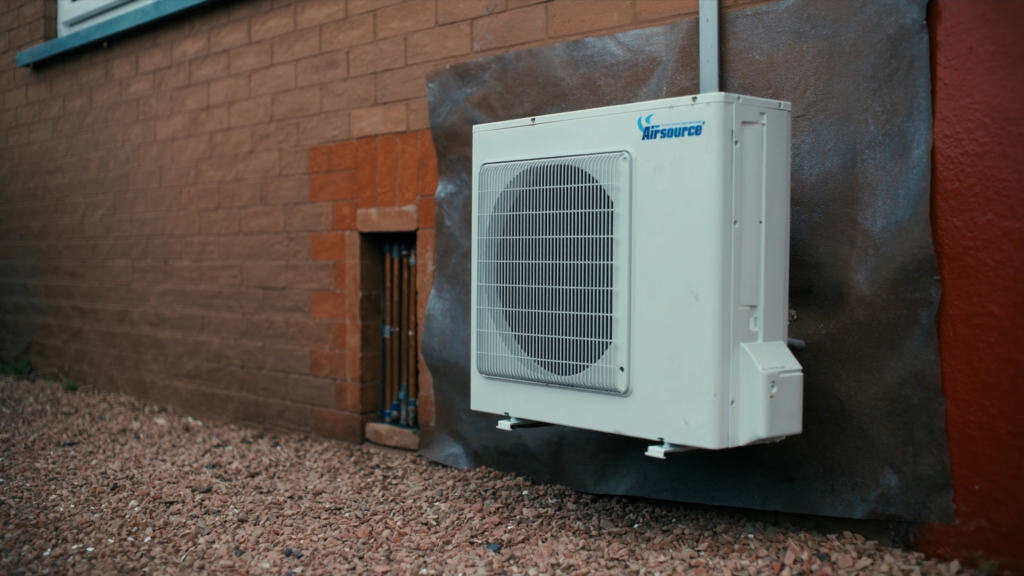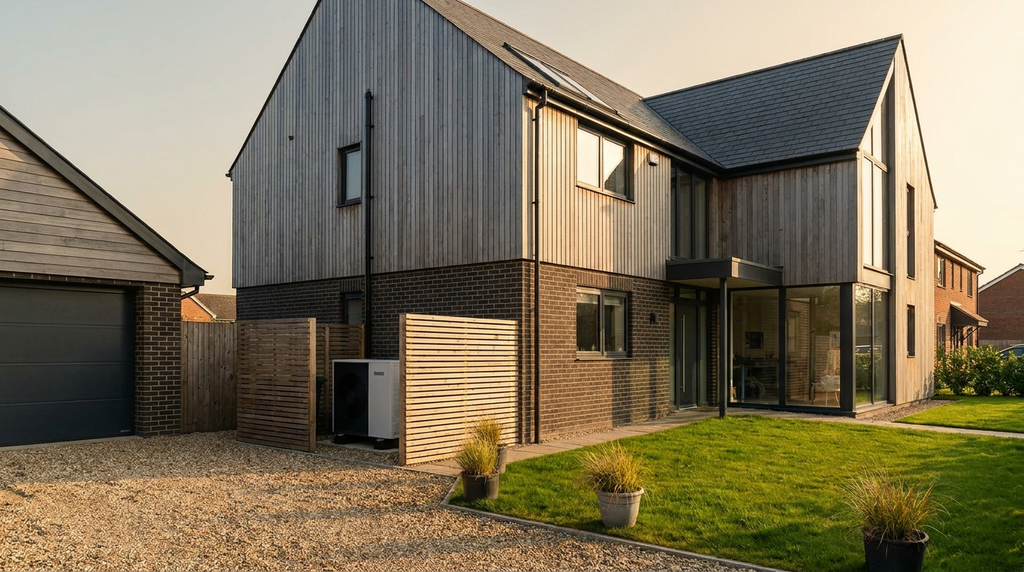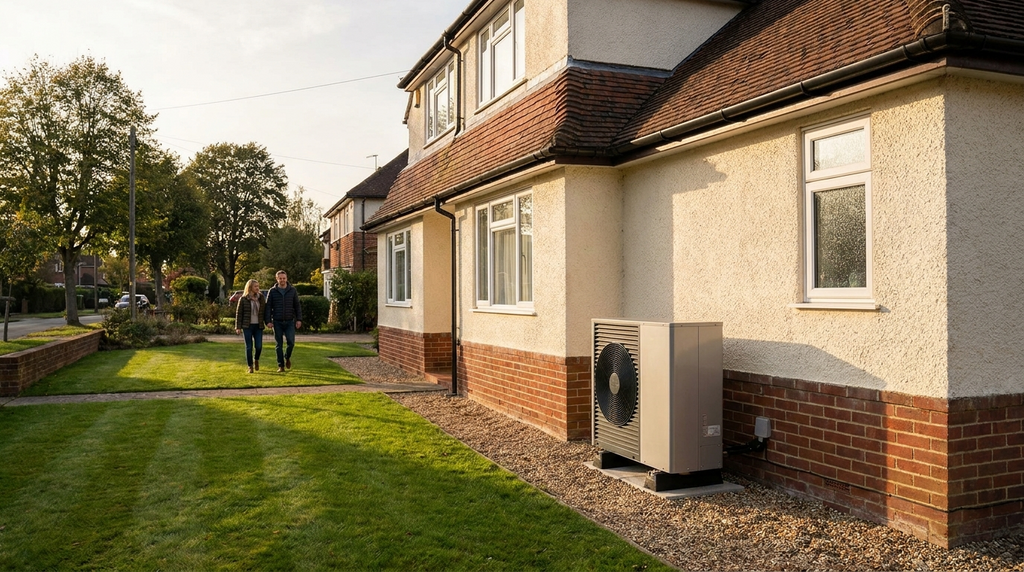
Hybrid heat pump systems cost £8,000–£14,000 installed (2026 prices)
Deciding whether to replace your gas boiler with a hybrid heat pump system involves weighing upfront costs against long-term savings. In 2026, the typical installed cost for a hybrid system combining a gas boiler with an air-source heat pump ranges from £8,000 to £14,000 (Energy Saving Trust, 2026).
The heat pump component alone (typically 4–8 kW) costs between £4,000 and £7,000, while the boiler adds £2,000 to £4,000. The Boiler Upgrade Scheme (BUS) offers a £7,500 grant for air-source heat pumps, which applies to the heat pump component only (DESNZ, 2026). After the grant, your net cost for the hybrid system falls to roughly £500–£6,500.
A hybrid system can cut annual heating bills by £200–£600
In a typical 3-bedroom semi-detached home, a hybrid system shifts most of the heating load to the heat pump, which handles 60–80% of annual demand, while the gas boiler covers only the coldest days. This split can reduce annual heating bills by £200–£600 compared to a gas-only system (Energy Saving Trust, 2026).
Actual savings depend on three main variables: the ratio of gas to electricity prices, the level of home insulation, and whether the heat pump is correctly sized for your property. If your home is poorly insulated, the heat pump will run less efficiently, reducing potential savings.
Hybrid heat pump system pros and cons
| Pros | Cons |
|---|---|
| Lower running costs than a gas-only system | Higher upfront cost than a boiler-only system |
| Reduced carbon emissions (up to 60–70% less) | Requires outdoor unit space and indoor hot water cylinder |
| No need to fully insulate the home first | Heat pump efficiency drops in very cold weather |
| Works with existing radiators in many cases | More complex to install and maintain than a boiler alone |
These trade-offs are based on data from the Energy Systems Catapult’s hybrid heat pump field trial and MCS installation standards (Energy Systems Catapult, 2026). The key advantage is that you don’t need to upgrade your home’s insulation to a very high standard before installing a hybrid system, unlike a full heat pump.
Who qualifies for the £7,500 Boiler Upgrade Scheme grant
The BUS grant is available for air-source heat pumps installed in England and Wales. To qualify, your home must have a valid Energy Performance Certificate (EPC) with no outstanding recommendations for loft or cavity wall insulation (GOV.UK, 2026).
The heat pump must be MCS-certified and installed by an MCS-accredited installer. The grant covers the heat pump component only, not the boiler. Hybrid systems are eligible provided the heat pump meets BUS standards. If you already have a modern gas boiler, you can add a heat pump and claim the grant for that component alone.
How to verify an MCS-certified installer for your hybrid system
MCS certification is a requirement for BUS grant eligibility and for most manufacturer warranties. To find a certified installer, use the MCS Installer Database at mcscertified.com (MCS, 2026).
When searching, confirm that the installer holds MCS certification specifically for heat pumps (product category HP). Ask for proof of public liability insurance, which reputable installers will provide. TrustMark registration is also common for microgeneration installers and adds an extra layer of consumer protection (TrustMark, 2026).
Quick numbers hybrid system performance in a typical UK home
| Metric | Typical value | Source |
|---|---|---|
| Heat pump size | 4–8 kW | MCS, 2026 |
| Heat pump annual efficiency (SCOP) | 3.0–3.5 | EST, 2026 |
| Gas boiler annual efficiency | 88–92% | Ofgem, 2026 |
| Typical annual gas saved | 60–80% | Energy Systems Catapult, 2026 |
| Payback period (with BUS grant) | 5–10 years | EST, 2026 |
The seasonal coefficient of performance (SCOP) measures the heat pump’s efficiency over a full year. A SCOP of 3.0 means the heat pump delivers 3 kWh of heat for every 1 kWh of electricity consumed. The payback period assumes current energy prices and the BUS grant; actual payback may be shorter or longer depending on future energy costs.
A hybrid system is best for homes with high heat demand and moderate insulation
Hybrid systems are designed for homes where a full heat pump would struggle due to poor insulation, large radiators, or very cold winters. The system automatically switches between the heat pump and boiler based on outside temperature or energy cost. This ensures you always use the most efficient option (Energy Systems Catapult, 2026).
Ideal candidates are homes with an existing gas connection and a hot water cylinder. If you have a combi boiler with no cylinder, you will need to install one, adding to the cost. The system is less suitable for well-insulated homes where a full heat pump can handle most of the heating demand alone.
Hybrid heat pump systems reduce carbon emissions by 60–70% compared to a gas boiler alone
Based on the UK grid carbon intensity in 2026 (approximately 100–120 gCO₂/kWh), a hybrid system can cut carbon emissions by 60–70% compared to a gas-only boiler (DESNZ, 2026). The heat pump’s lower carbon footprint offsets the gas boiler’s emissions during peak demand periods.
As the national grid continues to decarbonise, the emissions reduction from a hybrid system will increase further. The Climate Change Committee’s sixth carbon budget targets a fully decarbonised grid by 2035, meaning a hybrid system installed today will become progressively cleaner over its lifetime (CCC, 2026).
Compare hybrid heat pump vs full heat pump running costs
Boiler Upgrade Scheme grant eligibility checklist
Frequently Asked Questions
A hybrid heat pump system costs £8,000 to £14,000 installed in 2026, according to the Energy Saving Trust. After the £7,500 Boiler Upgrade Scheme grant, your net cost is £500 to £6,500.
A hybrid heat pump system combines a gas boiler with an air-source heat pump. The heat pump covers most of your heating load (60–80% annually), while the boiler kicks in on the coldest days, as explained by the Energy Systems Catapult.
Yes, if you want lower running costs and reduced carbon emissions without fully insulating your home first. A hybrid system can save £200–£600 per year on bills, per the Energy Saving Trust, but requires higher upfront cost and outdoor unit space.
Yes, in many cases hybrid heat pumps work with existing radiators. MCS installation standards confirm that the system can be retrofitted without replacing your full radiator setup.
You can save £200 to £600 per year on heating bills compared to a gas-only system, according to the Energy Saving Trust. Actual savings depend on gas-to-electricity price ratios, home insulation levels, and correct heat pump sizing.