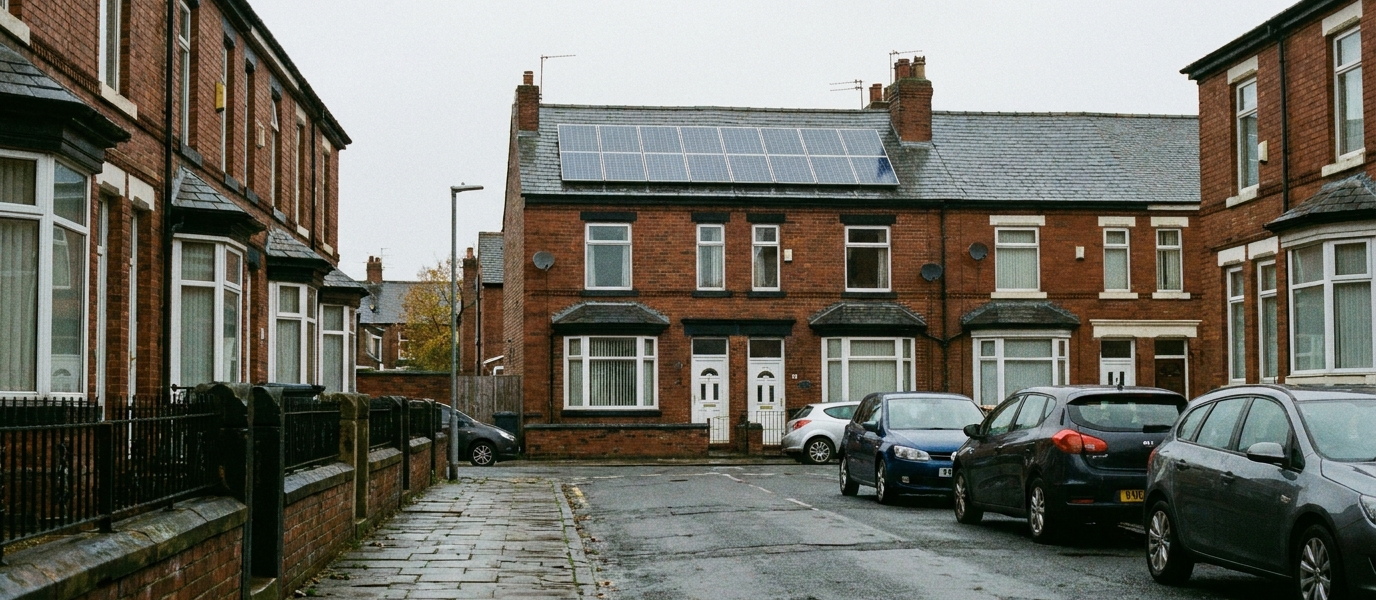
Leaseholders in England and Wales number roughly 4.5 million households, and most of them cannot install solar panels without their freeholder’s written consent. A single case reported by The i Paper puts a price on that permission: £1,500. For a flat owner hoping to cut a £600 annual electricity bill, that fee alone wipes out the first two years of savings.
The i Paper reports that the freeholder demanded the sum for administrative processing, not for structural surveys or insurance. The flat owner, who lives in a converted Victorian terrace, wanted to install four panels on a south-facing roof. The £1,500 fee was separate from any installation cost, which typically runs £5,000–£8,000 for a 4 kW system on a house, though flats are often smaller and cheaper.
Who qualifies, and who doesn’t
Under the Landlord and Tenant Act 1985, leaseholders can make ‘improvements’ only with the freeholder’s consent, and that consent cannot be unreasonably withheld. But what counts as ‘reasonable’ is fuzzy. The i Paper case suggests some freeholders treat solar panels as a revenue stream, not a green upgrade.
For flat owners, the practical hurdles go beyond fees. Many leasehold flats have shared roofs, meaning the freeholder owns the roof structure. Even if the lease says ‘no alterations’, a 2020 Court of Appeal ruling (the *Duval* case) affirmed that leaseholders can apply for a tribunal to override unreasonable refusals. The catch: tribunal applications cost £100–£400 and can take months.
The Energy Saving Trust advises that a typical one-bedroom flat might save £140–£200 a year on electricity with a 1.5 kW system. At that rate, the permission fee alone adds 7–10 years to the payback period. Without the fee, payback is roughly 12–15 years, within the lifespan of modern panels.
What it costs a typical flat owner
Consider a leasehold flat in Manchester using 2,500 kWh per year. A 1.5 kW array (about 4 panels) costs roughly £3,500 installed, including scaffolding. With the Smart Export Guarantee (SEG) paying about 5p/kWh for exported power, total annual benefit might reach £180. Payback without permission fee: 19 years. With the £1,500 fee: 28 years. That is too long for many leaseholders, especially those with 70-year leases.
Ofgem data shows that flats in blocks with communal heating systems already pay higher standing charges, often 20–30% more than houses, because network infrastructure costs are spread over fewer meters. Adding a solar permission fee on top worsens an already unfair cost distribution.
Yet the government’s Heat and Buildings Strategy, published in 2021, assumes rooftop solar will play a major role in decarbonising homes. Leasehold flats represent roughly 20% of the UK housing stock. If they are locked out, the national solar target of 70 GW by 2035 becomes harder to reach.
What this misses, and what could change
The Leasehold Reform (Ground Rent) Act 2022 banned ground rents on new leases but did not touch permission fees for green upgrades. The current Leasehold Reform Bill, expected to pass in 2025, may include a provision to cap ‘improvement’ fees at a reasonable level, perhaps £200–£500. The Ministry of Housing, Communities and Local Government has not confirmed a figure.
In the meantime, leaseholders have three options. First, negotiate: some freeholders waive fees if the installer provides proof of insurance and structural integrity. Second, apply to the First-tier Tribunal (Property Chamber) if the fee seems unreasonable. Third, consider a ‘rent-a-roof’ scheme where a third-party company owns the panels and you buy the power, though these schemes are rare for flats.
Solar installers accredited by the Microgeneration Certification Scheme (MCS) can advise on leasehold cases, but many avoid them because of the administrative hassle. The i Paper case is not an outlier, it is a symptom of a system that treats leaseholders as second-class citizens in the green transition.
Households in leasehold flats who want solar should check their lease for any ‘no alterations’ clause. If it exists, ask the freeholder in writing for consent and keep a copy. If the fee exceeds £500, consider a tribunal application. The government’s consultation on the Leasehold Reform Bill closes on 22 February 2025, leaseholders can submit evidence of excessive fees via the Ministry’s website.
Frequently Asked Questions
In the UK, freeholders can charge leaseholders a fee for written consent to install solar panels, and this can be as high as £1,500 for administrative processing alone, as reported in a recent case. This fee is separate from installation costs, which typically range from £3,500 for a 1.5 kW system on a flat to £5,000–£8,000 for a 4 kW system on a house.
Under the Landlord and Tenant Act 1985, freeholders cannot unreasonably withhold consent for improvements like solar panels, but what counts as 'reasonable' is often unclear. If your freeholder refuses, you can apply to a tribunal to override the refusal, based on the 2020 Court of Appeal ruling in the *Duval* case, though tribunal applications cost £100–£400 and can take months.
The Energy Saving Trust estimates a typical one-bedroom flat in the UK can save £140–£200 per year on electricity with a 1.5 kW solar system, plus earn around 5p/kWh through the Smart Export Guarantee for exported power. However, a £1,500 permission fee can add 7–10 years to the payback period, extending it from 12–15 years to 19–28 years.
No, the Leasehold Reform (Ground Rent) Act 2022 banned ground rents on new leases but did not address permission fees for green upgrades like solar panels. This means freeholders can still charge high fees for consent, which can significantly reduce the financial viability of solar installations for leaseholders.
If permission fees are prohibitive, leaseholders in England and Wales can apply to a tribunal to challenge unreasonable fees or refusals, but this costs £100–£400 and takes time. Alternatively, consider community solar schemes or green energy tariffs, though these don't provide the same direct savings as rooftop panels, which typically save £140–£200 per year on a flat.





