The price cap will rise by £63 in October, the third increase this year. But behind that headline is a quieter convergence: building regulations, net zero budgets, and energy compliance standards are all tightening at once. For UK homeowners, this is not a distant policy debate. It is the moment when the rules that govern how we heat, insulate, and value our homes become a single, enforceable framework.
As reported by ResponseSource Press Release Wire, the UK net zero and energy compliance sector is entering a defining phase as standards, budgets, and regulation converge. The press release notes that this convergence is accelerating, with new requirements for heat pumps, insulation, and EPC ratings set to reshape the market. For the 28 million existing homes in England alone, the implications are immediate.
Who qualifies, and who doesn’t
The new compliance framework centres on the Future Homes Standard, due in 2025, which mandates that new homes produce 75-80% less CO₂ than current regulations. For existing homes, the key change is the tightening of EPC minimums for private rentals: from 2028, all new tenancies must have an EPC rating of C or above. That affects roughly 2.5 million rented homes, many of which currently sit at D or E. The cost of upgrading a typical 3-bed semi from E to C is typically £10,000-£15,000 for insulation, glazing, and heating system improvements, a figure the government has not fully subsidised.
But the catch is that grant programmes are shrinking. The Boiler Upgrade Scheme, which offers £7,500 for heat pumps, has already seen demand outstrip supply in some regions. The Social Housing Decarbonisation Fund is oversubscribed. And the Green Homes Grant, which closed in 2021, has not been replaced. Homeowners who delay risk losing access to financial support entirely.
What it costs a typical 3-bed semi
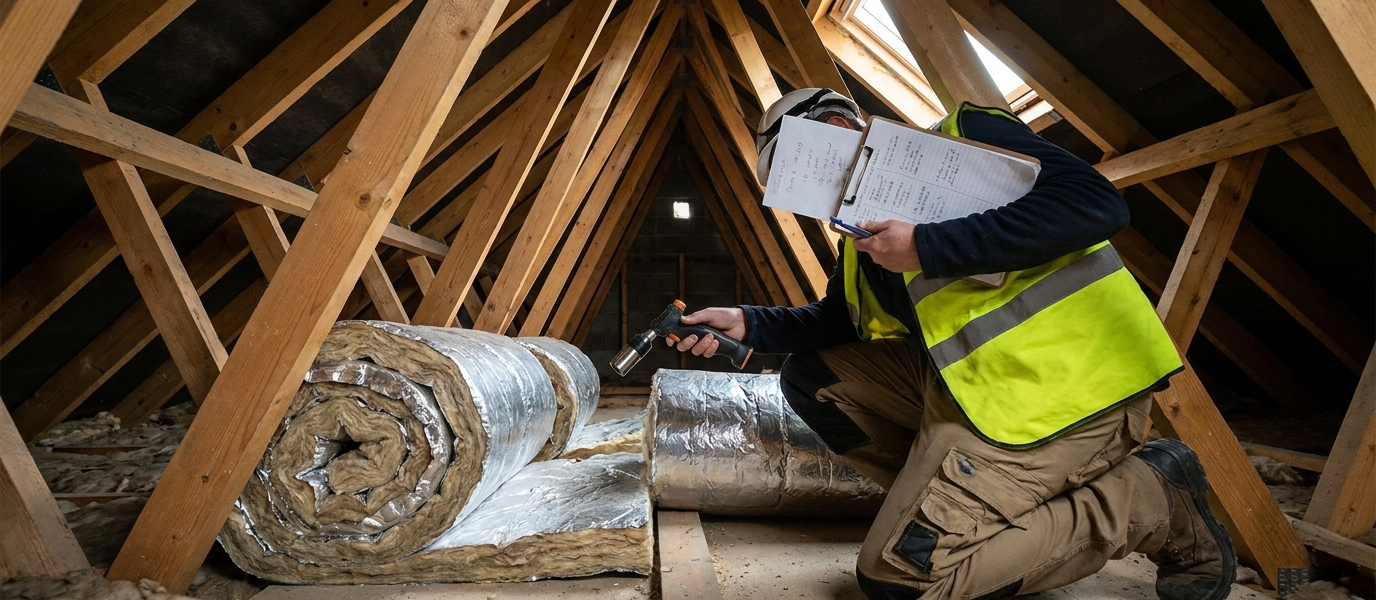
For a household in a 1980s semi-detached home with gas central heating and single glazing, the compliance cost is significant. To reach EPC C, they need cavity wall insulation (£500-£1,000), loft insulation top-up (£300-£500), double or triple glazing (£4,000-£8,000), and a heat pump or improved boiler (£7,500-£15,000 with installation). The total: £12,000-£24,000. Ofgem’s data shows that a typical home using 12,000 kWh of gas and 3,000 kWh of electricity per year currently pays £1,600-£1,800 annually. A heat pump could cut that to £1,200-£1,400, but the upfront cost remains the barrier.
The Energy Saving Trust calculates that solid wall insulation alone can save £300-£400 a year on heating bills, yet only 10% of UK homes with solid walls have it installed. The convergence of standards means that by 2030, a home without cavity wall insulation or double glazing will be effectively unlettable and harder to sell.
The ‘but’ pivot, what this misses
Yet the government’s own Climate Change Committee has warned that current policies will not meet the 2030 target for improving home energy efficiency. The budget for the Social Housing Decarbonisation Fund is £3.8 billion over 10 years, roughly £380 million a year, while the cost of upgrading all social homes to EPC C is estimated at £20 billion. That gap is not being filled by private investment. Meanwhile, the Boiler Upgrade Scheme has a budget of £450 million through 2028, but only 60,000 heat pumps have been installed since its launch in 2022, against a target of 600,000 per year by 2028.
The convergence of standards, then, is a double-edged sword. It creates clarity for builders and landlords, but it also exposes the gap between regulation and delivery. Homeowners on standard variable tariffs can check their EPC rating on the gov.uk portal now. Those with homes below EPC C should budget for upgrades within the next 24 months, while grants are still available. The window for cheap compliance is closing.
What to do and by when
Households on standard variable tariffs can apply through gov.uk for the Boiler Upgrade Scheme from 4 November. Eligibility closes on 31 March 2027 for current funding rounds. The Great British Insulation Scheme closed on 31 March 2026. It funded insulation measures only and never covered windows or glazing. Applications are open now through the Energy Saving Trust. The key deadline: 2028 for rental properties, 2025 for new build standards. Act before the rules converge and the grants vanish.
Frequently Asked Questions
From 2028, all new tenancies in the UK must have an EPC rating of C or above, affecting around 2.5 million rented homes currently rated D or E. Upgrading a typical 3-bed semi from E to C costs £10,000-£15,000 for insulation, glazing, and heating improvements, though government subsidies are limited.
For a 1980s semi-detached home, the total cost to reach EPC C is typically between £12,000 and £24,000, including cavity wall insulation (£500-£1,000), loft insulation (£300-£500), double glazing (£4,000-£8,000), and a heat pump or improved boiler (£7,500-£15,000).
Yes, the Boiler Upgrade Scheme still offers £7,500 for heat pump installations, but demand has outstripped supply in some UK regions. Homeowners should apply early as the scheme is limited and may not be extended.
The Future Homes Standard, due in 2025, mandates that new UK homes produce 75-80% less CO₂ than current regulations. For existing homes, it tightens EPC minimums and accelerates requirements for heat pumps, insulation, and energy compliance.
A heat pump can reduce annual energy bills from £1,600-£1,800 to £1,200-£1,400 for a typical home using 12,000 kWh of gas and 3,000 kWh of electricity. However, the upfront cost of £7,500-£15,000 remains a significant barrier despite potential long-term savings.




