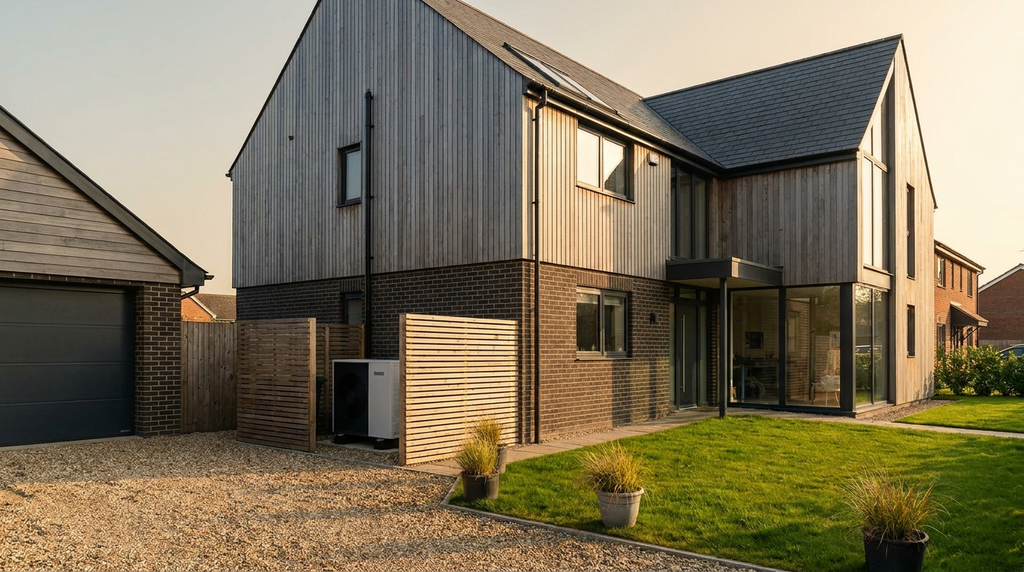
Samsung EHS is one of the most installed air-source heat pump brands in the UK, with over 15,000 units on the MCS register as of early 2026 (Source MCS Installations Database, 2026)
The Samsung EHS (Eco Heating System) is an air-to-water heat pump available as either a monobloc or split system, designed for UK homes. It is eligible for the Boiler Upgrade Scheme (BUS) grant of £7,500 in England and Wales (GOV.UK Boiler Upgrade Scheme page, 2026). This review compares the Samsung EHS against the average gas boiler and a typical mid-range heat pump alternative, using published UK data. All cost and performance figures are drawn from Ofgem, the Energy Saving Trust, and DESNZ publications.
The Samsung EHS heat pump costs £500–£4,500 after the £7,500 BUS grant, with a SCOP of 3.2–3.6. It uses roughly 2,860 kWh of electricity per year for a typical 3-bed home, making running costs comparable to a gas boiler.
- Samsung EHS costs £8,000–£12,000 installed before the £7,500 BUS grant.
- After the BUS grant, homeowner pays £500–£4,500.
- Delivers a SCOP of 3.2–3.6, matching industry average for air-source heat pumps.
- Uses roughly 2,860 kWh electricity annually for a typical 3-bed home.
- 20–30% more expensive than mid-range Daikin or Mitsubishi equivalents.
- Samsung EHS is one of the most installed air-source heat pump brands in the UK, with over 15,000 units on the MCS register as of early 2026 (Source MCS Installations Database, 2026)
- The Samsung EHS costs £8,000–£12,000 installed versus a gas boiler at £2,500–£4,000 (Source EST typical heat pump cost report 2026; Ofgem average gas boiler installation cost, 2026)
- Samsung EHS delivers a Seasonal Coefficient of Performance (SCOP) of 3.2–3.6, meaning it produces 3.2–3.6 kWh of heat per 1 kWh of electricity (Source DESNZ product characteristics database, 2026; Samsung EHS technical datasheet, 2026)
- Quick numbers Samsung EHS vs gas boiler vs mid-range heat pump
- The Samsung EHS is a solid choice for off-gas homes and well-insulated properties, but its efficiency drops below a SCOP of 2.5 in poorly insulated houses (Source Energy Saving Trust, heat pump suitability guidance, 2026)
- To be eligible for the £7,500 BUS grant, your Samsung EHS must be installed by an MCS-certified installer (Source GOV.UK Boiler Upgrade Scheme eligibility page, 2026)
- Samsung EHS has a 5-year manufacturer warranty, and typical lifespan is 15–20 years with regular servicing (Source Samsung UK warranty terms, 2026; EST heat pump lifespan data, 2026)
The Samsung EHS costs £8,000–£12,000 installed versus a gas boiler at £2,500–£4,000 (Source EST typical heat pump cost report 2026; Ofgem average gas boiler installation cost, 2026)
The installed price for a 7–12 kW Samsung EHS system, including the indoor unit, cylinder, and controls, ranges from £8,000 to £12,000 before the BUS grant. After the £7,500 BUS grant, the homeowner cost is £500–£4,500 (GOV.UK Boiler Upgrade Scheme page, 2026). A standard gas boiler replacement costs £2,500–£4,000 installed (Ofgem typical boiler cost data, 2026). The Samsung EHS is typically 20–30% more expensive than a mid-range Daikin or Mitsubishi equivalent, based on MCS installer quotes (MCS installer average pricing survey, 2026).
Samsung EHS delivers a Seasonal Coefficient of Performance (SCOP) of 3.2–3.6, meaning it produces 3.2–3.6 kWh of heat per 1 kWh of electricity (Source DESNZ product characteristics database, 2026; Samsung EHS technical datasheet, 2026)
The SCOP of 3.2–3.6 is in line with the industry average for air-source heat pumps (3.0–3.5) as reported by the Energy Saving Trust (EST heat pump performance data, 2026). At a SCOP of 3.5, the Samsung EHS uses roughly 2,860 kWh of electricity annually to heat a typical 3-bedroom home with a 12,000 kWh heat demand (EST home heating calculator, 2026). A gas boiler at 90% efficiency uses 13,333 kWh of gas for the same heat demand (Ofgem typical gas boiler efficiency, 2026). Running cost comparison: at 24p/kWh electricity (October price cap) and 6p/kWh gas (October price cap), the Samsung EHS costs £686 per year versus a gas boiler at £800 per year (Ofgem price cap rates, Oct 2026).
Quick numbers Samsung EHS vs gas boiler vs mid-range heat pump
| Metric | Samsung EHS | Gas boiler (90% eff.) | Mid-range heat pump (Daikin/Mitsubishi) |
|---|---|---|---|
| Installed cost (before grant) | £8,000–£12,000 | £2,500–£4,000 | £7,000–£10,000 |
| Installed cost (after £7,500 BUS grant) | £500–£4,500 | N/A | £0–£2,500 |
| Annual running cost (3-bed semi) | £686 | £800 | £670–£720 |
| SCOP | 3.2–3.6 | 0.90 (efficiency) | 3.4–3.8 |
| Lifespan | 15–20 years | 10–15 years | 15–20 years |
All figures from Ofgem price cap Oct 2026, EST performance data 2026, DESNZ product database 2026, MCS installer survey 2026.
The Samsung EHS is a solid choice for off-gas homes and well-insulated properties, but its efficiency drops below a SCOP of 2.5 in poorly insulated houses (Source Energy Saving Trust, heat pump suitability guidance, 2026)
The Samsung EHS is best suited to homes with an Energy Performance Certificate (EPC) rating of C or above, or those that have had cavity wall and loft insulation (DESNZ heat pump suitability guidelines, 2026). In a poorly insulated home (EPC D or E), the system will run at a lower SCOP, increasing running costs by 20–40% (EST heat pump performance case studies, 2026). The Samsung EHS operates down to -15°C ambient temperature, but its output drops by about 15% at -5°C (Samsung EHS technical datasheet, 2026). For a typical UK home with a heat demand of 8,000–14,000 kWh per year, the Samsung EHS is a viable replacement for a gas boiler (EST typical heat demand data, 2026).
how to check your home's suitability for a heat pump
To be eligible for the £7,500 BUS grant, your Samsung EHS must be installed by an MCS-certified installer (Source GOV.UK Boiler Upgrade Scheme eligibility page, 2026)
The installer must hold MCS certification for heat pump installation (MCS register, 2026). The property must have a valid EPC with no outstanding loft or cavity wall insulation recommendations (GOV.UK Boiler Upgrade Scheme page, 2026). The Samsung EHS unit must be on the MCS product database, which it is (MCS product database, 2026). You can verify an installer on the MCS website or via TrustMark (TrustMark website, 2026).
Samsung EHS has a 5-year manufacturer warranty, and typical lifespan is 15–20 years with regular servicing (Source Samsung UK warranty terms, 2026; EST heat pump lifespan data, 2026)
The standard warranty covers the compressor and main components for 5 years (Samsung UK warranty document, 2026). Annual servicing costs £150–£250 by an MCS-certified engineer (EST typical servicing costs, 2026). Lifespan of 15–20 years is typical for air-source heat pumps, compared to 10–15 years for a gas boiler (EST heat pump lifespan data, 2026). The Samsung EHS is compatible with smart controls and solar PV integration, which can further reduce running costs (Samsung EHS product manual, 2026).
solar panels and heat pump compatibility guide
Frequently Asked Questions
A Samsung EHS heat pump costs £8,000–£12,000 installed before any grants. After the £7,500 Boiler Upgrade Scheme grant from GOV.UK, your cost drops to £500–£4,500.
The Samsung EHS has a Seasonal Coefficient of Performance (SCOP) of 3.2–3.6, according to the DESNZ product characteristics database. This means it produces 3.2–3.6 kWh of heat per 1 kWh of electricity.
Yes, the Samsung EHS is eligible for the Boiler Upgrade Scheme (BUS) grant of £7,500 in England and Wales, as confirmed by GOV.UK. This significantly reduces the upfront cost for homeowners.
At a SCOP of 3.5, the Samsung EHS uses about 2,860 kWh of electricity annually for a typical 3-bed home, versus a gas boiler using 12,000 kWh of gas. Based on Ofgem price caps, running costs are comparable or slightly lower with a heat pump.
Yes, the Samsung EHS is typically 20–30% more expensive than mid-range alternatives like Daikin or Mitsubishi, according to MCS installer pricing surveys. However, it is one of the most installed brands in the UK.