Why Knutsford Homeowners Are Looking at Double Glazing Right Now
There’s a quiet but noticeable shift happening across Knutsford’s streets right now. Drive down Legh Road, past the Victorian villas near the town centre, or through the postwar semis on the Longridge estate, and you’ll spot new window frames gleaming against classic brickwork. Double glazing upgrades are picking up pace here, and it’s not hard to understand why.
Knutsford sits in a genuinely interesting position. Its average EPC rating of Band C puts it above the national average, most homes here are already reasonably well insulated. But “reasonably well” isn’t the same as “performing as well as it could.” For a town with detached and semi-detached homes that tend to have generous window areas, those older single-glazed or early double-glazed units are now the biggest gap in an otherwise efficient envelope.
Energy bills have also sharpened minds considerably. With Knutsford’s average gas usage sitting at around 11,500 kWh per year, close to the national median, households aren’t burning through fuel at a dramatic rate, but every tenth of a unit rate counts. Replacing tired or failed double glazing (or single glazing where it still exists in older properties) is one of the more impactful upgrades a homeowner can make without triggering major building works.
And then there’s Knutsford’s character to consider. This is a town that takes its aesthetics seriously, the unique black-and-white timbered buildings around King Street aren’t just pretty, they’re part of a genuine civic pride. Homeowners here tend to want upgrades that look right, not just perform well. The good news is that modern double glazing has come a very long way in that department.
What Double Glazing Actually Involves for a Typical Knutsford Home
For most Knutsford homes, double glazing installation is a relatively manageable project, but the details matter enormously depending on when your house was built.
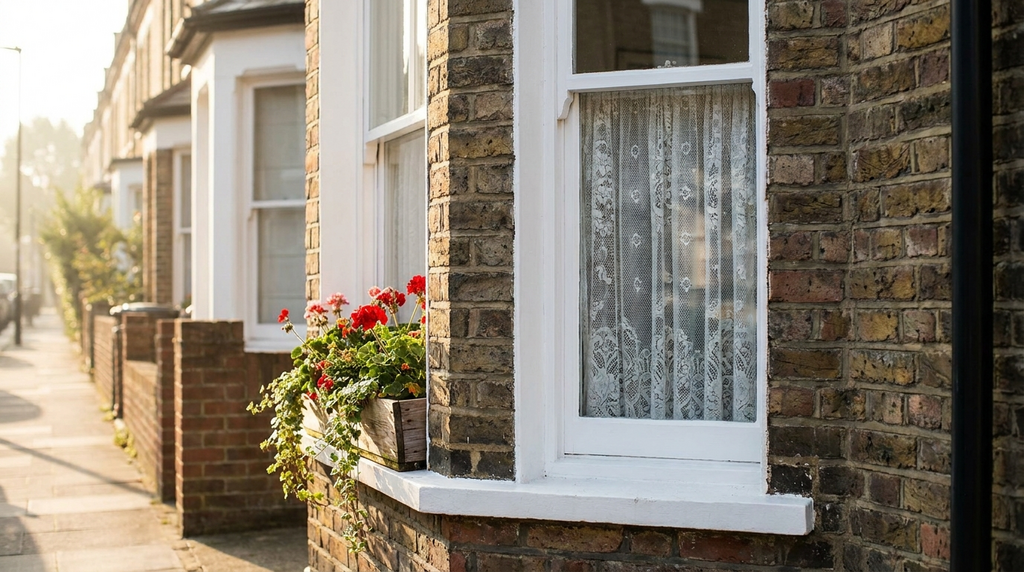
The most common housing stock here falls into a few distinct eras. There are the Victorian and Edwardian properties near the town centre, built roughly between 1880 and 1915, with their characteristically tall, narrow sash windows and brick surrounds. These need more careful measurement and often benefit from timber or heritage-style uPVC frames to maintain their proportions. Forcing a chunky modern white frame into a Victorian aperture looks wrong immediately, and in some cases it affects planning compliance too.
Then you have the interwar semis (1920s–1940s) and the postwar detached and semi-detached estates from the 1950s through to the 1980s, which make up a large proportion of Knutsford’s housing. These are generally much more straightforward. Standard uPVC frames fit well, measurements are predictable, and most installers will complete a full house of windows in a single day.
For newer builds from the 1990s onwards, particularly on developments to the east and north of the town, the original double glazing may simply be reaching the end of its design life. Sealed units lose their argon gas fill and develop condensation between the panes, reducing thermal performance significantly. Replacing just the glass units rather than the full frames is often an option here, which cuts cost considerably.
A few things that make Knutsford installations slightly different from larger urban centres
- Parking and access on some of the older residential streets near the town centre can be tight, installers may need to factor in time for managing materials
- The town doesn’t have its own large glazing suppliers, meaning most installers bring stock from Northwich, Macclesfield, or further into Greater Manchester, this can add modest lead time
- Knutsford has designated conservation areas around the historic town centre where additional planning constraints apply
- Some detached properties here are substantial in size, meaning window counts are higher than average and total project costs reflect that
How Much Double Glazing Costs in Knutsford and the North West Area in 2026
Pricing for double glazing in Knutsford sits broadly in line with the North West average, with a modest premium over the cheapest urban rates due to the smaller local installer market and the need for some companies to factor in travel from Northwich, Middlewich, or Macclesfield.
Here’s a realistic breakdown for 2026, based on standard uPVC double glazed units with Low-E glass and argon fill, the most popular choice for this area.
| Property Type | Number of Windows | Basic uPVC (supply and fit) | Mid-Range uPVC with A-rated glass | Flush Sash or Heritage Style |
|---|---|---|---|---|
| 2-bed semi-detached | 6–8 | £2,800–£3,800 | £3,800–£5,200 | £5,500–£7,500 |
| 3-bed semi-detached | 8–10 | £3,500–£4,800 | £4,800–£6,500 | £6,800–£9,500 |
| 3-bed detached | 10–12 | £4,200–£5,800 | £5,800–£8,000 | £8,500–£12,000 |
| 4-bed detached | 12–16 | £5,500–£7,500 | £7,500–£10,500 | £11,000–£16,000 |
| Victorian terrace or conversion | 6–10 | £3,500–£5,000 | £5,000–£7,000 | £7,500–£12,000 |
For comparison, the North West average for a 3-bed semi is roughly £4,500–£6,000 for mid-range units, and the national average is slightly lower at around £4,200–£5,500. Knutsford sits near the top of the North West range, though still comfortably below the South East premium. Neighbouring Northwich and Middlewich tend to come in slightly cheaper simply due to better installer density.
Triple glazing is increasingly available and costs roughly 20–30% more than equivalent double glazed units. For most Knutsford homes, the payback arithmetic on triple glazing is less compelling than in Scotland or the exposed North, more on that in the climate section below.
How Knutsford’s Weather and Location Affect Your Double Glazing Choices
Knutsford’s climate is often described as typical Central England, and that’s mostly accurate, but it comes with a specific North West flavour worth understanding before you sign any contracts.
The town gets somewhere between 700mm and 950mm of rainfall per year, which is notably wetter than much of England but far drier than the Pennine uplands or the Lake District. That consistent moisture means frame durability and drainage design matter more here than in drier parts of the country. Poorly fitted frames that allow water to track along the sill are a real nuisance in a climate like this, and unfortunately not uncommon with rushed or budget installations.
Knutsford sits at around 65–80 metres above sea level, relatively sheltered compared to the exposed Cheshire plain to the west or the hills towards Macclesfield. You won’t face the wind-driven rain problems that some Pennine-fringe properties deal with, but it’s not a calm, dry location either. This makes the quality of sealants and weather seals genuinely important, ask any installer about the specific gasket and drainage system they use.
The heating degree day count here, roughly 1,500 to 1,800 per year, puts Knutsford firmly in the moderate range. This is important for the triple glazing question. In northern Scotland or exposed coastal Wales, triple glazing’s extra thermal layer pays back much faster. In Knutsford, high-performance A-rated or A+-rated double glazing will deliver most of the available benefit at lower upfront cost. Even so, if you’re planning a 25-year stay and heating costs continue their upward trend, triple glazing on north-facing rooms is worth serious consideration.
Sunshine hours are modest at 1,000–1,200 per year, which means solar gain through south-facing windows does contribute to warmth in winter. Don’t make the mistake of specifying high solar control glass throughout the house, that’s a product designed for hotter climates and will actually make your south-facing rooms colder in a Knutsford winter.
The Products and Options That Work Best Here
Given Knutsford’s mix of housing stock and climate, here’s what genuinely performs well rather than just what looks impressive in a showroom brochure.
For Victorian and Edwardian properties near the town centre
Timber or heritage-style flush sash uPVC is the right call. Modern heritage uPVC is extremely low maintenance compared to timber (important in a wet North West climate), thermally superior to original timber sash, and keeps planning officers and neighbours happy. Look for profiles with a slim sightline, 70mm or under, to maintain the period feel. A-rated sealed units with warm edge spacer bars reduce condensation at the frame edges, which matters in older properties where humidity can be higher.
For postwar semis and detached estates
Standard casement uPVC in white or cream suits these properties perfectly. Specify a minimum U-value of 1.2 W/m²K for the whole window (not just the glass centre pane, which is a figure sometimes quoted misleadingly). Argon-filled Low-E double glazed units with warm edge spacers hit this comfortably. Tilt-and-turn windows are worth considering for upper floors, they make cleaning significantly easier on a detached property where you’d otherwise need a ladder.
For newer homes replacing failed sealed units
Check whether the frames themselves are still in good condition before committing to a full replacement. Many 1990s–2000s frames are structurally sound; replacing just the sealed units (the glass cassettes) can cost as little as £100–£200 per window rather than the full frame replacement figure. A good installer will be honest about this, be slightly wary of any company that pushes full replacement without checking frame condition first.
- Minimum glass specification, 4mm outer pane, 16mm argon-filled cavity, 4mm inner pane (4-16-4) with Low-E coating
- Spacer bars, warm edge (foam or hybrid) rather than traditional aluminium, which creates cold spots
- Frame material, uPVC for most properties, timber or heritage uPVC for conservation-adjacent or Victorian stock
- Security, look for PAS 24 enhanced security accreditation, which is increasingly a requirement for insurance purposes
- Glazing for noise, if you’re close to the A50 or the rail line, ask about acoustic laminated glass on front elevations
How to Find a Trustworthy Double Glazing Installer Near Knutsford
Knutsford itself doesn’t have the density of glazing companies you’d find in Warrington or Manchester, which means you’ll almost certainly be working with an installer who covers a cluster of towns across this part of Cheshire. That’s completely normal and not a problem, but it does mean doing your homework properly.
The companies most likely to serve Knutsford are typically based in Northwich (11km), Macclesfield (17km), or the southern Manchester suburbs, covering Middlewich and Winsford as part of the same territory. Some larger regional firms based in Manchester or Chester serve the whole corridor.
Certifications that actually matter
- FENSA registration, this is the most important one for double glazing. FENSA installers self-certify that work complies with Building Regulations, meaning you don’t need to apply for separate planning permission for standard replacements. Always verify FENSA membership on the FENSA website directly, not just from a business card
- CERTASS, an alternative to FENSA with equivalent status; both are acceptable
- TrustMark, a government-endorsed quality scheme that covers workmanship standards more broadly
- Which? Trusted Traders, independently vetted; particularly useful for smaller local companies
Questions worth asking any installer
- Are you FENSA or CERTASS registered and can you show me your current certificate
- Will the work be carried out by your own employees or subcontracted
- What is the warranty on the sealed units, frames, and installation separately
- Do you carry your own liability insurance and can I see evidence of it
- Can you provide references from jobs within Knutsford or nearby towns in the last 12 months
Lead times in the North West currently run to around 4–8 weeks for standard orders, though this can stretch during busy spring and autumn periods. If an installer quotes you less than two weeks with no caveats, that’s worth questioning.
One honest red flag, any company that offers a dramatic “today only” discount, particularly after a long in-home sales presentation, should be treated with real caution. The double glazing industry has improved enormously but this practice hasn’t entirely disappeared.
Grants and Funding That Could Reduce Your Costs in 2026
The funding landscape for double glazing is more limited than for heating systems like heat pumps, but there are genuine routes to financial support for eligible Knutsford households.
ECO4 Scheme (Energy Company Obligation)
ECO4 is the main national scheme and it does cover glazing upgrades as part of a broader energy efficiency package. To qualify, you typically need to be receiving certain means-tested benefits (Universal Credit, Pension Credit, child benefit in lower-income households) and your home needs to be EPC Band D or below. With Knutsford’s average sitting at Band C, many homes here won’t qualify, but those that do are worth checking. Apply through your energy supplier or through the government’s ECO4 referral route.
It focuses on single insulation measures and can cover glazing in some circumstances for properties in lower EPC bands. Cheshire East Council (which is your local authority for Knutsford) administers local referrals. It’s worth contacting Cheshire East directly to ask about current availability, the scheme has a finite budget and allocations vary by area and quarter.
Cheshire East Council Warm Homes Initiative
Cheshire East Council operates local retrofit support programmes that can signpost eligible residents towards funding and vetted installers. These programmes tend to prioritise fuel-poor households and those in lower EPC-rated properties. Contact the council’s housing or energy team directly for current availability.
For most Knutsford homeowners
The honest position is that if your home is already Band C and you’re not receiving qualifying benefits, you’re unlikely to access grant funding for double glazing directly. However, double glaz