Why Stockport Homeowners Are Finally Taking Double Glazing Seriously
There’s something shifting in Stockport right now. Walk down any street in Edgeley, Heaton Moor, or Reddish and you’ll notice more skips outside Victorian terraces, more white vans parked up outside semis on the Heatons estates. Double glazing upgrades are quietly booming, and it’s not hard to see why.
Stockport sits in a pocket of Greater Manchester that catches more than its fair share of damp, grey weather rolling in off the Pennines. The town’s average gas consumption of 12,000 kWh per year tracks almost exactly with the national median, but that hides a real problem: older Stockport homes are burning through that gas far less efficiently than newer builds. With most properties sitting at EPC Band D, there’s a significant gap between what people are paying to heat their homes and what they should be paying.
The Greater Manchester Combined Authority has also been pushing hard on its retrofit agenda, and Stockport Council is very much part of that picture. Residents are increasingly aware that funding windows don’t stay open forever, and that acting now means getting ahead of both rising energy costs and tightening installation schedules as demand grows.
What Double Glazing Actually Involves for a Typical Stockport Home
Stockport’s housing stock tells a clear story. The town grew rapidly during the Victorian and Edwardian eras, think the dense terraced streets of Heaviley, Offerton, and Brinnington, and then expanded again with post-war semi-detached estates in areas like Cheadle Hulme and Bramhall. Both eras present their own quirks for double glazing installation.
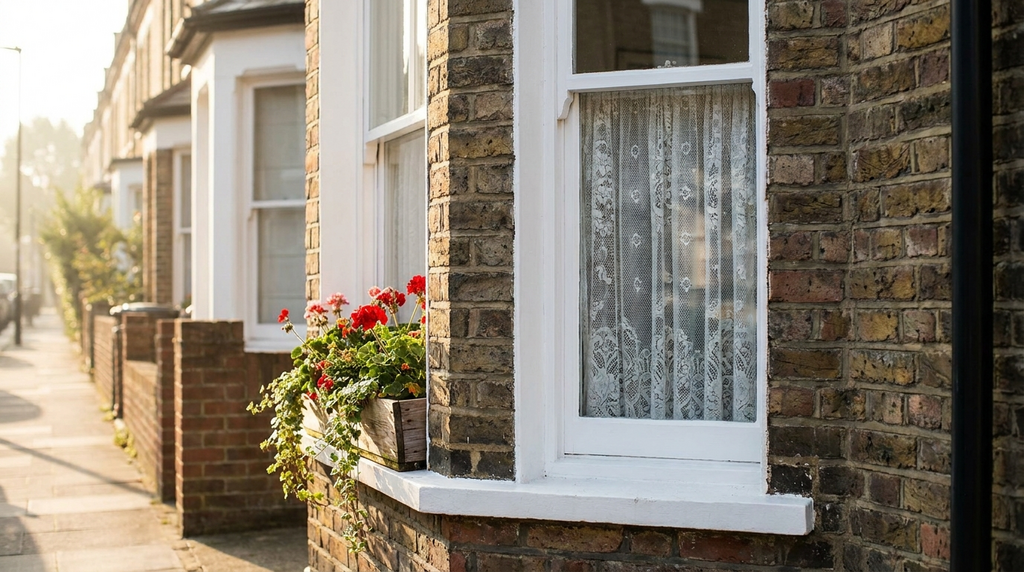
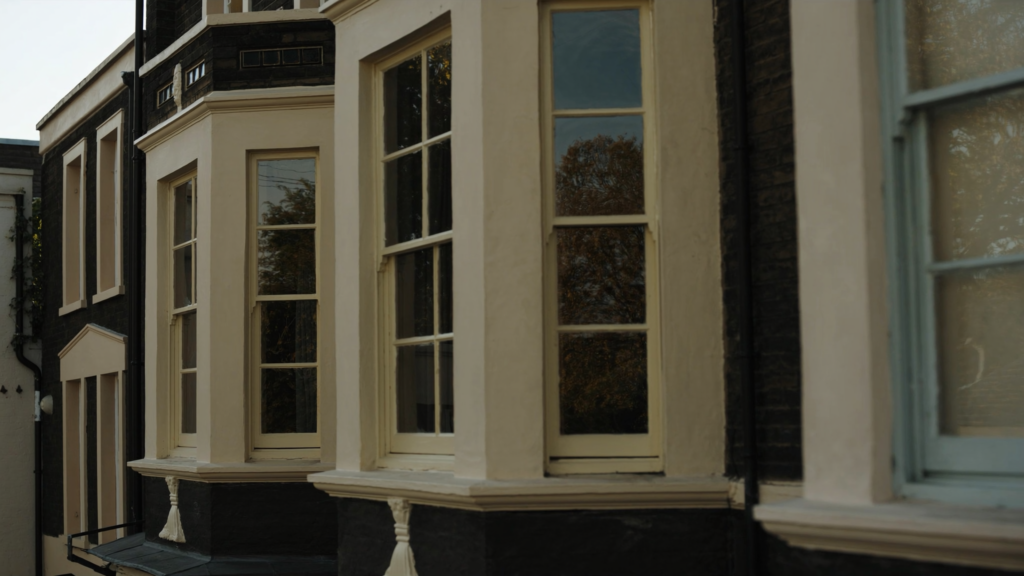
Victorian and Edwardian terraces typically have timber sash windows or simple casement frames that were never designed for modern sealed units. The reveals (the recessed area around the window opening) are often shallow, which can restrict your frame options. Brickwork around original windows is sometimes soft or spalling, meaning the installer may need to repoint or repair before fitting. Budget for this. It’s common, and doing it properly is worthwhile.
On the post-war semis, you’ll often find original steel Crittal-style windows that were replaced once already with uPVC in the 1990s or early 2000s. That first generation of uPVC is now starting to fail, seals going, handles breaking, condensation between the panes. Replacing it is actually straightforward, because the openings are standard sizes and access is usually good.
A few things that make Stockport slightly trickier than some towns:
- Terraced street parking, narrow roads in areas like Cale Green and Davenport mean installers may need to arrange parking permits or early-morning access. Worth flagging to your installer upfront.
- Conservation area properties, Stockport has several designated conservation areas including parts of the town centre and certain Victorian suburbs. These carry restrictions on what frames and glass styles are permitted (more on this in the planning section).
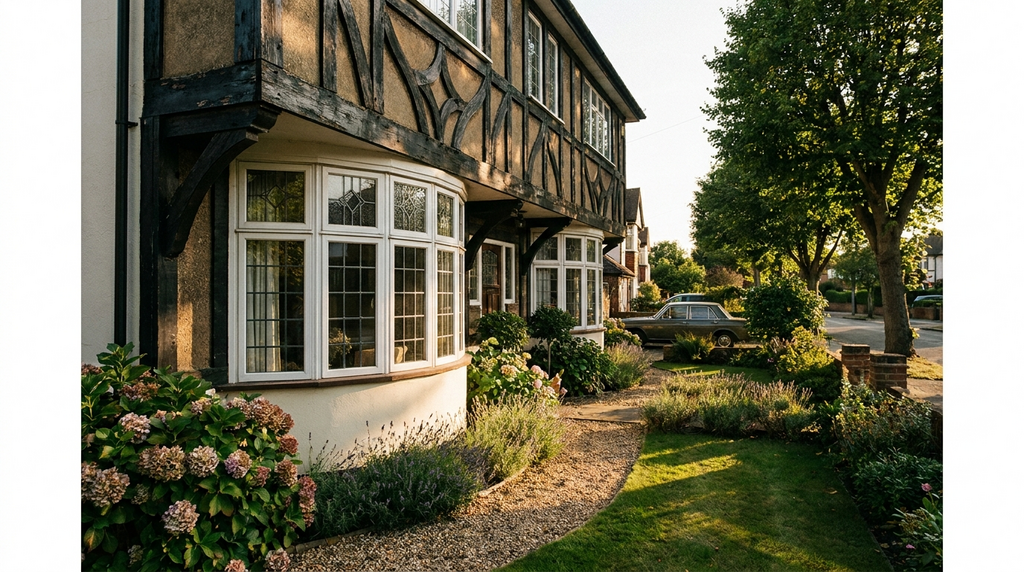
- Chimney breast projections, many terraced homes have bay windows at the front. Bay window installations are more complex and cost more than standard openings, typically adding 20–30% to the bay window price.
- Stone lintels, some of the older properties in the hillier parts of Stockport, particularly around Marple and Bredbury, have stone-dressed windows that need careful handling to avoid cracking during removal.
None of this should put you off. It just means choosing an installer who actually knows the local housing stock, someone who has done dozens of jobs on Stockport’s Victorian terraces, not just new-build replacements in Cheshire.
How Much Double Glazing Costs in Stockport and the North West in 2026
Let’s talk numbers. Labour costs in Stockport are moderate, lower than central Manchester or London, but not as cheap as more rural parts of the North West. Being 10km from Manchester means most major suppliers have good distribution into the area, which keeps material costs competitive.
| Property Type | Number of Windows | Standard uPVC (A-rated) | Premium uPVC (A+ rated) | Aluminium Frames |
|---|---|---|---|---|
| 2-bed terrace (e.g. Edgeley, Reddish) | 6–8 | £2,800–£3,600 | £3,400–£4,400 | £4,800–£6,200 |
| 3-bed semi (e.g. Cheadle Hulme, Hazel Grove) | 9–12 | £4,200–£5,400 | £5,100–£6,600 | £7,000–£9,200 |
| 4-bed detached (e.g. Bramhall, Marple) | 13–16 | £5,800–£7,500 | £7,000–£9,200 | £10,000–£13,500 |
| Bay window add-on (per bay) | 1 | £900–£1,400 | £1,200–£1,800 | £2,000–£3,000 |
| Front door (composite) | 1 | £1,100–£1,600 | £1,400–£2,000 | £2,200–£3,200 |
These figures include supply, fitting, and disposal of your old windows. They assume reasonable access, if your property has awkward scaffolding requirements or very tight street access, expect a modest uplift of 10–15%.
Compared to neighbouring towns, Stockport prices are typically 5–8% below central Manchester and broadly level with Oldham and Macclesfield. Salford installers sometimes quote lower, but they may not always be familiar with Stockport’s specific housing types. The North West average for a 3-bed semi full replacement sits around £4,800–£5,200 in standard uPVC, so Stockport is right in that range.
How Stockport’s Weather and Location Shape Your Double Glazing Choices
Stockport doesn’t get the full force of Manchester’s infamous rainfall, the town sits slightly in the lee of the Pennines compared to areas further east, but you’re still looking at around 820–870mm of rain per year. That’s meaningful when you’re choosing glazing products.
Persistent damp and driving rain mean that seal quality and drainage channels matter enormously. Cheap uPVC frames with poor drainage routing will eventually leak at the corners, and in Stockport’s west-facing properties (which catch the prevailing Atlantic weather), this happens faster than you might expect. Always ask installers about the drainage design on the bottom rail.
Stockport’s position also means moderate heating degree days, around 1,600–1,750 per year. This puts you solidly above the national average, meaning thermal performance genuinely pays back. Triple glazing, which is sometimes overkill in milder southern towns, starts to make more financial sense here, particularly for north-facing rooms or properties on exposed hillside positions like parts of Marple Ridge or Woodley.
Wind exposure is moderate rather than severe, you’re not facing the conditions of a coastal Lancashire town, but east-facing gable ends in Stockport’s terraced rows can take a battering from cold Pennine winds in winter. Specifying a slightly higher-performance centre-pane U-value (0.6 W/m²K rather than the standard 1.0) on those elevations is money well spent.
The Products and Options That Actually Perform Well in Stockport
Here’s an honest expert opinion rather than a brochure rundown. For most Stockport homes, the sweet spot is A+ rated uPVC casement windows with argon-filled low-E glass, specifying a whole-window U-value of 1.2 W/m²K or better. This is above the Building Regulations minimum and noticeably better than entry-level A-rated products.
For Victorian terraced properties where the character of the building matters, consider sculptured or chamfered uPVC profiles rather than flat-faced modern sections. They’re significantly better at mimicking original timber profiles and will look far less out of place on a period street in Heaviley or Great Moor.
A few specific recommendations for Stockport conditions:
- Warm-edge spacer bars, these replace the traditional aluminium spacer between panes with a lower-conductivity alternative. They reduce cold-edge condensation noticeably in Stockport’s damp winters and are worth specifying even if your installer doesn’t mention them automatically.
- Triple glazing for north and east elevations, on exposed aspects, the additional cost (typically 20–30% over double glazing) pays back meaningfully given the heating degree day count here. U-values around 0.7–0.8 W/m²K are achievable.
- Acoustic laminated glass for properties near the A6 or town centre, Stockport’s main arterial roads generate significant traffic noise. Acoustic glass in a double-glazed unit performs better for noise reduction than standard triple glazing, so if noise is your primary concern, this is the right choice.
- Composite doors over uPVC doors, Stockport’s damp conditions make composite (GRP skin over foam core) a far better long-term choice than standard uPVC doors, which can warp and discolour faster in persistently wet climates.
Finding a Trustworthy Double Glazing Installer Near Stockport
Stockport has good installer coverage, being part of the Greater Manchester conurbation means you’re never short of companies wanting your business. That cuts both ways. There are excellent local firms who genuinely know the housing stock, and there are also high-pressure national companies with local branches who are primarily interested in your deposit.
The certifications that actually matter are these:
- FENSA registration, mandatory for any installer replacing windows or doors in England. A FENSA certificate is your proof that the installation meets Building Regulations, and you’ll need it when you sell your home. Check the FENSA online register before signing anything.
- TrustMark registration, the government-endorsed quality scheme for home improvement trades. Particularly important if you’re accessing any grant funding.
- Which? Trusted Trader or Checkatrade verification, useful supplementary checks, but not a substitute for FENSA.
Questions worth asking any installer before committing:
- Can you show me examples of work on Victorian terraces similar to mine in the Stockport area?
- Who manufactures your frames and glass units, are they made in the UK?
- What is your process if I find condensation between the panes within the guarantee period?
- Do you handle Building Regulations notification directly, or do I need to arrange a Local Authority inspection?
Lead times in the North West are currently running at 4–8 weeks for most installers, with larger firms serving the Manchester cluster (Stockport, Salford, Oldham, Macclesfield) sometimes booking out 10–12 weeks in advance during spring. If you’re hoping to be done before winter, booking by late summer is sensible.
Red flags to watch for: same-day pressure to sign, no written quote, very short company history, no local reviews you can verify independently, and any installer who cannot provide their FENSA registration number immediately.
Grants and Funding Available to Stockport Residents in 2026
The funding landscape has evolved considerably, and there are real options available to Stockport homeowners, but eligibility criteria are specific, so it’s worth understanding exactly where you stand.
ECO4 (Energy Company Obligation 4) remains active and is the most widely applicable scheme for Stockport residents needing full window replacement as part of a broader retrofit. To qualify, you typically need to be on certain means-tested benefits (Universal Credit, Pension Credit, Child Tax Credit, and others) OR live in a property with an EPC rating of D or below, which covers a large proportion of Stockport’s housing stock. Under ECO4, double glazing is rarely funded as a standalone measure but is often included alongside insulation or heating upgrades. Your energy supplier or a registered ECO4 installer can assess your eligibility at no cost.
The Great British Insulation Scheme closed on 31 March 2026. It funded insulation measures only and never covered windows or glazing. Again, Stockport’s Band D average EPC means many homes qualify on energy efficiency grounds alone. GBIS can contribute toward glazing improvements as part of a broader thermal envelope upgrade.
Stockport Council’s Healthy Homes programme offers means-tested grants and loans for energy efficiency improvements including glazing. Contact Stockport Metropolitan Borough Council’s housing team directly to check current availability, funding tranches open and close periodically and it’s worth getting on their radar early.
Greater Manchester Retrofit schemes, the GMCA continues to operate area-based retrofit programmes targeting specific neighbourhoods. Brinnington has historically been a focus area for targeted energy upgrades. Check whether your street falls within a current programme boundary via the GMCA’s retrofit hub.
For most Stockport homeowners not on benefits, realistically the primary route to funded support is through ECO4’s broad eligibility criteria or through financing options offered by FENSA-registered installers (0% finance over 12–24 months is widely available). Full grant funding without benefit eligibility remains limited.
Planning Permission and Local Regulations in Stockport
The good news for most Stockport homeowners is that replacing windows with double glazing falls under permitted development rights, meaning you do not need planning permission, provided the replacement windows are similar in appearance to the originals and the property is not in a designated area.
However, there are important exceptions that affect a meaningful number of Stockport properties:
Conservation areas, Stockport Metropolitan Borough Council has designated several conservation areas where additional controls apply. These include parts of Stockport town centre, Heaton Moor, and areas around Marple. Within these areas, you typically cannot install uPVC windows that would alter the character of the building. Timber-effect profiles or genuine timber frames are usually required, and you may need to apply for planning permission before proceeding. Contact Stockport MBC’s planning department to confirm whether your property falls within a designated boundary.
Listed buildings, if your property is listed (there are several in the borough, particularly around Marple and the historic town centre), you will need Listed Building Consent for any window changes. This is a more involved process and you should engage a conservation specialist alongside your glazing installer.
Article 4 Directions, Stockport MBC has applied Article 4 directions in certain areas, which remove standard permitted development rights. Check this specifically with the council’s planning department if you are in any doubt about your location.
For standard properties outside these designations,