Overview of Double Glazing in Buxton
Buxton sits at one of the highest elevations of any market town in England, perched at roughly 300 metres above sea level in the Peak District hills of Derbyshire. That altitude makes a real, measurable difference to how cold your home gets in winter, and it is the single most important reason why double glazing is a genuine necessity for comfortable, affordable living here, not a cosmetic upgrade. With a population of around 22,000 and an average EPC rating of Band E across the housing stock, a significant number of Buxton homes are losing heat through outdated, single-glazed or failing sealed-unit windows at a rate that directly pushes up energy bills every month.
Buxton’s housing stock is dominated by Victorian and Edwardian terraced and semi-detached properties, many of them built from local gritstone and limestone, beautiful, characterful homes that were never designed with modern energy efficiency in mind. The original windows in these properties, whether timber sash or early metal-framed casements, offer almost no insulating value by today’s standards. Replacing or upgrading them with modern double glazing is one of the highest-impact improvements a Buxton homeowner can make, reducing draughts, cutting noise from the town centre and surrounding roads, and making a meaningful dent in those above-average gas bills.
This guide is written for Buxton homeowners who want straightforward, honest information, covering real 2026 costs for the East Midlands area, the types of glazing best suited to local properties, how to find a trustworthy installer, and what grants or funding might be available to help with the cost.
Why Buxton Homeowners Choose Double Glazing
The Buxton Climate and Its Effect on Heating Bills
Buxton is consistently among the coldest towns in the East Midlands, and indeed in the whole of England. The town regularly records temperatures several degrees lower than nearby Derby or Nottingham, experiences more days of frost per year, and sits in an area of the Peak District that sees significant wind exposure, particularly in the winter months. The average gas consumption for a Buxton household is approximately 12,500 kWh per year, which is noticeably above the UK national average. A large share of that gas use goes directly towards compensating for heat lost through poorly insulated windows and doors.
When wind-driven rain and cold air find their way through failed window seals or draughty frames, your boiler works harder and your home never quite feels warm. Modern double glazing with good weather seals eliminates most of that infiltration, meaning your heating system can do its job efficiently rather than constantly playing catch-up with the Derbyshire cold.
The Character of Buxton’s Housing Stock
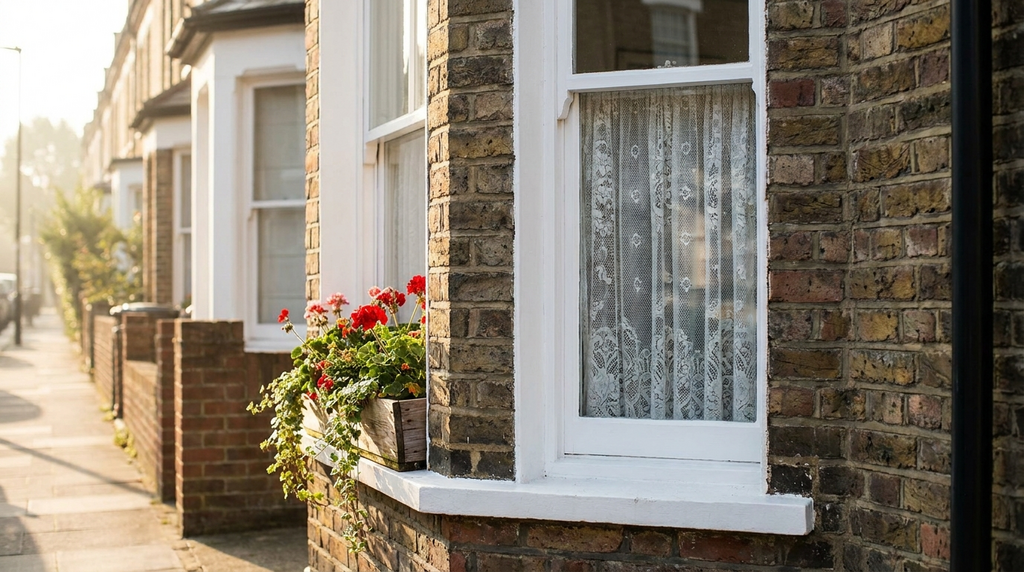
The majority of homes in Buxton are Victorian-era terraced and semi-detached properties. These houses share walls with neighbours, which helps somewhat with heat retention through the party walls, but their front and rear elevations, often featuring large bay windows or tall sash windows, are frequently the biggest source of heat loss. Many of these homes still have their original timber frames, which, if not maintained, warp and allow draughts. Even where replacement windows have been installed over the decades, a significant number of these will now be beyond their effective lifespan, with failed sealed units showing condensation between the panes, a clear sign that the insulating gas has escaped and the unit is performing little better than single glazing.
Semi-detached properties on estates built in the 1950s, 1960s, and 1970s, found in areas such as Fairfield and around the edges of town, often have metal or early uPVC frames that are long overdue for replacement. These homes benefit enormously from a full double glazing upgrade, both in comfort and in measurable energy saving.
Noise and Security Benefits Specific to Buxton
Buxton town centre is a busy market town with regular traffic along the A6 and A515. Properties close to Spring Gardens, the market place, and the main through roads benefit significantly from the noise reduction that quality double glazing provides. Modern laminated or acoustic double glazing can reduce external noise by up to 35 decibels compared with single glazing. Also, modern multi-point locking systems fitted as standard with new windows provide a significant uplift in home security, relevant given that many older Buxton properties still have outdated window furniture.
2026 Costs for Double Glazing in Buxton
What to Expect to Pay in the East Midlands in 2026
Double glazing costs in Buxton and the wider East Midlands region in 2026 are influenced by several factors, the size and number of windows, the frame material chosen, the glass specification, and the complexity of the installation (for example, bay windows or first-floor access requirements). The figures below are realistic average ranges based on the East Midlands market in 2026 and reflect the additional logistical costs of working in a rural, elevated town like Buxton compared with larger urban centres.
| Window Type and Size | Frame Material | Estimated Cost Per Window (Supply and Fit) |
|---|---|---|
| Small casement (600mm x 900mm) | uPVC | £350 – £550 |
| Standard casement (1200mm x 1050mm) | uPVC | £450 – £750 |
| Standard casement (1200mm x 1050mm) | Timber | £700 – £1,200 |
| Standard casement (1200mm x 1050mm) | Aluminium | £600 – £1,000 |
| Victorian-style sash window (900mm x 1500mm) | Timber | £900 – £1,800 |
| Victorian-style sash window (900mm x 1500mm) | uPVC | £600 – £1,100 |
| Bay window (three panels, standard) | uPVC | £1,200 – £2,200 |
| Bay window (three panels, standard) | Timber | £2,000 – £4,000 |
| Full house package (eight windows, typical terrace) | uPVC | £3,500 – £6,500 |
| Full house package (ten windows, semi-detached) | uPVC | £4,500 – £8,000 |
Factors That Affect the Price in Buxton Specifically
- Conservation area and listed building requirements, Many central Buxton properties are in designated conservation areas, meaning timber or heritage-style frames may be required rather than standard white uPVC, which adds to the cost.
- Access and logistics, Buxton’s hillside streets and narrow terraced rows can make delivery and installation more complex, particularly for upper-floor windows requiring scaffolding.
- Older frame conditions, Victorian-era properties often have deteriorated lintels, frames, and reveal plasterwork that needs making good after window removal, adding labour costs.
- Gas specification, Argon-filled units cost slightly more than air-filled but provide meaningfully better performance in Buxton’s colder climate.
Types of Double Glazing Available
Frame Materials Suited to Buxton Homes
uPVC frames remain the most popular and cost-effective option across Buxton. They are low-maintenance, excellent at weathering the damp, cold conditions the town experiences, and available in a wide range of styles including mock-sash designs suitable for Victorian terraces. Modern uPVC is a long way from the yellowing plastic of earlier decades, contemporary profiles in anthracite grey or woodgrain finishes are increasingly common and look far more in keeping with older properties.
Timber frames are the preferred choice for conservation areas and listed buildings, where planning consent may require materials sympathetic to the original construction. Timber double glazing is more expensive and requires periodic maintenance (repainting every five to eight years), but it offers excellent insulation and is required in many of Buxton’s historic streets. Engineered timber profiles are now available that resist warping and moisture far better than the solid timber of previous generations.
Aluminium frames offer a slim, modern profile popular with contemporary extensions and newer properties. They are durable and low-maintenance but require thermal breaks within the frame to prevent cold bridging, which is particularly important in Buxton’s climate. They typically cost more than uPVC but less than high-quality timber.
Glass Specifications Worth Knowing
The glass unit itself is as important as the frame. For Buxton homes, look for the following as a minimum standard in 2026:
- Low-emissivity (Low-E) glass, a microscopic metallic coating that reflects heat back into the room. This is now standard in quality units and makes a significant difference in cold climates like Buxton’s.
- Argon gas fill, the gap between the two panes is filled with inert argon gas rather than air, reducing heat transfer. This is widely available and worth specifying.
- Warm-edge spacer bars, the bar that separates the two panes at the edges. Warm-edge spacers (made from polymer rather than aluminium) reduce cold bridging at the glass edge and reduce condensation at the frame junction.
- Window Energy Rating (WER) of A or A+, the British Fenestration Rating Council (BFRC) rates windows from G to A+. For Buxton homes, aim for at least a WER of A.
What to Look for in a Buxton Double Glazing Installer
Certifications and Accreditations That Matter
Not all double glazing companies operating in the Buxton area are equal. The following accreditations give you real protection and assurance:
- FENSA registration, FENSA (Fenestration Self-Assessment) is the government-authorised scheme that allows window installers to self-certify that their work meets Building Regulations. A FENSA-registered installer will issue you with a certificate after installation, which is essential when you come to sell your home. Never use an installer who cannot provide FENSA certification.
- TrustMark accreditation, TrustMark is a government-endorsed quality scheme for tradespeople. TrustMark-registered installers have been vetted for quality of work and customer service.
- Which? Trusted Traders, independently vetted and a useful additional layer of reassurance.
- Membership of the Glass and Glazing Federation (GGF), GGF members sign up to a code of practice and have access to a deposit protection scheme, which protects your money if a company goes out of business before completing your installation.
Questions to Ask Before Signing Anything
- Are you FENSA-registered, and will you provide a FENSA certificate on completion?
- What guarantee do you offer on the sealed units, and what guarantee on your installation workmanship?
- Do your windows carry a BFRC Window Energy Rating, and if so, what is it?
- Are you familiar with Buxton’s conservation area requirements, and have you installed windows in similar properties nearby?
- What happens if there are any issues with the surrounding reveal or lintel during removal?
- Can you provide references from recent jobs in Buxton or the High Peak area?
Get at least three written quotes before committing. Be wary of high-pressure sales tactics and artificially inflated “discount” pricing, a reputable installer will give you time to consider and will not pressure you into signing on the same day.
Government Grants and Funding for Double Glazing in 2026
ECO4, Energy Company Obligation
The ECO4 scheme is the main government programme in 2026 through which eligible homeowners can receive fully or substantially funded energy efficiency improvements, including windows in some circumstances. ECO4 is delivered by the large energy suppliers and targets households in Bands D to G on their EPC rating, which means a large proportion of Buxton’s housing stock qualifies on that measure alone. Eligibility is primarily based on income, you may qualify if you receive certain means-tested benefits including Universal Credit, Pension Credit, or Child Tax Credit. Because Buxton’s average EPC is Band E and many properties are in Bands D to F, the area sees a reasonable volume of ECO4-funded work.
Under ECO4, windows are typically funded as part of a broader package of measures rather than as a standalone installation. If your home qualifies, you may receive loft insulation, cavity wall insulation, or heating upgrades alongside glazing improvements.
Great British Insulation Scheme (GBIS)
The Great British Insulation Scheme closed on 31 March 2026. It funded insulation measures only and never covered windows or glazing. Draught-proofing and glazing improvements may be included depending on your specific assessment. Contact your energy supplier or check the government’s Simple Energy Advice service to establish whether you qualify.
Derbyshire County Council and High Peak Borough Council Local Support
High Peak Borough Council, which covers Buxton, has historically participated in area-based energy improvement schemes. In 2026, it is worth contacting High Peak Borough Council directly to ask about any live local authority flexibility funds or Warmer Homes-type programmes that may supplement ECO4 funding for Buxton residents. Derbyshire County Council also administers some discretionary funding for energy efficiency in vulnerable households.
The Warm Home Discount
While the Warm Home Discount is a bill rebate rather than a capital grant, eligible Buxton households receive a £150 annual discount on their electricity bill in 2026. This is worth factoring into the overall financial picture when budgeting for window improvements.
How Double Glazing Affects Your EPC Rating
Buxton’s average EPC rating of Band E is a significant issue for homeowners who may wish to sell or let their property. From 2026 onwards, pressure on landlords to improve EPC ratings continues to increase, and the trajectory for owner-occupiers is towards minimum standards in the medium term as well.
Replacing single glazing or failed double glazing across a typical Buxton terraced home can improve an EPC rating by approximately four to twelve points on the SAP score, which may be enough to move a property from Band E to Band D, or from Band D to Band C, a meaningful improvement. In practice, the impact depends on the size and number of windows being replaced and the current overall condition of the property.
For a Band E terraced property in Buxton with ten windows replaced with A-rated double glazing, a reasonable expectation would be a shift of six to ten SAP points. Combined with loft insulation and a modern bo