Why Tonbridge Homeowners Are Taking Double Glazing Seriously Right Now
There’s a quiet but noticeable shift happening across Tonbridge’s residential streets. From the Victorian terraces near the castle to the 1960s semis out towards Higham Wood, homeowners are getting serious about double glazing. Energy bills are a big motivator, but there are other reasons too.
Tonbridge sits in a bit of a sweet spot for home improvement economics. South East property values mean upgrades genuinely add to your home’s worth, while Band D EPC ratings across much of the town signal real room for improvement. If you’re planning to sell, rent, or simply stay warm without wincing at your gas bill, double glazing is one of the most visible and impactful changes you can make.
The cold easterly winds that funnel through the Medway Valley during winter don’t get enough credit for how uncomfortable older single-glazed windows can make a room feel. Tonbridge isn’t the coldest place in England, far from it, but those easterlies cut through poorly insulated glass with surprising efficiency. Residents in older properties near the High Street or along Shipbourne Road know exactly what we mean.
There’s also a growing awareness around noise. Tonbridge town centre has seen increasing traffic, and the rail line is never far from residential areas. Modern double glazing, particularly acoustic-spec units, makes a genuine difference to everyday comfort, not just heat retention.
What Double Glazing Actually Involves for a Typical Tonbridge Home
Most of Tonbridge’s housing stock falls into two broad camps, pre-1940 Victorian and Edwardian terraces, and post-war semis from the 1950s through to the 1980s. Each era comes with its own quirks for fitting double glazing.
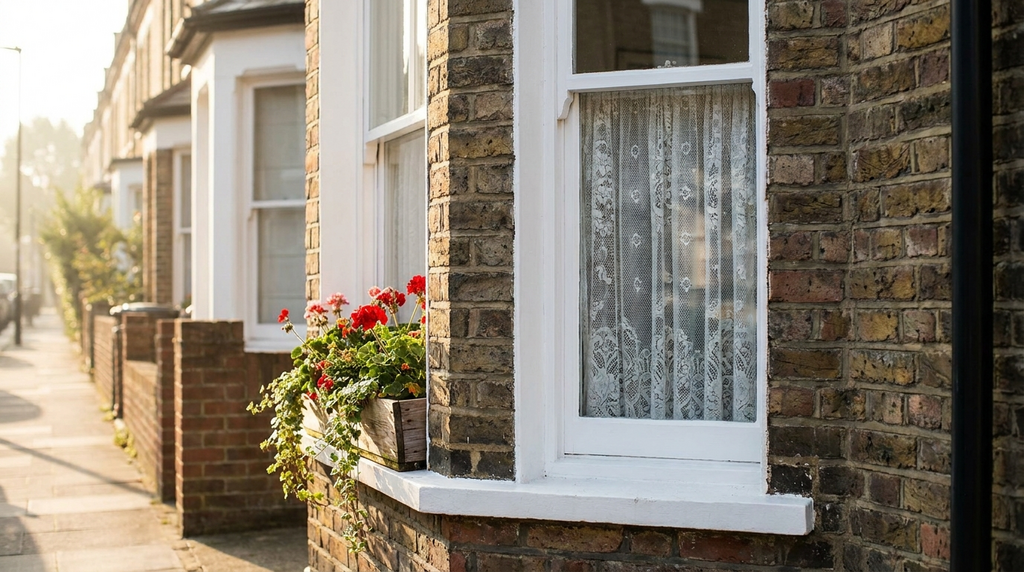
The older terraces, particularly around Priory Street, Vale Road, and the streets running off the High Street, typically have timber sash or casement windows set into shallow reveals. These frames are often non-standard sizes, which means off-the-shelf uPVC units won’t always drop straight in. You’ll likely need made-to-measure frames, which adds cost but results in a far better finish.
Post-war semis, the kind you’ll find throughout Higham Wood, Bayswood, and the estates off Hadlow Road, are generally more straightforward. Standard aperture sizes, brick reveals with decent depth, and accessible parking for installation vans all keep costs and complications down.
Things That Catch Homeowners Off Guard
- Lintel conditions, In older Tonbridge terraces, lintels above windows can be in variable condition. A good installer will check these before quoting, but not all of them do.
- Party wall considerations, If you’re in a mid-terrace, scaffolding access can be tricky and may require agreement with neighbours.
- Conservation restrictions, Parts of Tonbridge, particularly near the castle and older town centre streets, fall within conservation designations. More on this below.
- Subsidence awareness, The Medway floodplain means some properties in lower-lying areas have experienced movement. Distorted frames are a sign worth investigating before new glazing goes in.
The good news is that Tonbridge has a well-established local installer market. You’re close enough to Tunbridge Wells, Sevenoaks, and Maidstone that you have genuine competition between companies, which keeps pricing honest and quality up.
How Much Double Glazing Costs in Tonbridge and the South East in 2026
Let’s talk real numbers. The South East sits above the national average for installation costs, roughly 10 to 15 percent higher than the Midlands or North, but not dramatically so. Tonbridge specifically benefits from having multiple installers operating across the Tunbridge Wells, Sevenoaks, and Maidstone corridor, which keeps competition healthy.
| Property Type | Number of Windows | Standard uPVC (A-rated) | Premium uPVC (A+ rated) | Timber or Aluminium |
|---|---|---|---|---|
| 2-bed terrace | 5–7 | £3,200–£4,500 | £4,800–£6,200 | £6,500–£9,000 |
| 3-bed semi-detached | 8–10 | £4,500–£6,200 | £6,500–£8,500 | £9,000–£13,000 |
| 4-bed detached | 12–15 | £6,500–£9,000 | £9,000–£12,500 | £13,000–£19,000 |
| Front door (composite) | 1 | £1,100–£1,600 | £1,600–£2,400 | £2,200–£3,500 |
These figures include supply, fitting, and VAT at the current 20% rate. They assume standard access, if your property requires scaffolding, add roughly £600 to £1,200 depending on height and configuration.
How Tonbridge Compares to Nearby Towns
Tunbridge Wells, being slightly more affluent and with higher conservation area coverage, tends to run 5 to 8 percent more expensive for double glazing due to more bespoke requirements. Maidstone comes in slightly cheaper thanks to lower overheads for installers based there. Chatham is generally the most competitive on price in the cluster.
Sevenoaks, with its significant proportion of listed buildings and conservation streets, can be considerably more expensive for anything other than standard uPVC on newer builds.
Insider tip, Getting quotes from installers based in both Tonbridge and Maidstone often produces the most competitive results. A Maidstone-based company with a good reputation will usually match local pricing to win the work, especially for larger jobs.
How Tonbridge’s Weather and Location Affect Your Double Glazing Choices
Tonbridge’s climate is genuinely one of its selling points as a place to live. Milder winters than much of the UK, good sunshine hours, and relatively low rainfall (typically 500 to 700mm per year) mean your double glazing needs to work a bit differently here than in, say, Manchester or Aberdeen.
The cold easterly winds in winter are the real challenge. They’re dry rather than wet, but they create a wind-chill effect that makes U-value performance in your glazing more important than you might expect given the modest heating degree days. A window rated to 1.2 W/m²K will genuinely perform noticeably better than one at 1.8 W/m²K when an easterly is blowing hard off the North Downs.
Solar Gain Is Actually Worth Thinking About
This is where Tonbridge homeowners have an advantage that many don’t fully exploit. The South East gets the best solar irradiance in the UK, and the right glazing specification can turn your south and west-facing windows into free passive heating from October through March.
Look for glazing with a Solar Heat Gain Coefficient (SHGC) above 0.4 for south-facing windows. This isn’t always the default spec installers quote, ask specifically for it. On a typical Tonbridge semi with a south-facing living room, this can meaningfully cut your heating requirement through the shoulder months.
Moisture and Condensation Considerations
The relatively dry conditions in Tonbridge mean external condensation on high-performance glazing (a sign the unit is doing its job, not a defect) is less of a daily issue than in wetter parts of the UK. However, internal condensation in poorly ventilated bathrooms and kitchens is still common in older terraces. Good double glazing reduces the cold surface that causes this, but it’s worth discussing ventilation upgrades at the same time.
The Products and Options That Actually Perform Well Here
Given Tonbridge’s mix of Victorian terraces and post-war semis, plus the specific climate conditions, here’s what genuinely works rather than a generic rundown.
For Post-War Semis (1950s to 1980s)
Standard uPVC casement windows with A+ energy ratings are the practical, cost-effective choice for the vast majority of these properties. Look for units with a U-value of 1.2 W/m²K or better, this is achievable at a reasonable price point and is a significant upgrade from typical original single glazing at around 5.0 W/m²K.
- Frame, White or foiled woodgrain uPVC (foiled finishes hold up better on south-facing elevations in Kent sunshine)
- Glazing unit, 28mm double-glazed sealed unit with argon fill
- Low-E coating, Specify a soft-coat (pyrolytic) low-E for best thermal performance
- Spacer bar, Warm edge spacer (avoids the cold aluminium edge that causes condensation)
For Victorian and Edwardian Terraces
This is where the decision gets more nuanced. If your property is in or near a conservation area, slim-profile double-glazed units that replicate the look of original sash windows are available, and they’re significantly better than they were even five years ago. Expect to pay a premium of 25 to 40 percent over standard uPVC, but the aesthetic result is worth it, and in some cases, necessary for planning compliance.
For properties not under conservation constraints, timber-look uPVC sash replacements hit a good balance between performance, cost, and appearance. They won’t raise eyebrows from neighbours or the council, and they perform thermally as well as any standard unit.
A Word on Triple Glazing
Triple glazing is increasingly popular, but for Tonbridge’s climate, with milder winters and excellent solar potential, the payback versus standard high-performance double glazing is long. It makes more sense for properties in exposed north-facing positions or in the coldest rooms. Don’t let an installer up-sell you to triple glazing across the board unless your specific situation genuinely warrants it.
How to Find a Trustworthy Double Glazing Installer Near Tonbridge
The Tonbridge-to-Maidstone corridor has a healthy installer market, but as with any trade, quality varies considerably. Here’s how to separate the good from the questionable.
Certifications That Actually Matter
- FENSA registration, This is non-negotiable for window and door replacement. FENSA-registered installers self-certify compliance with Building Regulations, saving you the cost of a council inspector visit. Always ask for your FENSA certificate after installation.
- TrustMark registration, Government-endorsed quality scheme. Look for this on their website, not just the installer’s own marketing.
- Which? Trusted Trader, Less common but a strong indicator of consistently reviewed quality.
- Manufacturer accreditation, Installers accredited by REHAU, Spectus, or Deceuninck for uPVC have met those manufacturers’ installation standards.
Questions Worth Asking Before Signing Anything
- Are you FENSA registered and will you provide the certificate
- What is the U-value of the glazing unit you’re quoting
- What type of spacer bar do you use
- Is the quoted price for argon-filled units
- What is your guarantee period, and is it backed by an insurance-backed warranty
Red flags to watch for, High-pressure same-day pricing, quotes that don’t specify U-values or energy ratings, no physical address, and guarantees that rely solely on the company’s own solvency (not an insurance-backed product).
Lead times in the South East are currently running at three to six weeks for standard orders. Bespoke sizes, coloured frames, or heritage-style units can stretch to eight to twelve weeks. Get your installation booked before autumn if you want everything sorted before the colder months.
Grants and Funding That Could Reduce Your Costs in 2026
Double glazing funding has become more accessible in recent years, though it rarely covers the full cost. Here’s what Tonbridge homeowners can realistically access.
ECO4 Scheme
The Energy Company Obligation (ECO4) scheme funds energy efficiency improvements for lower-income households and those in fuel poverty. Double glazing can be included as part of a wider package of improvements, it’s rarely funded in isolation under ECO4, but if your home also needs insulation, it can be bundled into a single funded project. Eligibility typically requires receiving qualifying benefits or having a household income below a set threshold. Tonbridge Borough Council (operating under the Tonbridge and Malling Borough Council area) can provide referrals. Contact the council directly or use the government’s ECO4 eligibility checker online.
Great British Insulation Scheme (GBIS)
The Great British Insulation Scheme closed on 31 March 2026. It funded insulation measures only and never covered windows or glazing. If your property is in EPC Band D or below, which covers a significant portion of Tonbridge’s housing stock, you may qualify. Owner-occupiers and private tenants (with landlord agreement) can both apply.
Tonbridge and Malling Borough Council Retrofit Support
The council has run additional retrofit support schemes in recent years aimed at helping residents improve energy performance. These schemes come and go, so it’s worth contacting the council’s sustainability team directly to ask what’s currently available. The South East as a region has benefited from Warm Homes Local Grant funding, which local authorities can direct to eligible households for window and door upgrades.
VAT, The Most Overlooked Saving
Glazing is standard-rated for VAT at 20%. The zero rate for energy-saving materials covers insulation, heat pumps and solar panels; HMRC names secondary and double glazing as excluded (VAT Notice 708/6). The rules on what qualifies are specific, your installer should be able to confirm eligibility, but this alone can save several hundred pounds on a full house re-glaze.
Planning Permission and Local Regulations in Tonbridge
Most double glazing installations in Tonbridge fall under permitted development rights, meaning no planning application is required. However, there are important exceptions you need to know about before committing to a quote.
Conservation Areas in Tonbridge
Tonbridge and Malling Borough Council has designated conservation areas within the town, particularly around the historic castle and town centre streets. Within a conservation area, changing the appearance of windows on the front elevation of your home can require planning permission, even if the property itself isn’t listed. The key test is whether the new windows are of a “similar appearance” to those they replace.
In practice, this means standard white uPVC casements are often refused on Victorian terraces in conservation areas, while heritage-style slim-profile units or timber replacements may be approved. Always check with the planning department before ordering, a quick permitted development enquiry costs nothing and