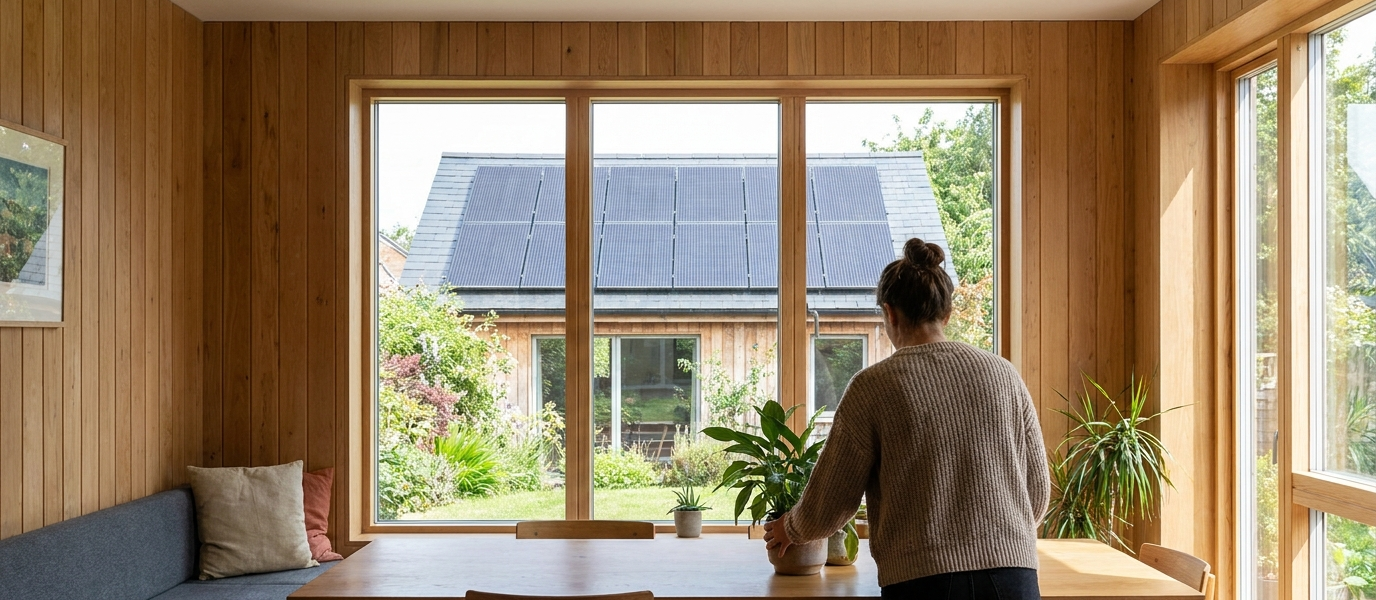
The seven eco-homes profiled by Country Life this week look like they belong on a magazine cover, clean lines, big windows, stone and timber. But behind the architecture lies a hard-nosed financial calculation: each one is built to slash energy bills by 60-80% compared to a typical UK home. For the 19 million households in England alone with an EPC rating of D or below, that is not a lifestyle choice. It is a route out of fuel poverty.
As reported by Country Life, these homes, from a Kentish barn conversion to a Skye croft, share a common DNA: super-insulated fabric, airtight construction, mechanical ventilation with heat recovery, and renewable heating. None relies on a gas boiler.
What it costs a typical 3-bed semi
The headline figure most homeowners want is the price of retrofitting an existing property to similar standards. The Energy Saving Trust estimates that a deep retrofit, walls, roof, floor insulation, triple glazing, air-source heat pump, and solar PV, can cost between £25,000 and £50,000 for a 1930s semi. The Boiler Upgrade Scheme currently offers £7,500 towards a heat pump. The Great British Insulation Scheme closed on 31 March 2026. It funded insulation measures only and never covered windows or glazing. Even without subsidies, the annual saving on a gas-heated semi is roughly £1,000-£1,500 at current price cap levels.
But the seven homes in the Country Life feature were mostly new builds. New-build eco-homes can achieve an EPC A rating with a fabric-first approach for a construction cost premium of roughly 5-10% over a standard build, according to the Passivhaus Trust. That premium is recouped in lower running costs within a decade.
Who qualifies, and who doesn’t
The catch is that most UK homeowners live in existing stock. Of the 29 million homes in Britain, fewer than 1% meet Passivhaus standards. The government’s Heat and Buildings Strategy targets 600,000 heat pump installations per year by 2028, but current rates are below 60,000. The disconnect between aspiration and delivery is wide.
Yet the Country Life examples show that even partial upgrades work. A Grade II listed cottage in the Cotswolds used internal wall insulation and secondary glazing to cut heat loss by 40% without altering the external appearance. Listed-building consent is no barrier, the trick is using vapour-permeable materials that let walls breathe.
Three steps for homeowners this year
First, book an EPC assessment. The £60-£120 survey will reveal where your home leaks heat. The Great British Insulation Scheme closed on 31 March 2026. It funded insulation measures only and never covered windows or glazing. Third, get a quote for a heat pump under the Boiler Upgrade Scheme, installers are booked months ahead, so act now before the April 2025 grant deadline.
The homes in Country Life are beautiful. But the real beauty is the numbers: lower bills, higher EPC ratings, and a property that holds its value in a decarbonising market. That is not a magazine fantasy. It is a practical plan.
Frequently Asked Questions
A deep retrofit for a typical 1930s semi, including wall, roof, and floor insulation, triple glazing, an air-source heat pump, and solar PV, costs between £25,000 and £50,000 according to the Energy Saving Trust. The Great British Insulation Scheme closed on 31 March 2026. It funded insulation measures only and never covered windows or glazing.
Yes, the Boiler Upgrade Scheme offers £7,500 towards an air-source heat pump installation, but installers are booked months ahead and the grant deadline is April 2025. To qualify, you must have a valid EPC assessment and replace an existing fossil fuel heating system, so it's best to get a quote early.
A deep retrofit can slash energy bills by 60-80% compared to a typical UK home, saving roughly £1,000-£1,500 annually on a gas-heated semi-detached house at current price cap levels. Even partial upgrades, like internal wall insulation and secondary glazing, can cut heat loss by 40% without altering a listed building's appearance.
Not necessarily, listed-building consent is not a barrier if you use vapour-permeable materials that let walls breathe, as shown in a Grade II listed Cotswolds cottage that cut heat loss by 40% with internal wall insulation and secondary glazing. Always check with your local conservation officer first to ensure materials are appropriate and avoid damaging the building's fabric.
Book an EPC assessment, which costs £60-£120, to identify where your home leaks heat and get a clear rating. The Great British Insulation Scheme closed on 31 March 2026. It funded insulation measures only and never covered windows or glazing.




