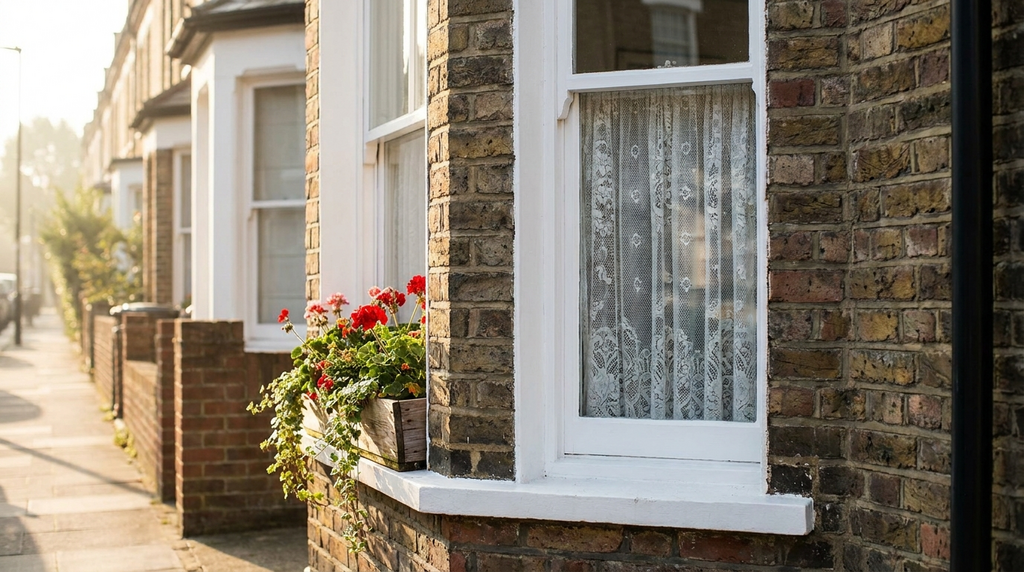
The average cost of Georgian windows for a three-bedroom period property is £4,800–£9,200
If you own a period property, replacing or installing Georgian windows is a significant investment. The cost depends on the materials, the number of sashes, and whether you choose slimlite double glazing.
Georgian windows for a three-bedroom period property cost £4,800–£9,200 on average (Checkatrade 2026). This covers timber, uPVC, or aluminium options with authentic 6-over-6 or 8-over-8 glazing patterns.
- Average cost for a 3-bed property is £4,800–£9,200 (Checkatrade 2026).
- Timber windows cost £800–£1,500 per window; uPVC £450–£900.
- Authentic 6-over-6 or 8-over-8 glazing patterns define Georgian style.
- Slimlite double glazing achieves U-values of 1.2–1.6 W/m²K.
- Listed buildings require planning permission before any replacement.
- The average cost of Georgian windows for a three-bedroom period property is £4,800–£9,200
- Georgian window styles are defined by their 6-over-6 or 8-over-8 glazing pattern
- Quick numbers, cost, U-value, and energy savings for Georgian windows
- Double glazing in Georgian windows is possible with slimlite units that match the original sightlines
- Planning permission is required for Georgian windows in listed buildings and conservation areas
- MCS certification is not needed for windows, but FENSA or CERTASS registration is required for installation
- The direct answer, for a period property, choose slimlite double-glazed timber Georgian windows to preserve character while improving energy efficiency
- Installer verification, check FENSA registration and ask for references before commissioning
For a standard three-bedroom Victorian or Georgian terrace with six to eight windows, you should expect to pay between £4,800 and £9,200 for supply and installation (Checkatrade, 2026). This range covers timber, uPVC, and aluminium options.
Additional costs to factor in include installation fees of £400 to £800 per window, planning permission application fees if required, and the cost of sash window refurbishment if you are retaining original frames. The final figure will vary based on your specific property and the level of work needed.
Georgian window styles are defined by their 6-over-6 or 8-over-8 glazing pattern
The authentic Georgian look uses multiple small panes divided by glazing bars. The most common pattern is 6-over-6, meaning six panes in the top sash and six in the bottom sash. An 8-over-8 pattern is also historically accurate for larger windows.
Modern options include simulated divided lites (SDL), where the glazing bars are applied to the inside or outside of a single pane, and true divided lites (TDL), where each small pane is a separate piece of glass. TDL is the most authentic option but is more expensive.
For listed buildings or conservation areas, planning permission is mandatory before you order or install any replacement windows. You must check with your local authority first (Historic England guidance on windows in historic buildings, GOV.UK 2026).
Quick numbers, cost, U-value, and energy savings for Georgian windows
| Item | Data |
|---|---|
| Average cost per window (timber, double-glazed) | £800–£1,500 |
| Average cost per window (uPVC, double-glazed) | £450–£900 |
| U-value of slimlite double glazing | 1.2–1.6 W/m²K |
| U-value of standard double glazing (28mm) | 1.4–1.8 W/m²K |
| Annual heating bill saving vs single glazing (3-bed house) | £110–£195 |
| Payback period (vs single glazing) | 15–25 years |
| Source | EST 2026 window energy ratings, GGF technical data |
Double glazing in Georgian windows is possible with slimlite units that match the original sightlines
You can install double glazing in Georgian windows without altering the historic appearance. Slimlite units are thinner than standard double glazing and fit within original sash frames.
A typical slimlite unit is 10 to 14mm thick, compared to 24 to 28mm for standard double glazing. This allows the original slim glazing bars and sightlines to be retained. U-values of 1.2 to 1.6 W/m²K are achievable with slimlite, compared to 0.7 to 1.0 for standard double glazing (Glass and Glazing Federation (GGF) 2026 technical bulletin).
The trade-off is that slimlite double glazing has a slightly higher U-value, meaning lower thermal performance than modern standard windows. However, it still reduces heat loss by 50 to 60 percent compared to single glazing, while preserving the period character of the property.
Planning permission is required for Georgian windows in listed buildings and conservation areas
For listed buildings, any window replacement, including like-for-like, requires listed building consent from your local planning authority. This is a legal requirement that applies even if you are using the same materials and design (GOV.UK guidance on listed building consent, 2026).
In conservation areas, replacement windows must match the original design and materials. Permission is usually required, and you should check with your local council before ordering. For non-designated heritage assets, local plan policies vary, some councils require a full planning application, while others may accept prior notification.
MCS certification is not needed for windows, but FENSA or CERTASS registration is required for installation
MCS (Microgeneration Certification Scheme) is not relevant for windows. However, the installer must be registered with FENSA (Fenestration Self-Assessment Scheme) or CERTASS to meet Building Regulations.
FENSA or CERTASS registration proves the installer complies with Part L (thermal performance) and Part B (fire safety) of the Building Regulations. If the installer is not registered, you must apply for a Building Regulations completion certificate separately from your local authority (GOV.UK Building Regulations Approved Document L, 2026).
For timber sash windows, also check the installer holds TrustMark accreditation. This provides consumer protection and ensures the company meets government-endorsed standards (TrustMark consumer guide, 2026).
For a period property, choose slimlite double-glazed timber Georgian windows to preserve character while improving energy efficiency
For most period properties, slimlite double-glazed timber Georgian windows are the best option. They maintain the original sightlines and slim glazing bars that define the Georgian aesthetic.
The U-value of 1.2 to 1.6 W/m²K reduces heat loss by 50 to 60 percent compared to single glazing. This makes a meaningful difference to your heating bills while keeping the historic appearance intact (EST case studies, 2026).
Planning permission is typically easier to obtain for slimlite units than for standard double glazing, because they do not alter the window’s external appearance. The cost premium over uPVC is justified by the heritage value and the potential benefit to your property’s resale value.
Installer verification, check FENSA registration and ask for references before commissioning
Before commissioning any work, verify the installer is FENSA or CERTASS registered. You can check the register directly on the FENSA website.
Ask for three recent references from period property installations, not new-build homes. This gives you confidence the installer understands sash windows and historic buildings. Check the installer has public liability insurance with a minimum of £2 million cover. For timber windows, ask if the company offers a 10-year guarantee on the frames and glazing (TrustMark consumer guide, 2026).
how to find a FENSA registered installer for sash windows
Frequently Asked Questions
The average cost is £4,800–£9,200 for a standard three-bedroom period property, according to Checkatrade (2026). This covers supply and installation of six to eight windows.
Yes, for listed buildings or conservation areas you must get planning permission before ordering or installing replacement windows. Check with your local authority first, as per Historic England guidance on GOV.UK (2026).
SDL (simulated divided lites) have glazing bars applied to a single pane, while TDL (true divided lites) use separate glass panes for each square. TDL is more authentic and expensive.
Slimlite double glazing for Georgian windows typically achieves a U-value of 1.2–1.6 W/m²K, according to the Energy Saving Trust. This is a significant improvement over single glazing.
Yes, uPVC Georgian windows are available and cost £450–£900 per window. They offer a more affordable alternative to timber while maintaining the 6-over-6 or 8-over-8 look.