The single most important thing switching from LPG to a heat pump cuts heating costs by roughly 30–50% and eliminates all carbon emissions from your heating, but the upfront cost is significantly higher than a like-for-like LPG boiler replacement.
If you currently heat your home with liquid petroleum gas (LPG), you are likely paying a significant premium compared to mains gas. LPG is one of the most expensive heating fuels, and it produces carbon dioxide when burned.
Switching to a heat pump can reduce your annual heating bill by roughly 30–50% and cut your home’s carbon emissions from heating to zero, but the initial installation cost is several thousand pounds more than a new LPG boiler.
The average LPG-heated home spends approximately £1,500–£2,500 per year on fuel, depending on property size and insulation. A heat pump reduces this to an estimated £800–£1,400 annually (Energy Saving Trust, 2026). The upfront installation cost for a heat pump ranges from £7,000 to £13,000 after the Boiler Upgrade Scheme (BUS) grant, while a new LPG boiler costs around £2,500–£4,500 (GOV.UK, 2026). The payback period is typically 5–10 years, assuming current energy price caps and no major insulation upgrades.
How the Boiler Upgrade Scheme grant works for LPG-to-heat-pump swaps in 2026
The Boiler Upgrade Scheme (BUS) is the main government grant for heat pumps in England and Wales. It provides a flat-rate grant of £7,500 for an air-source heat pump, applied as a discount by the installer before you pay (GOV.UK, 2026).
To qualify, you must own the property and have a valid Energy Performance Certificate (EPC) with no outstanding recommendations for loft or cavity wall insulation. If your EPC recommends these measures, you must install them before the heat pump, or the grant is not available. The grant is available for homes previously heated by LPG, oil, or direct electric, as well as mains gas. You must use an MCS-certified installer to claim the grant. The installer claims the money from Ofgem after installation is complete and signed off (Ofgem, 2026).
Quick numbers costs, savings, and emissions
| Item | Typical figure | Source |
|---|---|---|
| Annual LPG heating cost (3-bed semi) | £1,800–£2,200 | Energy Saving Trust, 2026 |
| Annual heat pump running cost (same home, SCOP 3.2) | £900–£1,100 | Energy Saving Trust, 2026 |
| Upfront cost – LPG boiler replacement (installed) | £2,500–£4,500 | Checkatrade / Which? cost guides |
| Upfront cost – heat pump (installed, after £7,500 BUS grant) | £7,000–£13,000 | MCS register, 2026 |
| CO₂ savings per year | 2.5–4 tonnes | DESNZ, 2026 |
| Typical heat pump SCOP (Seasonal Coefficient of Performance) | 3.0–3.5 | MCS installer data sheets, 2026 |
SCOP stands for Seasonal Coefficient of Performance. It is the ratio of heat output to electricity input over a full year. A SCOP of 3.2 means for every 1 kWh of electricity used, the heat pump delivers 3.2 kWh of heat. LPG boilers typically operate at 85–90% efficiency, so they deliver less than 1 kWh of heat per kWh of fuel.
The direct answer is your home suitable for a heat pump replacing LPG?
Yes, if your home has a heat loss of no more than 10–12 kW at -2°C outside temperature. This is typical for a well-insulated 3–4 bed house (MCS Heat Pump Installation Standard MIS 3005, 2026).
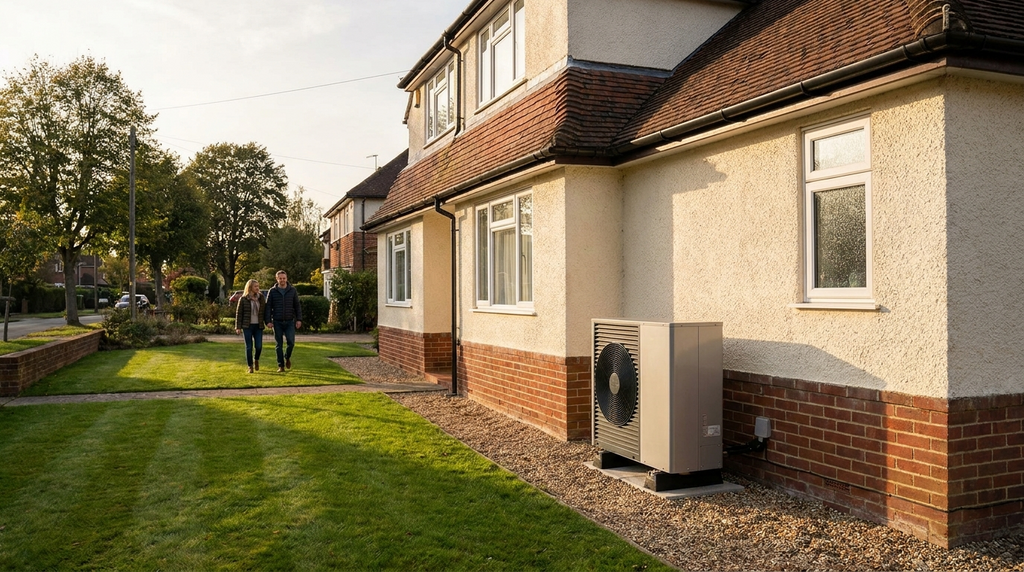
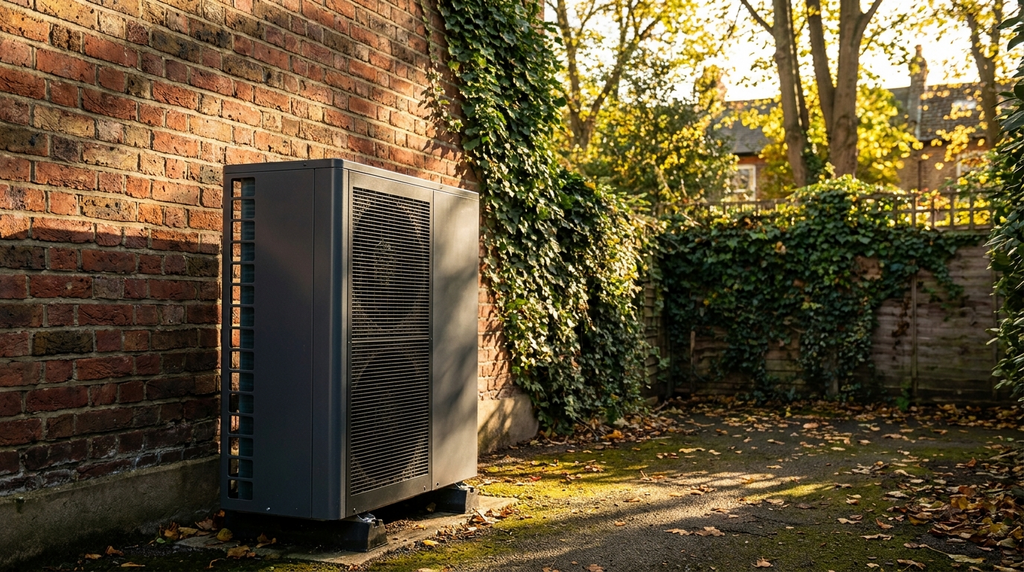
Yes, if you have space for an outdoor unit (approximately 1m x 1m footprint) and a hot water cylinder. The cylinder typically goes in an airing cupboard or utility room. Yes, if your radiators are sized for lower flow temperatures of 45–55°C, or you are willing to upgrade them. Heat pumps work best with larger radiators or underfloor heating because they heat water at a lower temperature than LPG boilers.
No, if your home has very poor insulation such as single glazing, no loft insulation, or solid walls without internal or external insulation, and you cannot or will not upgrade these first. The heat pump will struggle to keep the home warm and will run inefficiently, reducing your savings (Energy Saving Trust, 2026).
The three main trade-offs running costs, upfront cost, and hot water
Running costs. LPG is historically more volatile in price than electricity. The energy price cap stabilises electricity costs, but heat pumps still cost less per kWh of heat delivered because they extract free heat from the air. At a SCOP of 3.2, the cost per kWh of heat is roughly one-third of the electricity price. That makes it cheaper than LPG per unit of heat (Ofgem, 2026).
Upfront cost. The BUS grant reduces the gap, but you may still need £7,000–£13,000 upfront, compared to £2,500–£4,500 for a new LPG boiler. This is the main barrier for most homeowners.
Hot water. A heat pump heats a cylinder slowly, so you may need a larger cylinder of 180–250 litres. You will not get instant endless hot water like a combi boiler. Most homeowners find a cylinder sufficient for daily use, but you need to plan for recovery time between showers (MCS, 2026).
Eligibility and certification how to verify your heat pump installer
Your installer must be MCS-certified (Microgeneration Certification Scheme) to allow you to claim the BUS grant and to comply with building regulations. The installer should also be TrustMark-registered for consumer protection (TrustMark, 2026).
Check the installer’s MCS number on the MCS register at www.mcscertified.com before signing a contract. The installer must provide a heat loss calculation using the MCS method and a system design showing that the heat pump can meet your heating demand. Building regulations Part L also require that the installation meets minimum efficiency standards (GOV.UK, 2026).
Steps to complete the LPG-to-heat-pump switch in 2026
- Get an EPC and check for any insulation recommendations that need addressing first. You must resolve any outstanding loft or cavity wall insulation recommendations before you can claim the BUS grant.
- Obtain at least three quotes from MCS-certified installers. Ask each for a heat loss calculation and a SCOP estimate for your property.
- Apply for the BUS grant through your chosen installer. They handle the paperwork and deduct the £7,500 from your final bill.
- Arrange for the removal of your LPG tank. You must notify the tank owner or hire a certified decommissioning contractor. Do not leave a redundant tank on your property.
- Install the heat pump, hot water cylinder, and any necessary radiator upgrades. The installer should complete the system design and commissioning.
- Register the installation with MCS and Ofgem to finalise the grant. The installer typically does this, but you should confirm it is done (Energy Saving Trust, 2026).
Compare heat pump running costs with LPG boiler running costs in detail
See our guide on heat pump sizing for off-grid homes
Frequently Asked Questions
Yes, the upfront cost is £7,000-£13,000 after the £7,500 Boiler Upgrade Scheme grant (GOV.UK, 2026). A new LPG boiler costs around £2,500-£4,500.
Yes, a heat pump reduces annual heating costs by 30-50%. The average LPG home spends £1,500-£2,500 per year, while a heat pump costs £800-£1,400 (Energy Saving Trust, 2026).
Heat pumps typically last 15-20 years, while LPG boilers last 10-15 years (Energy Saving Trust, 2026). This means fewer replacements over time.
Yes, the Boiler Upgrade Scheme offers a £7,500 grant for air-source heat pumps in England and Wales (GOV.UK, 2026). You must own the property and have a valid EPC with no outstanding insulation recommendations.
Yes, heat pumps often require larger radiators or underfloor heating to work efficiently at lower flow temperatures. An MCS installer will assess your system and may recommend upgrades.