A leaking hot water cylinder can waste a significant amount of water and may indicate a serious fault. Understanding whether to repair or replace the cylinder depends on the leak’s location and the condition of the tank itself.
Fix a hot water cylinder leak by replacing the body (£1,200-£2,000) or repairing the component (£80-£350). A single drip per second wastes over 1,000 litres yearly (Ofgem, 2026), so act quickly to save water and money.
- Replace the cylinder if the leak is from the tank body for £1,200-£2,000.
- Repair a leaking immersion heater or thermostat for £150-£350.
- Fix a leaking pipe connection or valve for £80-£200.
- A single drip per second wastes over 1,000 litres yearly (Ofgem, 2026).
- Check the pressure relief valve first as it may not need a full replacement.
- A leaking hot water cylinder wastes over 1,000 litres of water a year, according to Ofgem
- Replacement cost versus repair cost for a hot water cylinder leak
- Quick numbers replacement vs repair comparison
- The direct answer replace the cylinder if the leak is from the tank body, repair if from a component
- How to verify your installer is certified for the work
- Cost breakdown replacing a leaking cylinder
- Cost breakdown repairing a leaking component
- Energy efficiency impact replacement versus repair
The direct answer is that you should replace the cylinder if the leak is from the tank body, but you can usually repair it if the leak is from a component like the immersion heater or a pipe connection. Ofgem data shows that a single drip every second can waste over 1,000 litres of water annually (Ofgem, 2026), so prompt action is essential.
A leaking hot water cylinder wastes over 1,000 litres of water a year, according to Ofgem
According to Ofgem, a single drip every second can waste over 1,000 litres of water in a year (Ofgem, 2026). This waste increases your water bill and can cause damage to flooring and joists.
A leak can signal several possible faults. It may come from corrosion in the cylinder body, a failed immersion heater element, a faulty thermostat, a loose pipe connection, or a pressure relief valve (PRV) discharging water. The PRV is a safety device that releases water if the pressure inside the cylinder gets too high. This article compares the two most common fixes: replacing the cylinder versus repairing the specific component. All cost figures come from the latest 2026 DESNZ and Energy Saving Trust data.
How to spot a leaking hot water cylinder
Replacement cost versus repair cost for a hot water cylinder leak
The cost of fixing a leaking hot water cylinder varies widely depending on the cause. Replacing a standard 120-litre unvented cylinder costs between £1,200 and £2,000, including installation (DESNZ, 2026).
Repairing a leaking immersion heater element or thermostat typically costs between £150 and £350 (Energy Saving Trust, 2026). Repairing a leaking pipe connection or valve costs between £80 and £200. The repair cost is significantly lower than a full replacement, but only if the cylinder body is sound.
Quick numbers replacement vs repair comparison
The table below compares the key factors for the three main options. All lifespan data is from the Energy Saving Trust “Heating and Hot Water Systems” guide 2026 (Energy Saving Trust, 2026).
| Factor | Replace cylinder | Repair immersion heater | Repair pipe/valve |
|---|---|---|---|
| Average cost | £1,200–£2,000 | £150–£350 | £80–£200 |
| Labour time | 4–6 hours | 1–3 hours | 1–2 hours |
| Typical lifespan after fix | 15–25 years | 5–10 years (element) | 5–15 years (pipe/valve) |
| Risk of further leaks | Low (new cylinder) | Moderate (existing cylinder may corrode) | Low (if pipework is sound) |
| Energy efficiency impact | Improves (better insulation) | No improvement | No improvement |
The direct answer replace the cylinder if the leak is from the tank body, repair if from a component
This is the key decision point for any hot water cylinder leak. A leak from the cylinder body, visible as rust, a pinhole, or a crack, always requires full replacement. The MCS “Domestic Hot Water Systems” installation standards 2026 state that a cylinder with a body leak cannot be safely repaired (MCS, 2026).
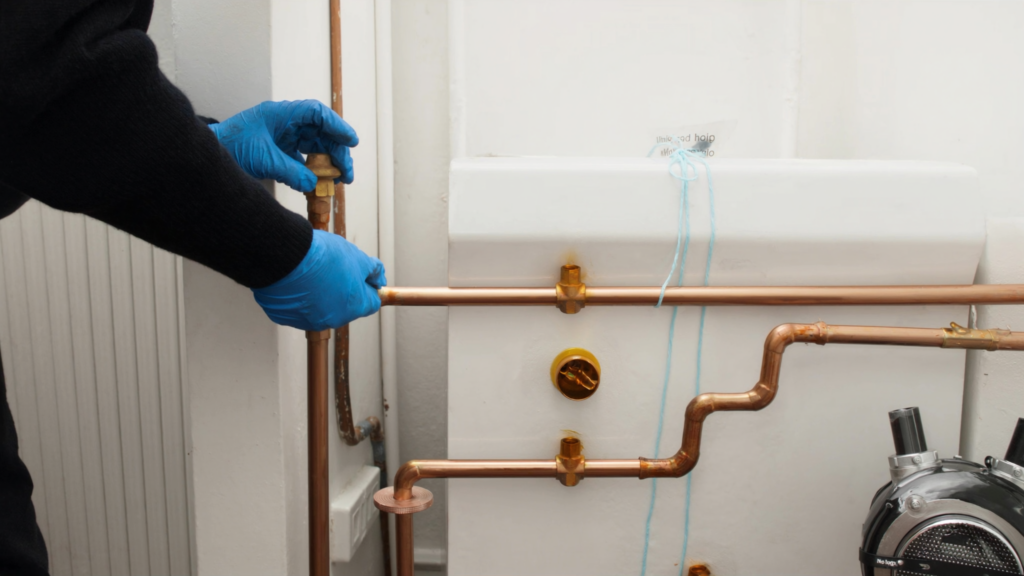
A leak from the immersion heater boss, thermostat pocket, or pipe connection can usually be repaired. These components can be replaced without disturbing the main tank. A leak from the pressure relief valve (PRV) indicates a pressure issue, not a cylinder fault. The PRV may need replacing, or the system pressure may need adjusting by a qualified engineer.
How to verify your installer is certified for the work
For unvented cylinders, the installer must hold a G3 unvented hot water certificate and be registered on a Competent Person Scheme, such as the Gas Safe Register or NICEIC. This is a legal requirement under building regulations (GOV.UK, 2026).
For vented cylinders, the installer must be on the Gas Safe Register if the immersion heater is gas-fired, or registered with NICEIC or NAPIT for electrical work. TrustMark registration provides consumer protection for all heating and plumbing work (TrustMark, 2026). Always ask to see the installer’s certificate before work begins.
Cost breakdown replacing a leaking cylinder
Replacing a leaking cylinder involves several costs. The cylinder unit itself costs between £400 and £800 for a standard 120-litre unvented model (DESNZ, 2026). Labour for a G3-qualified installer typically costs between £400 and £600. Disposal of the old cylinder adds £50 to £100. The total range is £1,200 to £2,000.
Additional costs may apply if the pipework needs modifying or if the new cylinder has different dimensions. Always get at least three quotes from certified installers.
Cost breakdown repairing a leaking component
Repairing a leaking component is much cheaper. Replacing an immersion heater element costs between £150 and £250 (Energy Saving Trust, 2026). Thermostat replacement costs between £100 and £200. A pipe or valve repair costs between £80 and £200.
Labour for a repair is typically 1 to 3 hours, compared with 4 to 6 hours for a full replacement. This means the total cost is often 80–90% lower than a replacement, provided the cylinder body is sound.
Energy efficiency impact replacement versus repair
A new cylinder with better insulation can reduce heat loss by 25 to 30 kWh per year (Energy Saving Trust, 2026). This is a modest saving, roughly equivalent to £5–£10 on your annual energy bill at current prices.
Repairing a component does not improve the cylinder’s insulation value. However, replacement allows you to upgrade to a model with a higher efficiency rating, such as an A-rated cylinder. Repair is the lower-carbon choice if the cylinder body is sound, as it avoids the manufacturing and disposal emissions associated with a new cylinder.
How to choose between repairing and replacing a hot water cylinder
Frequently Asked Questions
Yes, if the leak is from a component like the immersion heater, thermostat, or pipe connection. Repair costs £80-£350 according to Energy Saving Trust (2026). If the leak is from the cylinder body itself, you must replace the cylinder.
Replacing a standard 120-litre unvented cylinder costs between £1,200 and £2,000 including installation, based on DESNZ 2026 data. This is higher than repair but necessary if the tank body is corroded.
A leak from the top is often from a loose pipe connection, a faulty immersion heater seal, or a pressure relief valve (PRV) discharging. Check connections first. If the PRV releases water, it may indicate high pressure, not a cylinder fault.
A single drip every second can waste over 1,000 litres of water annually, according to Ofgem (2026). This increases your water bill and risks damage to floors and joists.
Replace the cylinder if the leak is from the tank body due to corrosion. Repair if the leak is from a component like the immersion heater, thermostat, or pipe connection. The repair is cheaper (£80-£350) than replacement (£1,200-£2,000).