If you have heard that a heat pump can cut your heating bills but costs thousands more to install than a gas boiler, you may wonder how the technology actually works. The basic principle is simple, even if the system looks unfamiliar.
A heat pump can cut your heating bills by 25% but costs roughly £7,000 more upfront than a gas boiler. It works by moving heat from outside air or ground into your home, using refrigerant and a compressor, not burning fuel.
- A heat pump moves heat from outside air or ground into your home.
- It uses refrigerant and a compressor, like a fridge in reverse.
- Produces 3-4 units of heat per 1 unit of electricity (DESNZ, 2026).
- Installation costs £9,000-£11,000, about £7,000 more than a gas boiler.
- Annual running costs are £800-£1,000, saving 25% on heating bills.
- A heat pump costs roughly £7,000 more than a gas boiler but can cut heating bills by 25% a year
- A heat pump moves heat from outside air or ground into your home, not burning fuel to create it
- Quick numbers efficiency, output, and cost comparisons
- The four main components of a heat pump system are the outdoor unit, indoor unit, refrigerant, and controls
- How a heat pump connects to your central heating and hot water system
- Eligibility and installer verification MCS certification is the key standard
- The main trade-off is lower running costs but higher upfront cost and slower heat delivery
- A heat pump works by moving heat from outside air or ground into your home using refrigerant and a compressor, without burning fuel
A heat pump does not burn fuel to create heat. Instead, it moves existing heat from the outside air or ground into your home, using a process similar to a refrigerator running in reverse. This allows it to produce three to four units of heat for every unit of electricity it uses (DESNZ, 2026).
A heat pump costs roughly £7,000 more than a gas boiler but can cut heating bills by 25% a year
The average gas boiler replacement costs between £2,500 and £3,000. A typical air-source heat pump installation runs from £9,000 to £11,000 (Energy Saving Trust, 2026). That is a difference of roughly £7,000 upfront.
Annual running costs for a heat pump average £800 to £1,000. For a gas boiler, the average is £1,200 to £1,400 (Energy Saving Trust, 2026). This means a heat pump can reduce your heating bill by about 25% each year.
The trade-off is clear: you pay more initially, but you spend less on energy over time. How quickly you recover the extra upfront cost depends on your home’s insulation, your heating habits, and future energy prices.
A heat pump moves heat from outside air or ground into your home, not burning fuel to create it
Unlike a boiler that burns gas to generate heat, a heat pump transfers existing heat from the outside air or ground into your home using refrigerant and a compressor. Even when the outside air is as cold as -15°C, there is still heat energy present that the pump can extract (DESNZ, 2026).
The process is similar to a fridge running in reverse. A fridge pulls heat from inside and dumps it outside. A heat pump pulls heat from outside and dumps it inside. No fuel is burned on your property, which is why heat pumps produce far fewer carbon emissions than gas or oil boilers.
Quick numbers efficiency, output, and cost comparisons
| Metric | Heat pump value | Gas boiler value | Source |
|---|---|---|---|
| Average efficiency (CoP) | 300% (CoP 3.0) | 90% | DESNZ, 2026 |
| Average annual running cost | £900 | £1,300 | EST, 2026 |
| Average installation cost | £9,000–£11,000 | £2,500–£3,000 | EST, 2026 |
| Typical lifespan | 15–20 years | 10–15 years | EST, 2026 |
| Carbon emissions per kWh | 0.12 kg CO2 | 0.21 kg CO2 | DESNZ, 2026 |
The four main components of a heat pump system are the outdoor unit, indoor unit, refrigerant, and controls
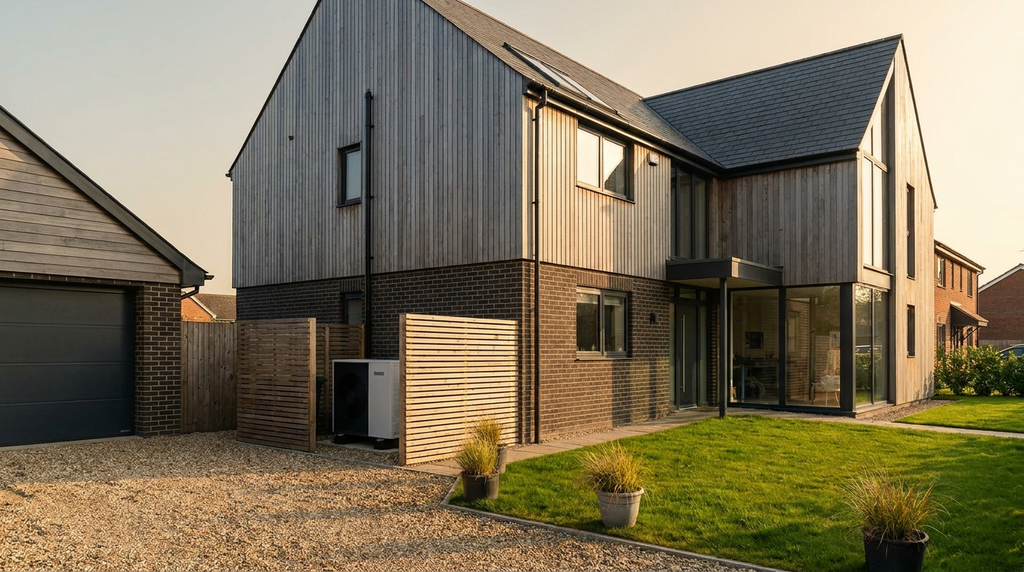
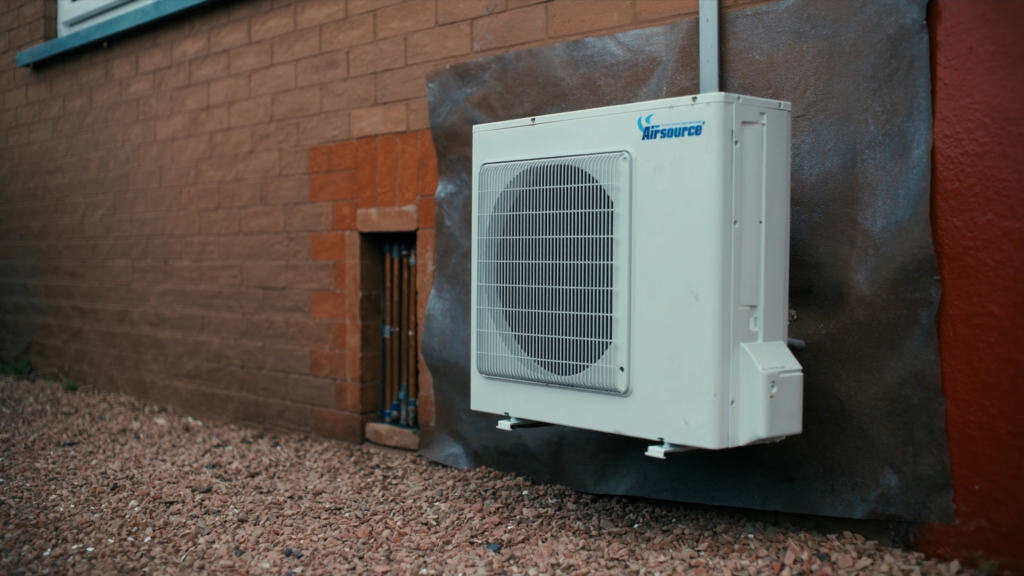
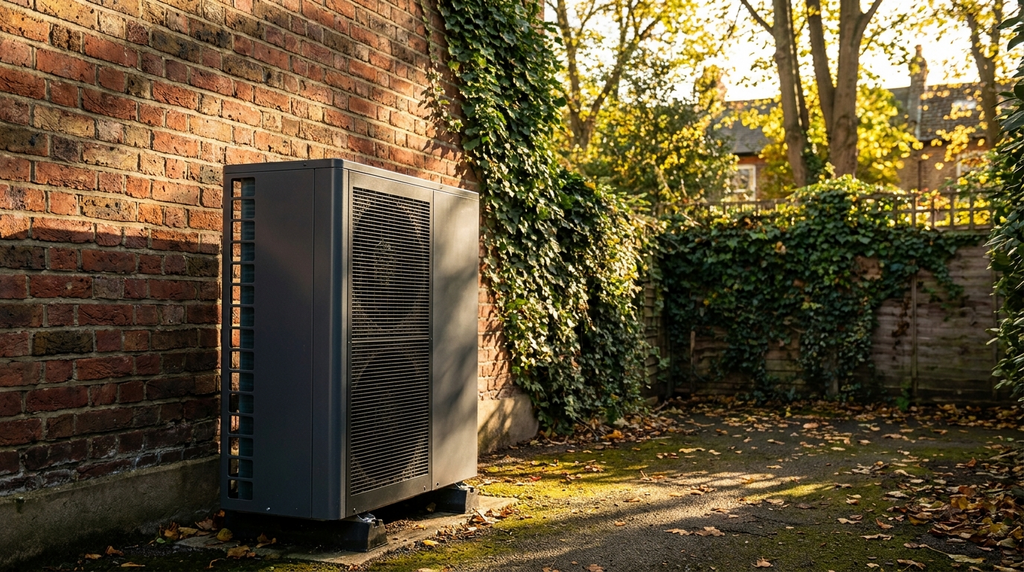
The outdoor unit contains a fan (for air-source heat pumps) or a ground loop (for ground-source heat pumps) that collects heat from the outside. The refrigerant inside the system absorbs that heat, is compressed to a higher temperature, and then releases the heat into your home via the indoor unit.
The controls, which include a thermostat and a heat pump controller, manage when the pump runs and at what temperature. This works in the same way as a boiler’s timer and thermostat, though heat pumps are built to run for longer periods at a steady temperature rather than switching on and off quickly. how to set your heat pump thermostat for maximum savings
How a heat pump connects to your central heating and hot water system
The heat pump sends warm water, typically at 35–55°C, to radiators or underfloor heating. This is cooler than the 60–75°C that a gas boiler produces. Because the water is cooler, radiators often need to be larger, or you may need underfloor heating to distribute the heat effectively (Energy Saving Trust, 2026).
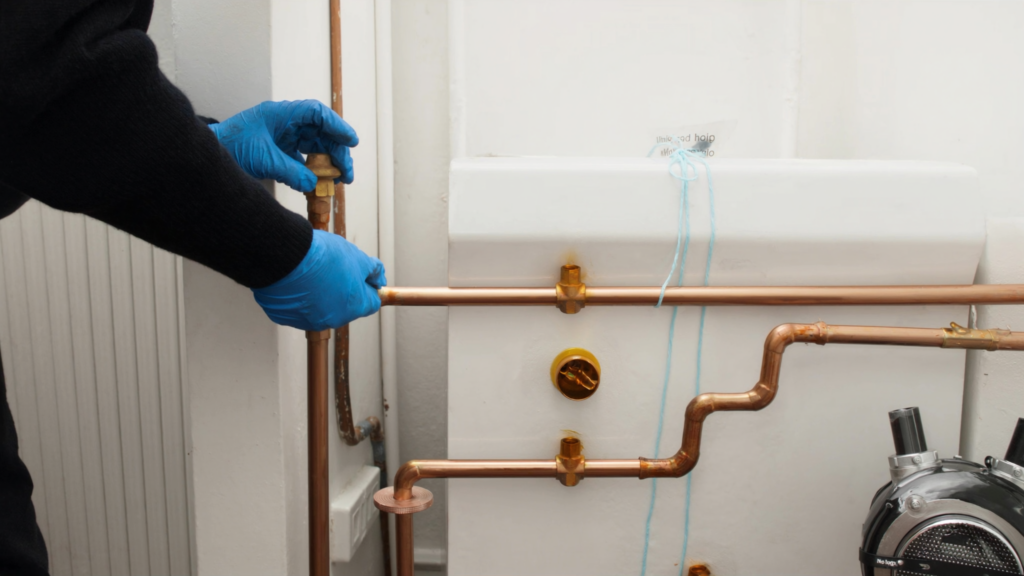
For hot water, the heat pump heats a storage cylinder rather than providing instant hot water like a combi boiler. The cylinder is usually larger than a standard hot water tank, so you will need space for it. Your installer will check whether your existing pipework and radiators are suitable.
Eligibility and installer verification MCS certification is the key standard
To qualify for the £7,500 Boiler Upgrade Scheme grant, your heat pump must be installed by an MCS-certified installer (GOV.UK, 2026). MCS stands for Microgeneration Certification Scheme. It ensures the installer meets technical and quality standards for renewable heating systems.
You can check the MCS register online to verify an installer’s certification before hiring them. It is also worth looking for TrustMark accreditation, which provides broader consumer protection for home improvement work.
The main trade-off is lower running costs but higher upfront cost and slower heat delivery
A heat pump’s lower running costs, around 25% less than gas, come from its high efficiency of 300% compared to 90% for a boiler. However, the upfront cost is three to four times higher (Energy Saving Trust, 2026). Heat pumps also heat water more slowly than boilers, so your home warms up gradually rather than instantly. This works best with good insulation and a programmable thermostat.
The Boiler Upgrade Scheme grant of £7,500 reduces the upfront cost significantly (GOV.UK, 2026). This makes the payback period shorter for most homes, though exact figures depend on your property’s insulation and your heating patterns.
A heat pump works by moving heat from outside air or ground into your home using refrigerant and a compressor, without burning fuel
This is the direct answer to how heat pumps work. The core principle is heat transfer rather than fuel combustion. The process uses electricity to run the compressor and fan, but it produces three to four units of heat for every one unit of electricity used (DESNZ, 2026).
For homeowners, this means lower carbon emissions and lower bills compared to gas or oil, provided the home is well-insulated. If your home has poor insulation, the savings will be smaller, and the heat pump will need to run for longer to keep you warm. how to improve your home insulation before installing a heat pump
Frequently Asked Questions
A heat pump works like a fridge in reverse. It extracts heat from outside air or ground, even at -15°C, and moves it indoors using refrigerant and a compressor (DESNZ, 2026). No fuel is burned on your property.
A typical air-source heat pump installation costs £9,000 to £11,000 (Energy Saving Trust, 2026). That is roughly £7,000 more than replacing a gas boiler, which costs £2,500 to £3,000.
A heat pump can reduce your annual heating bill by about 25%. Average running costs are £800 to £1,000, compared to £1,200 to £1,400 for a gas boiler (Energy Saving Trust, 2026).
Yes, a heat pump is 300-400% efficient, producing 3-4 units of heat for every 1 unit of electricity (DESNZ, 2026). A gas boiler is typically 90-95% efficient.
It depends on your home's insulation and energy prices. With annual savings of £200-£400 (Energy Saving Trust, 2026), the £7,000 upfront difference could be recovered in 18-35 years.