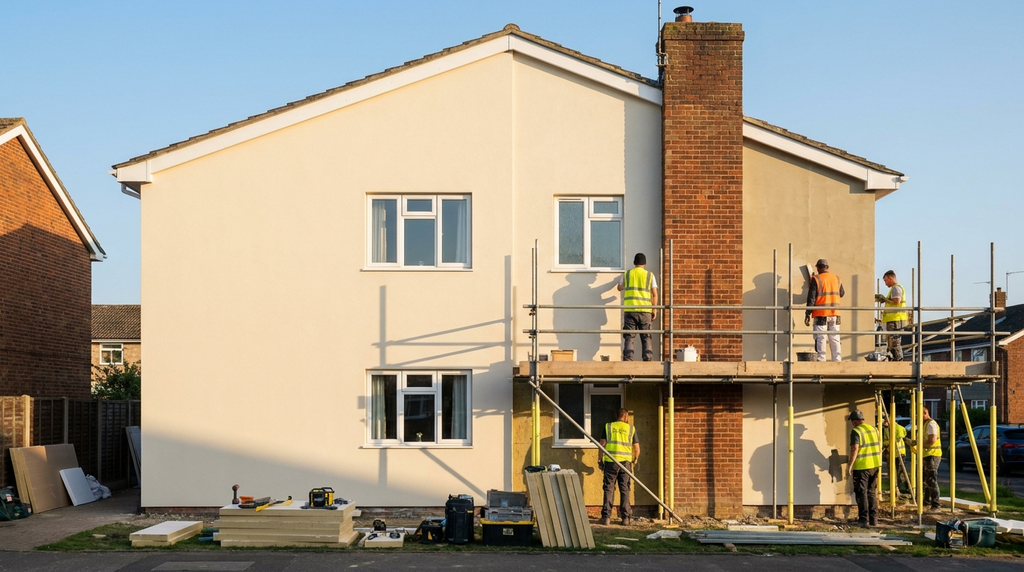
Removal typically takes one to two days for an average three-bedroom semi-detached home
If you are considering removing cavity wall insulation, the first question is usually how long the work will take. For most homeowners, the answer is straightforward.
Removal takes one to two days for a typical 3-bed semi-detached house. Larger or complex homes can take three to five days. The exact duration depends on the insulation material and property condition.
- 1–2 days for a typical 3-bed semi-detached house
- 3–5 days for larger 4-bed detached properties
- Blown fibre and bead removal is faster than foam
- Active extraction takes 4–6 hours per working day
- Check TrustMark registered installers for accurate quotes
- Removal typically takes one to two days for an average three-bedroom semi-detached home
- Quick numbers typical removal times by property type and material
- The removal process itself takes four to six hours of active work per day
- The answer to “how long does it take to remove cavity wall insulation” is one to two days for most homes
- Eligibility for removal grants or funding depends on your property’s age, location, and insulation type
- You must use an MCS-certified installer to guarantee the removal is done correctly and to maintain warranty cover
For a typical three-bedroom semi-detached house, the standard timeframe for a full cavity wall insulation removal is one to two working days. Larger or more complex properties, such as four-bedroom detached homes, houses with multiple storeys, or those with extensive damp problems, can take three to five days (GOV.UK, 2026). The actual duration depends on the type of insulation material, the condition of the cavity, and the number of access holes required. For example, blown fibre and bead insulation are usually quicker to extract than rigid foam panels.
Quick numbers typical removal times by property type and material
The table below shows typical removal times and cost ranges for common property types and insulation materials. These figures are based on TrustMark registered installer cost surveys and Department for Energy Security and Net Zero (DESNZ) published removal cost data for 2026 (DESNZ, 2026).
| Property type | Insulation material | Typical removal time (days) | Average cost range (£) |
|---|---|---|---|
| 1-bed flat | Fibre | 0.5–1 | £400–£800 |
| 2-bed terrace | Bead | 1 | £600–£1,200 |
| 3-bed semi | Foam | 1–2 | £1,000–£2,000 |
| 4-bed detached | Foam | 3–5 | £2,500–£4,500 |
These figures are averages. Your actual cost and time will depend on your installer’s rates, the accessibility of your property, and any additional work required, such as drying the cavity or repairing damp damage.
The removal process itself takes four to six hours of active work per day
On a standard working day, the removal team spends four to six hours actively extracting material. The rest of the day is used for setup, cleanup, and site protection. Extraction methods vary. Vacuum extraction for beads and fibre is generally faster, while mechanical removal for rigid foam panels takes longer and may involve cutting the foam into manageable pieces (MCS, 2026).
After the material is removed, the installer must inspect the cavity for debris and confirm the wall is clear. This inspection adds 30–60 minutes to the schedule. The installer will also check for any signs of damp or damage that may need addressing before the cavity is sealed. If the insulation is wet, contaminated, or has caused damp, the process may extend to three days because the installers need to dry the cavity before re-installing or sealing (Energy Saving Trust, 2026).
The answer to “how long does it take to remove cavity wall insulation” is one to two days for most homes
For the typical UK homeowner with a three-bedroom semi-detached house, the removal is a one- to two-day job. This timeframe includes setup, extraction, cavity inspection, and basic site cleanup. If the insulation is wet, contaminated, or has caused damp, the process may extend to three days because the installers need to dry the cavity before re-installing or sealing (GOV.UK, 2026).
It is important to discuss the expected duration with your installer before work begins. They will assess your property and provide a more precise estimate based on your specific situation.
Eligibility for removal grants or funding depends on your property’s age, location, and insulation type
The Great British Insulation Scheme closed on 31 March 2026. It funded insulation measures only and never covered windows or glazing. You are not eligible for a grant if you simply want to change insulation type without a proven defect (GOV.UK, 2026).
To confirm eligibility, you must provide a survey report from a registered installer that documents the issue. The installer must be MCS-certified or registered with TrustMark. Without a documented defect, you will need to pay for the removal yourself. Learn more about cavity wall insulation removal costs and grants
You must use an MCS-certified installer to guarantee the removal is done correctly and to maintain warranty cover
Only installers registered with the Microgeneration Certification Scheme (MCS) or TrustMark are approved for grant-funded removal work. Using an uncertified installer voids any future warranty on the wall and may invalidate your home insurance (MCS, 2026). Check the MCS installer database or the TrustMark website before hiring.
An MCS-certified installer will follow the correct removal process, inspect the cavity thoroughly, and provide a certificate of completion. This certificate is important for maintaining your home insurance and for any future property sale. Find out how to choose a cavity wall insulation installer You should always ask to see the installer’s certification before agreeing to any work.
Frequently Asked Questions
For a typical three-bedroom semi-detached home, removal takes one to two working days, according to GOV.UK (2026). Larger properties can take three to five days.
Removal time depends on the insulation material, property size, cavity condition, and number of access holes needed. Foam insulation takes longer than beads or fibre, per DESNZ (2026).
Yes, for smaller properties like a one-bed flat or two-bed terrace, removal can be completed in half to one day. A 3-bed semi typically requires one to two days, as stated by TrustMark installer surveys.
The removal team spends four to six hours actively extracting material each day. The rest of the day is used for setup, cleanup, and site protection.
Yes, foam insulation removal typically takes longer than beads or fibre because it requires mechanical extraction. Foam removal can add one to two extra days for a 3-bed semi, according to DESNZ (2026).