The case for keeping what’s already there
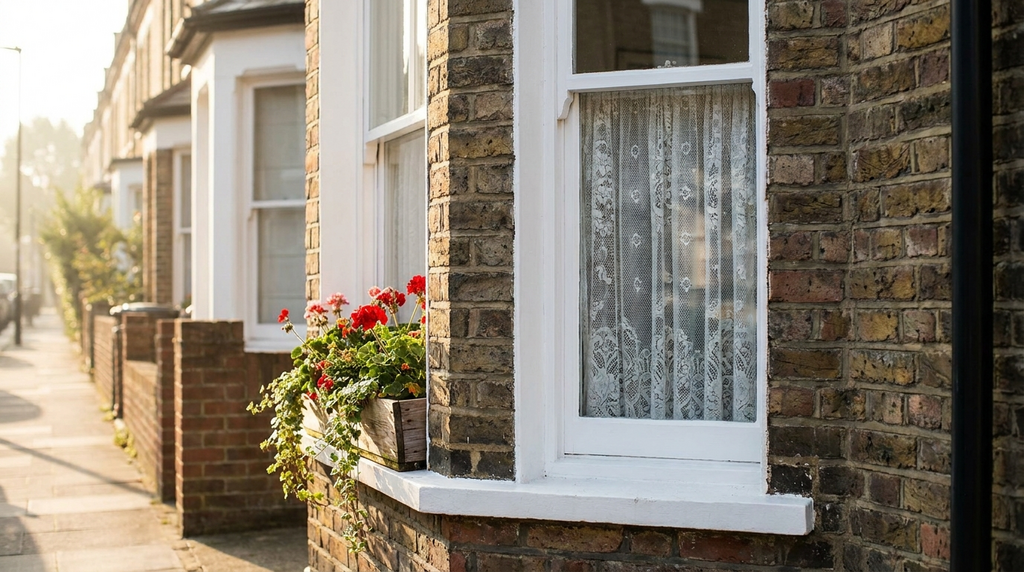
Late autumn in a Victorian terrace. Low sun catches the original crown glass, casting ripples across the ceiling like water. The window doesn’t close flush anymore, a draught sneaks in around the meeting rail, but the light it makes is irreplaceable. This is the moment the question arrives: restore or replace?
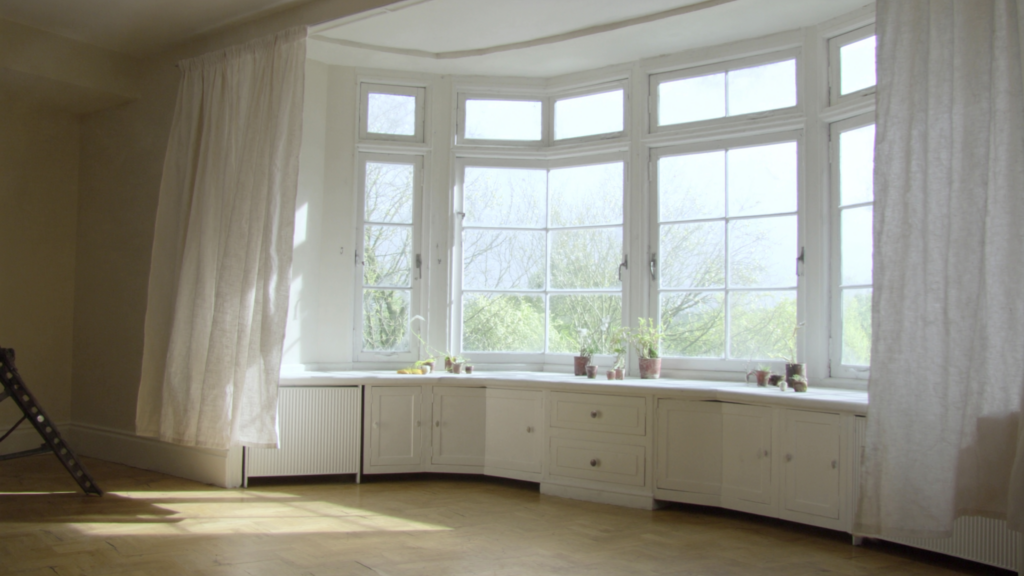
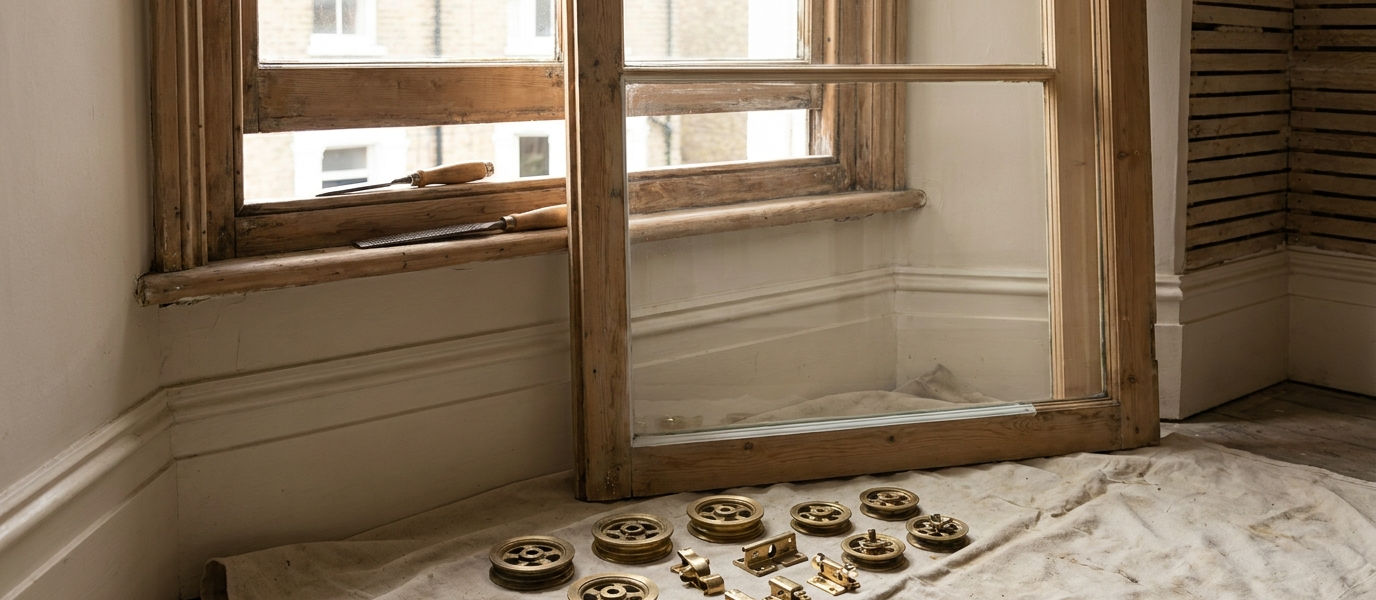
Original sash windows were built from old-growth timber, denser, more stable than almost any modern softwood. That wood can outlast a replacement if properly maintained. The crown glass has a subtle distortion that modern float glass can’t replicate; it softens light and gives period rooms their particular atmosphere, the kind you see in a 1930s suntrap bay at four in the afternoon. Restoration also keeps the original joinery details, mouldings, horns, ironmongery, that mass-produced replacements often simplify or lose entirely. A window that has its original brass pulleys and a working sash lock feels solid in a way that a new one rarely does.
If you’re drawn to the idea of keeping your home’s character intact, you might also enjoy our guide on period paint colours for matching that original palette.
When a replacement genuinely makes sense
Not every sash window can be saved. Frames beyond repair, rot deep in the sill or tenons, multiple failed splices, windows that have been painted shut for decades, sometimes have to go. The same applies to single glazing in a room that’s genuinely unusable in winter; secondary glazing can’t fix every thermal bridge, especially where the frame itself is warped.
Listed building consent may restrict your options, but unlisted homes with badly altered 1970s replacements, those thin aluminium sashes that rattle in the wind, are often better starting from scratch. The question then becomes: what goes in their place?
The thermal argument nobody talks about
Here’s the part that surprises most homeowners. Restored sash windows with draught-proofing and double glazing, thin-profile, vacuum or slimlite units, can achieve U-values close to modern sealed units. The embodied carbon of a full replacement set is significant: timber, transport, manufacturing, disposal of the old frame. A well-restored sash window actually outperforms a poorly fitted standard double-glazed replacement because air leakage, not glass alone, drives heat loss. That draught you feel in January is usually the gap around the frame, not the pane itself.
So the thermal argument isn’t as clear-cut as the sales brochures suggest. If you’re weighing costs, factor in that a restored window with proper draught seals can save you as much on bills as a mid-range replacement, and it keeps the house’s original fabric intact.
Five things a restorer will check before quoting
- Bottom rail condition – the most common rot point; if it’s soft, it can be spliced, but only if the stiles are sound.
- Pulley and cord health – original cast-iron pulleys last centuries; the cords are replaceable for around £20 per window.
- Sash weight pockets – often painted shut; they need to open for re-cording and draught-proofing.
- Glass type – original crown or cylinder glass is worth saving; later sheet glass less so.
- Frame squareness – a racked frame can sometimes be re-pinned rather than replaced.
A good restorer will give you a straight answer within minutes. If they say “we can save it,” ask for a breakdown of what they’ll splice versus replace. If they say “it’s beyond repair,” get a second opinion, some restorers are more conservative than others.
Why the best replacement is still a timber sash
If replacement is the only option, resist the temptation to go uPVC. uPVC sashes lack the depth of glazing bar and the correct sightline proportions; they read as wrong from the street, like a cheap suit at a black-tie dinner. Modern timber sash windows can match the original profiles exactly, and factory-applied microporous paint systems outlast site-applied finishes by years.
For exposed elevations, Accoya or thermally modified timber options offer rot resistance without the maintenance burden of softwood, worth the premium of around 20-30% over standard timber. You’ll pay roughly £800 to £1,500 per window for a good timber replacement, depending on size and finish, but the result is a window that looks right in its opening and will last decades with proper care. If you’re considering paint colours for the new frames, our article on front door colour ideas has tips on choosing shades that work with period brickwork.
The decision framework let the window tell you
Here’s a simple rule of thumb. If more than 50% of the original timber is sound and the glass is original, restore. If the frame has been replaced once already, look for screw-fixed beads, modern glass, missing horns, you’re choosing between two replacement options.
Budget realistically: a full restoration with draught-proofing and slim double glazing costs roughly the same as a mid-range timber replacement, somewhere between £600 and £1,200 per window. But the restored window adds value differently, it keeps the house’s history intact. The gain for you is not just thermal comfort or energy bills; it’s living with windows that feel right in their openings, that catch light the way the architect intended, and that won’t look dated in a decade.
A quiet case for doing nothing this year
Sometimes the right move is to repair the cord, add a draught strip, and wait. A window that opens and closes but rattles slightly is not failing; it’s telling you it needs attention, not replacement. Spending a season living with the windows as they are, noticing where the light falls, how the room feels in summer, makes the eventual decision more confident.
You might find that the slight draught is something you can live with, or that the crown glass’s ripple effect is worth more to you than a perfectly flat pane. And when you do decide, whether it’s restoration or a timber replacement, you’ll know you made the choice for your home, not just for the sales brochure. For more on maintaining what you’ve got, see our piece on sash window draught-proofing for simple DIY fixes that buy you time.