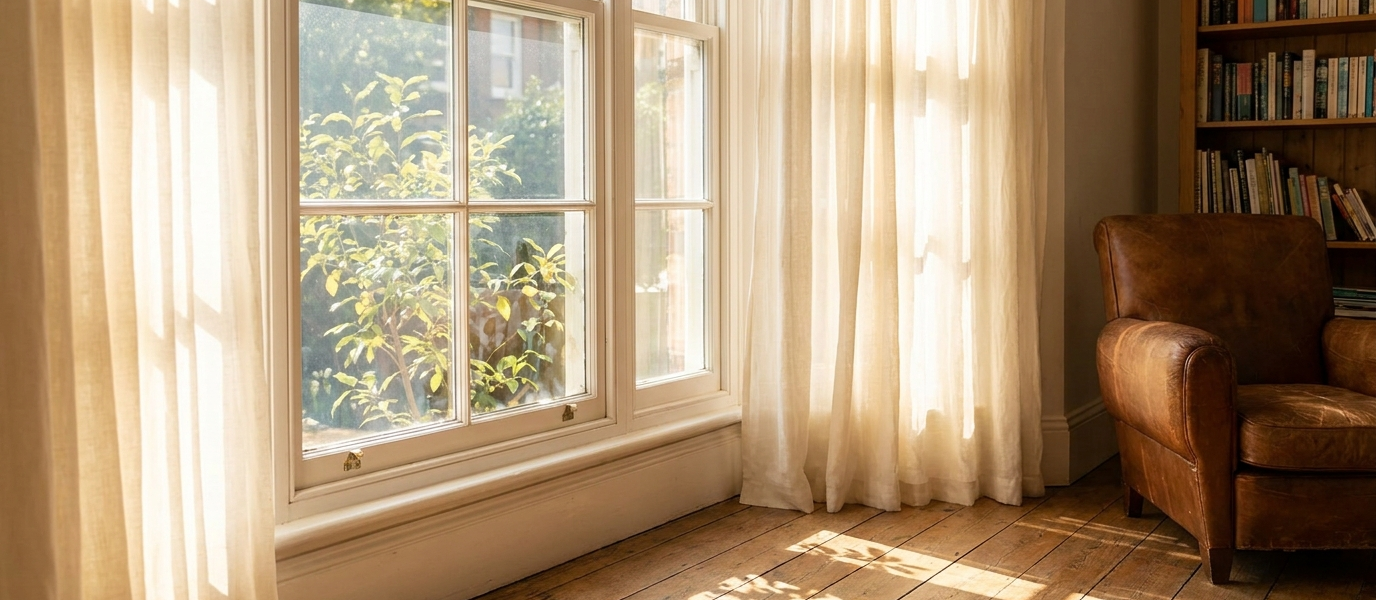
Open to the light, not the glare
It happens in the best rooms. That south-facing Victorian bay, the one you fell for during a winter viewing, turns into a furnace by July. The sofa you chose in a soft oatmeal is now a seat you avoid between two and four. The garden view you paid for is bleached into a white rectangle of glare. You pull the blinds, and the room shrinks. You close the curtains, and the house feels like it’s holding its breath.
The instinct is to block, to darken, to retreat. But what if the answer isn’t less light, but better light? What if you could keep the airy, open feeling that made you love the room in the first place, and simply remove the part that makes you squint?
The moment you realise heat isn’t the enemy, glare is
Here’s the shift in thinking that changes everything. It’s not the warmth of the sun that ruins a room, it’s the harshness. The washed-out colours on your walls. The way your eyes narrow when you try to read. The slow, invisible fading of that velvet armchair you inherited. The sun is generous; it’s the glare that’s rude.
Solar window film isn’t about turning day into dusk. It’s about filtering, not blocking. The good stuff rejects up to 99% of UV rays and a significant portion of solar heat, yet leaves the room feeling as open as it did in March. You keep the view. You keep the connection to the garden, the street, the sky. You just lose the part that makes you want to close your eyes.
Why the old “dark tint” instinct fails every time
Let’s be honest about what most people picture when they hear “window film.” It’s the reflective, mirrored surface that turns a living room into a fishbowl. It’s the cheap, blue-tinted roll you see in office buildings and rental flats, the one that makes the room feel smaller, colder, less human. That instinct comes from a time when the only option was to block light to block heat. It was a trade-off, not a solution.
The visual cost is real. A room with dark tint feels like it’s wearing sunglasses indoors. The light that does come through is flat, grey, and lifeless. But the alternative, modern films built to be almost invisible, changes the equation entirely. They reject heat and UV without dimming the room’s atmosphere. They let you forget they’re there.
Finding the film that forgets itself
The decision comes down to one question: can you tell it’s there? The best solar window films are the ones you don’t notice until you put your hand on the glass and feel the difference. Ceramic and nano-ceramic options are the quiet heroes here. They read as clear glass from both sides, but they’re quietly working, rejecting infrared heat, cutting UV, softening the glare.
On the spec sheet, look for two numbers: the Visible Light Transmission (VLT) percentage, aim for 50% or higher if you want the room to stay bright, and the UV rejection, which should be north of 99%. But the real test is human. Stand in the room at 3pm on a July afternoon. Does the light still feel like light? Does the room still feel like the one you chose? If yes, you’ve found your film.
Eight ways to soften a tall sash window
Once the film is in place, the room changes, but you can lean into that change. Here are eight ways to make the most of it:
- Choose a film with a matte finish. It diffuses rather than reflects, so the light spreads softly instead of bouncing harshly.
- Layer with sheer linen blinds. A second, softer filter turns afternoon sun into a warm, hazy glow, the kind that makes you want to sit still.
- Paint the window frame in a pale, warm tone. Think Farrow & Ball’s Drop Cloth or Little Greene’s French Grey, they balance the cooler light that film can introduce.
- Add a slim ledge shelf with trailing plants. Pothos, philodendron, or a simple ivy catch the filtered light beautifully and soften the window’s hard lines.
- Use a warm-white bulb in the room’s main light. A 2700K LED will counteract any coolness the film brings, keeping the room feeling golden rather than clinical.
- Keep walls in earthy, mid-tone colours. A warm greige or dusty pink absorbs rather than competes with the light, it makes the room feel held, not washed out.
- Place a mirror opposite the window. It bounces what’s left of the sun deeper into the room, so the far corner doesn’t feel left out.
- Edit the view. If the film softens the outside, make sure what’s outside is worth softening. A potted topiary, a bird feeder, a carefully placed bench, give the eye something to land on.
Pick a colour that softens with the seasons
The film changes how natural light behaves, and that changes how paint colours read. A room with solar film might make a cool blue like De Nimes feel colder, almost slate-like. But warm greiges, dusty pinks, and soft terracottas become richer, more enveloping. They absorb the filtered light and glow back at you.
The quiet insight here is that the film doesn’t just change the window. It changes everything the window touches. Your sofa, your rug, the watercolour on the wall, they all read differently under this softer, more deliberate light. So choose your paint with the film in mind. A room that works with its light, rather than against it, feels like it’s breathing.
Let the light lead, and the room follows
Go back to that south-facing bay. The one that felt like a problem. Now imagine it reimagined: still bright, still connected to the garden, but comfortable. Calm. Usable. You can sit in the armchair at three in the afternoon without moving to the other side of the room. The colours on the wall haven’t faded. The view is still there, but softer, like a watercolour rather than a photograph.
The real gain isn’t energy savings or UV protection, though both matter. It’s that the room stops fighting the sun and starts working with it. It becomes a room that breathes with the day, rather than retreating from it. And that feeling, of a home that works with its light, not against it, is worth every careful decision you make along the way.





