The room that changed my mind about shutters
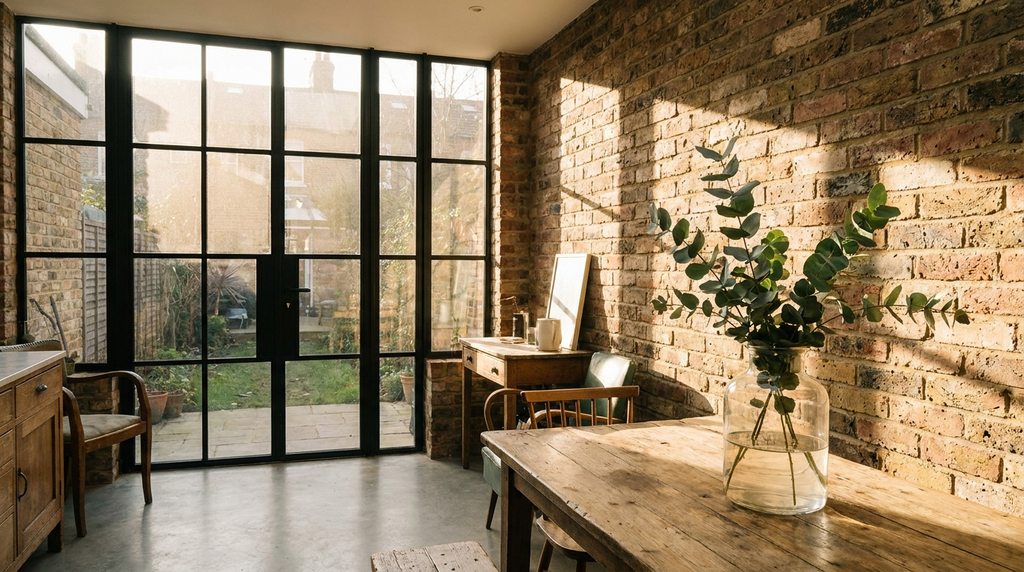
Standing in a south-facing living room at four in the afternoon, you know the feeling. The sun drops low enough to slip under your roof overhang and hits you square in the eyes. The garden beyond the glass becomes a blur of overexposed green. You pull the blind, and suddenly the room is a cave. You push it up again, and you’re squinting. There is no middle ground, and that’s the problem.
Indoor and outdoor shutters solve completely different problems, and the mistake most of us make is treating them as interchangeable. They aren’t. Outdoor shutters stop heat before it touches the glass. Indoor shutters sculpt the light that has already arrived. Once you understand that difference, you stop searching for a one-size-fits-all product and start looking at your windows as they actually behave through the day, the morning glare on the east side, the evening blast on the west, the street-facing window you want to keep private without losing daylight.
Let your front window set the tone
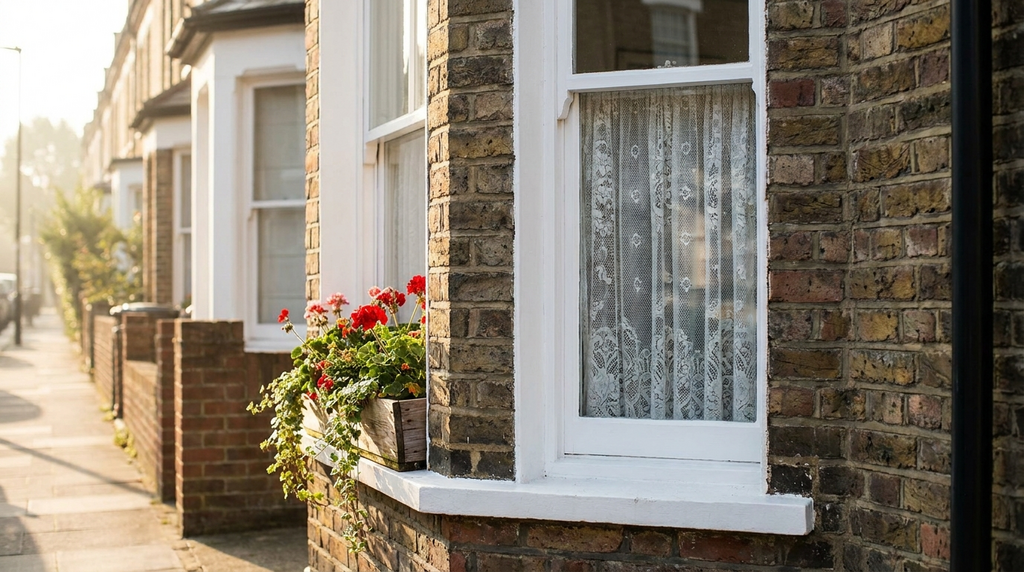
There is something about an outdoor shutter that changes how a house feels from the pavement. On a flat Georgian facade or a modern box with no porch or detail, a pair of solid louvred panels adds depth and shadow play that paint alone cannot achieve. It signals solidity, privacy, a certain old-world permanence before anyone steps inside.
The practical gain surprises most people. Outdoor shutters manage heat before it reaches the glass, not after. On a summer afternoon, the air between a closed shutter and the windowpane acts as a buffer zone, keeping the room behind it noticeably cooler. They also handle wind-driven rain against a sash window better than any internal blind. The downside is that they only work where they feel native, coastal cottages, historic terraces, streets where neighbours already have them. If yours is the only house on the row with external shutters, the effect shifts from charming to odd.
What indoor shutters do that nothing else can
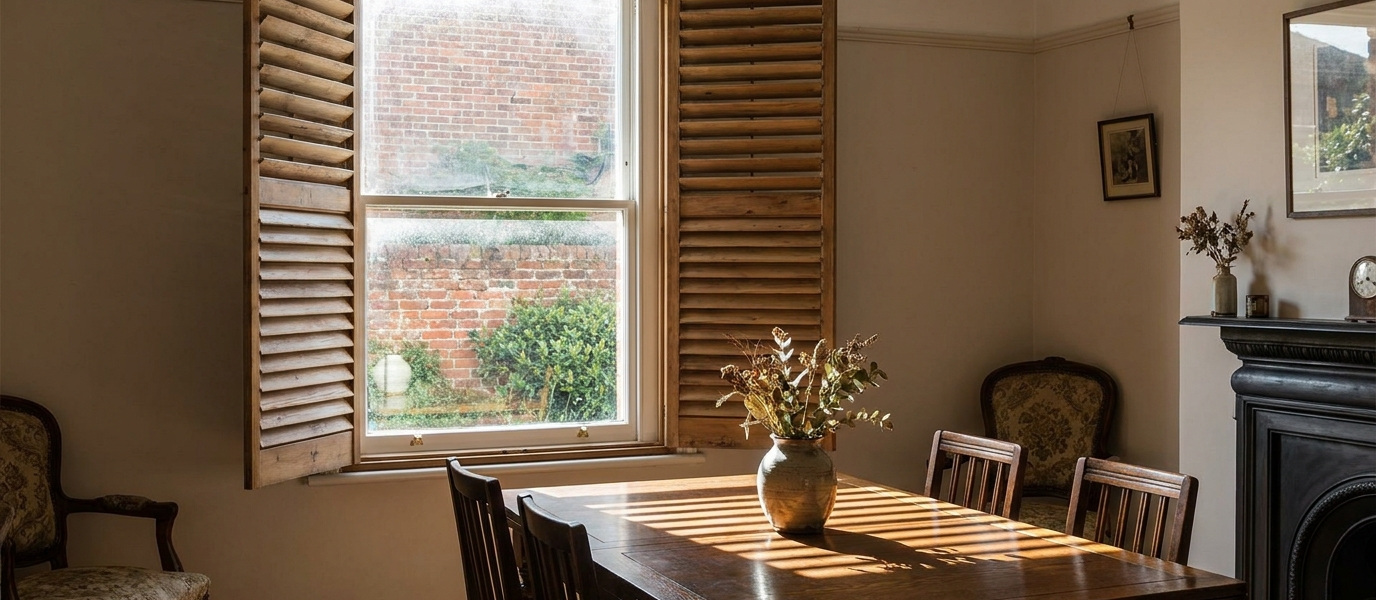
The light through louvres is not blocked, it is directed, softened, broken into lines that move across the floor as the sun shifts. That quality is unique to shutters. Curtains either block everything or nothing. Blinds feel flimsy and rattle in a breeze. But a well-made indoor shutter gives you a bedroom that is dark at six in the morning and softly lit by two in the afternoon, without you lifting a finger.
The psychological shift is subtle but real. An indoor shutter makes a window feel like furniture, not an opening. It has weight. It demands to be touched. When you tilt the louvres, you are not hiding from the outside, you are negotiating with it. That changes how you inhabit the room.
Eight ways to soften a tall sash window
Tall sash windows are beautiful and awkward. They let in glorious light and equally glorious drafts. They dominate a room. Here is how to make them work with shutters.
- Use full-height indoor shutters with a split tier. The upper section opens independently for light while the lower section stays closed for privacy. You get the view without the audience.
- Paint the window frame the same colour as the shutter trim. This blurs the boundary between glass and shutter, making the whole window feel larger and less busy.
- Install café-style shutters covering only the lower half. You keep the street view open while hiding a radiator or the clutter on the windowsill.
- Choose wider louvres for taller windows. Five-inch or six-inch slats reduce visual busyness and let more light through when open. Narrow louvres on a tall window look like Venetian blinds on steroids.
- Add a shallow shelf above the shutter box for trailing plants or a reading lamp. It turns the shutter into an architectural feature rather than a functional afterthought.
- Use a single solid panel on a small casement window rather than pairs. Cleaner, less fidgety, and it does not fight the scale of the room.
- Match shutter colour to the wall, not the woodwork, for a built-in look that does not fight the architecture. A soft Farrow & Ball Drop Cloth on the shutters and the walls makes the window recede elegantly.
- Consider tier-on-tier shutters for windows that need full coverage sometimes and none at other times. No compromise, no stacking, no lost light.
The decision that depends on your street, not your sofa
Outdoor shutters work best where they feel native. A coastal cottage with a history of salt spray and storm shutters. A Victorian terrace where the neighbours already have them. A modern house that needs the depth and shadow that flat render cannot provide. If your street is a mix of styles and eras, outdoor shutters can be a bold move, but bold moves need confidence.
Indoor shutters are more forgiving. They suit any period because they live inside your decor, not on the facade. A Georgian sash, a 1930s steel casement, a modern aluminium frame, indoor shutters adapt to the room, not the street. The one question that settles the debate is this: do you want to control the view, or control the light that arrives with it? Outdoor shutters control the view and the weather. Indoor shutters control the light and the mood. Different tools for different jobs.
Why texture matters more than colour
Colour is the easy decision. Texture is the one you live with. A flat white shutter looks clean on day one but feels sterile by month six. A shutter with a slight grain, a matte finish, or a hand-painted surface catches the light differently at different times of day. It breathes.
Outdoor shutters in timber weather differently from composite. Timber develops a silvery patina over time that can add character, or it can crack and peel if you do not maintain it. Composite resists the weather but never ages gracefully; it stays exactly as it was on the day of installation. The tactile moment matters too. When you run a hand across the louvres as you tilt them, an indoor shutter should feel substantial, not hollow. A cheap shutter rattles. A good one clicks into place with a sound that tells you it is built to last.
The moment you realise you want both
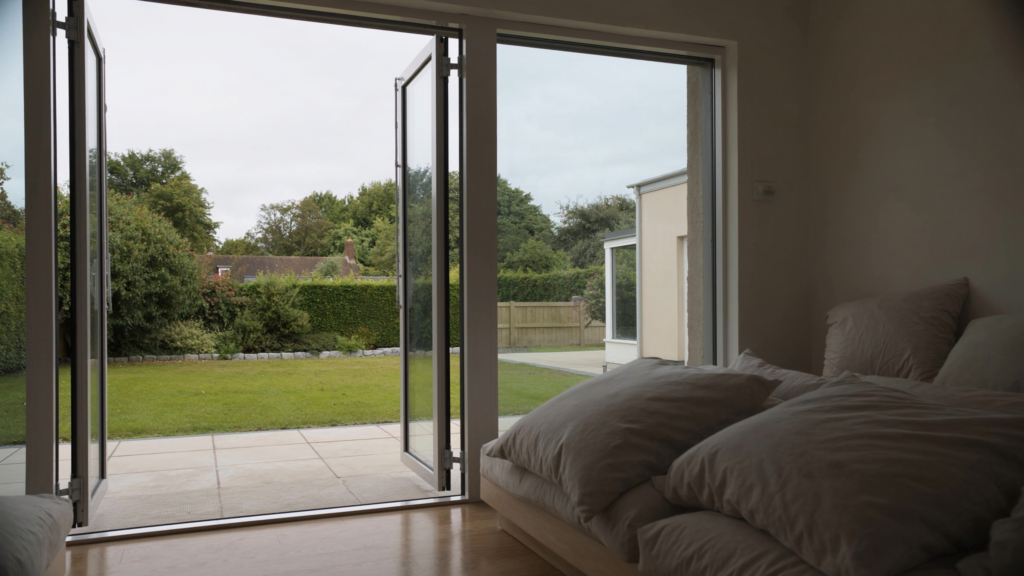
It happens in a kitchen with bifold doors to the garden. On a summer afternoon, the heat is relentless. Outdoor shutters on the exterior provide shade and storm protection, keeping the room cool before the sun even touches the glass. When evening comes and the light drops, you close the indoor shutters for privacy and warmth. The layered effect feels intentional rather than overdone, like having a coat and a scarf instead of choosing one or the other.
The quiet satisfaction is this: a window that does exactly what you need it to, every hour of the day, without you having to think about it. You stop wrestling with blinds. You stop squinting at four in the afternoon. You just tilt the louvres, and the room adjusts around you.