The front door that makes the house feel different
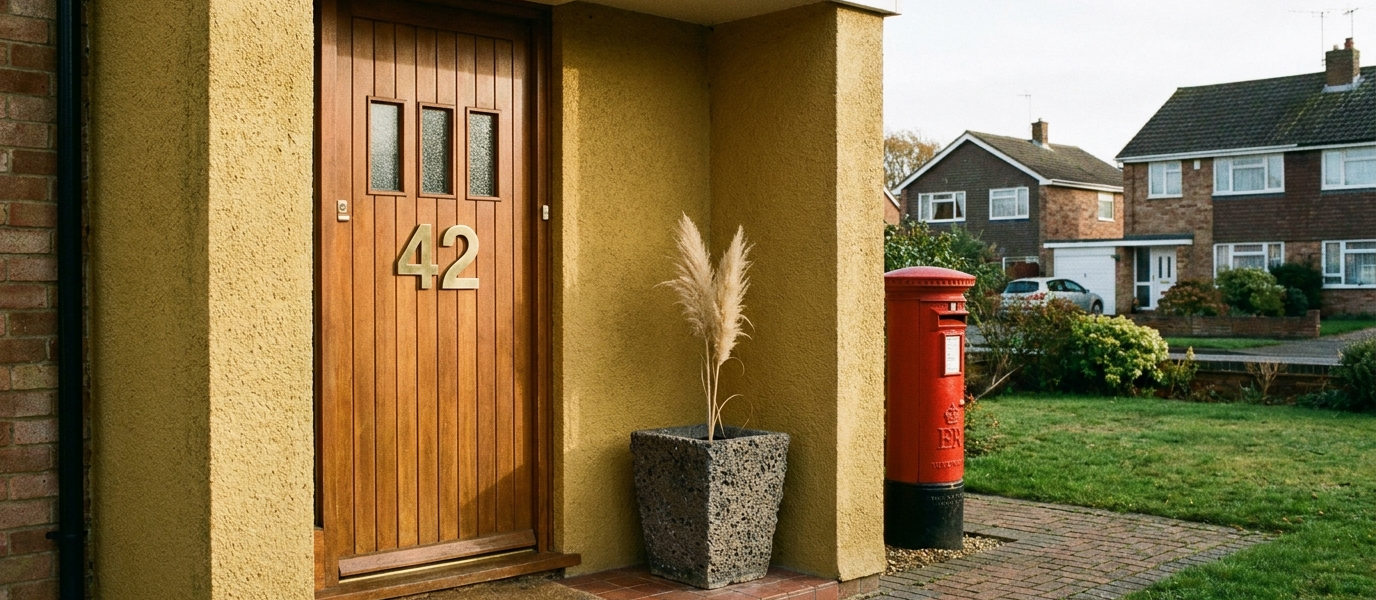
You pull up to your house and something has shifted. That plain, flush panel door you’ve walked past a thousand times has been replaced, and suddenly the whole front elevation reads differently. It’s lower, wider, with a single horizontal strip of glazing that catches the afternoon light and throws it across the step. Where a heavy Victorian six-panel door feels like a statement of arrival, a mid-century door is quieter. It doesn’t announce you; it welcomes you.
This isn’t about chasing a trend. A front door sets the emotional register of your home before anyone steps inside. A mid-century door says you value clarity, warmth, and a quiet kind of confidence. It reframes how the whole house presents itself, not as a period piece, but as a home that knows what it is.
What defines a mid century front door, the three rules
Not every door with a bit of glass counts. Real mid-century doors follow three clear principles, and once you see them, you can’t unsee them.
Rule one: horizontal emphasis. The eye moves sideways, not up. Wide panels, low-set glazing, or a single long window that stretches across the door rather than sitting at eye level. Think of a 1930s suntrap bay translated into a door, it’s about drawing the eye along the line of the house, not up to the sky.
Rule two: material honesty. Timber that’s left to age naturally, teak, oak, iroko, or painted in muted earth tones. No fake woodgrain, no mock-Tudor detailing, no plastic veneers trying to look like something they’re not. The wood does the work.
Rule three: minimal hardware. A slim lever handle, a letter plate flush with the wood, nothing fussy. If you wouldn’t want to touch it every day, it doesn’t belong here.
Glazing that lets the light fall differently
The window in a mid-century door is rarely a rectangle at eye level. It might be a horizontal ribbon near the top, a narrow strip beside the handle, or a single pane that starts low and stops short of the top edge. This changes the entry experience completely. Instead of blasting the face of whoever opens the door, the light lands softly on the hall floor, a pool of warmth that shifts through the day.
This matters more than you might think. A door that controls light is also a door that controls privacy, without needing a net curtain. You get the feeling of openness without the exposure. It’s the same trick that architects used in 1950s California: let the light in, but keep the street out.
For a reproduction, look for double-glazed units in slim frames that mimic the original single-pane look. Reeded or ribbed glass adds texture without blocking light, and amber-tinted glass gives a warm glow that softens the hall. If you want to go further, ask about a narrow strip of glazing beside the handle, it’s a detail that feels both modern and completely of its time.
Where to find reproductions that get the proportions right
The trick is finding a door that gets the proportions right, not one that simply looks retro. Specialist joinery companies like The Period Door Company and The Wooden Door Company offer profiles labelled “mid-century,” “retro,” or “MCM,” but you need to check the ratio. A true mid-century door should have a width-to-height ratio close to 2:1, noticeably wider than a standard modern door.
Glazing options are better than they were even five years ago. You can get double-glazed units in slim frames that sit flush with the outer face, with textured glass in reeded, ribbed, or amber-tinted finishes. Some suppliers will also adjust the height or glazing position to match a 1960s house where the original door was non-standard, worth asking if your home was built in that era and you want to restore its character.
Expect to pay around £800 to £2,000 for a well-made reproduction, depending on size, timber, and glazing. Custom sizing adds a few hundred more, but it’s often worth it to get the proportions right.
Colour, timber, and the art of not over-decorating
The best mid-century doors let the material speak. Teak and sapele warm up over time, developing a rich honey tone that no paint can match. If you’re painting, stick to colours that belong to the landscape rather than the catalogue: a soft sage, a deep ochre, charcoal, or a muted terracotta like Farrow & Ball’s Setting Plaster. These colours sit comfortably against brick, render, or timber cladding.
What to avoid: high-gloss finishes, brass-effect handles, and any form of coach lamp. A mid-century door that tries too hard to be noticed will always feel less confident than one that simply belongs. The goal is understatement, the kind of door that you don’t photograph on its own, but that makes every photo of the house better.
Six details that separate a reproduction from a pastiche
A reproduction can look right or just look retro. The difference is in the details.
- The handle sits lower than standard, around 900mm from the bottom, not the usual 1000mm. This shifts the visual weight down and reinforces the horizontal line.
- The letter plate is horizontal and slim, matched to the handle finish, matte black, satin stainless, or aged bronze. No shiny brass.
- The door is slightly wider than a standard modern door, 900mm or more, to preserve the horizontal proportion.
- Glazing is set flush with the outer face, not recessed behind a deep frame. This keeps the surface clean and uninterrupted.
- The door thickness is 44-50mm, not the chunky 60mm of a modern composite. It should feel solid but not heavy.
- The threshold is low and flush, no step up, no draught strip on show. The transition from outside to inside should feel smooth.
Let your front door do the heavy lifting
Once the door is right, it becomes the anchor for the rest of the house’s exterior. It sets the tone for windows, porch details, and even the garden path. The simplest way to let it lead: choose the door first, then pick a paint colour for the frame that recedes, the same tone as the wall, so the door reads as a single object.
This is where the confidence comes in. When the door is right, everything else around it starts to feel intentional too. You don’t need to add a coach lamp or a brass knocker or a fussy fanlight. The door does the work. And it does it quietly, the way the best design always does.