Power Flushing in 2026 costs £300–£600 for a typical 3-bed home
If your radiators have cold spots or your boiler makes banging noises, you might need a power flush. This process cleans out the sludge and debris that builds up inside your central heating system over time. The cost depends mainly on the size of your home and how many radiators you have.
A power flush for a typical 3-bedroom home with 10 radiators costs between £300 and £600 in 2026, according to national surveys from Checkatrade and MyBuilder (Checkatrade, 2026; MyBuilder, 2026). The average cost for a 10-radiator system is around £450.
System size and number of radiators are the main cost drivers. A 5-radiator flat might cost £250, while a 15-radiator large home could reach £750. Central London and the South East typically add 15–20% to the UK average. Boiler servicing is not included in the flush cost, expect an additional £80–£120 for a separate service visit (Gas Safe Register, 2026).
A blocked heating system wastes up to 15% of your annual gas bill
Sludge and magnetite (tiny iron particles from corroded pipes) reduce heat transfer inside your radiators. This forces your boiler to run longer to reach the thermostat target, wasting energy. The Energy Saving Trust and Ofgem’s 2026 Domestic Heating Efficiency Report state that a blocked system can waste up to 15% of your annual gas bill (Energy Saving Trust, 2026).
For a typical UK household spending £1,200 a year on gas, that 15% waste equals £180 in lost heat every year. Power flushing restores the original efficiency, eliminating this waste. Over five years, that saving adds up to £900, more than the cost of the flush itself.
Quick numbers what power flushing costs, saves, and pays back
| Metric | Typical value | Source |
|---|---|---|
| Average cost (10 radiators) | £450 | Checkatrade 2026 (source) |
| Annual gas saving | £180 | EST 2026 (source) |
| Payback period | 2.5 years | Calculated from Checkatrade and EST data |
| Radiator count | 10 | ONS housing stock data |
| Duration | 4–6 hours | Gas Safe Register 2026 guidance (source) |
The payback period of 2.5 years means the flush cost is recovered through reduced gas bills in under three heating seasons. After that, the £180 saving is pure benefit.
Power flushing restores heat to cold radiators and eliminates banging noises
Sludge builds up in the lowest points of your heating system, blocking flow to radiators furthest from the boiler. This is why the radiator in your hallway might be cold at the bottom while the one in the kitchen is fully hot. A power flush uses a high-flow pump and cleaning chemicals to dislodge and remove this debris from the entire system.
The process takes 4–6 hours for an average home and leaves the system clean and quiet. Banging noises from your boiler or pipes are often caused by trapped air or debris, a power flush removes both. After a flush, your radiators heat evenly from top to bottom, and the boiler operates more quietly and efficiently.
how to tell if your boiler needs a power flush
You must use an MCS-certified or Gas Safe Register engineer for a power flush
For gas boilers, a Gas Safe Register engineer is mandatory by law (Gas Safe Register, 2026). Using an unregistered engineer voids your boiler warranty and may invalidate your home insurance. If the power flush is linked to a heat pump or renewable heating upgrade, the engineer must also be MCS-certified (Microgeneration Certification Scheme) (MCS, 2026).
Always ask for proof of certification before any work begins. Get a written quote that states the number of radiators, the chemicals used, and whether a corrosion inhibitor will be added. A reputable engineer will provide this without hesitation.
A power flush is recommended every 5–7 years for a sealed pressurised system
The Energy Saving Trust’s 2026 maintenance guidelines recommend a power flush every 5–7 years for sealed pressurised systems (Energy Saving Trust, 2026). Open-vented systems (with a header tank in the loft) may need flushing every 3–5 years because they are more prone to oxygen ingress and corrosion.
Signs you need a flush include cold radiators at the bottom, a noisy boiler, or frequent pump failure. Adding a magnetic filter after the flush extends the interval to 7–10 years. A magnetic filter captures magnetite before it can circulate and settle in your system.
The process what happens during a power flush in 2026
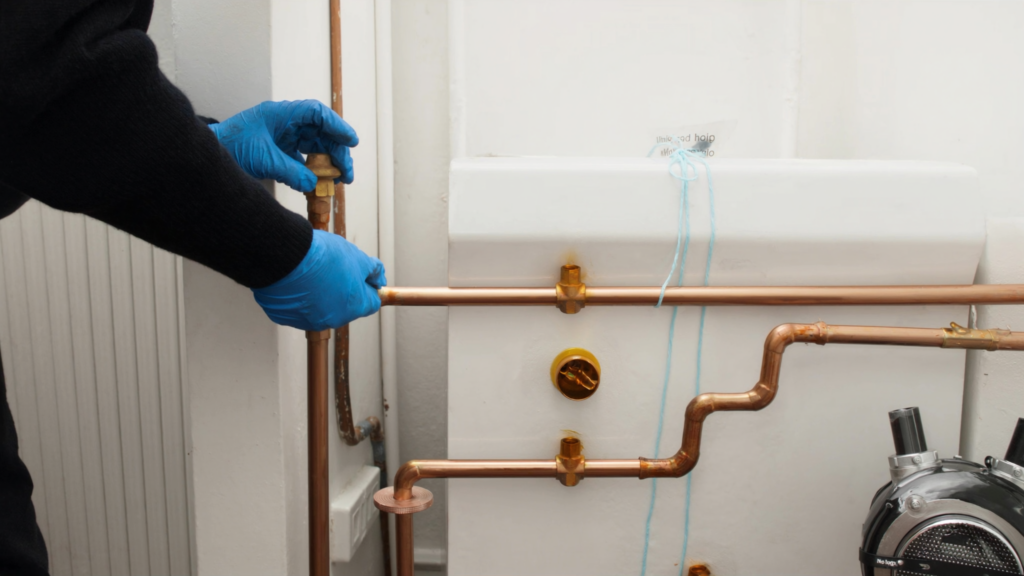
The engineer first isolates the boiler to prevent damage. They then connect the flushing machine to the system flow and return pipes. Cleaning chemicals are circulated for 30–60 minutes to break down sludge and magnetite.
The system is then flushed with clean water at high velocity until the water runs clear. This typically takes 2–3 hours. At the end, a corrosion inhibitor is added to protect the clean system from future rust. Some engineers also install a magnetic filter as part of the service, which adds £100–£150 to the cost.
Power flushing is not a DIY job, incorrect flushing can damage your boiler
Gas Safe Register 2026 safety warnings state that DIY flushing kits lack the pressure and flow control needed to avoid damaging boiler heat exchangers (Gas Safe Register, 2026). A botched flush can dislodge sludge that then blocks the boiler’s internal waterways, requiring a replacement that costs £1,500–£3,000.
Manufacturer warranties from Worcester Bosch, Vaillant, and Ideal all require professional installation to remain valid. If you attempt a DIY flush and your boiler fails, the warranty will be void. Leave power flushing to certified professionals who have the right equipment and insurance.
how to find a Gas Safe registered engineer
Frequently Asked Questions
Power flushing costs between £300 and £600 for a typical 3-bed home with 10 radiators, according to Checkatrade's 2026 survey.
Yes, a power flush can save up to £180 per year on gas bills by restoring system efficiency, as reported by the Energy Saving Trust in 2026.
A power flush typically takes 4 to 6 hours for a standard 10-radiator system, according to Gas Safe Register guidelines.
Yes, with a payback period of around 2.5 years and potential savings of £900 over five years, power flushing is cost-effective according to Ofgem's 2026 efficiency data.
Yes, cold spots on radiators indicate sludge buildup, and a power flush is the recommended solution according to the Energy Saving Trust.